Water damage restoration in Quogue, NY — a bathroom leak that reached three floors
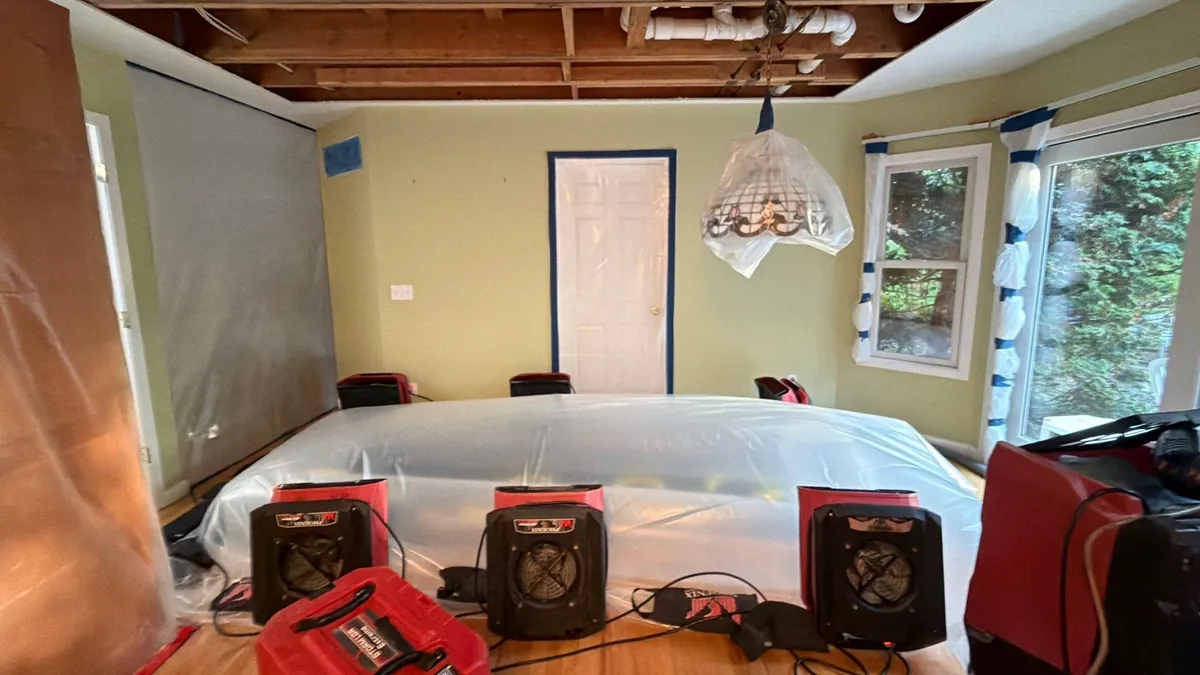
A failed plumbing connection in the bathroom sent water through the kitchen ceiling and down into the basement. Extraction, moisture mapping and mat drying saved the hardwood instead of replacing it.
Tom Cwalinsky··2 min read·Quogue, NY
The short answer
A failed bathroom plumbing connection in a Quogue home flooded three levels
— the bathroom itself, the kitchen ceiling below, and finally the basement.
K.O.S. Restoration extracted the standing water, moisture-mapped the whole
path, dried the kitchen hardwood in place with floor mats, and removed
saturated basement insulation before it became a mold job.
Why water spreads so fast in East End homes
Many homes in Quogue — and in Westhampton, East Quogue and Hampton Bays —
have layered construction: finished space above finished space, with wall
cavities, ceiling voids and floor systems that connect them. Water doesn't
respect any of it. It follows framing until it finds somewhere to pool.
By the time water shows on the ceiling below, it has already been moving
through structural components for a while. That's the part homeowners
rarely see, and it's why the visible stain is almost never the size of the
actual loss.
Immediate response and moisture mapping
When the crew arrived, the first two jobs were to confirm the source of the
plumbing failure and take full moisture readings through the bathroom,
kitchen and basement.
Moisture mapping tells us three things before anything gets cut:
how far the water actually travelled
which materials are salvageable
where moisture is hiding that nobody can see
That's the IICRC S500 protocol, and it's the difference between drying a
house and guessing at it.
Extraction on every level
Standing water was pulled from the kitchen ceiling cavity and off the
basement slab. Removing bulk water early is what limits hardwood warping
and keeps a drying job from turning into a demolition job.
Drying the kitchen hardwood in place
The kitchen hardwood had already absorbed water. Rather than tearing it
out, the crew installed floor-mat drying systems — the mats draw moisture
up through the boards under vacuum, so the flooring dries from the inside.
Hardwood can usually be restored if drying starts quickly. Waiting is what
turns a dry-out into a replacement.
The basement: saturated insulation and hidden moisture
In the basement, insulation had soaked through and water had pooled on the
concrete. Wet insulation loses its R-value straight away and becomes a mold
risk if it's left. Affected material came out, and drying and
dehumidification went in to stabilise the space.
Monitoring until the numbers say dry
Restoration isn't set-and-forget. The crew returned daily to check hardwood
drying progress, adjust equipment placement, and log readings against the
home's own dry standard — the IICRC requirement, and the record an adjuster
needs.
What this means if it happens to you
Water almost always travels further than it looks. Fast professional
mitigation is what prevents hardwood replacement, mold remediation and a
complicated insurance claim later.
If you're dealing with water damage in Quogue or anywhere on the East End,
see our Hamptons water damage restoration page —
or call us. We're on the East End daily, and a crew leaves Bellport the
moment you call.
The things people ask when they're looking at the same problem.
How quickly should water damage be addressed in Quogue?+
Immediately. Mold can begin forming within 24 to 48 hours, and coastal humidity on the East End shortens that window rather than lengthening it.
Can hardwood floors be saved after water damage?+
Often, if drying starts quickly. Floor-mat drying systems pull moisture up through the boards and can restore flooring that would otherwise be torn out — the deciding factor is how many days it sat, not how wet it looked.
Does homeowners insurance cover plumbing leaks?+
Sudden and accidental plumbing failures are covered under most policies; gradual, long-running leaks usually aren't. We document the loss either way so the claim has the best chance.
How do you know if water travelled behind walls?+
Moisture meters and thermal imaging. Thermal shows the temperature difference where water sits; the meter confirms it with a number. Neither guesses, and neither requires opening a wall to find out.