
Why cedar turns gray.
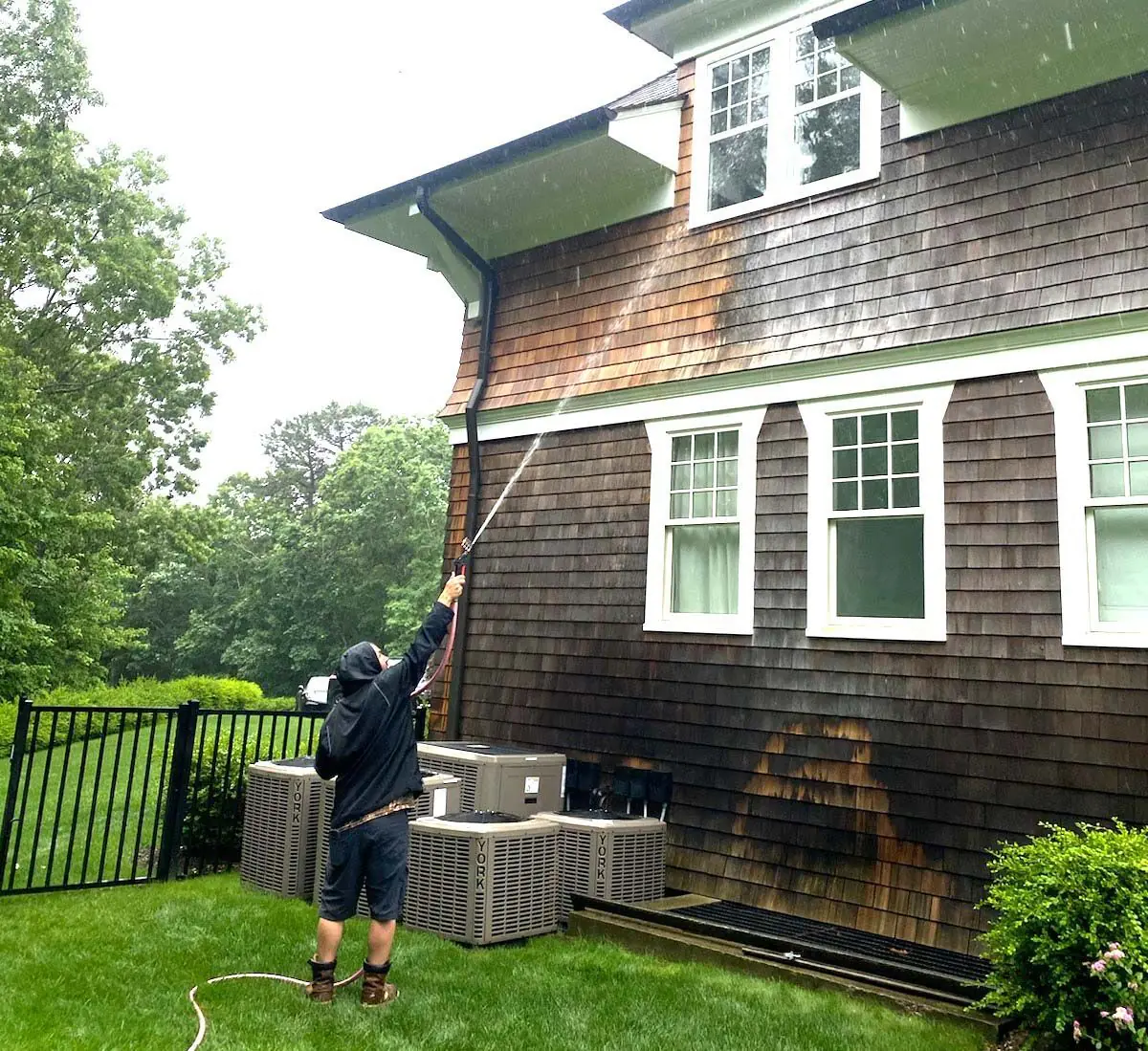
Cedar is porous and reactive. Sunlight breaks down the surface fibers and oxidizes them gray; moisture held in shade feeds algae and mildew that darken it further — usually unevenly, worst on north-facing walls.
On Long Island, salt air, humidity and mature trees speed all of it up. Left alone, the growth breaks down the wood fibers: warping, cracking and shakes that fail early.
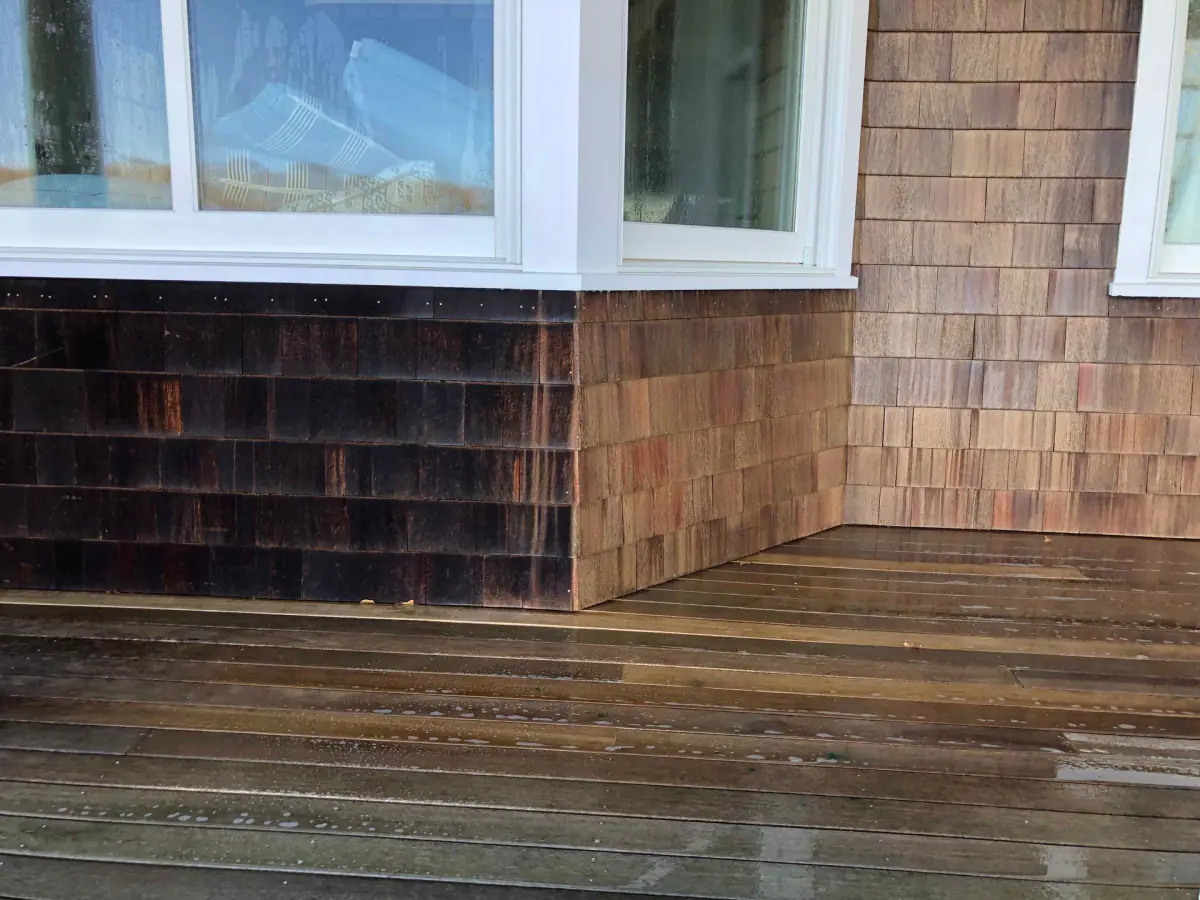
Gray or brownish-black shakes
Instead of the warm, natural cedar color.
Uneven darkening
Some sides noticeably worse than others.
Dark streaks or green patches
Mold, mildew or algae taking hold.
Water stains
Brownish or gray marks where water isn't draining off.
Why pressure washing is wrong for cedar.
High-pressure water cleans concrete. On cedar it splinters the surface fibers, strips the wood’s natural oils and forces moisture behind the shakes into the wall — it can look fine for a month and be deteriorating within a season.
Oxidation is a chemical problem, so it needs a chemical answer: a cleaning solution that breaks it down, time to work, and a low-pressure rinse.
What we clean
- Cedar shake sidingEvery elevation, including the north side.
- Cedar roofsSoft-washed like every roof — see roof cleaning.
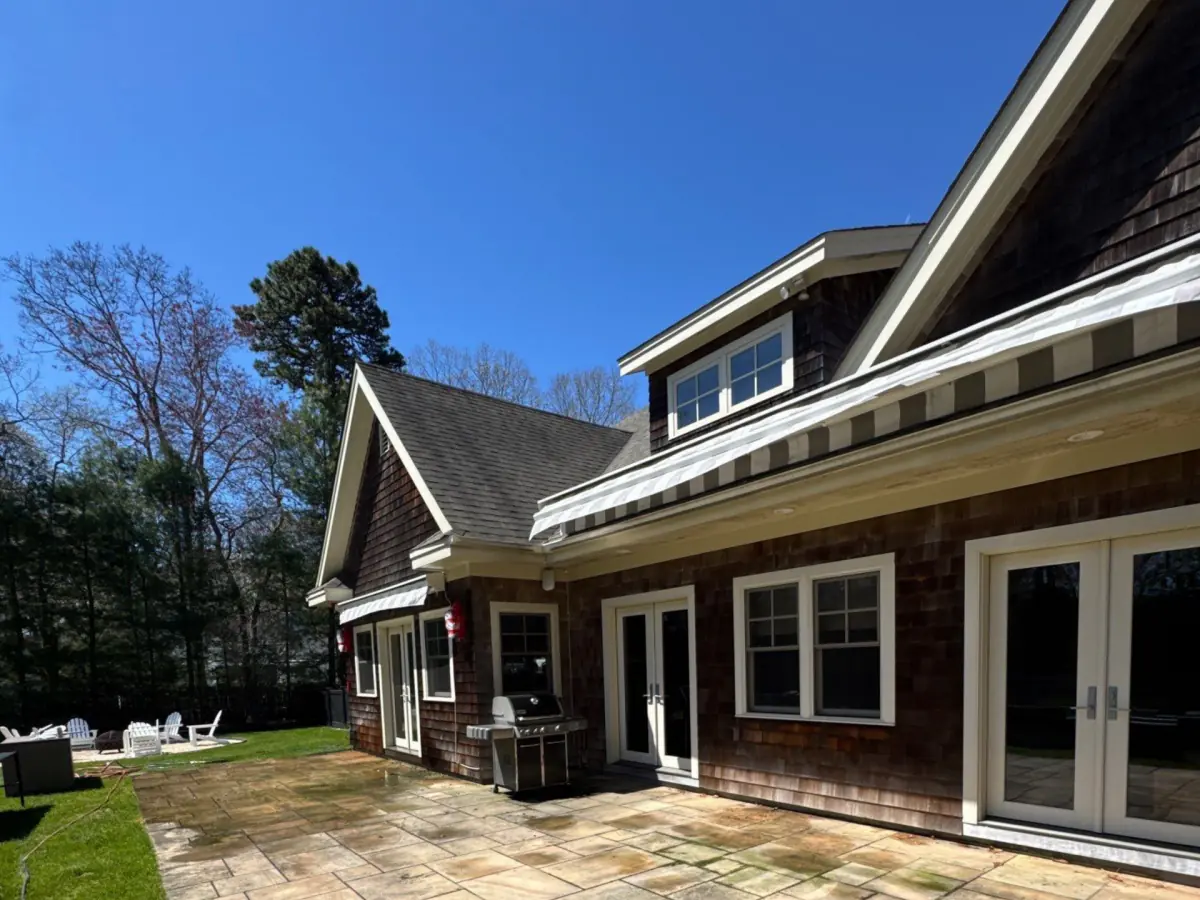
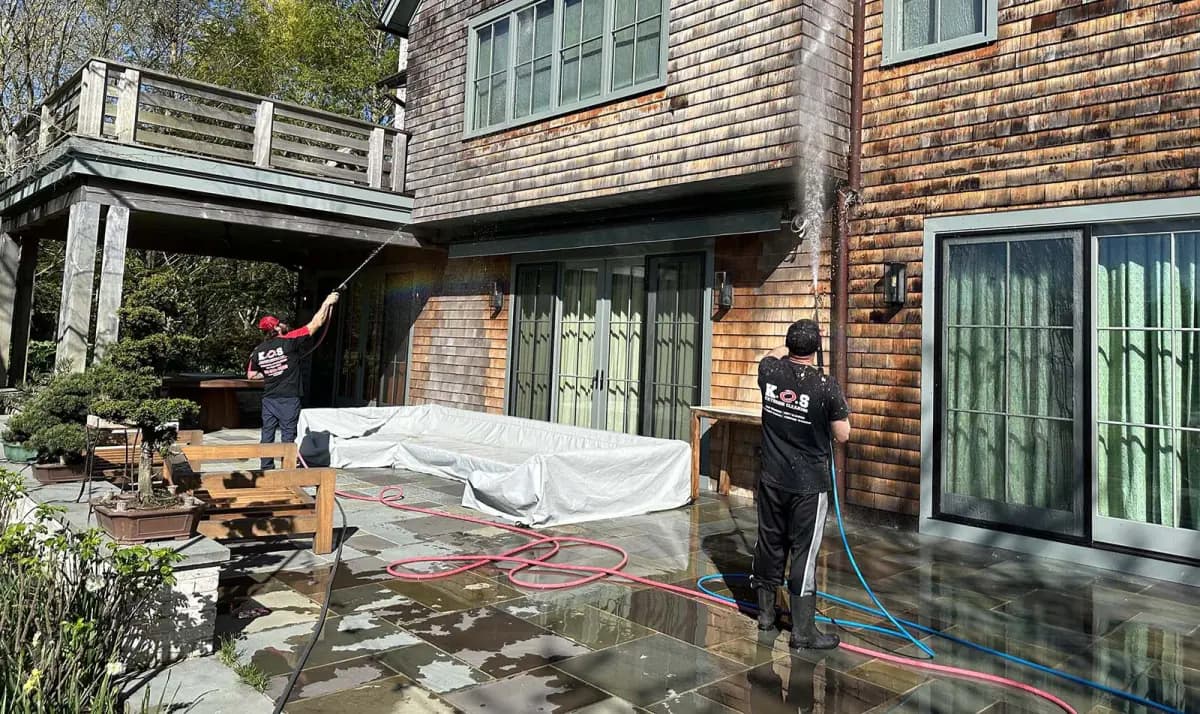
- Patios and stepping stonesHard surfaces get pressure washing, as on the Westhampton job.
How we clean cedar.
Assess the house
Every elevation checked first: which walls are oxidized, where algae has taken hold, what's shaded and what faces north.
Protect the plants
Beds and lawn against the house are rinsed first so the landscaping comes through the wash healthy.
Treat and dwell
A professional-grade solution goes on at low pressure and is given time to break down the oxidation and organic growth at the source.
Low-pressure rinse and inspect
A gentle rinse carries it all off without raising the grain, then a final inspection of every side.
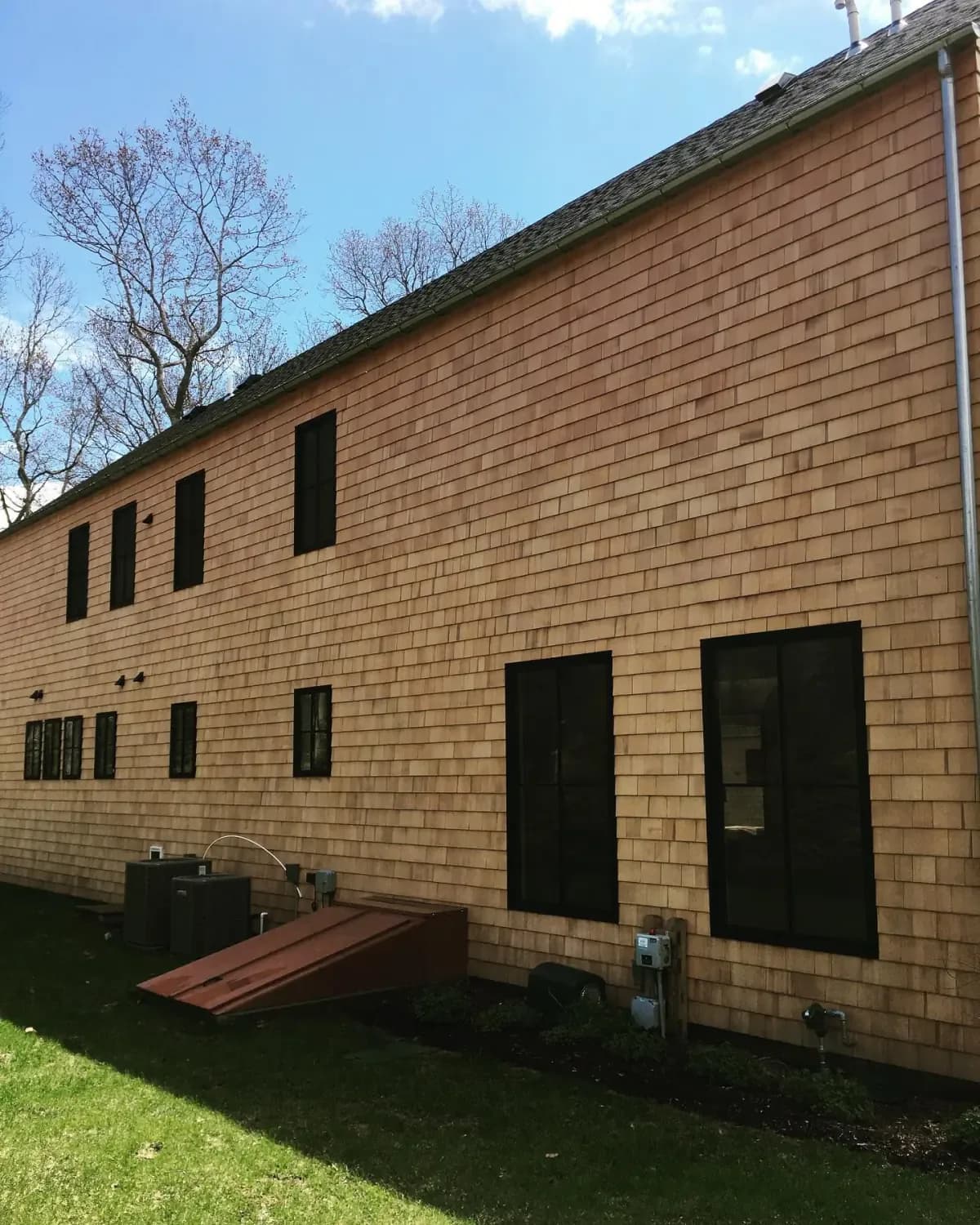
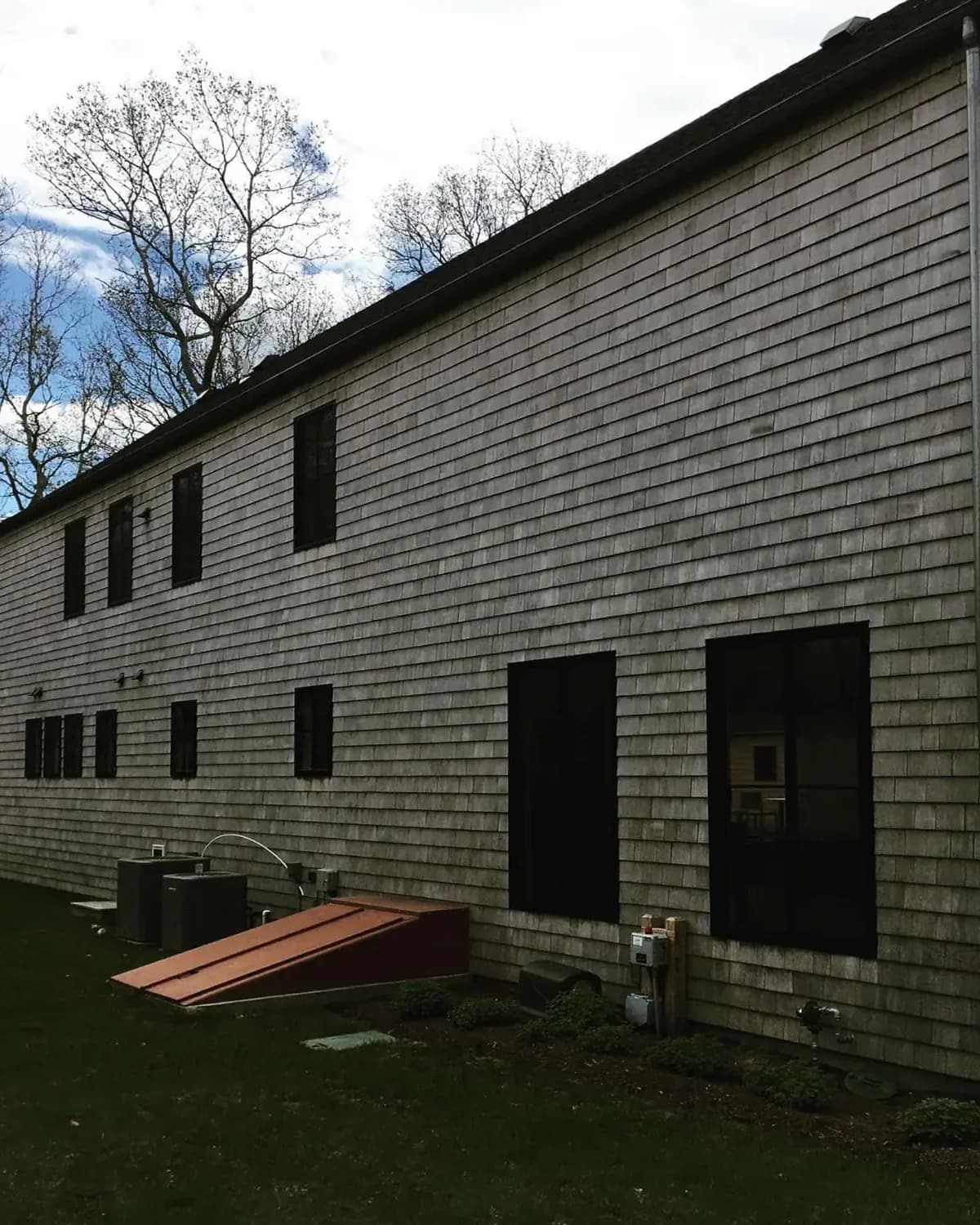
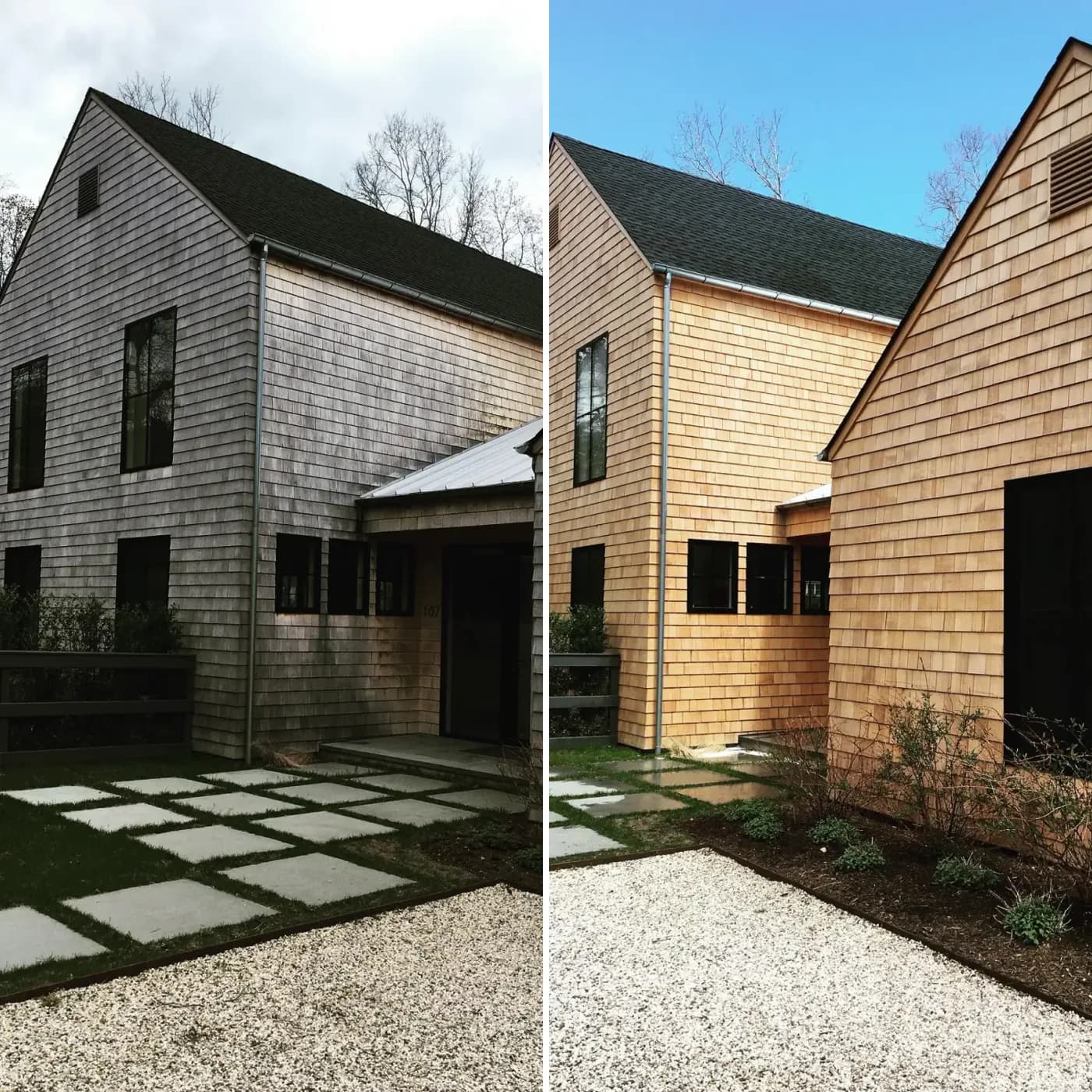
Cedar comes back.
The same Long Island wall of cedar shake, before and after a soft wash — gray back to warm brown. Drag the handle to compare.
Free estimate. The price you’re quoted is the price you pay.
On the job.
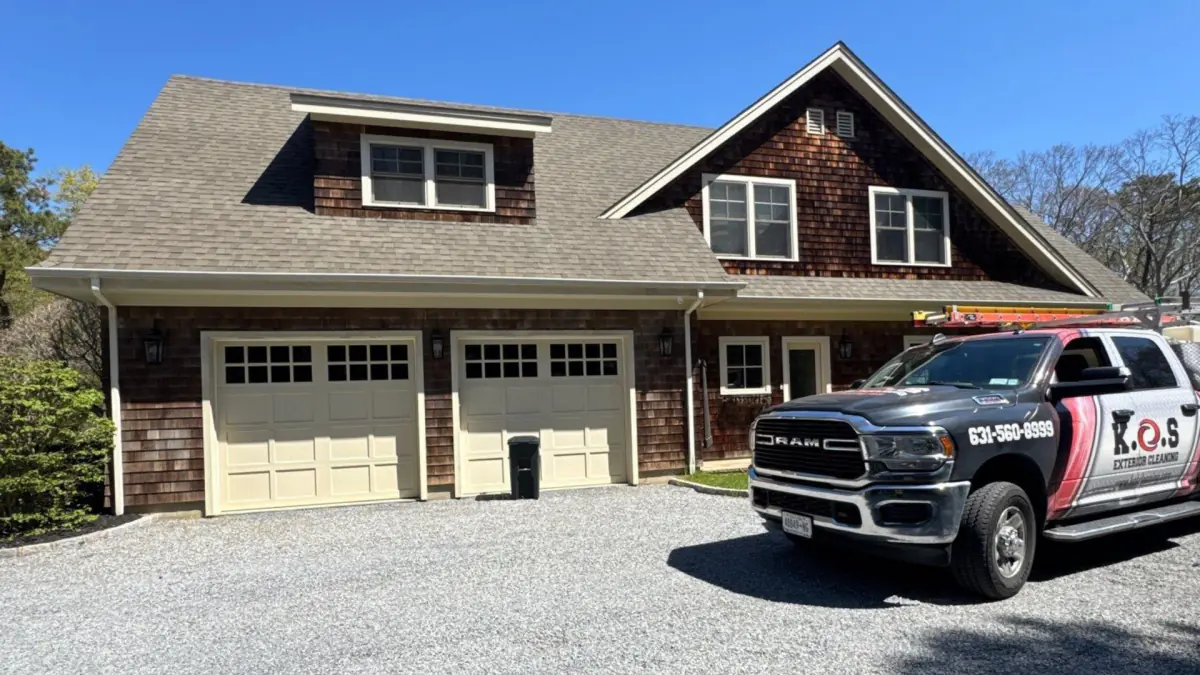
K.O.S. crews on Long Island cedar — and what it looks like when they're done.
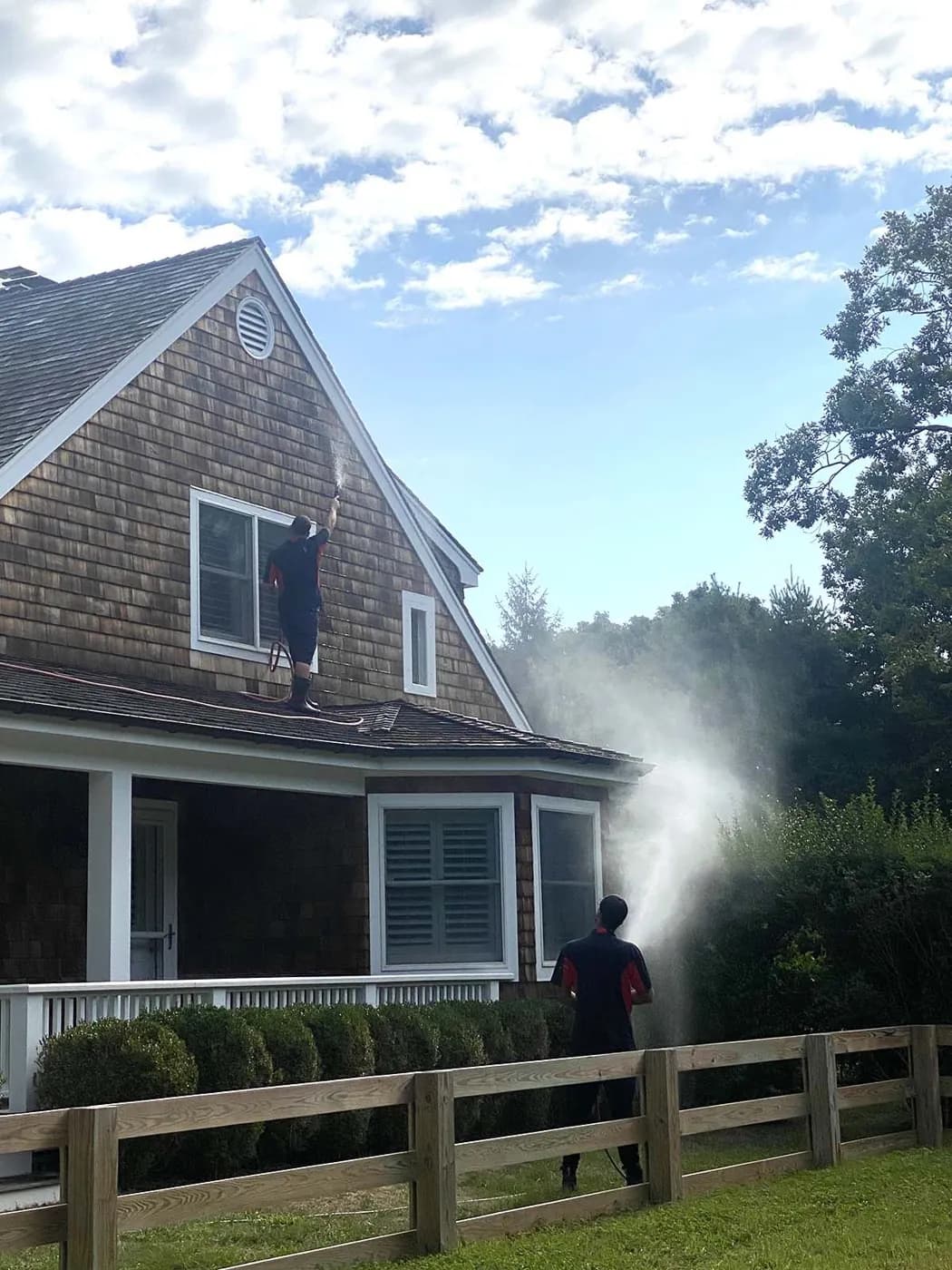
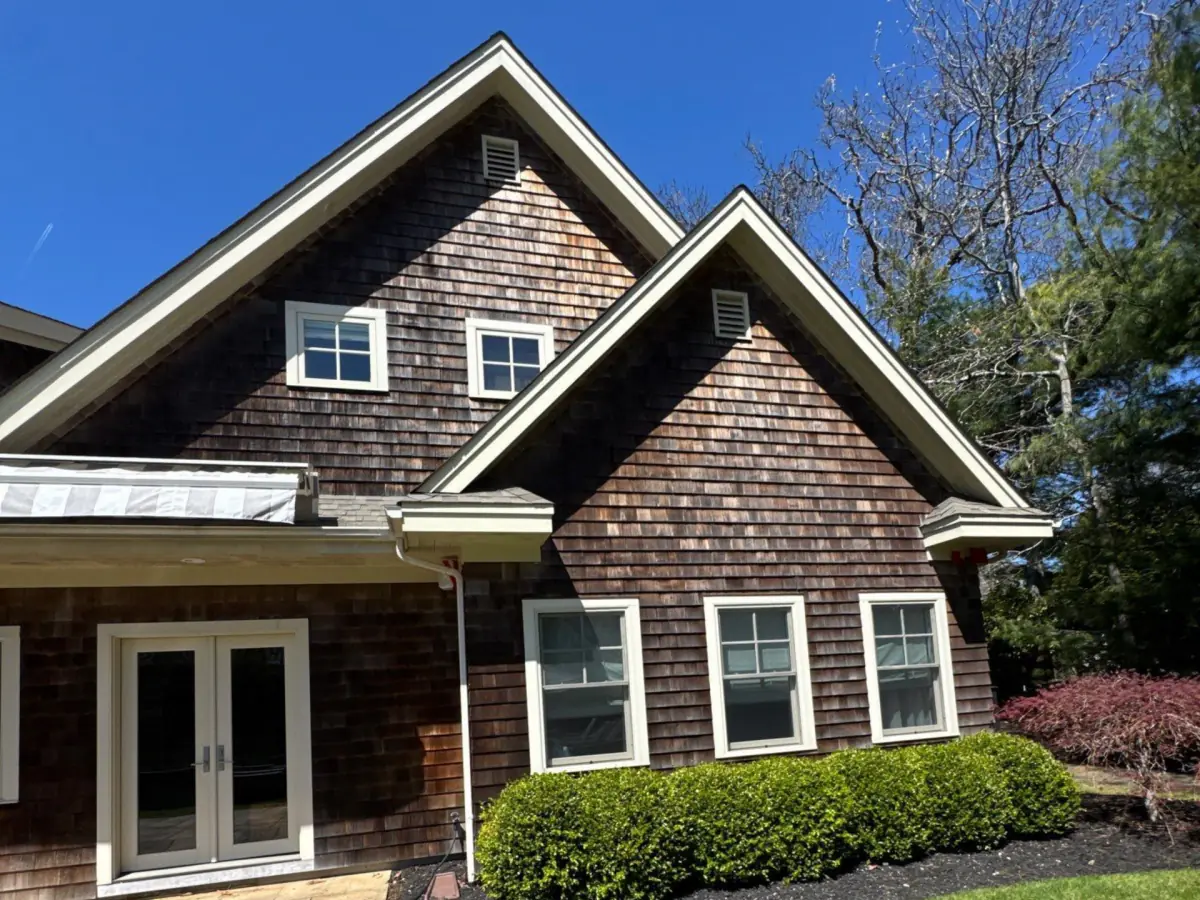
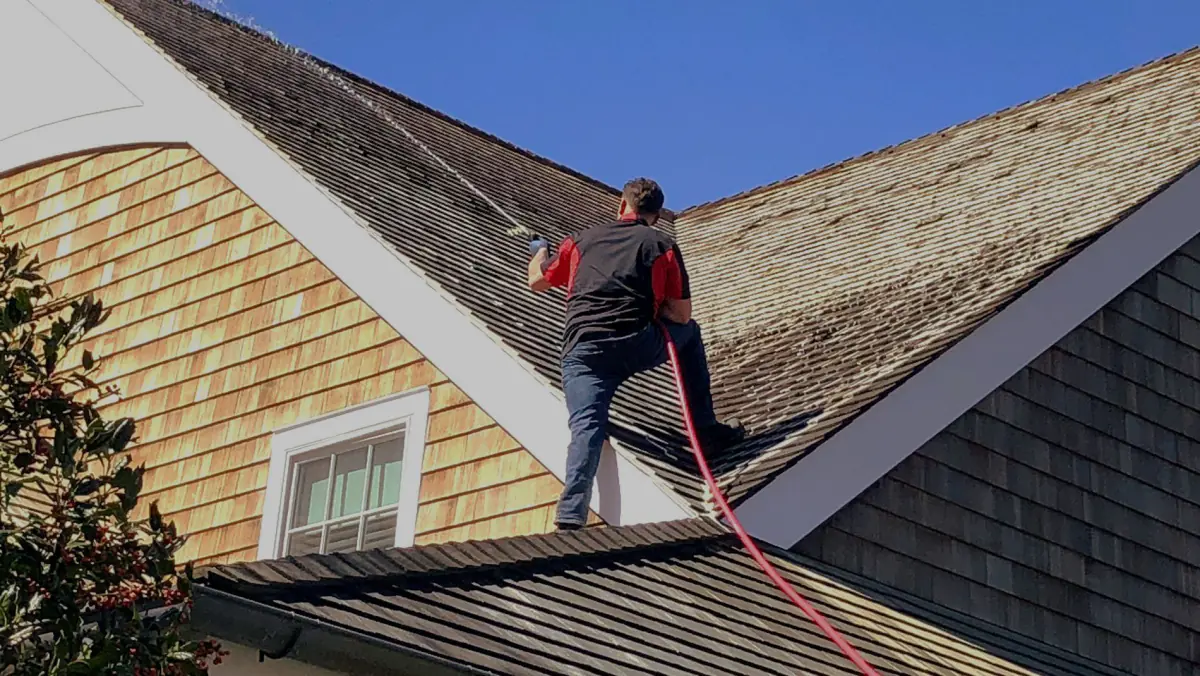
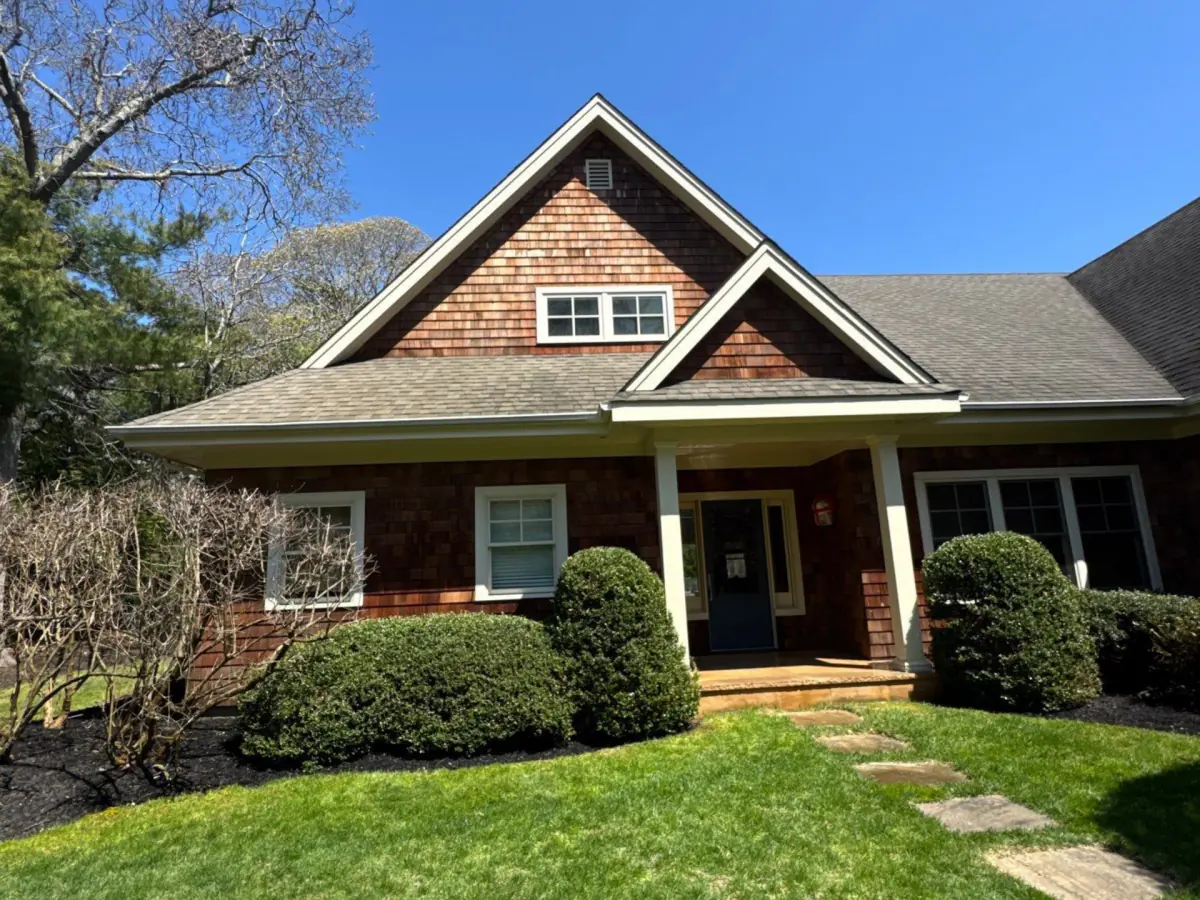
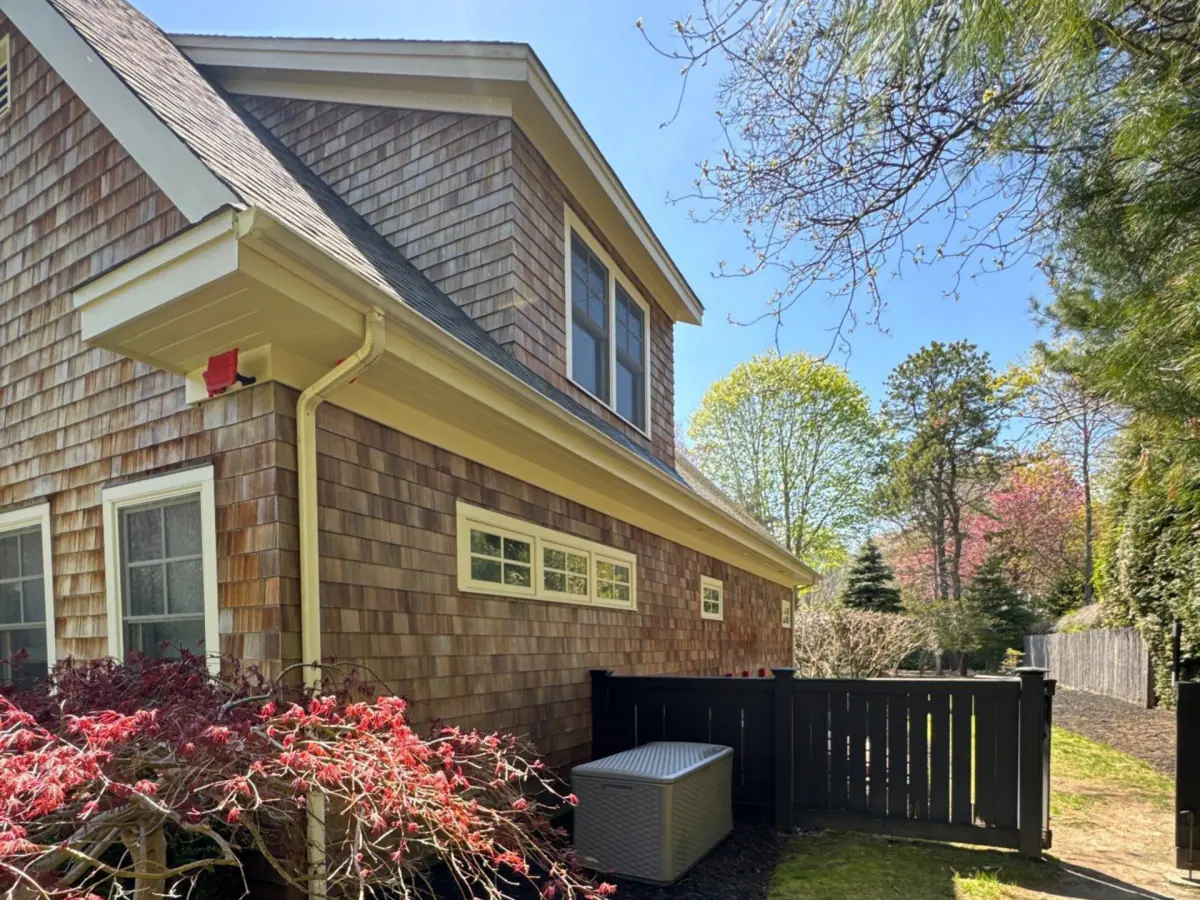
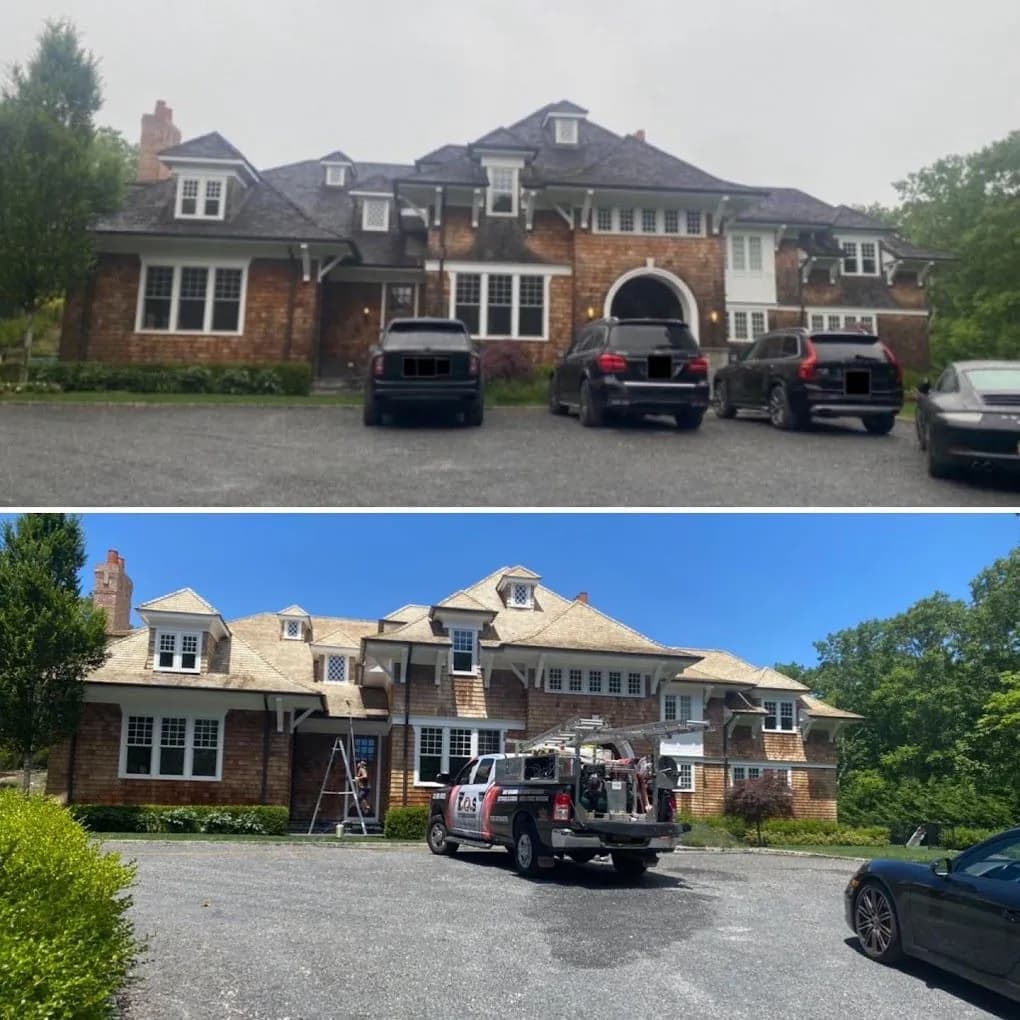
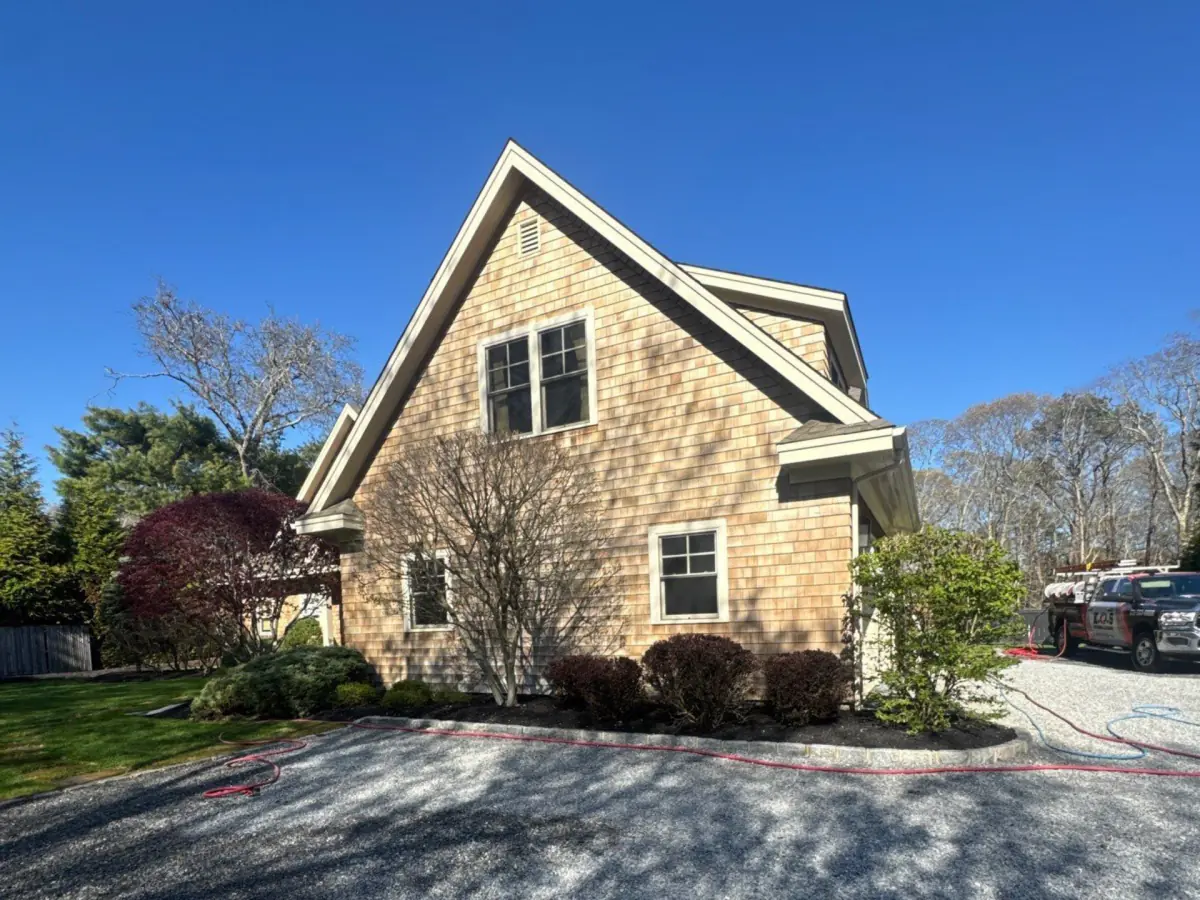
A cedar job, start to finish.
A Hamptons home's cedar shake, written up with the photos from the job.
What it costs.
There’s no flat price: a cottage and a three-story cedar house on the East End aren’t the same job.
Free estimate. The price you’re quoted is the price you pay.
Size of the house
How much cedar there is, and how many stories it runs up.
Siding, roof or both
Cedar siding, a cedar roof, or both — each adds surface to treat and rinse.
Condition
Light graying lifts quickly; years of oxidation, mildew and green growth need longer dwell time to break down.
Before you book.
Longer answers to the questions people ask before they call.
How Often Should Cedar Shakes Be Cleaned to Prevent Damage or Mold Growth?
Learn how often cedar shakes should be cleaned to prevent damage and mold growth, with top-rated K.O.S. Cleaning, serving Long Island since 2006.
Read the guide →
Cedar Shake Restoration Will Transform Your Long Island Home
If your siding is looking dull and dirty our cedar shake siding restoration services will transform your home. Learn more about cedar cleaning services on Long Island.
Read the guide →
Soft washing vs. pressure washing on Long Island: which one your house actually needs
They're not the same service, and using the wrong one is how siding cracks and paint strips. Here's which surfaces take pressure, which need low-pressure chemistry, and why most homes need both.
Read the guide →
Frequently asked questions
Straight answers on graying, pressure and how long it lasts.
Is soft washing safe for cedar shake siding?
Yes — it's designed for delicate wood like cedar. It relies on low pressure and biodegradable cleaning solutions to break down oxidation and organic buildup rather than blasting the surface.
Why is my cedar turning gray or black?
Two things at once: UV exposure breaks down the surface fibers and oxidizes them gray, while moisture held in shaded areas feeds algae and mildew that darken the wood — often unevenly, worst on north-facing walls.
Can pressure washing ruin cedar shake?
It can, and it frequently does. High-pressure water splinters the surface fibers, strips the wood's natural oils and can force moisture behind the siding into the wall cavities.
How often should cedar shakes be cleaned?
Every 1–3 years. Salt air, humidity and shade speed up growth, so waterfront homes, houses under mature trees and north-facing walls need it sooner.
How long does a cedar soft wash last?
For most Suffolk County homes, one to three years, depending on shade, how close the house is to the water, tree cover and which walls face north.
Do you clean cedar roofs too?
Yes — cedar shake siding and cedar roofs, both soft-washed.
Get a free cedar cleaning quote.
Real person · free estimates · no obligation
Call for a quote(631) 560-8999