

What causes water damage.
Where the water comes from decides where it goes — and how much has to come out.
Burst & frozen pipes
Pipes freeze and split in a cold snap; supply lines, fittings and boilers fail without warning. The water runs inside walls and down through floors before anyone sees it — one failed bathroom supply line in Westhampton reached multiple levels, the ductwork and the garage.
Flooded basements
Heavy rain overwhelms drainage in low-lying areas. Soil saturates when gutters clog or the yard slopes toward the house, groundwater rises above the foundation where the water table is high, and a failed or missing sump pump lets it all in.
Roof leaks & ceiling damage
Worn roofing, missing shingles, clogged gutters and ice dams let rain and snowmelt in. It stains ceilings, soaks insulation and runs down inside walls — and fixing the roof doesn't dry what already got wet. In Glen Head, a leak that had been repaired left hidden moisture and mold behind basement drywall.
Water heater & appliance leaks
Water heaters, washing machines, dishwashers and ice makers leak slowly or all at once. A leak in a basement can go unnoticed until it becomes a mold job — as it did under one Westhampton water heater.
What water damage restoration includes.
Water damage restoration is the extraction of standing water, removal of materials that can’t be saved, and monitored drying of the structure to IICRC standard — documented for your insurance claim.
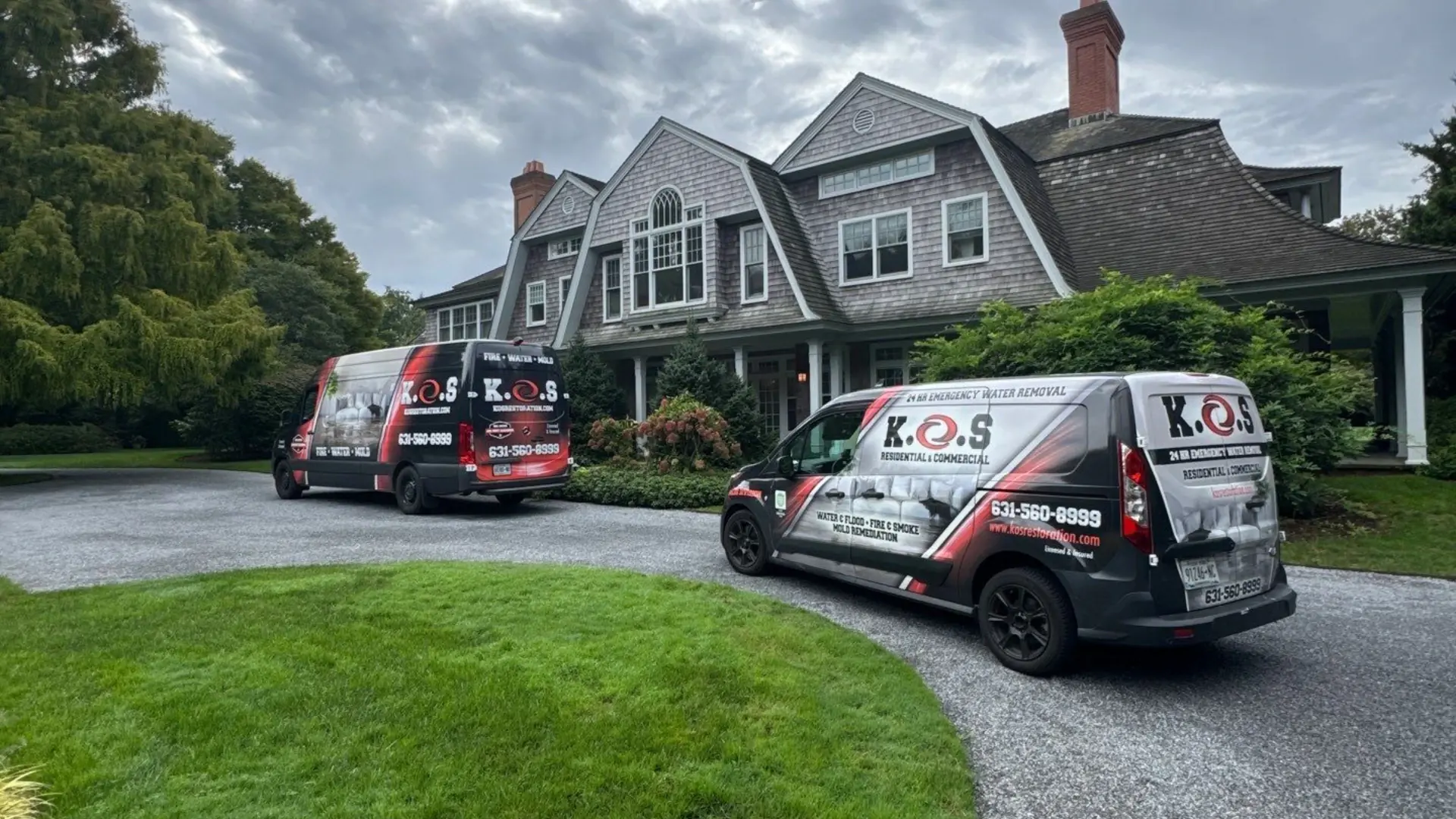
On Long Island, K.O.S. Restoration does it in five steps, with a crew on site in 45 minutes and most homes dry in 3–5 days.
Extraction
Truck-mounted units and submersible pumps pull standing water. This is the hour that decides how much drywall and flooring survives.
Moisture mapping and documentation
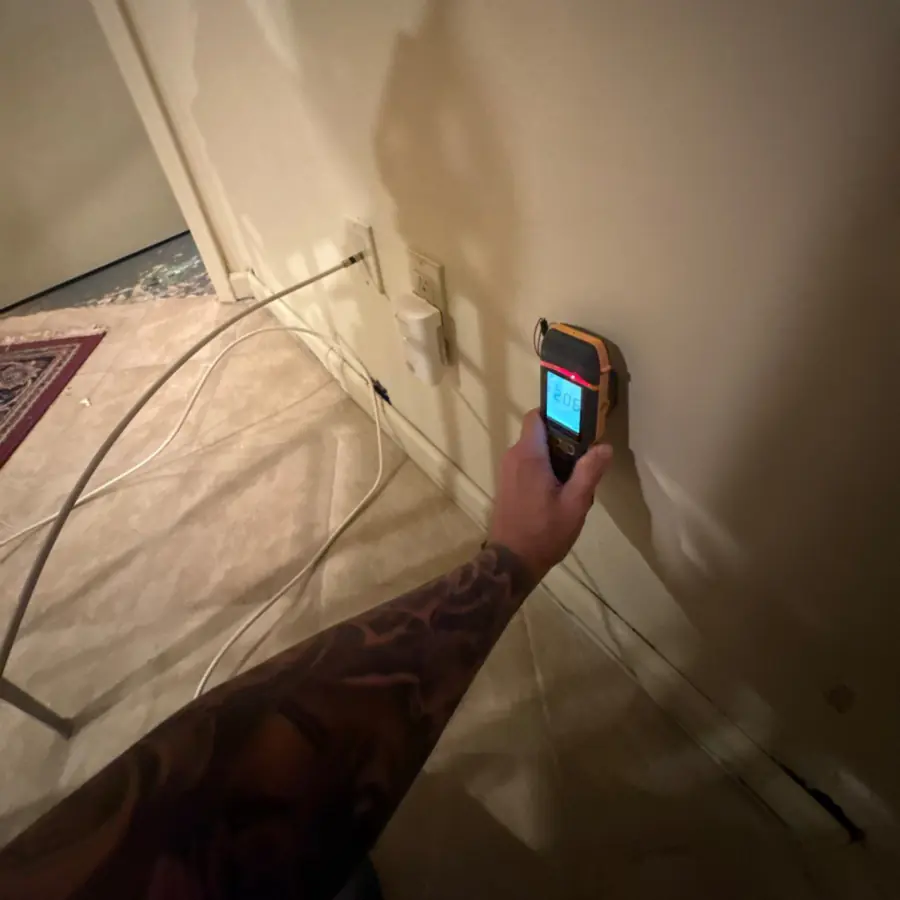
Pin and pinless moisture meters, a thermal camera for water inside walls, and photos of everything — the record your adjuster's Xactimate estimate is built from.
Containment and removal
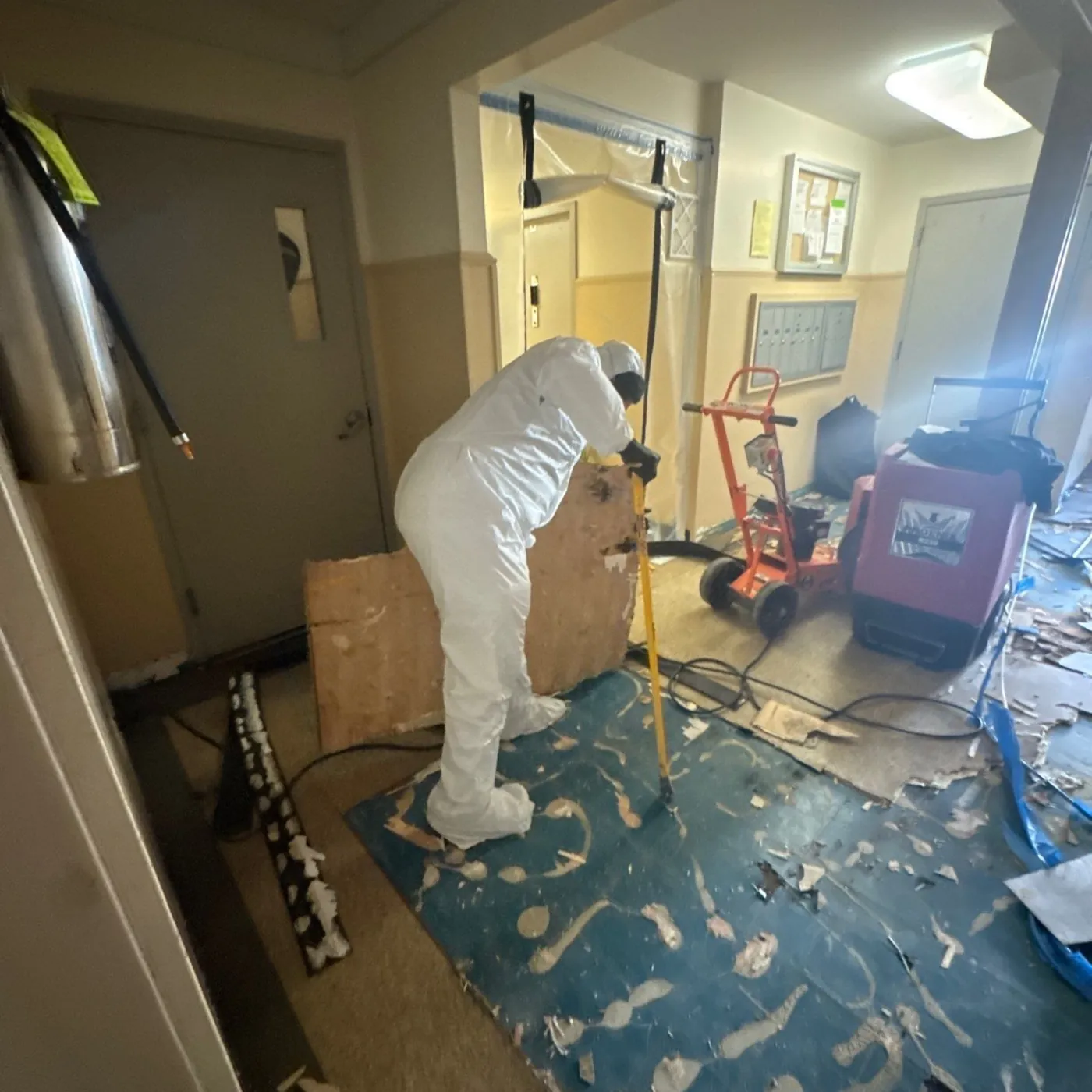
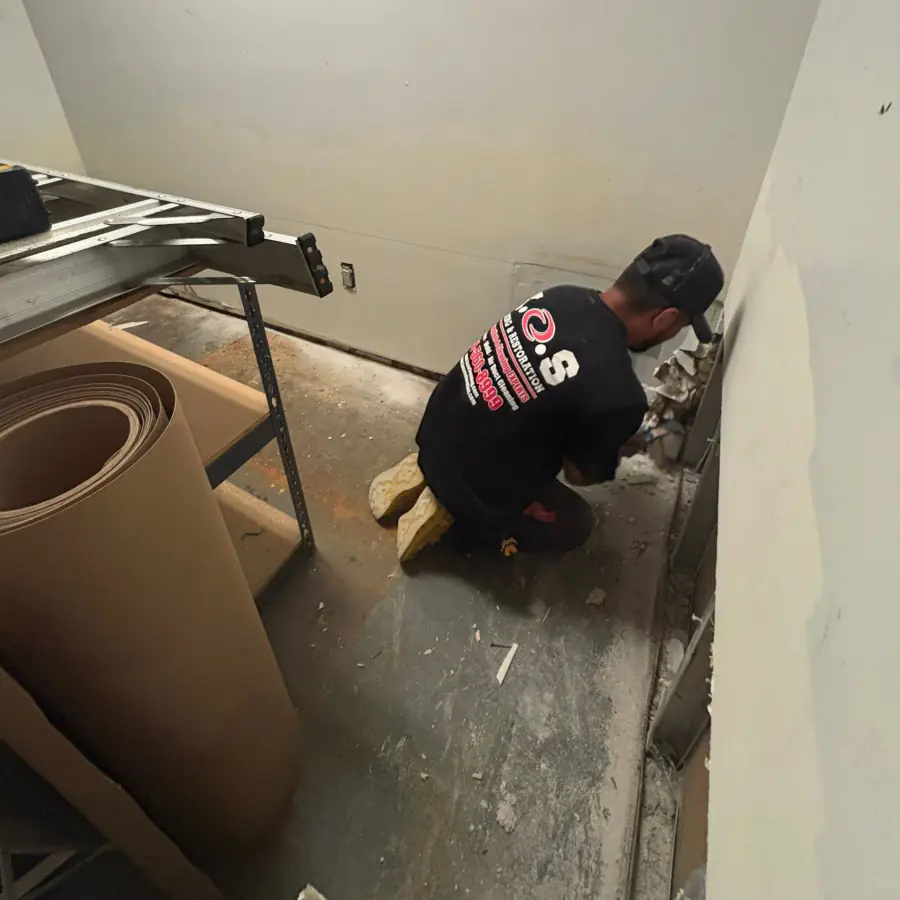
Wet carpet pad, swollen subfloor, and the bottom of affected drywall (a flood cut) come out; the rest is treated with an antimicrobial.
Drying to a target, not a schedule
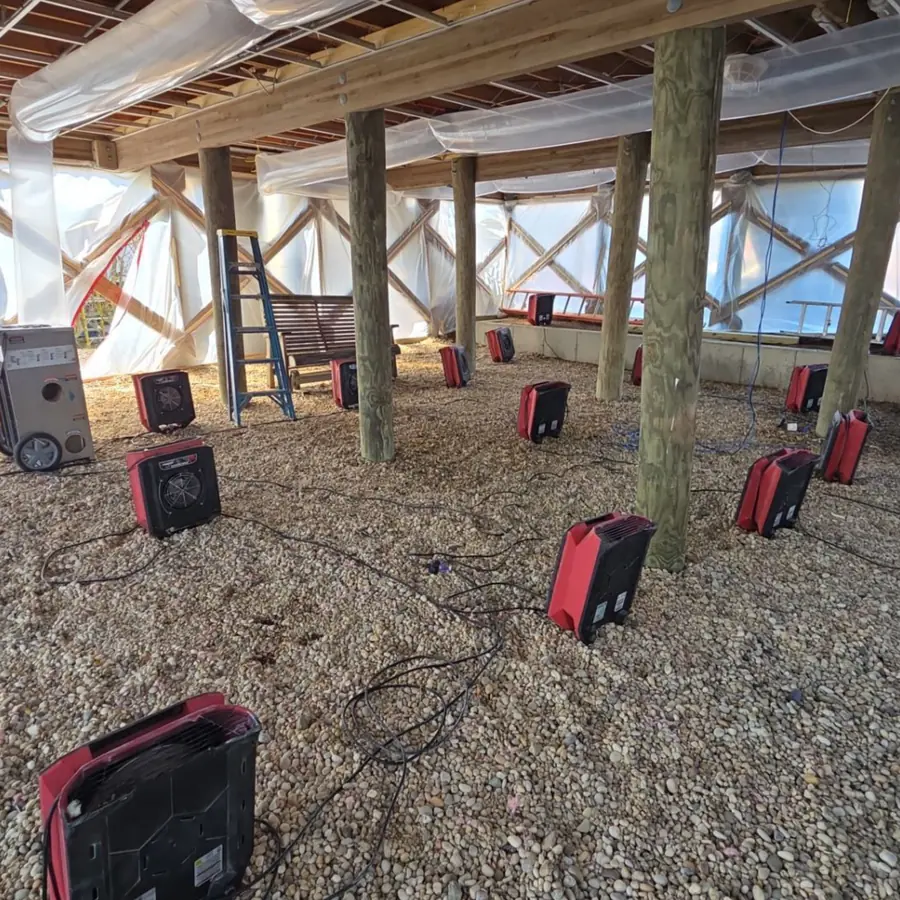
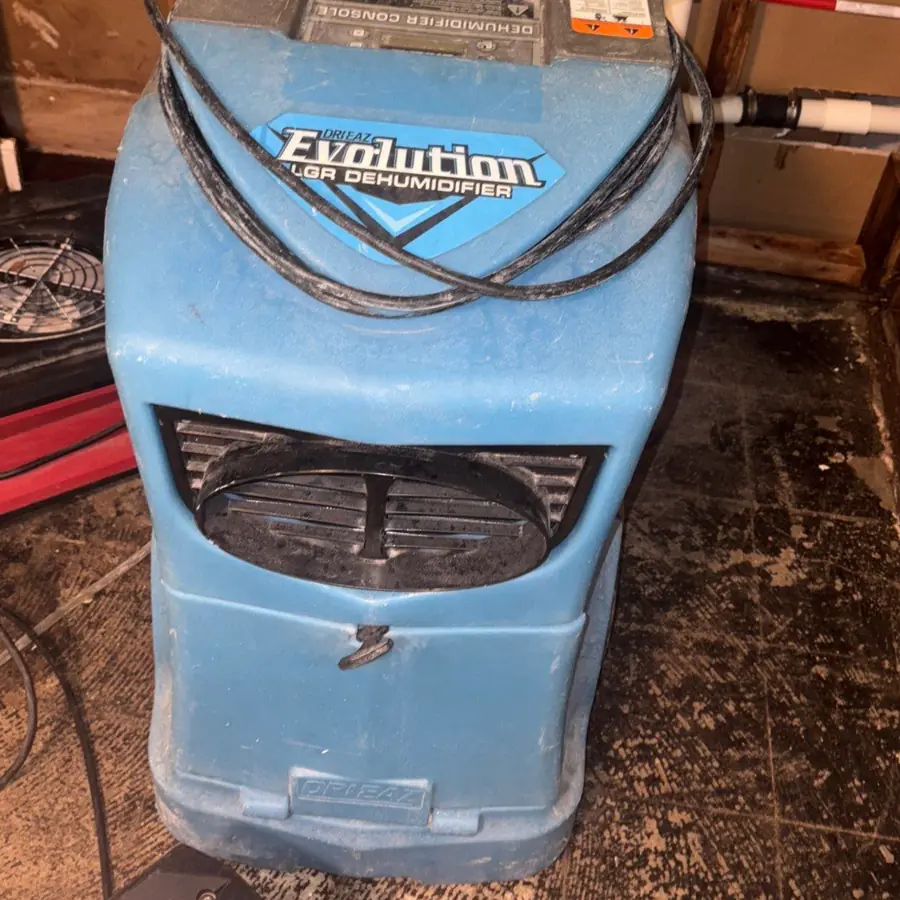
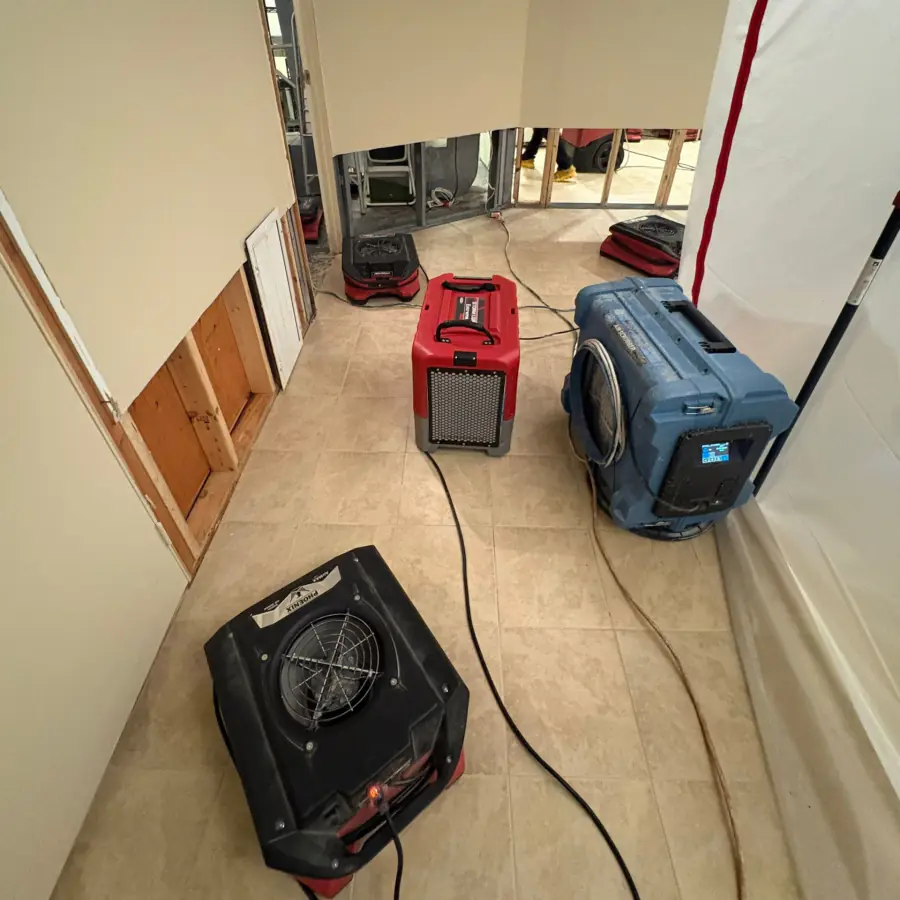
LGR dehumidifiers and axial air movers placed by the IICRC S500 formula for the room's volume and materials, then monitored daily until readings match dry standard.
Verification and handoff
Final readings logged, equipment removed, and a written repair scope so your contractor — or your insurer — knows exactly what to put back.
What it costs, and how long it takes.
Most residential water losses on Long Island dry in 3–5 days. Cost depends on the category of water, how long it sat, the size and materials of the area, and what has to be removed.
For sudden losses it’s usually covered by homeowners insurance — you pay your deductible, and K.O.S. writes the estimate in Xactimate, the software your adjuster uses.
The IICRC grades water by what's in it, and the grade decides how much has to be removed rather than dried.
- Category 1 — clean supply-line water: extract and dry
- Category 2 — grey water from appliances: antimicrobial treatment, some removal
- Category 3 — sewage or floodwater: containment, full removal of porous materials
Time is the multiplier. The same leak costs very different amounts depending on when it was found.
- Within hours: extracted and dried, little removed
- 24–48 hours: mold growth begins; drywall and subfloor have wicked
- A week or more: the job becomes remediation as well as drying
A tiled bathroom dries fast. Finished basements, hardwood, and cabinetry take longer and need more equipment.
- Tile and concrete: fastest
- Carpet and pad: pad usually replaced
- Hardwood and cabinets: specialty drying, more days
Flood-cut drywall, carpet pad, and swollen subfloor are removed and photographed, so the repair estimate is exact and nothing is argued later.
A crew is on site in 45 minutes. Truck-mounted extraction pulls the standing water and the loss is stopped from spreading.
Moisture readings and photos are taken for the claim; LGR dehumidifiers and air movers are placed for the room's volume and materials.
Readings are logged every day and equipment is moved or adjusted as they drop. Most Long Island homes are dry in 3–5 days.
Final readings logged, equipment removed, and a written repair scope delivered. Repairs — drywall, flooring, paint — are a separate phase scoped from the same documentation.
Sudden, accidental water damage — a burst pipe, a failed supply line, an appliance leak — is covered under most homeowners policies. Gradual leaks and groundwater flooding often aren't.
On a covered loss, your deductible. K.O.S. bills the carrier directly.
The estimate is written in Xactimate — the same system your adjuster uses — from the moisture readings and photos taken on day one, so the scope isn't disputed later.
Call (631) 560-8999and a crew inspects at no charge. You’ll know what’s wet, what has to come out, and what the claim looks like before any work starts.
What we can save.
Most water losses come down to four materials. Dried early and correctly, all four usually stay — which is the difference between a restoration bill and a renovation.
Hardwood floors
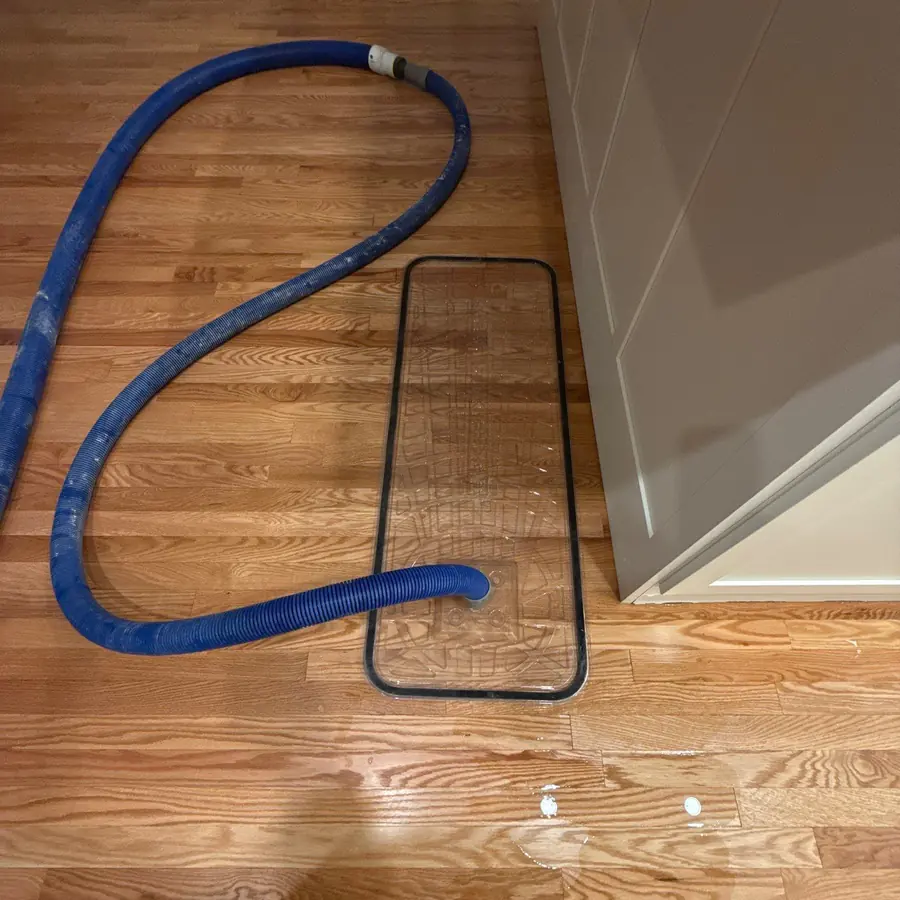
Cupping starts within days. Floor-mat drying systems pull moisture up through the boards so most hardwood can be saved rather than replaced — if drying starts early.
Guide · Drying hardwood floors quickly
Carpet and pad
Clean-water losses: carpet lifted, pad replaced, carpet dried in place. Grey or black water: carpet and pad removed and documented for the claim.
Cabinets and built-ins
Toe-kicks pulled and cavities dried with directed air so kitchen and vanity cabinets stay — the difference between a repair and a remodel.
Structural drying
Framing, subfloor, and wall cavities dried to IICRC standard with monitored equipment, so what's rebuilt on top of them stays dry.
Guide · Structural drying, explained
Commercial-grade drying, at your door in 45 minutes.
Radial air movers, LGR dehumidifiers, and truck-mounted extraction — enough to dry a whole basement, fast.
Every setup is sized to the room by the IICRC S500 formula, not dropped in the middle of the floor: air movers angled across every wet surface, dehumidifiers matched to the space and the moisture load, and drying mats for hardwood.
Water damage on Long Island is different.
K.O.S. Restoration has dried homes across Suffolk, Nassau, and Queens from Bellport since 2006. The geography — a high water table, cesspools, coastal storms, and old housing stock — shapes how we work every job.
Crews dispatch from Bellport. Find your town on the service-area pages:
- Suffolk County
- The Hamptons & East End
- Nassau County
- Queens
The water table is high — and higher on the South Shore
Bellport, Patchogue, Mastic, and the barrier-island towns sit a few feet above groundwater. Basements and crawlspaces take on water from below during nor'easters and spring thaw, not just from pipes.
Most of Suffolk is on cesspools and septic
A backed-up cesspool after heavy rain is one of the most common calls we get east of Route 112, and it's Category 3 water — a sewage job, not a mop-up.
January and February are burst-pipe season
Uninsulated pipes in exterior walls, garages, and summer homes left at 50°F freeze in the first hard cold snap. Our Patchogue and Mastic Beach jobs below both started that way.
Post-war houses hide water well
Plaster over lath, finished basements, and slab-on-grade capes from the 1950s–70s let water travel unseen. We find it with moisture meters and thermal imaging, not by guessing.
Featured work.
Roof leak water damage in Glen Head.
Glen Head, NY · July 2026 · Roof leak + mold
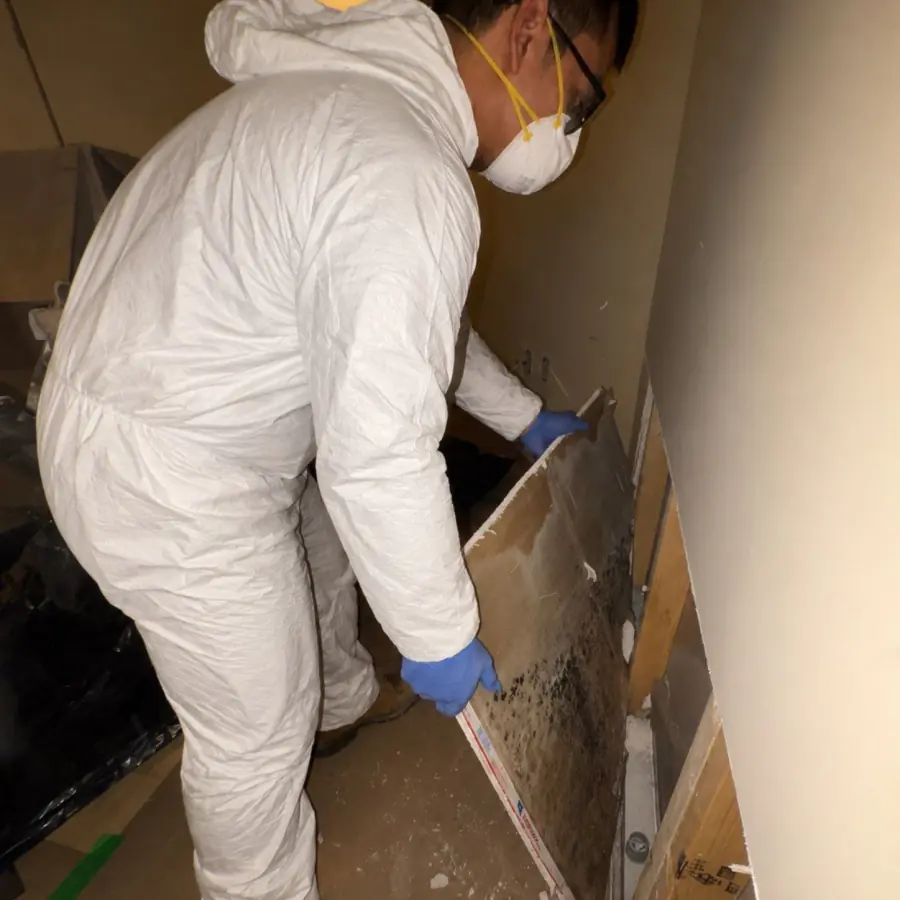
A roof leak that had already been repaired. A discoloured patch on a finished-basement wall, and a smell that hadn't been there before. No standing water, no burst pipe — nothing that looked like an emergency. When the crew pulled the first panels of drywall, the front was clean and the back was covered in mold.
The wall was moisture-mapped before a single cut, flood-cut to the dry line, remediated inside sealed containment to IICRC S520, and dried to the numbers — daily readings against the home's own dry standard, not a schedule.
Insurance handled
We bill your carrier directly with Xactimate — the same software your adjuster uses.
Sudden water damage is covered under most homeowners policies. You pay your deductible; we handle the rest.
- State Farm
- Allstate
- Liberty Mutual
- GEICO
- USAA
- Travelers
- Mercury
- Mutual of Omaha
- Zurich
300+ neighbors have already called.
A 5.0 rating across Suffolk County. Read every review on Google.
Water damage questions
The questions people ask Google about water damage restoration on Long Island — answered plainly.
What does water damage restoration include?
Extraction of standing water, moisture mapping and documentation, removal of materials that can't be dried (wet pad, swollen subfloor, flood-cut drywall), antimicrobial treatment, monitored structural drying with dehumidifiers and air movers, and a written scope for repairs. K.O.S. handles all of it except the rebuild, which we scope for your contractor.
How long does it take to fix water damage in a house?
Drying takes 3–5 days for most Long Island homes, monitored daily until materials read dry. Repairs — drywall, flooring, paint — are a separate phase afterward and depend on what had to be removed.
What do water restoration companies charge?
Cost depends on the category of water, how long it sat, the size and materials of the area, and what has to be removed. For sudden losses homeowners insurance usually covers the restoration and you pay your deductible. K.O.S. inspects free and writes the estimate in Xactimate, the same software your adjuster uses, so there's nothing to negotiate later.
How can you tell if water damage is permanent?
With a moisture meter, not by looking. Drywall that reads wet after drying, subfloor that has delaminated, and hardwood that has cupped more than the boards can relax are replaced; almost everything else can be dried and kept if drying starts within a day or two.
Can water damage be restored?
Yes — the sooner the better. Water extracted and drying within 24 hours usually means no mold and minimal material loss. After 48 hours mold growth begins, and after a week the job becomes remediation as well as drying.
Will my insurance cover it?
Sudden, accidental water damage — a burst pipe, a failed supply line, an appliance leak — is covered under most homeowners policies. Gradual leaks and groundwater flooding often aren't. We document the loss and bill your carrier directly.
Do I need to leave my home?
Usually not. Most water losses are contained to one area and the equipment runs while you live around it. We'll tell you plainly if a sewage loss or heavy mold makes relocating the safer call.
Can water damage cause mold?
Yes, within 24–48 hours in Long Island humidity. Fast drying is the best mold prevention there is. If mold has already started, K.O.S. is IICRC-certified in mold remediation and can handle it in the same engagement — see our mold remediation page.
Guides.
Once the water’s off and the crew is on the way, these four answer what comes next: what to do in the first hour, what your policy will and won’t pay for, where water hides after the visible leak is fixed, and how fast mold turns a drying job into a remediation.
Written by the people who show up, from jobs on Long Island — not a national franchise’s content team.
What to do when you discover water damage
The first hour, in order: shut the water, kill the power to wet rooms, photograph everything before you touch it, and what not to do while you wait for the crew.
Read the guide →
Insurance claims for water damage restoration
What sudden-loss policies cover and what they don't, how the deductible works, and why documentation from day one decides the claim.
Read the guide →
Signs of hidden water damage
Water travels inside walls and under floors. The stains, smells, and soft spots that mean it's still there — often a floor away from the leak.
Read the guide →
Mold risks after water damage
Mold starts within 24 to 48 hours of a loss. Why the clock matters, where it grows first, and how remediation differs from drying.
Read the guide →
All water damage guides →
Every minute the water sits, it spreads.
Real person · 24/7 · 45-minute response
Start the clock(631) 560-8999