
Where the backup comes from.
Where it came from decides who fixes the cause — and what has to come out.
Sewer backups & main-line clogs
Clogged or collapsed lines — tree roots, debris, old plumbing — push sewage back up through the lowest drain, usually a finished basement. Where there are sewers (much of Nassau, western Suffolk and Queens), a nor'easter can overload the system and back it up through floor drains block by block.
Cesspool & septic overflows
Roughly three-quarters of Suffolk homes are on cesspools or septic, not sewers. Heavy rain on the South Shore's high water table floods the pool, and the lowest drain in the house is where it comes out. Your cesspool company pumps and repairs the system; K.O.S. cleans up what came inside.
Toilet overflows & failed lines
Upstairs toilets, ejector pumps and lines under the house. On tile, a same-day call is quick to extract and clean — the cost is in what's under the tile and behind the vanity if it sat. A failed line under the house means soil removal and a new vapor barrier.
What sewage cleanup includes.
Sewage cleanup is the containment and extraction of Category 3 water, removal of every porous material it touched, cleaning and sanitizing of the hard surfaces that remain, and drying of the structure to a measured standard — with the contaminated waste disposed of as such.
On Long Island, K.O.S. Restoration does it in five steps to the IICRC S500 standard, in full protective equipment, with a crew on site in 45 minutes. The plumbing or cesspool repair is a separate trade; we’ll tell you who to call.
Stop the source, seal the area
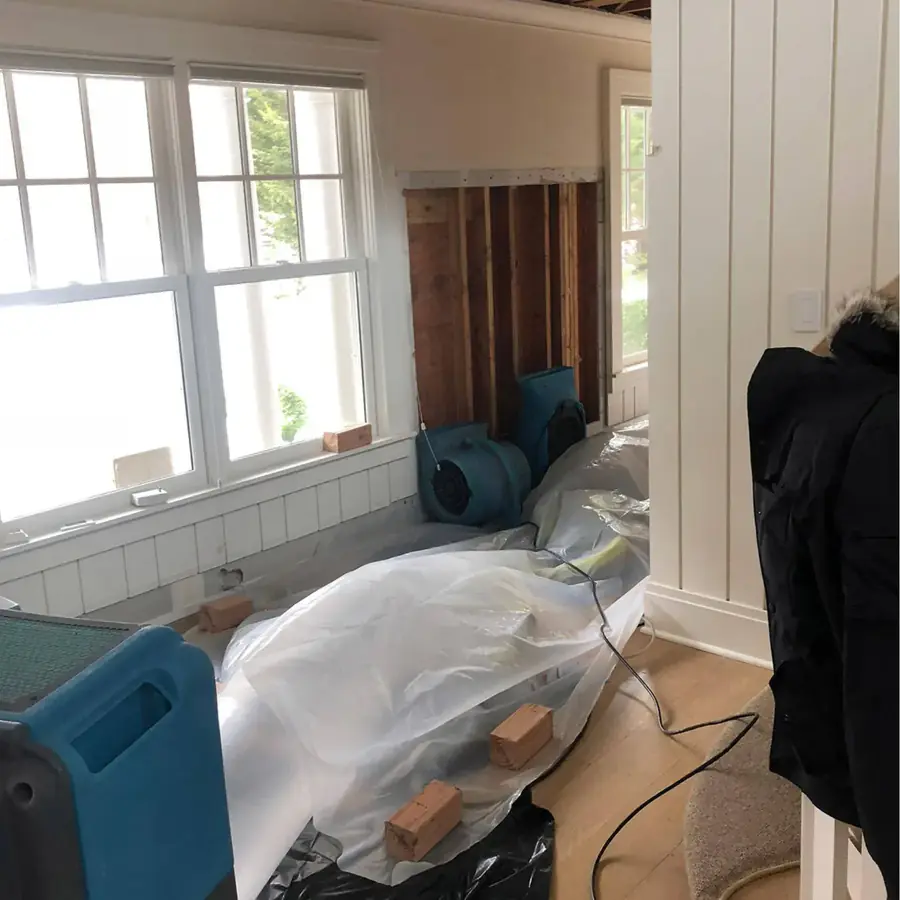
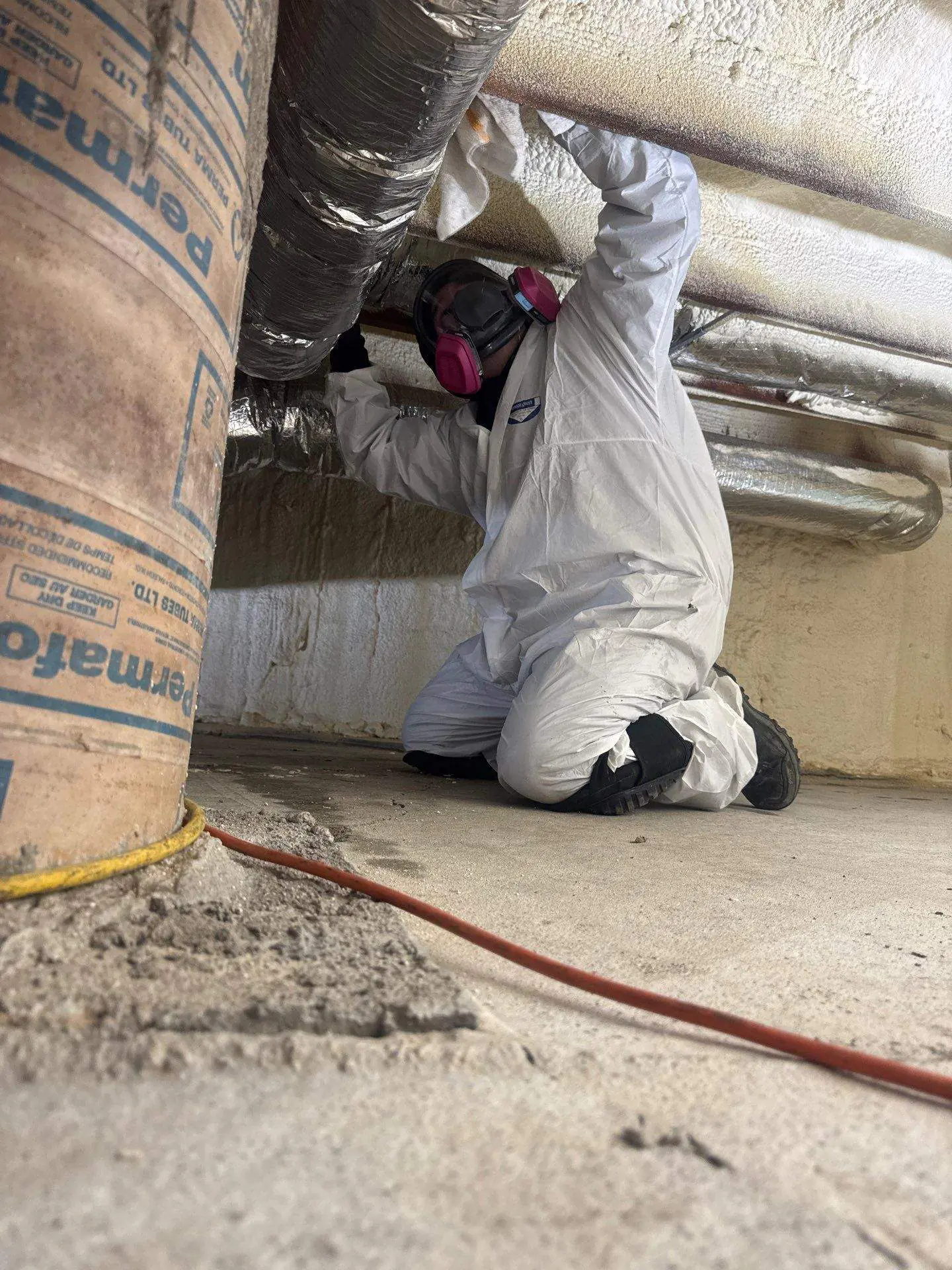
Your plumber or cesspool company stops the backup; K.O.S. seals the affected rooms, shuts down the HVAC so nothing aerosolizes through the ducts, and sets up negative-air scrubbers. Crews work in full PPE — this is Category 3 water.
Extract and remove
Standing sewage pumped and extracted. Then everything porous it touched comes out: carpet and pad, drywall to above the water line, insulation, cardboard, upholstered contents, and in crawlspaces the soil and vapor barrier. Bagged, sealed, and disposed of as contaminated waste.
Clean, then sanitize
Two separate passes, in that order. Hard surfaces — concrete, framing, tile, sealed wood — are cleaned of solids and residue first, then treated with an EPA-registered, IICRC-rated antimicrobial. Sanitizing a dirty surface doesn't work; that's why bleach on a mopped floor fails.
Dry to a standard
Dehumidifiers and air movers run until framing and slab read dry — the same structural drying as any water loss, because the moisture left behind is what grows mold in 24 to 48 hours.
Deodorize, document, hand off
Odor is treated at the source materials, not masked. Photos, moisture logs, and the inventory of what was removed go to your adjuster; a written scope goes to your contractor for the drywall and flooring that go back.
What it costs, and how long it takes.
Most sewage losses on Long Island are contained, cleaned, and dry inside a week. Cost depends on how much came up, where it went, how long it sat, and what has to be removed — and Category 3 means more is removed than with clean water.
Sewer backup is usually an endorsement, not standard coverage. Check your policy for it; if it’s there, K.O.S. documents from day one and bills your carrier directly.
A toilet overflow onto tile is hours; a main-line backup through a finished basement is days. Sewage in a crawlspace adds soil removal and a new vapor barrier.
- Bathroom or laundry on tile: extract, clean, sanitize, dry
- Finished basement: carpet, pad, and drywall out to above the water line
- Crawlspace: insulation, soil, and vapor barrier out; new barrier in
Sewage soaks into porous material within hours and the bacterial load climbs while it's wet. A same-day call keeps the removal to what the water touched; a backup found after a weekend away means the walls and the floor below it.
Category 3 water means porous materials are removed, not cleaned — there's no drying a sewage-soaked carpet pad. Hard, non-porous surfaces are cleaned and kept. Contents are sorted the same way.
Contaminated material is bagged, sealed, and disposed of as such, and crews work in full protective equipment. It's part of why sewage costs more than the same volume of clean water — and why it isn't a mop-and-bucket job.
On site in 45 minutes. Affected rooms sealed, HVAC off, standing sewage out. Meanwhile your plumber or cesspool company is clearing the cause — call them first, then us.
Porous materials out, hard surfaces cleaned of residue, first antimicrobial pass. Most single-room backups are through removal the same day.
Second sanitizing pass once surfaces are clean, then drying equipment until framing and slab read dry. Monitored daily.
Equipment out, odor treated, documentation to your adjuster, and a written scope for the rebuild. A crawlspace with a new vapor barrier runs a day or two longer.
Most standard homeowners policies EXCLUDE sewer and drain backup unless you carry a 'water backup' or 'sewer backup' endorsement — typically $5,000–$25,000 of coverage for a small premium. Check your declarations page for it before you assume. If you have it, the cleanup and the damaged finishes are covered; the plumbing repair usually isn't.
The plumber clears the line or fixes the pipe. The cesspool company pumps and repairs the tank or pool. K.O.S. cleans up what came into the house. Call whichever stops the flow first; we'll be on site while they work, and we can recommend the others if you don't have one.
With the endorsement, your deductible. Without it, K.O.S. gives you a written scope up front — inspection is free either way — so you know the number before any work starts.
Sewage claims get denied for the same reason mold claims do: no proof of what was removed and why. Every bag out the door is photographed and inventoried; readings are logged; the scope is in Xactimate.
Where sewage ends up, and what we do there.
It always comes up at the lowest point. Four places that means on Long Island, and what each one involves.
Finished basements
The most common sewage loss on Long Island: a main-line backup into the lowest drain in a carpeted, drywalled basement. Carpet, pad, and drywall to above the line come out; the slab and framing are cleaned, sanitized, and dried.
Crawlspaces
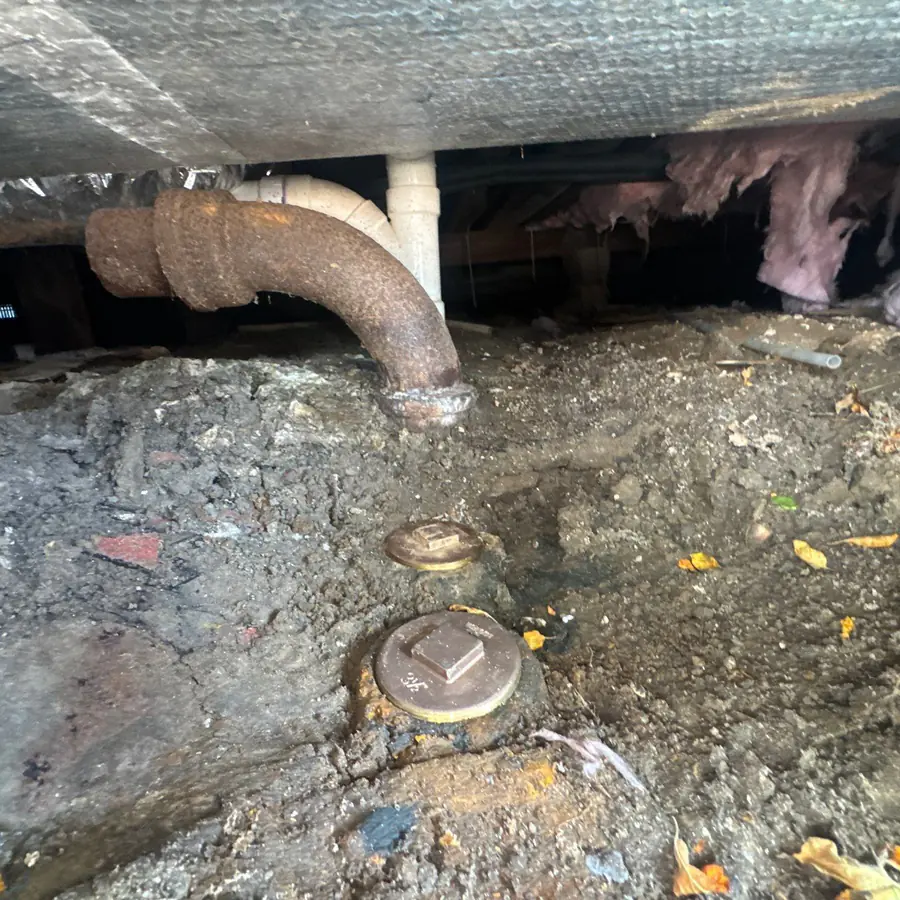
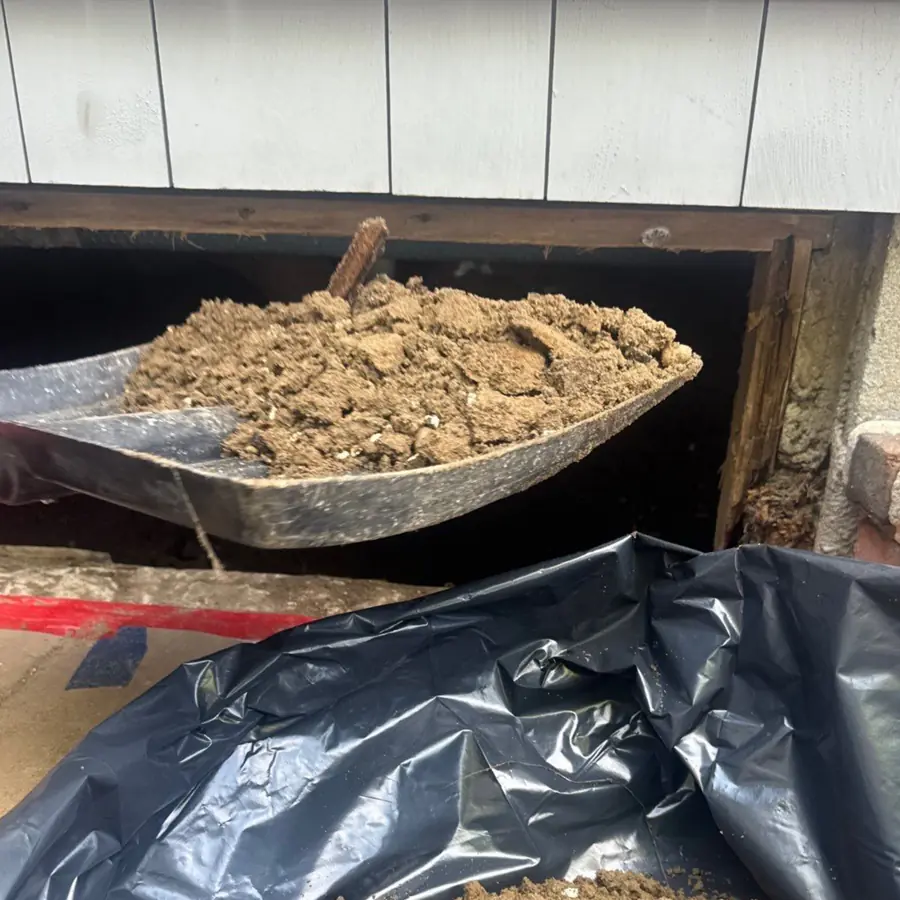
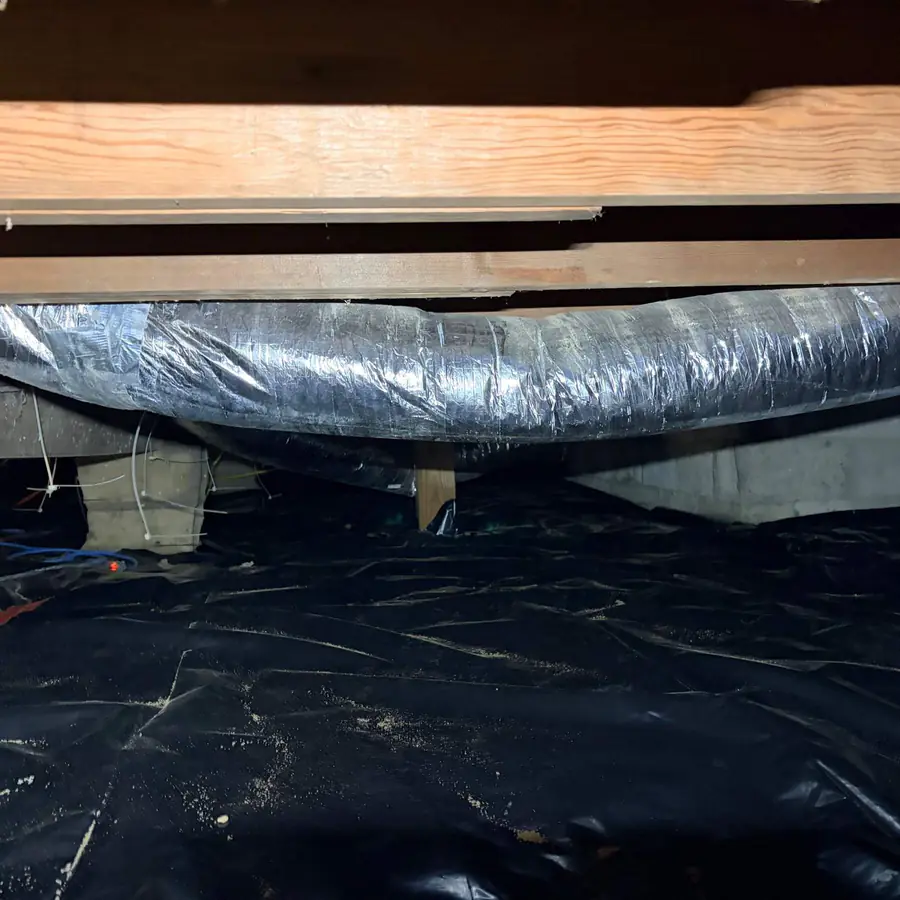
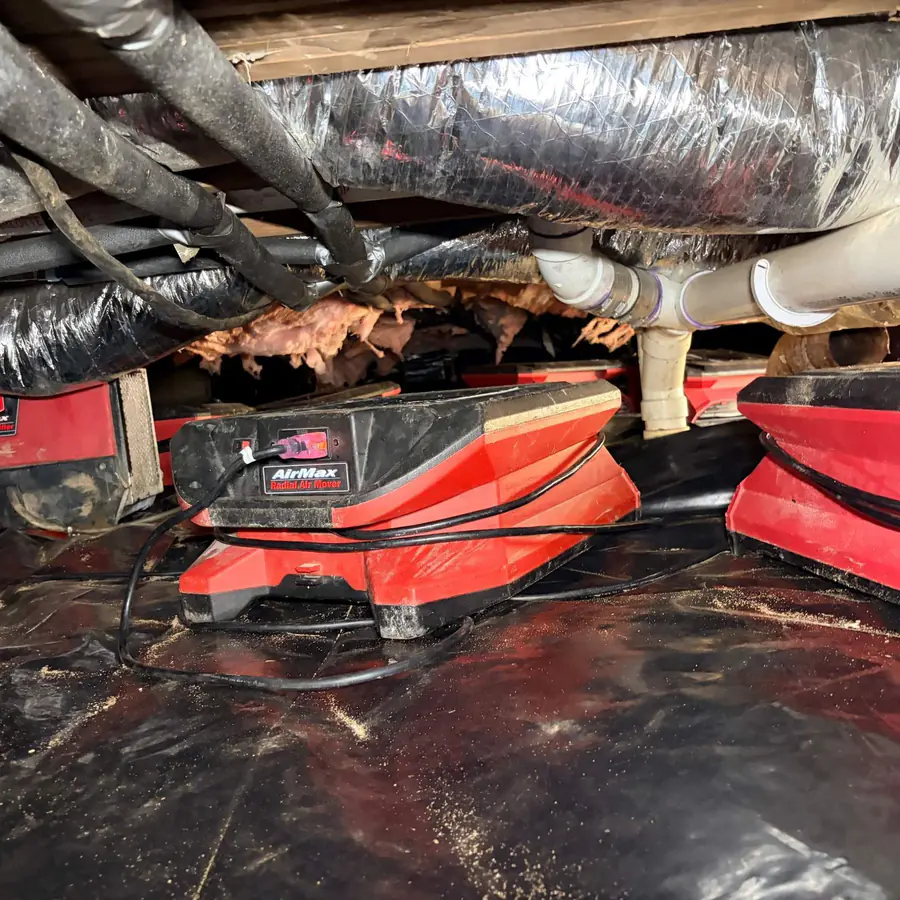
Sewage under the house sits in the soil and the insulation and nobody sees it. Contaminated soil and the vapor barrier are removed, the space is sanitized, a new barrier goes in, and it's dried — the Westhampton Beach job below.
Guide · Why certified sewage cleanup matters
Bathrooms and laundry rooms
Overflows and ejector-pump failures on hard flooring. Fast to extract and clean when the call is same-day; the cost is in what's under the tile and behind the vanity if it sat.
Contents and HVAC
Hard-surface contents cleaned and kept; anything porous that touched sewage is inventoried and removed. If the HVAC ran during the backup, K.O.S. Cleaning handles the ducts — aerosolized sewage through a return is a whole-house problem.
Category 3 is a different job.
Clean water gets dried. Sewage gets removed, cleaned, sanitized, and then dried — in PPE, under negative air, with the waste sealed and disposed of as contaminated. Skip a step and the smell comes back in a week and the bacteria never left.
K.O.S. crews are IICRC-certified in water damage restoration and applied microbial remediation, and carry the equipment to do all of it the same day.
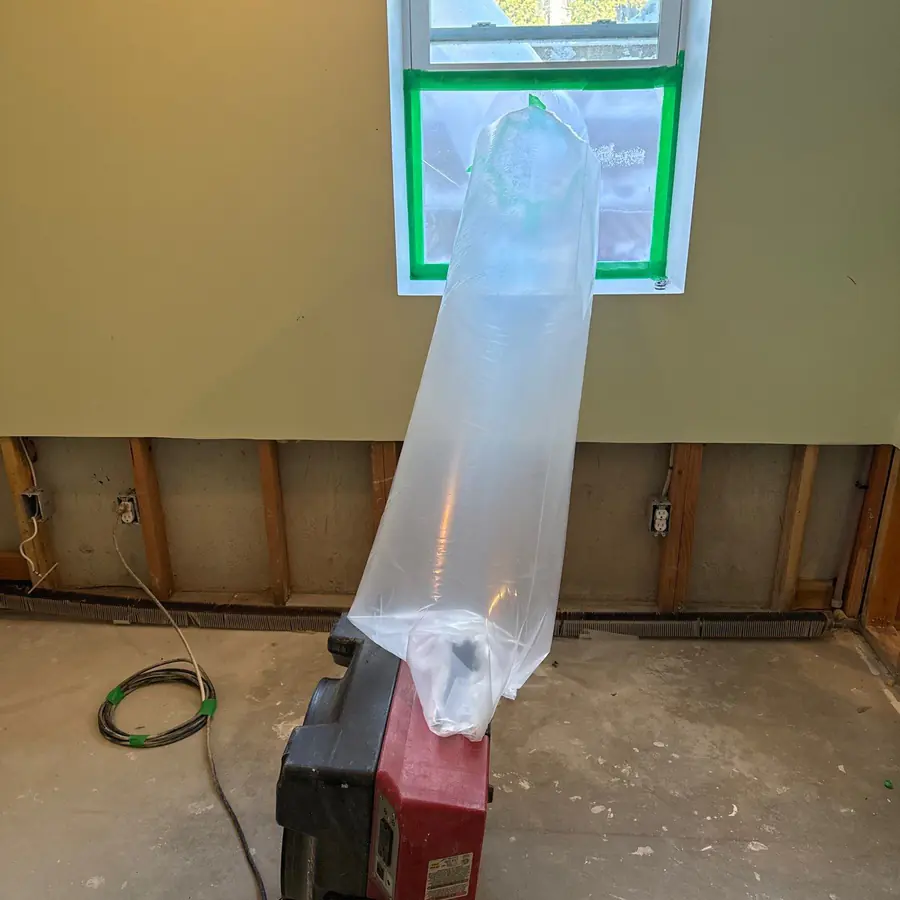
Sewage backups on Long Island are different.
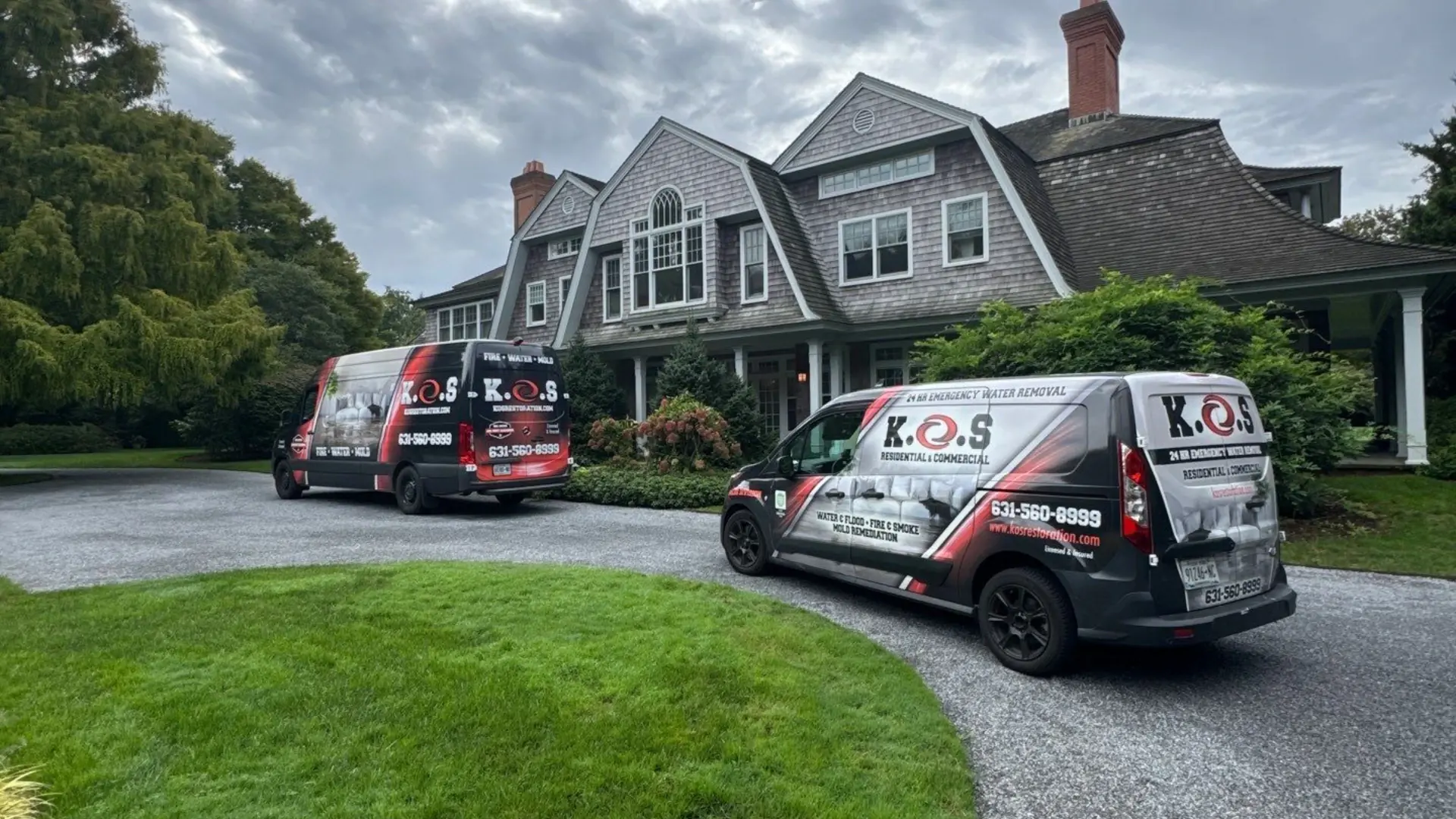
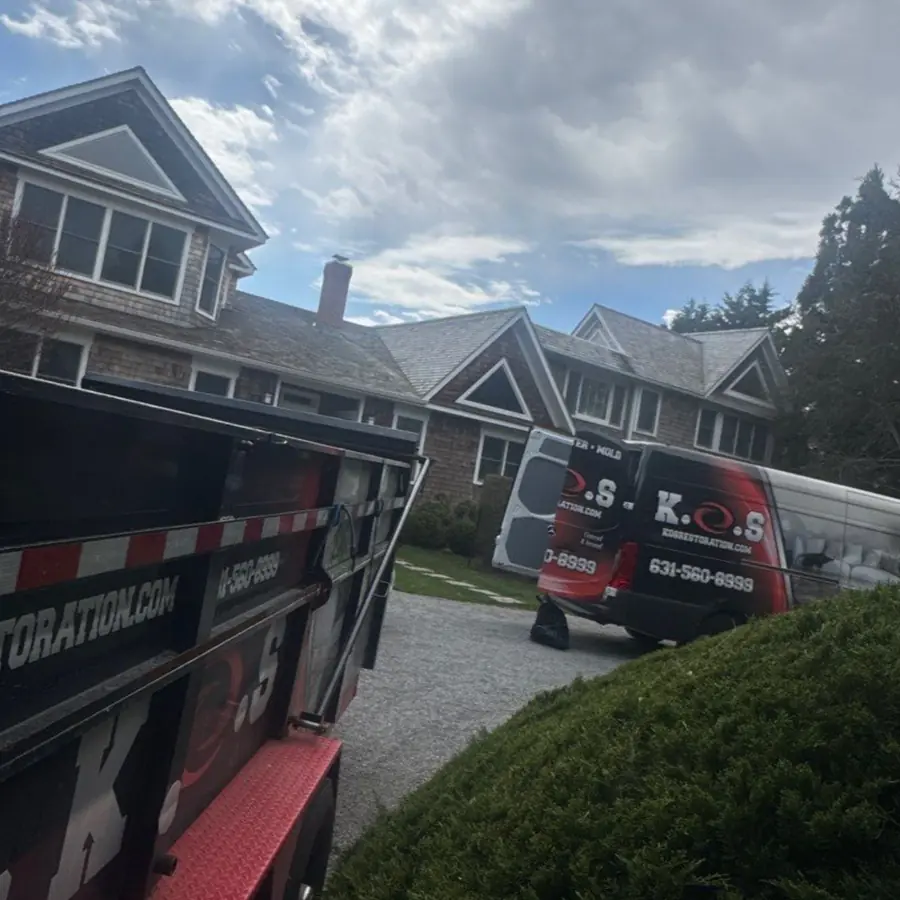
K.O.S. Restoration has cleaned up backups and overflows across Suffolk, Nassau, and Queens from Bellport since 2006. Cesspools, a high water table, storm-surcharged sewers, and finished basements below the line make this a more common call here than almost anywhere.
Crews dispatch from Bellport. Find your town on the service-area pages:
- Suffolk County
- The Hamptons & East End
- Nassau County
- Queens
Most of Suffolk is on cesspools
Roughly three-quarters of Suffolk County homes are on cesspools or septic, not sewers. A heavy rain on the South Shore's high water table floods the pool, and the lowest drain in the house is where it comes back up.
Nor'easters surcharge the sewers
Where there ARE sewers — much of Nassau, western Suffolk, and Queens — a storm can push more water into the system than it can carry, and it backs up through basement floor drains block by block. One storm, many calls.
Finished basements below the line
Post-war capes and splits with finished basements put carpet and drywall against the slab, below the sewer line. That's why a backup here is a removal job, not an extraction — and why a backflow valve is the cheapest insurance on the Island.
Coastal humidity makes it a mold job fast
Sewage is water first. In an East End crawlspace in July, contaminated material that sits a weekend is growing mold by Monday. The clock on a sewage loss is the same as any water loss — 24 to 48 hours.
Featured work.
Sewage cleanup and crawlspace restoration in Westhampton Beach.
Westhampton Beach, NY · June 2026 · Sewage line failure
A sewage line failed under a Westhampton Beach home and ran into the crawlspace — Category 3 water, in a coastal town where the humidity alone can start mold in two days. The crew contained the space first, so nothing tracked into the house.
Contaminated insulation, soil, and the old vapor barrier came out; every surface was cleaned and sanitized with IICRC-rated agents; a new vapor barrier went in across the whole crawlspace; and drying equipment ran until the readings hit dry standard. Documented start to finish.
Insurance handled
Sewer backup is usually an endorsement — check your policy for it before you assume.
Most standard homeowners policies exclude sewer and drain backup unless you added ‘water backup’ coverage. If it’s on your declarations page, the cleanup and damaged finishes are covered up to its limit; K.O.S. documents every bag out the door and bills the carrier directly in Xactimate.
- State Farm
- Allstate
- Liberty Mutual
- GEICO
- USAA
- Travelers
- Mercury
- Mutual of Omaha
- Zurich
300+ neighbors have already called.
A 5.0 rating across Suffolk County. Read every review on Google.
Sewage cleanup questions
The questions people ask Google about sewage cleanup on Long Island — including whether a plumber does it and whether insurance pays — answered plainly.
What does sewage cleanup include?
Containing the affected area, extracting the standing sewage, removing every porous material it touched (carpet and pad, drywall, insulation, contents), cleaning and then sanitizing hard surfaces with an IICRC-rated antimicrobial, drying the structure to a measured standard, treating odor at the source, and documenting all of it for the claim. K.O.S. does the cleanup; a plumber or cesspool company fixes the pipe or the system.
How much does sewage backup cleanup cost?
It depends on how much came up, where, and how long it sat. A toilet overflow on tile caught the same day is a few hours; a main-line backup through a finished basement means carpet and drywall removal plus sanitizing and drying over several days; a crawlspace adds soil and a new vapor barrier. K.O.S. inspects free and gives a written scope before any work. If your policy has a sewer-backup endorsement, the cleanup is covered and you pay the deductible.
Will plumbers clean up sewage?
No. A plumber clears the blockage or repairs the line, and a cesspool company pumps or repairs the system — that's the cause. The cleanup is a Category 3 water loss: extraction, removal of contaminated materials, sanitizing, and drying, in PPE, with the waste disposed of as contaminated. That's restoration work. Call whichever stops the flow first; K.O.S. can be on site while they work.
Is sewage backup covered by homeowners insurance?
Usually only if you carry a 'water backup' or 'sewer and drain backup' endorsement — it's excluded from most standard policies. The endorsement is inexpensive and typically covers $5,000–$25,000. Check your declarations page. If you have it, cleanup and damaged finishes are covered; the plumbing or cesspool repair generally isn't.
Can I clean up sewage myself?
A small toilet overflow on a hard floor, caught immediately, with gloves and a proper disinfectant — reasonably, yes. Anything that reached carpet, drywall, a crawlspace, or sat for hours, no. Category 3 water carries E. coli, hepatitis A, and other pathogens; mopping spreads it, bleach on an uncleaned surface doesn't sanitize, and running the HVAC aerosolizes it through the house. Keep people and pets out, don't use the water, and call.
How long do sewer bacteria live on surfaces?
Days to weeks on hard surfaces while they stay damp, and indefinitely inside porous material — which is why carpet pad and drywall are removed rather than cleaned. Dry, cleaned, and sanitized hard surfaces are safe; that's the order the work happens in and the reason the two passes are separate.
What neutralizes sewage smell?
Removing what's producing it. The odor is the contaminated material — pad, drywall, soil — and no spray or fogger neutralizes it while that's still in the house. Once the source is out and the surfaces are cleaned and dried, residual odor is treated with hydroxyl or ozone and, where needed, a sealer on framing. If a room still smells after a 'cleanup', something was left behind.
How do I clean up sewage in the yard or a crawlspace?
Outdoors, a cesspool company pumps the system and the contaminated soil is usually removed and replaced — keep children and pets off it until then. Under the house, it's a crawlspace job: contaminated soil, insulation, and vapor barrier removed, the space sanitized and dried, and a new vapor barrier installed. It's the same process as the Westhampton Beach job on this page.
Guides.
Two reads for the first hour: what to do — and not do — before anyone arrives, and why a certified crew handles Category 3 water differently from a plumber or a cleaning service.
Written by the people who show up, from jobs on Long Island — not a national franchise’s content team.
Sewage backup: what to do in the first hour
Stop using water, keep everyone and every pet out, don't run the HVAC, photograph before you touch anything — and who to call first, the plumber or the cleanup crew.
Read the guide →
Why certified sewage cleanup matters
What Category 3 water actually carries, why a mop and bleach make it worse, and what an IICRC-certified crew does that a plumber or a cleaning service doesn't.
Read the guide →
All sewage and water guides →