
Hard surfaces only.
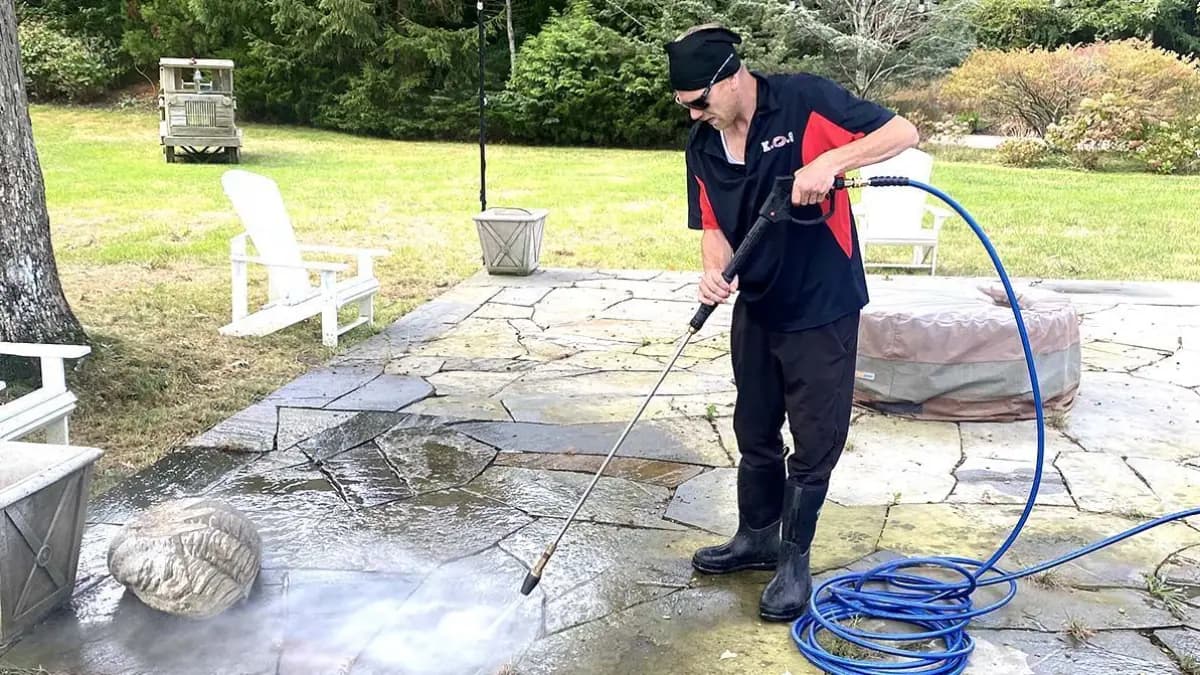
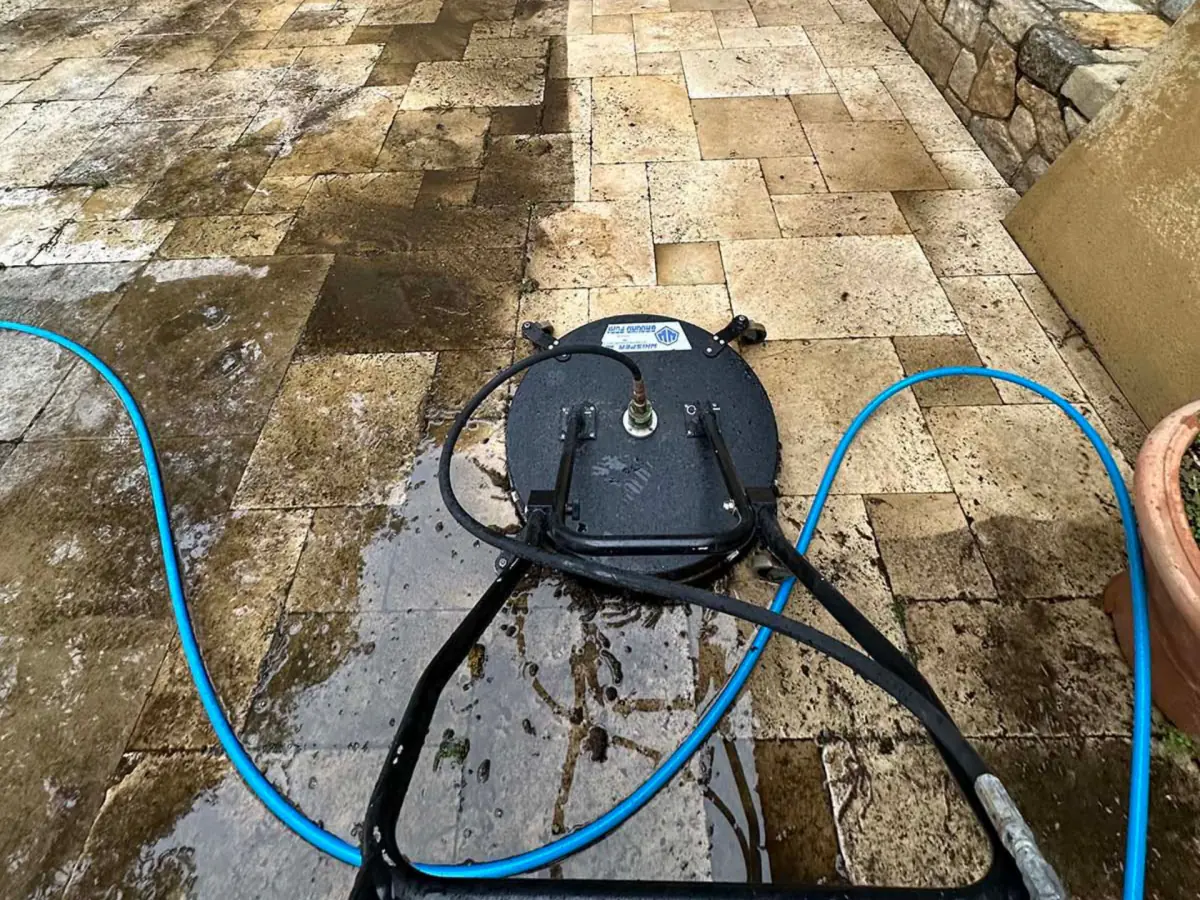
Pressure washing uses the force of the water — with a detergent and a professional surface cleaner — to lift algae, mold, dirt and staining out of concrete, pavers and stone. The pressure and nozzle are set for each surface; it isn’t one setting for everything.
Siding, roofs and cedar never get it. Those are soft-washed.
Driveways
Concrete, asphalt and paver.
Patios and walkways
Pavers, natural stone, brick, concrete and stamped surfaces.
Pool decks
Where slippery growth matters most.
Porches and entryways
Decks
Wood and composite.
Courts and retaining walls
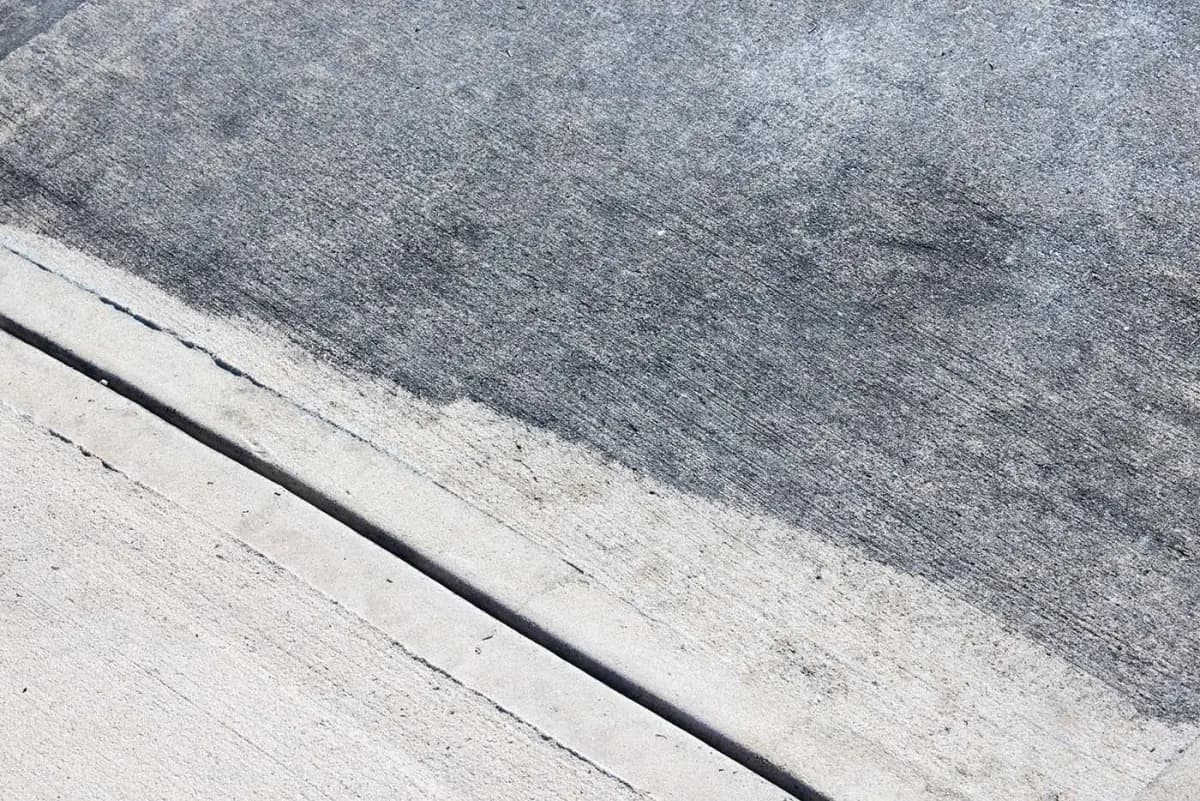
Why driveways turn dark.
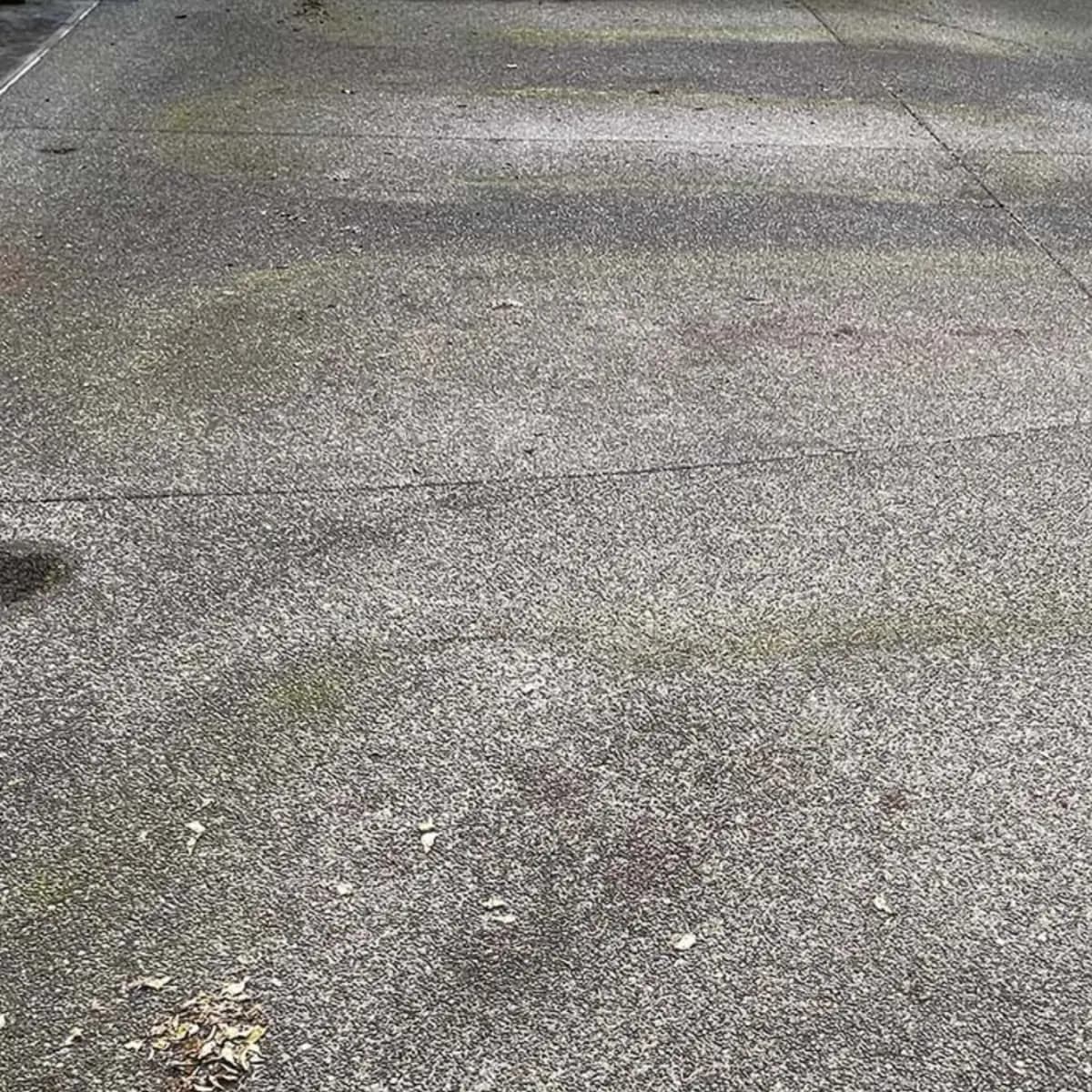
Concrete and pavers are porous: they soak up moisture and whatever lands on them. Algae, mold and mildew grow in the damp and the shade — Long Island humidity does the rest — and oil, transmission fluid and tire marks soak in deep.
It isn’t only cosmetic. Algae-covered concrete gets slippery when it’s wet, and long-term staining wears the surface down.
Green patches or black streaks
Usually in the shade, near gutters and edges.
Oil, fluid or tire marks
Dark patches where cars park.
Dull, uneven color
A driveway that used to be lighter.
Slippery spots when it rains
Walkways, steps and pool decks especially.
The right pressure for the material.
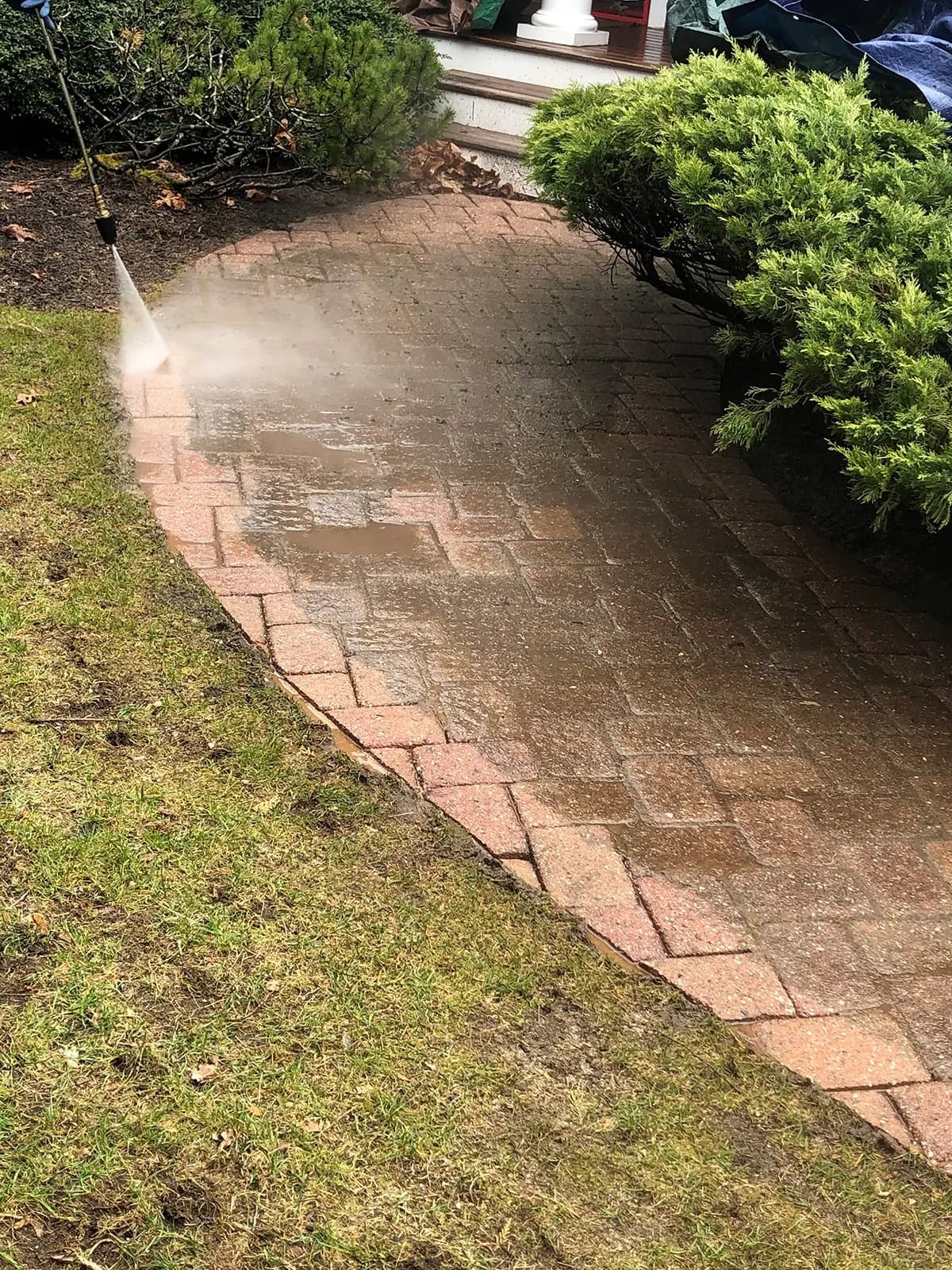
Too much pressure on pavers blasts out the joint sand, leaving gaps that invite weeds. On natural stone it can etch or streak permanently. A rental machine and one setting is how that happens.
Concrete, pavers, natural stone and composite each get their own approach — and the whole surface is cleaned evenly, not spot-treated where the stains are worst.
Paver joint sand
Not blasted out of the joints.
Natural stone faces
No etching or streaking.
How we pressure wash.
Identify the surface
Concrete, asphalt, pavers, natural stone and composite all respond differently — the material sets the pressure, the nozzle and the detergent.
Treat the growth
An eco-safe detergent goes on first to break down algae, mold and mildew at the source, not just the top layer.
Clean evenly
Professional surface cleaners and controlled pressure clean the whole surface evenly — no stripes, gouges or spot-cleaned patches.
Rinse and check
Everything rinsed off and checked, with paver joints and stone faces left intact.
What it looks like.
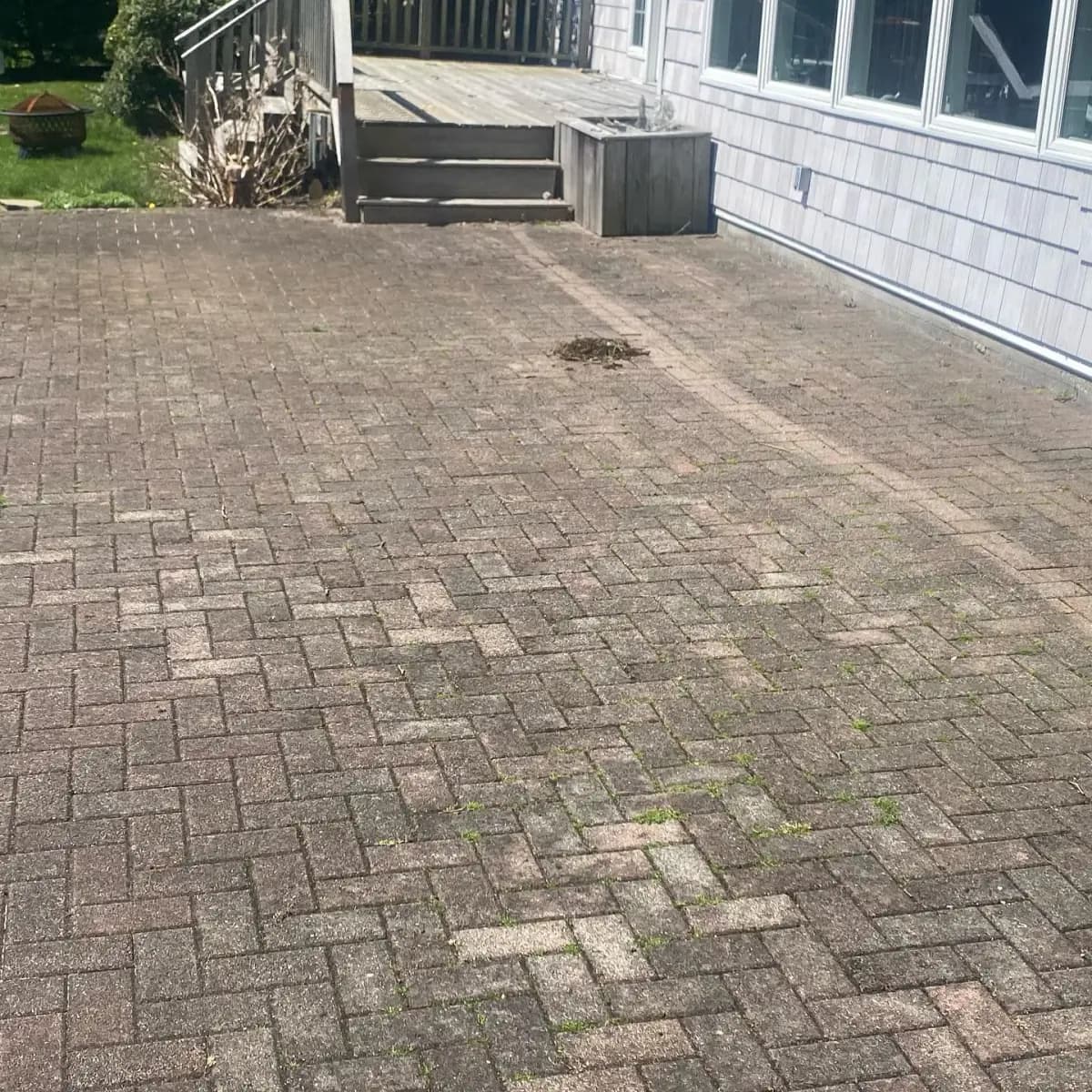
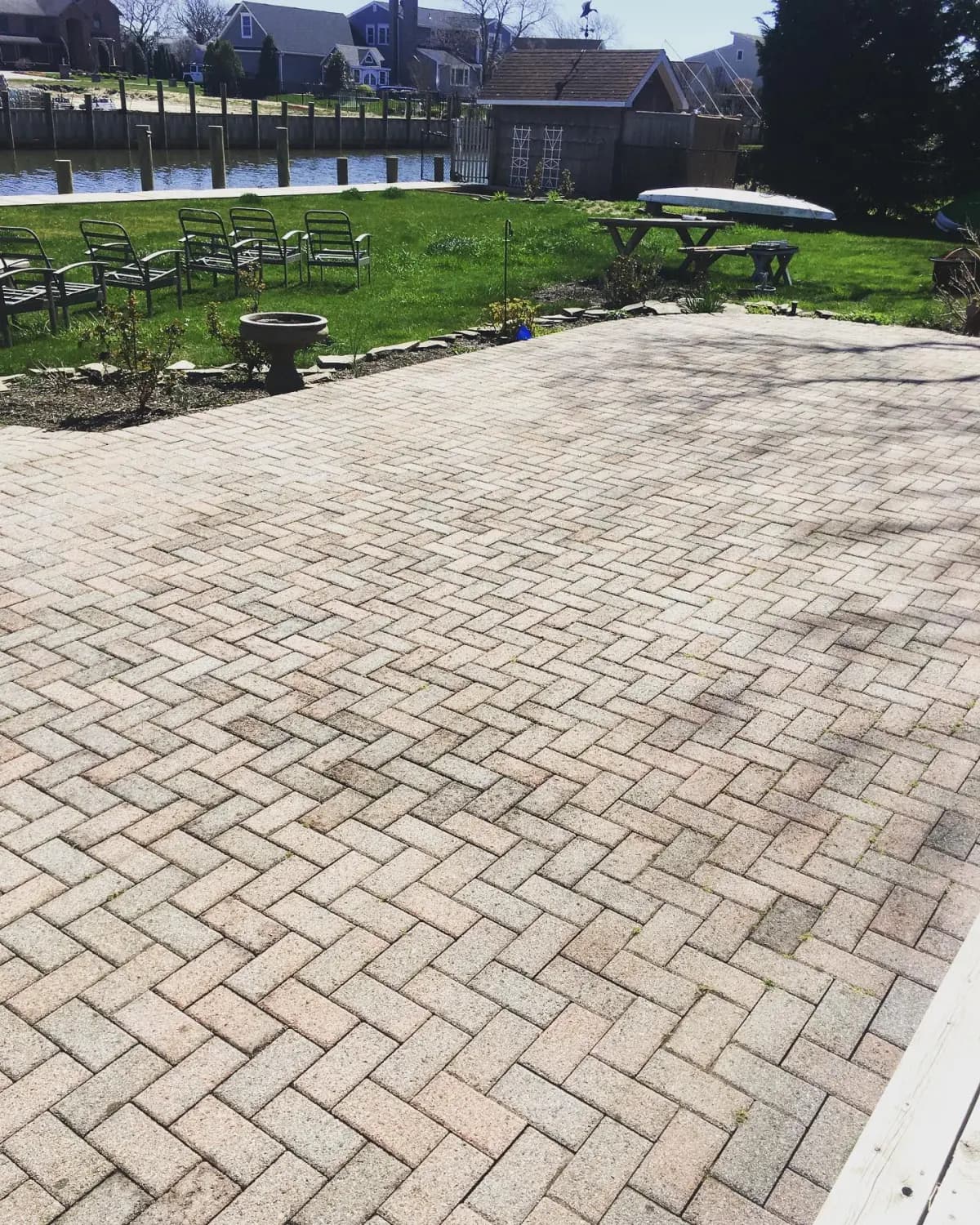
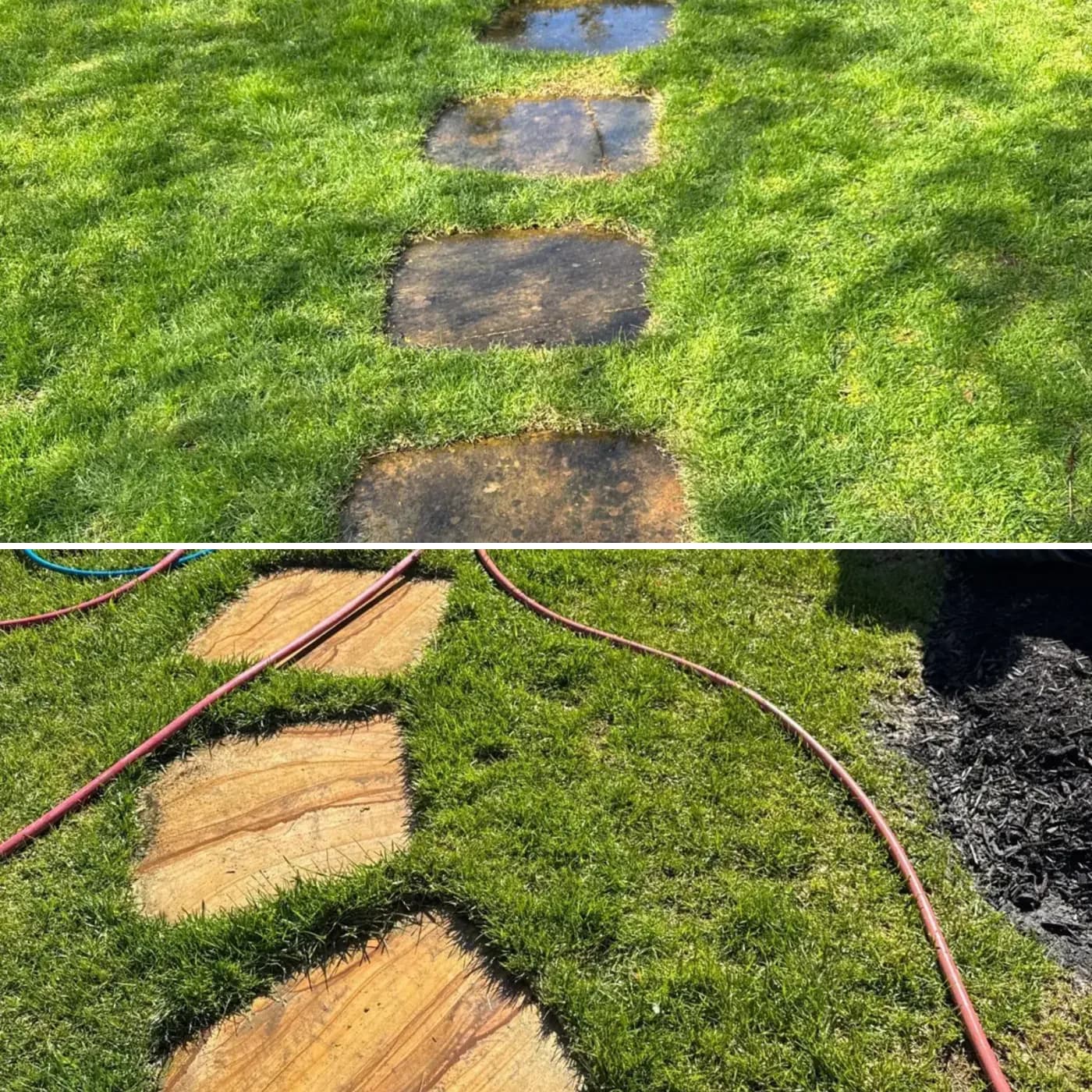
The same herringbone paver patio, before and after pressure washing — photographed from opposite ends.
On the job.
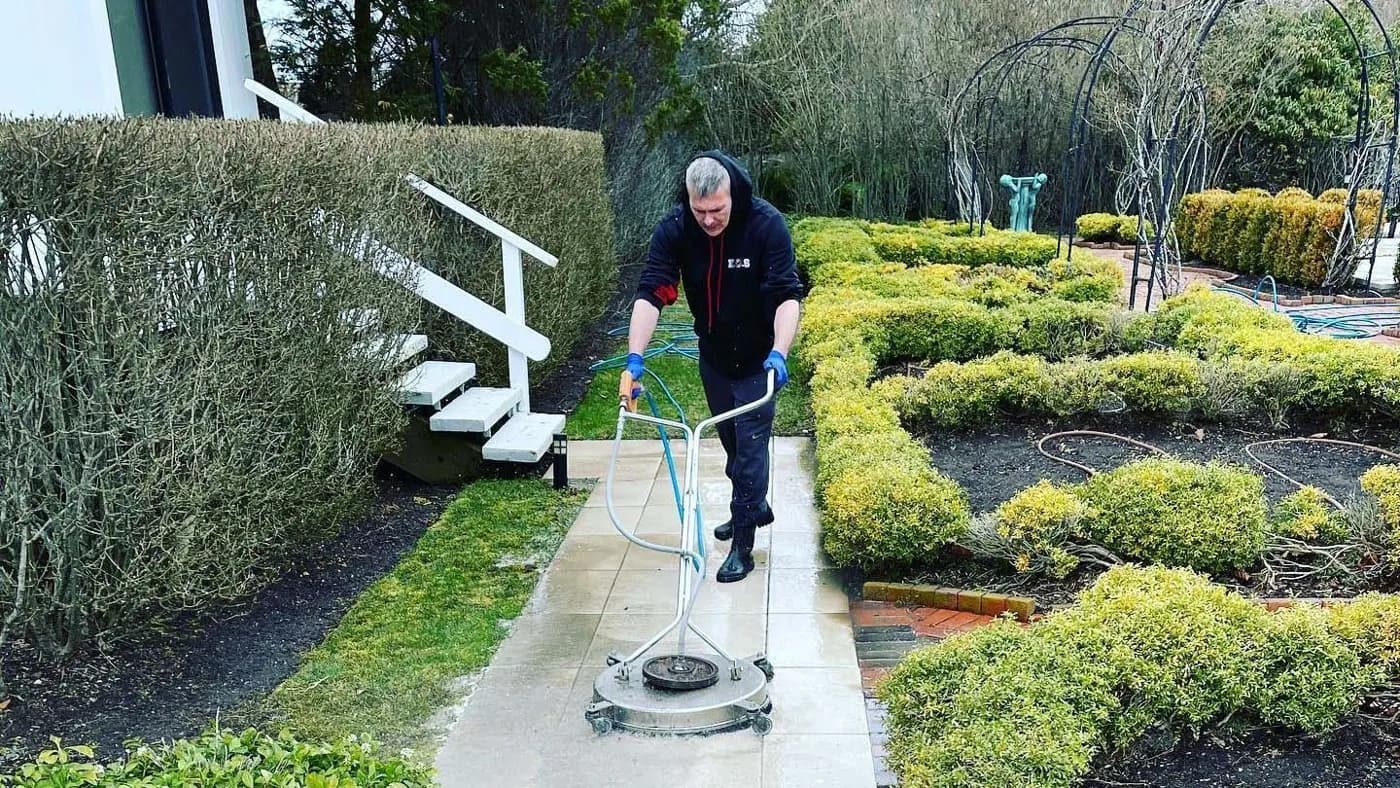
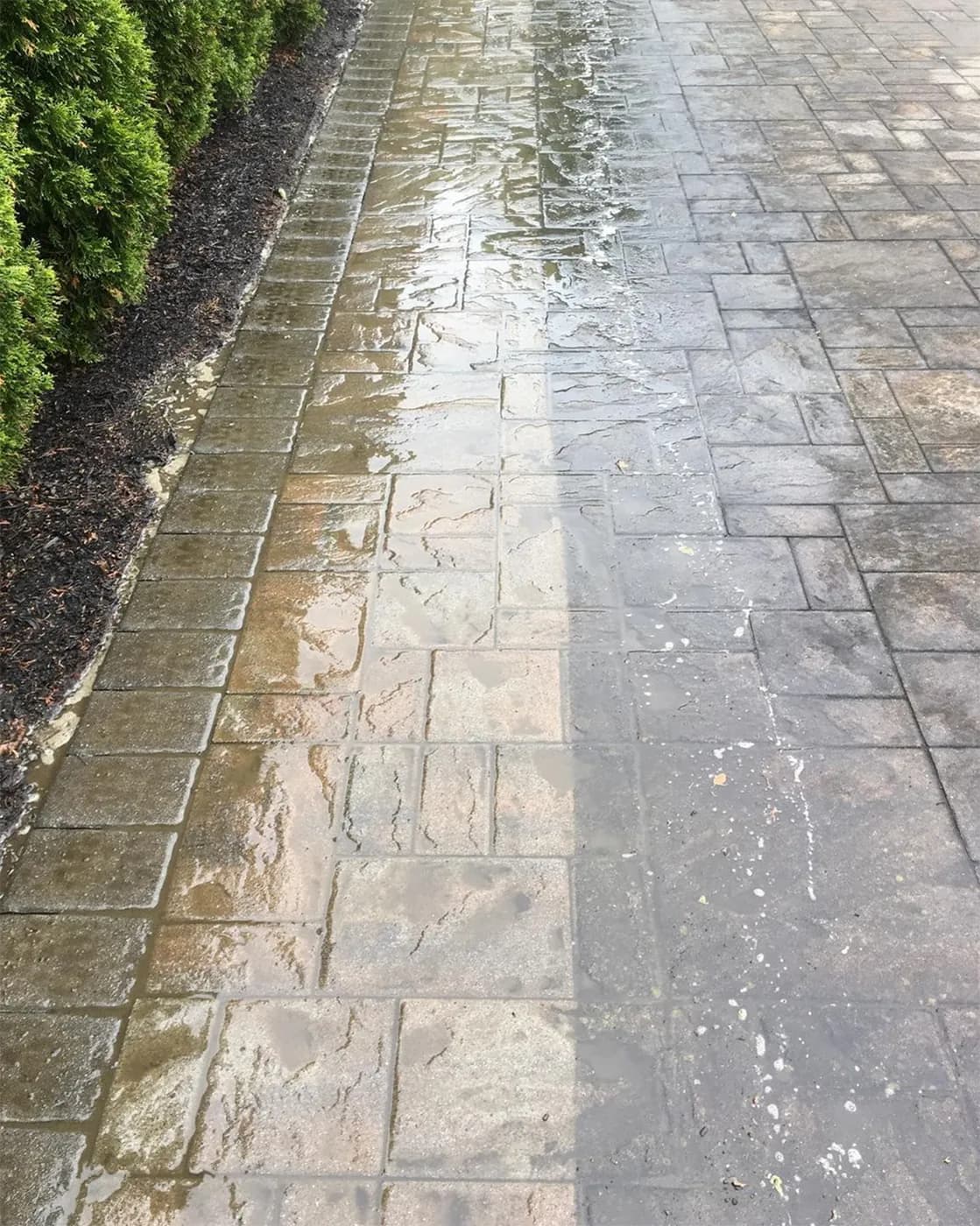
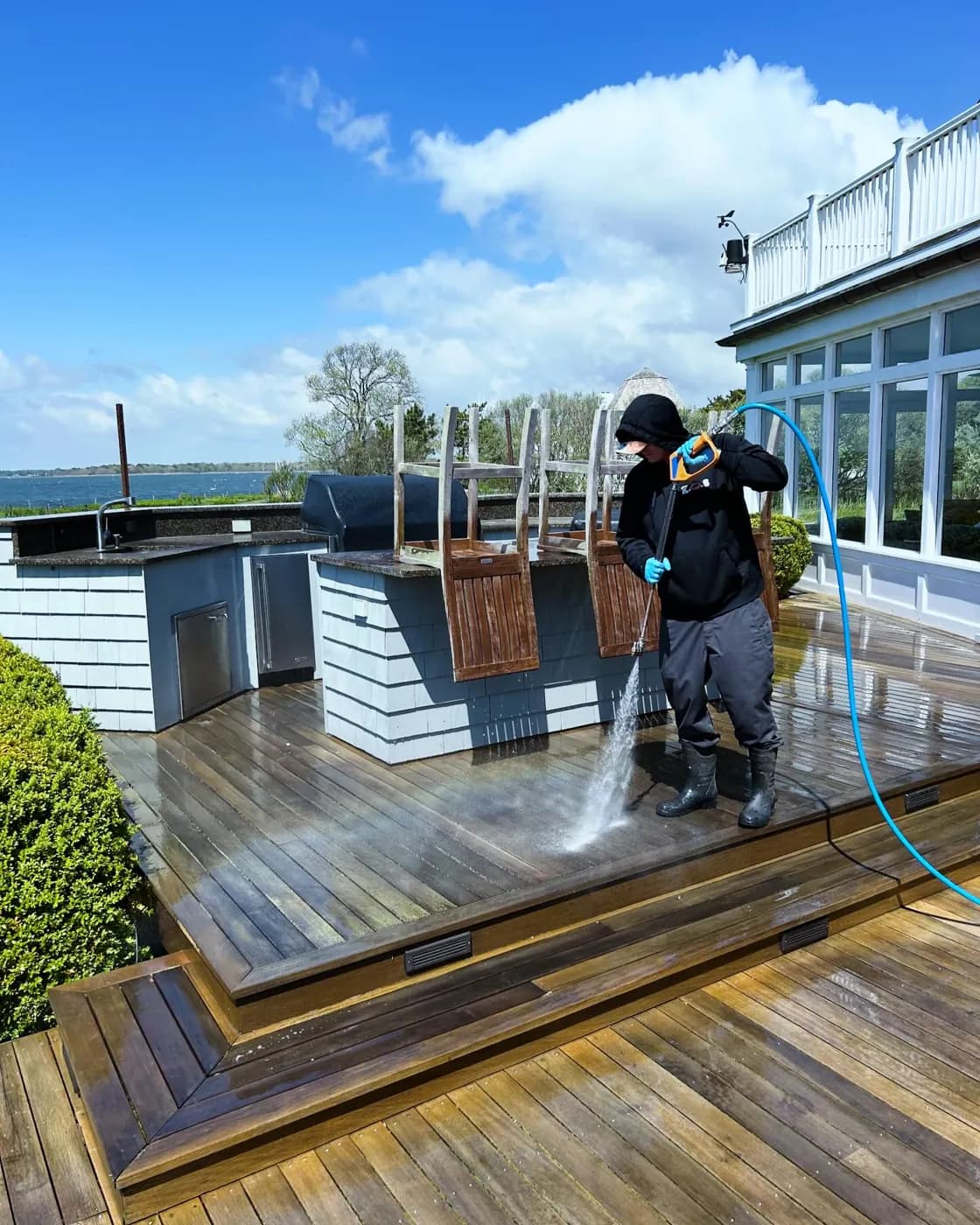
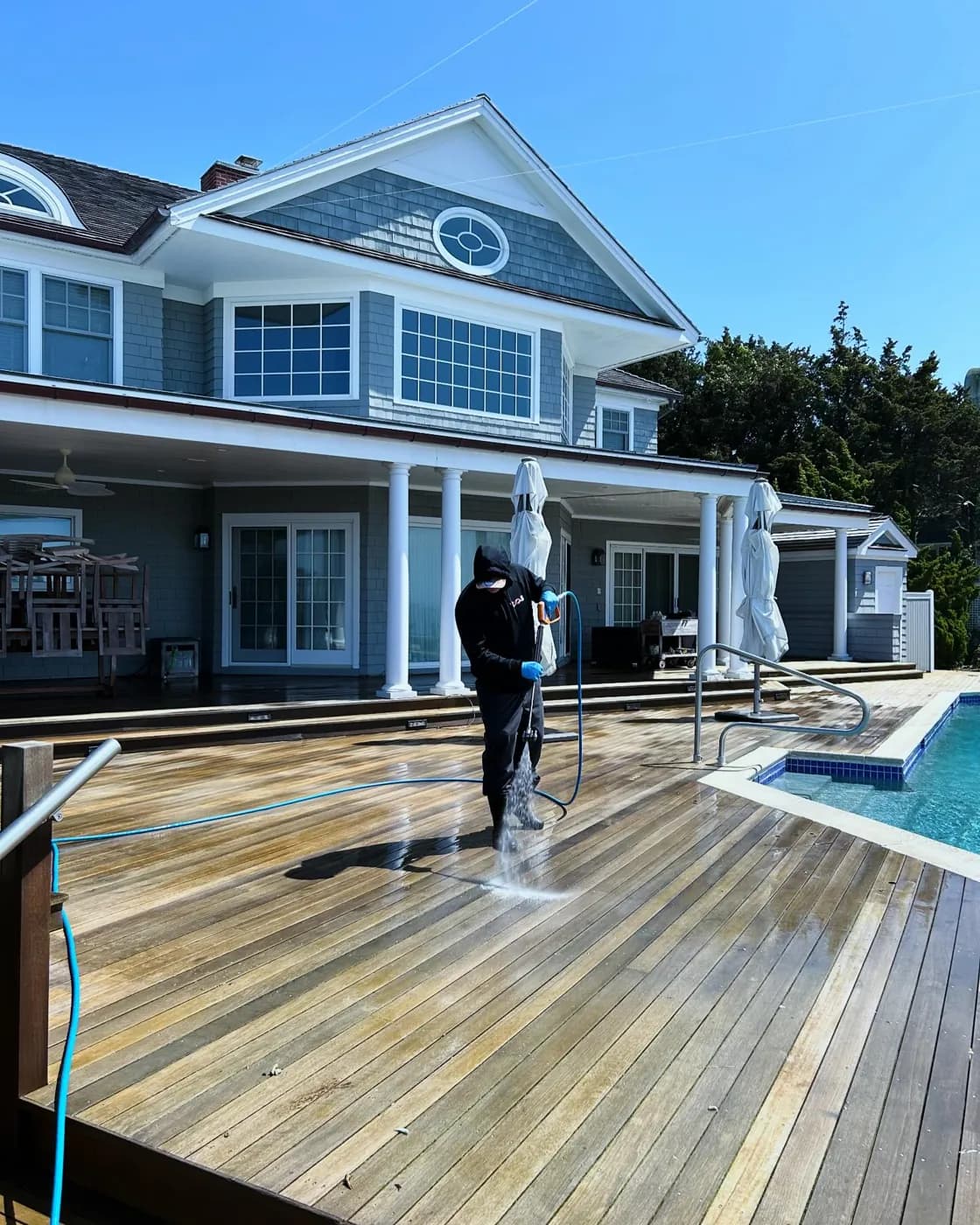
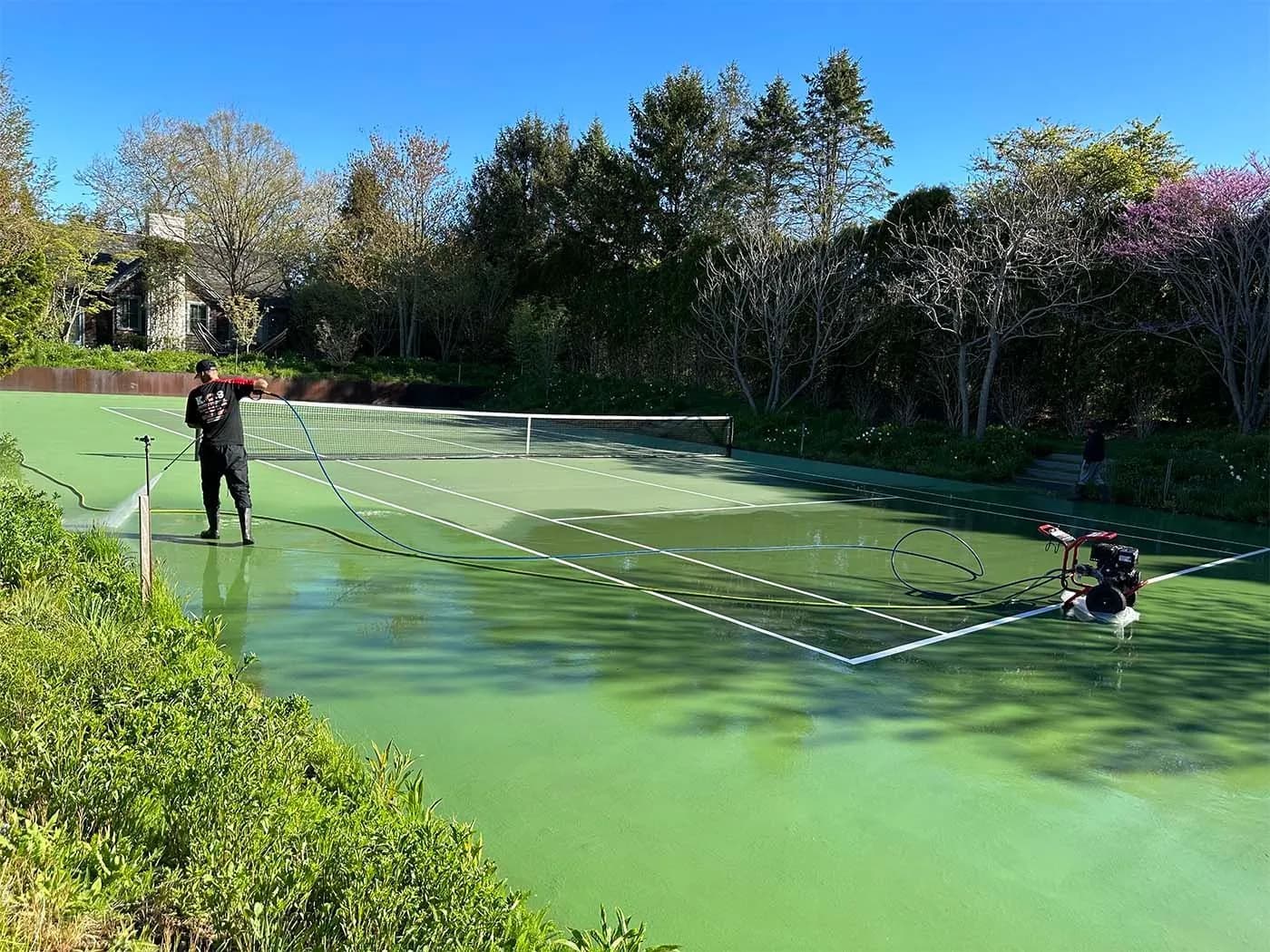
K.O.S. crews on Long Island driveways, patios, decks and courts — and the surfaces when they're done.
Siding, roofs or cedar?
Those get soft-washed.
What it costs.
There’s no flat price: a single-car driveway and a pool deck with a paver patio aren’t the same job.
Free estimate. The price you’re quoted is the price you pay.
How much surface
Priced by square footage across driveways, patios, walkways and pool decks.
What it's made of
Concrete can take more pressure; pavers, natural stone and wood need lower settings and more care, which takes longer.
Growth and staining
One season's algae comes up quickly; years of growth, oil and tire marks need more treatment.
Before you book.
Longer answers to the questions people ask before they call.
Why Driveways Turn Dark Over Time On Long Island
Learn why driveways turn dark and how to safely remove algae and buildup from pavers and concrete surfaces in Suffolk County, Long Island.
Read the guide →
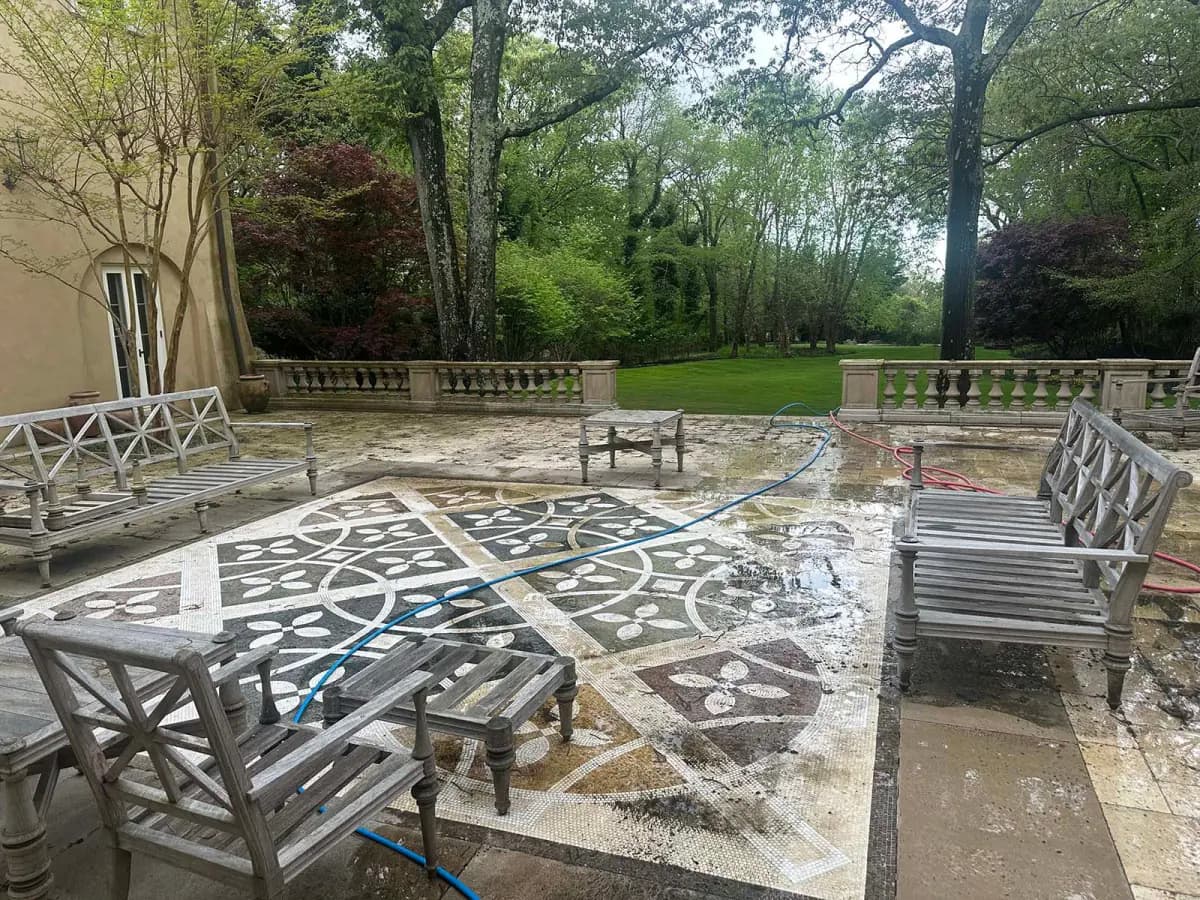
Why Patios Turn Green (And How to Fix It the Right Way)
Learn why patios turn green on Long Island and how to safely remove algae, mold, and buildup with the right cleaning method for your Suffolk County home.
Read the guide →
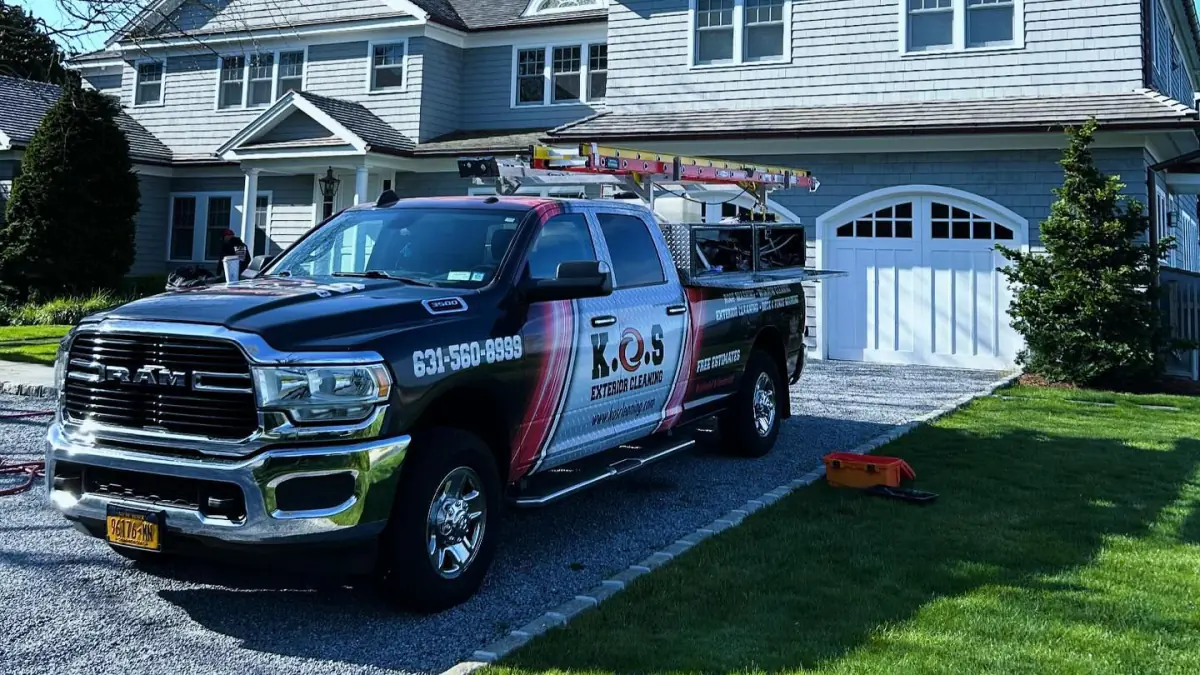
Power Washing to Brighten Up Your Exterior
Bring back the beauty of your home with expert power washing in Suffolk County. We clean patios, siding, walkways & more—just in time for summer.
Read the guide →
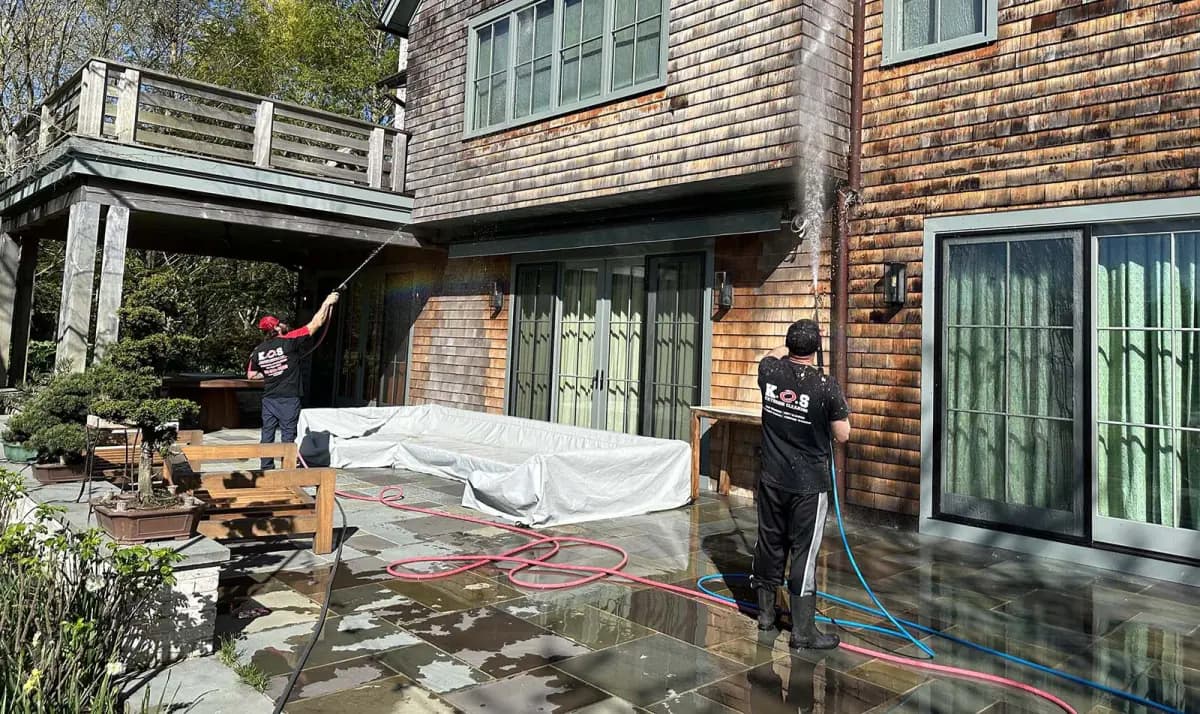
Soft washing vs. pressure washing on Long Island: which one your house actually needs
They're not the same service, and using the wrong one is how siding cracks and paint strips. Here's which surfaces take pressure, which need low-pressure chemistry, and why most homes need both.
Read the guide →
Frequently asked questions
Straight answers on cost, pavers and stains.
How much does pressure washing cost?
It depends on how much surface there is, what it's made of, how heavy the growth and staining are, and access. The estimate is free, and the price you're quoted is the price — no hidden fees.
How often should a driveway or patio be pressure washed?
Once a year for most driveways, patios and walkways — ideally in spring, after the winter buildup. Heavily shaded or poorly drained areas may need it more than once a season.
Will pressure washing damage my pavers?
Not when it's done properly. Too much pressure strips the joint sand between pavers and can etch natural stone, which is why the pressure and technique are set for each material.
Can pressure washing remove oil stains?
Most dark staining, yes — especially with the right cleaning solution. Oil and transmission fluid soak deep into porous concrete and are the hardest to lift.
Is the green or black growth on my patio dangerous?
It can be. Algae and mold make concrete and pavers slippery when wet — a real hazard on walkways, steps and pool decks.
Do you pressure wash siding or roofs?
No — siding, roofs and cedar shake are soft-washed: a cleaning solution at low pressure. High pressure cracks siding, strips shingle granules and splinters cedar.
Do you clean decks?
Yes — wood and composite decks, with the approach matched to the deck.
Do you do commercial pressure washing?
Yes — homes and businesses, including walkways, entryways and courts.
Get a free pressure washing quote.
Real person · free estimates · no obligation
Call for a quote(631) 560-8999