
What those black streaks are.
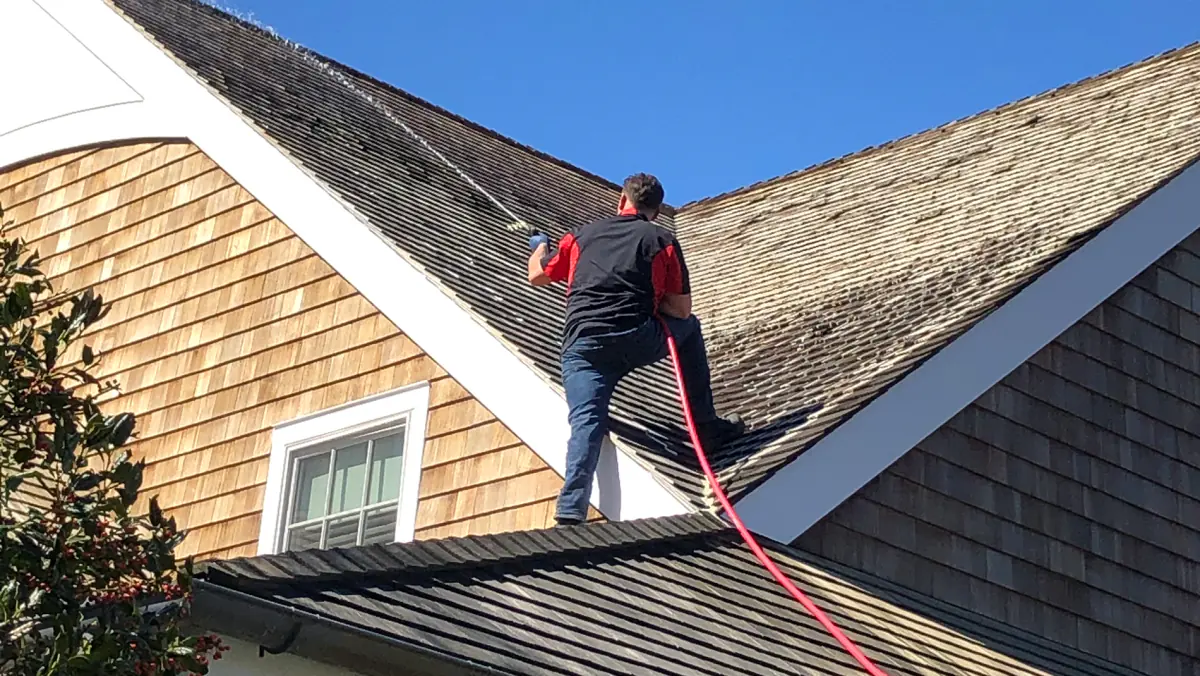
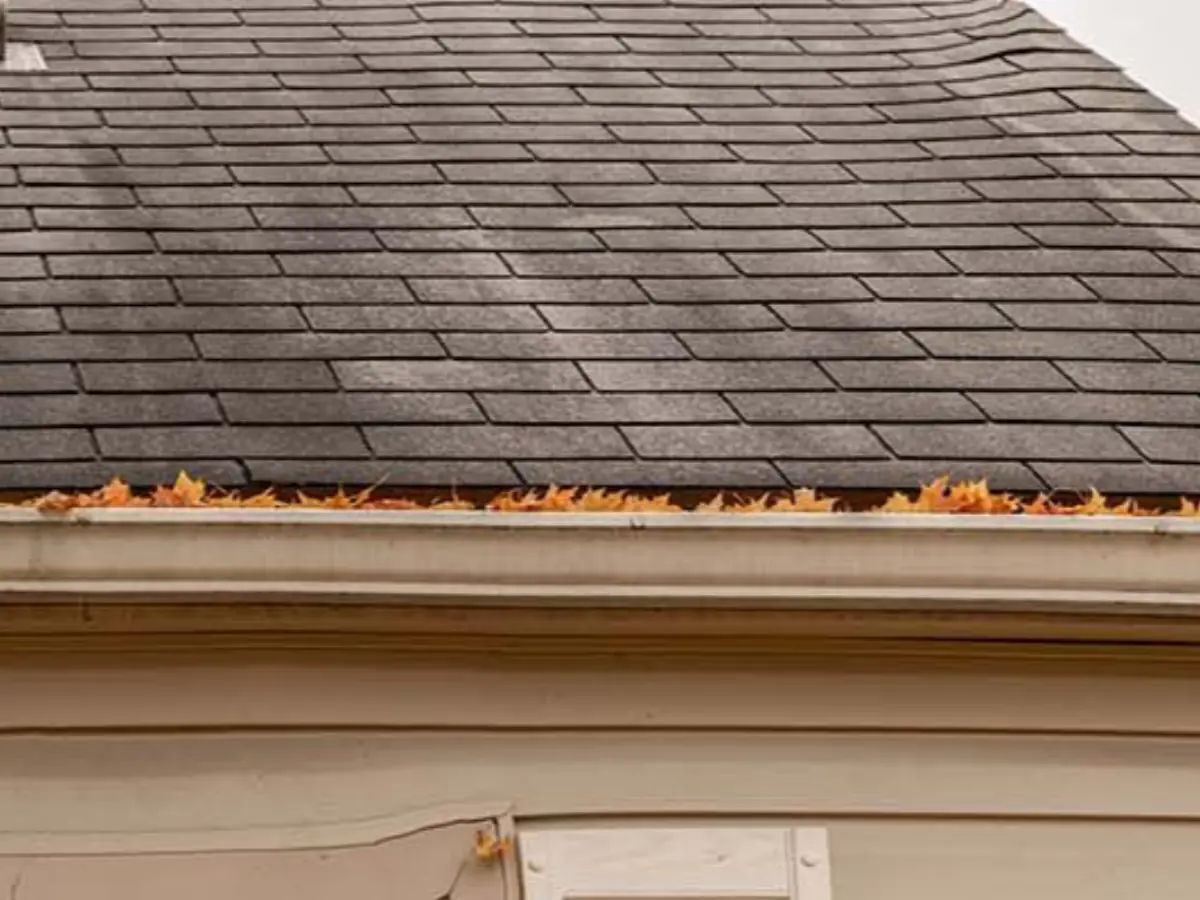
The dark streaks running down a Long Island roof are usually Gloeocapsa magma — an algae that feeds on asphalt shingles and thrives in coastal humidity and tree shade. It isn’t dirt, and it spreads.
Along with moss and lichen, it holds moisture against the roof and eats away at the shingles — staining them first, then weakening them and shortening the roof’s life.
Dark streaks down the shingles
Often starting near the peaks.
Green patches or moss
Especially on shaded slopes.
Overall dingy look
Stained, tired shingles.
Debris and clogged gutters
Leaves, branches and runoff from the roof.
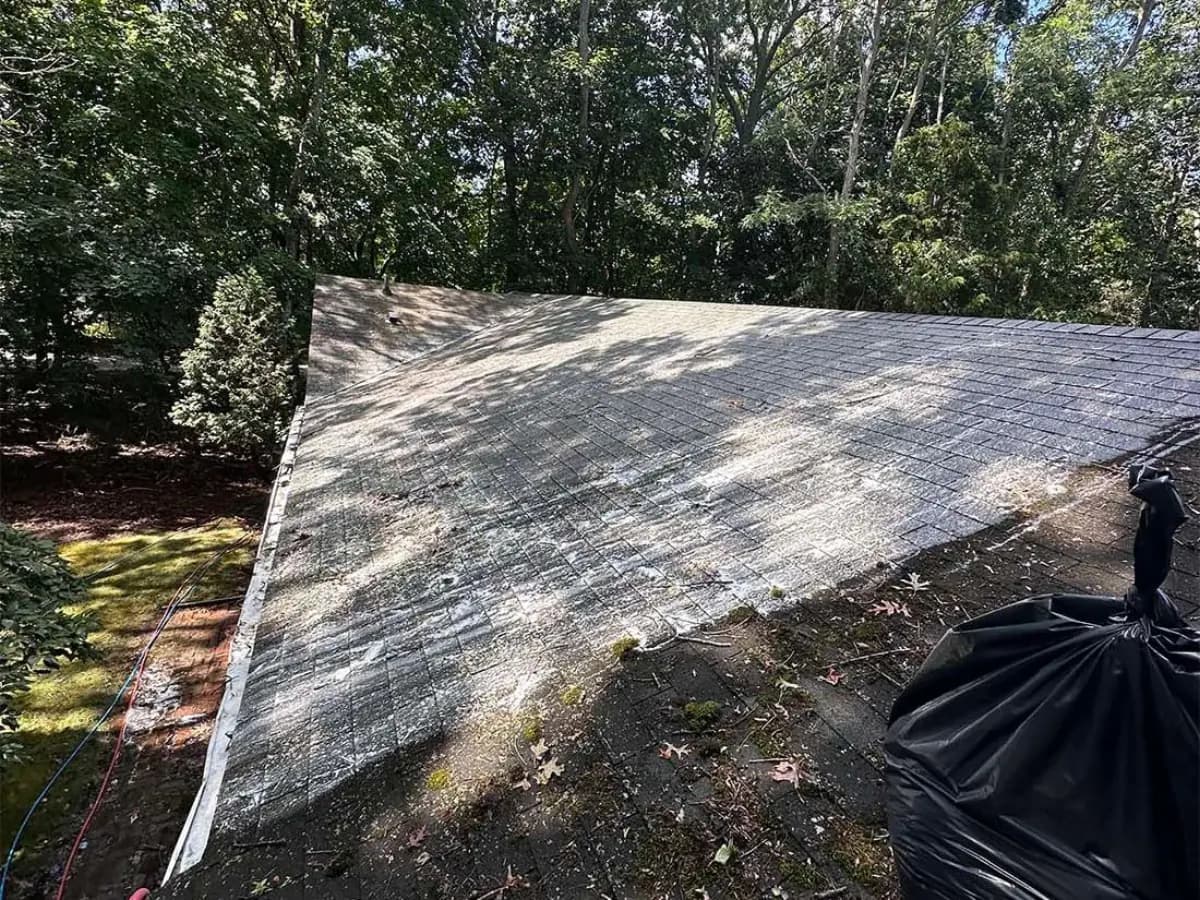
Never pressure-washed.
Blasting a roof with a pressure washer looks like the fast fix. It strips the protective granules off shingles, can damage the wood underneath, and can void the manufacturer’s warranty.
Soft washing lets a biodegradable solution do the work at low pressure: it kills the growth at the root and rinses off without loosening a shingle.
Asphalt shingle
The black streaks are Gloeocapsa magma feeding on the shingles; a soft wash kills it without stripping the granules or voiding the warranty.
Cedar shake
Pressure splinters cedar and strips its natural oils, so shakes are soft-washed back from gray — see cedar shake cleaning.
Slate
Moss and lichen come off at low pressure, so brittle slate tiles aren't cracked or knocked loose.
Metal
Algae and mildew are lifted by the solution, not the water, so painted and coated metal keeps its finish.
Flat roofs
EPDM, TPO and PVC membranes are cleaned gently, clearing algae and grime without scoring the surface or lifting the seams.
How we clean a roof.
Pre-soak the plants
Beds and shrubs under the eaves get a plant-safe pre-rinse, so the landscaping comes through the job healthy.
Apply the cleaning solution
Biodegradable detergent goes on at low pressure. On a roof the solution does the cleaning — never the force of the water.
Let it work
It breaks down algae, moss, lichen and mildew at the root, including the Gloeocapsa magma behind the black streaks.
Low-pressure rinse
A gentle rinse carries it off without lifting granules, loosening shingles or forcing water underneath.
What it costs.
There’s no flat price: a single-story ranch and a steep three-story roof aren’t the same job.
Free estimate. The price you’re quoted is the price you pay.
Size of the roof
The more roof surface, the more solution and time it takes to treat and rinse.
Pitch and access
Steep, high or hard-to-reach roofs need more setup and safety equipment than a low, walkable one.
How much growth
A few streaks lift quickly; years of moss and lichen take longer to break down at the root.
Before you book.
Longer answers to the questions people ask before they call.
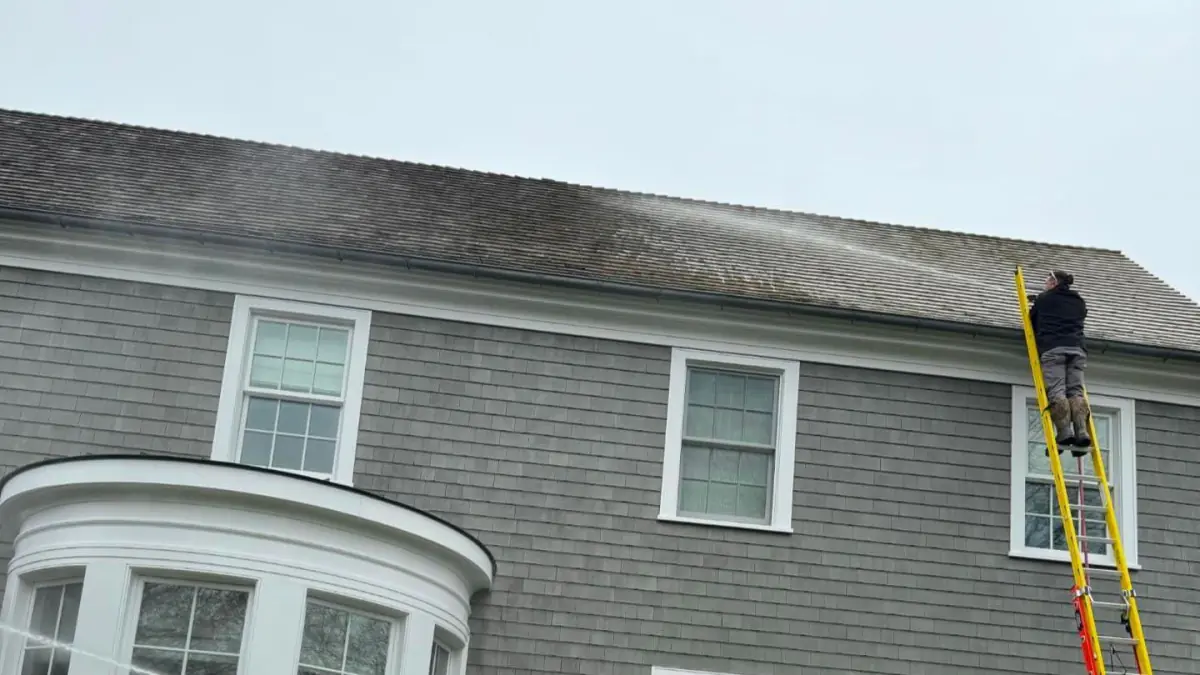
Why Roof Cleaning Changes Everything
Tired of black streaks on your roof? K.O.S. Cleaning offers expert roof cleaning services in Suffolk County using safe, professional soft washing. Restore your roof today!
Read the guide →
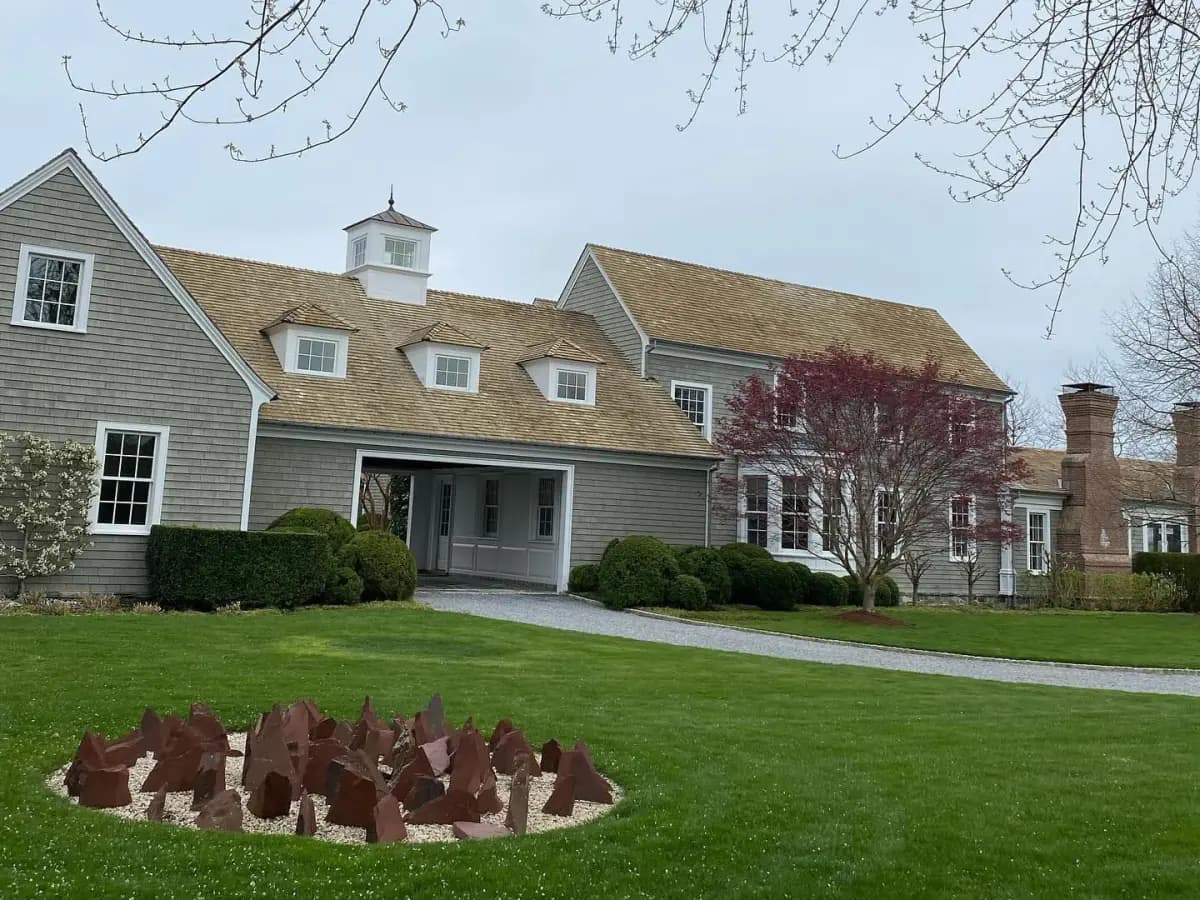
Soft Washing For Roofs On Long Island
Discover expert soft washing for roofs in Long Island with K.O.S. Cleaning. Safe for shingles and cedar shakes, trusted since 2006.
Read the guide →
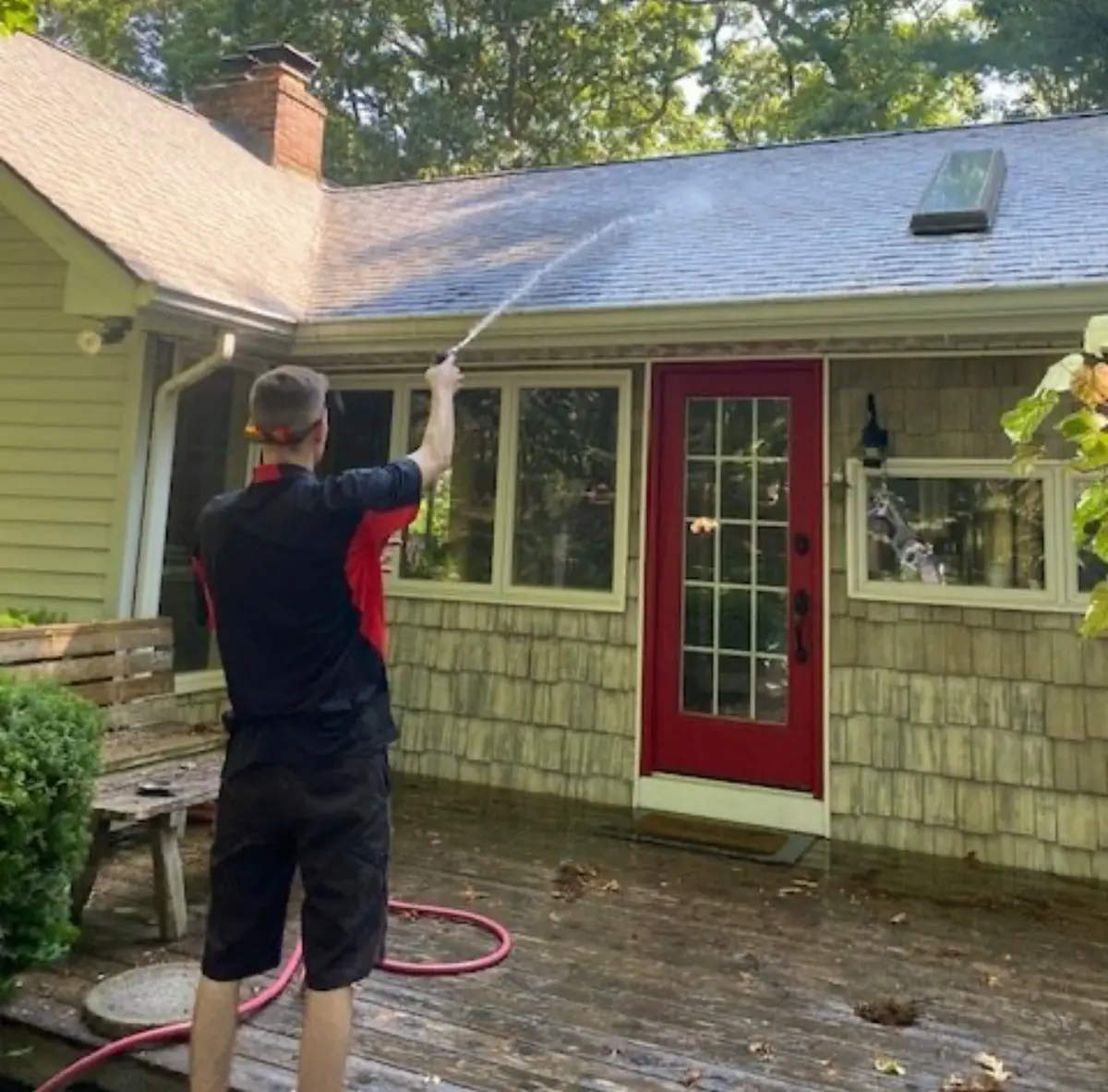
Long Island Roof Cleaning & Maintenance
Regular roof cleaning & maintenance prolongs the life of your roof, prevents damage from growth. Our top rated roof cleaning team can help.
Read the guide →
Frequently asked questions
Straight answers on streaks, warranties and cost.
What are the black streaks on my roof?
Usually an algae called Gloeocapsa magma. It feeds on asphalt shingles, thrives in Long Island's humidity, and spreads across the roof over time. Left alone it stains the shingles, weakens them and can shorten the roof's life.
How much does roof cleaning cost?
It depends on the size and pitch of the roof, how easy it is to access, and how much growth there is. The estimate is free, and the price you're quoted is the price — no hidden fees.
Will roof cleaning void my shingle warranty?
Soft washing won't — it's low pressure and doesn't loosen shingles. High-pressure washing strips the protective granules from shingles and can void the manufacturer's warranty, which is why we never pressure-wash a roof.
How often should a roof be cleaned?
Every 1–3 years, depending on shade, tree cover and the type of roof. Roofs in shade and under trees collect growth fastest.
Can I pressure wash my roof myself?
It's not worth the risk. High pressure strips granules, can damage the wood beneath and can void the warranty. Soft washing does the job without the damage.
Is it safe for my plants?
Yes. Everything under the roofline gets a plant-safe pre-rinse before any solution goes on.
What kinds of roofs do you clean?
Asphalt shingle, cedar shake, slate, metal and flat roofs (EPDM, TPO and PVC).
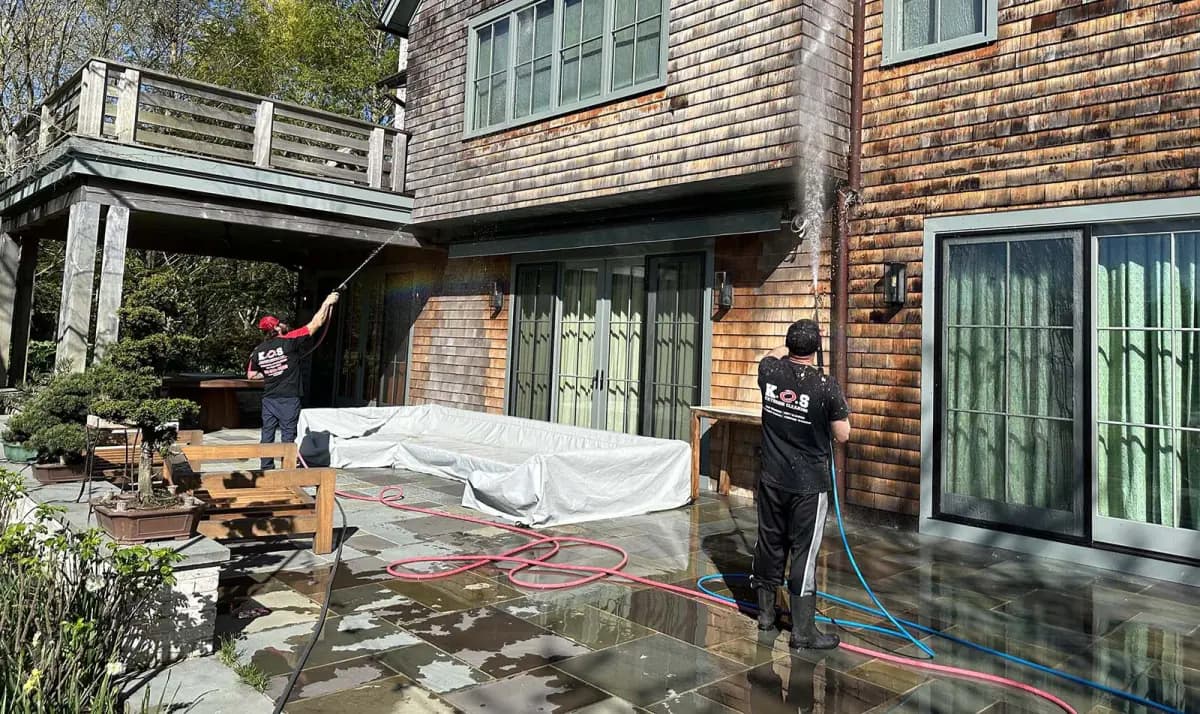
Get a free roof cleaning quote.
Real person · free estimates · no obligation
Call for a quote(631) 560-8999