

Where mold starts.
Mold needs moisture. Where it found it decides how far it spread — and what has to come out.
Attic mold
Roof leaks from rain, storms and ice dams; poor ventilation; thin insulation that lets warm air rise and condense; bathroom and dryer vents that discharge into the attic instead of outside. It shows up as dark staining on the roof sheathing, rafters and insulation.
Basement mold
Long Island is surrounded by water, and basements trap the humidity: warm air condenses on cool concrete, and block walls absorb ground moisture and release it slowly. A musty smell almost always means active growth — and the HVAC carries it through the house.
Crawlspace mold
A high water table, open vents and summer humidity keep crawlspaces damp. Because nobody goes down there, the mold is usually left alone until it spreads into the rest of the house.
Mold after water damage
Mold can start growing within 24 to 48 hours of a leak or flood, and the moisture left in walls, insulation and under flooring feeds it out of sight. In Glen Head, a roof leak that had already been repaired still left mold behind basement drywall.
What mold remediation includes.
Mold remediation is the removal of mold-contaminated materials and the cleaning of the structure around them inside sealed containment, followed by drying and, where needed, encapsulation — so the growth is gone and the moisture that fed it can’t bring it back.
On Long Island, K.O.S. Restoration does it in five steps to the IICRC S520 standard, as a New York State licensed remediator, with clearance testing by an independent assessor as the law requires.
Find the moisture, map the extent
Mold is a moisture problem with a fungus on top. Moisture meters and a thermal camera find where the water came from and how far the growth extends behind the surface you can see — before anything is cut.
Containment and negative air
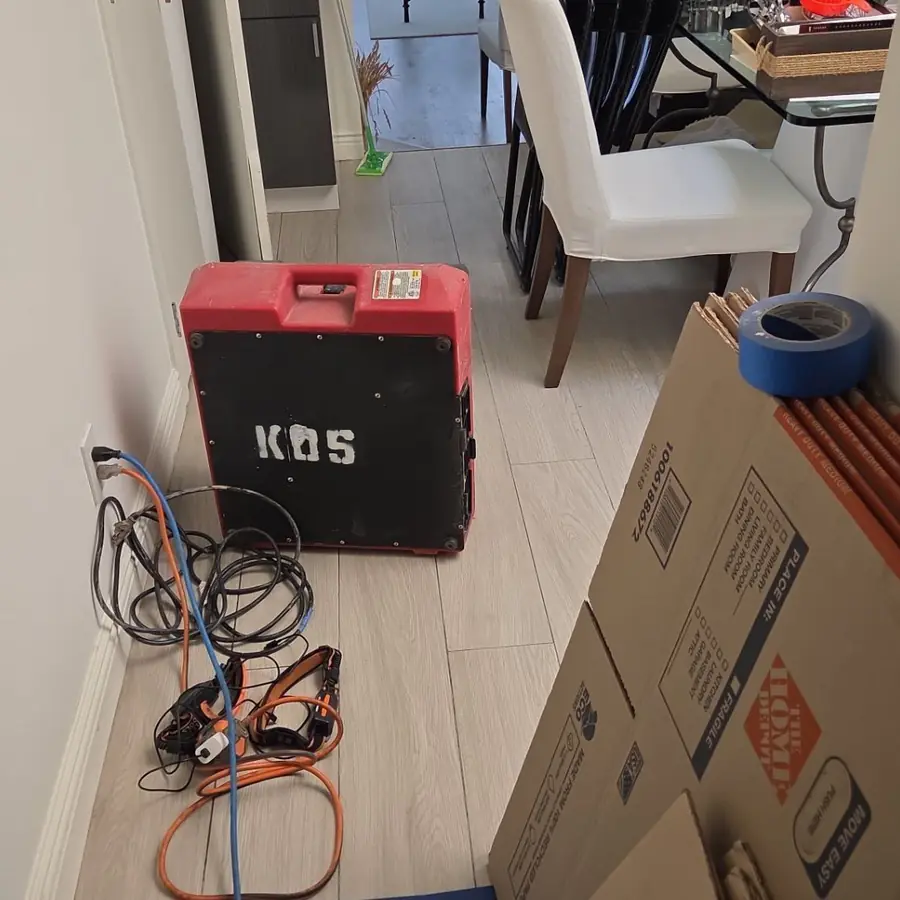
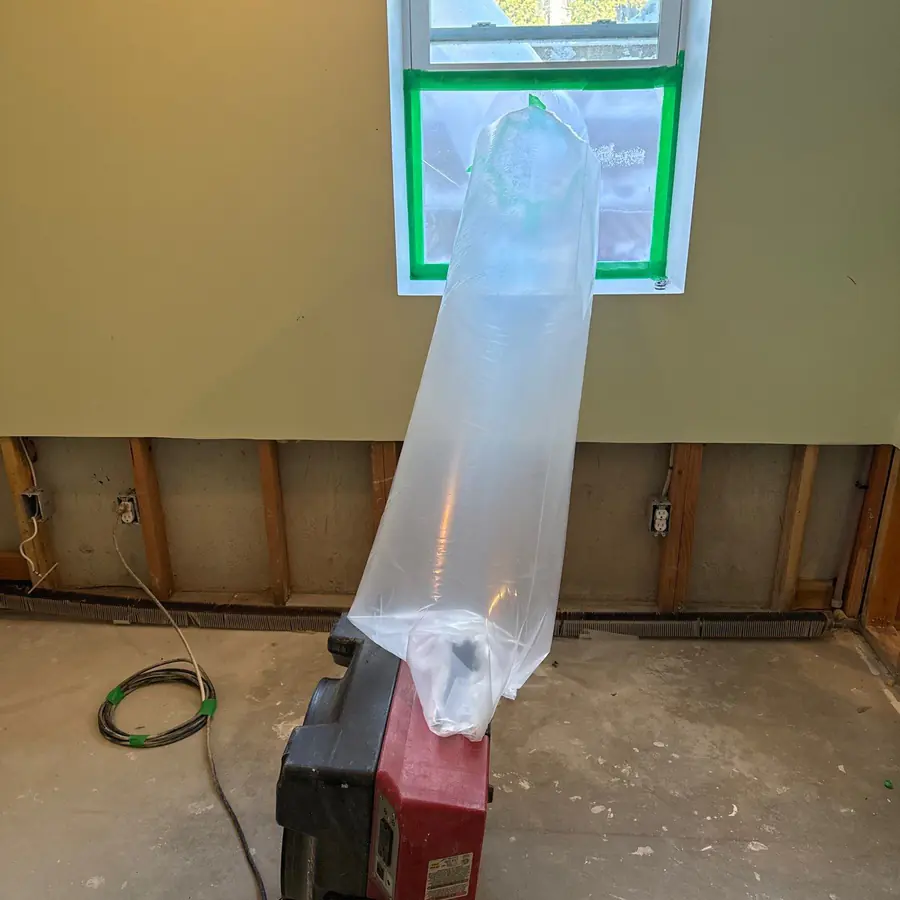
Sealed plastic barriers with zippered access, floors and stairways sheeted, and HEPA air scrubbers exhausting outside so the work zone runs under negative pressure. Demolition is when spores get airborne; containment is why one wall doesn't become a whole-house problem.
Remove what can't be cleaned
Drywall, insulation, and carpet pad with growth are cut back to clean, dry boundaries, bagged inside containment, and carried out through a controlled exit. Framing, sheathing, and concrete stay and get cleaned.
HEPA vacuum, antimicrobial, detail clean
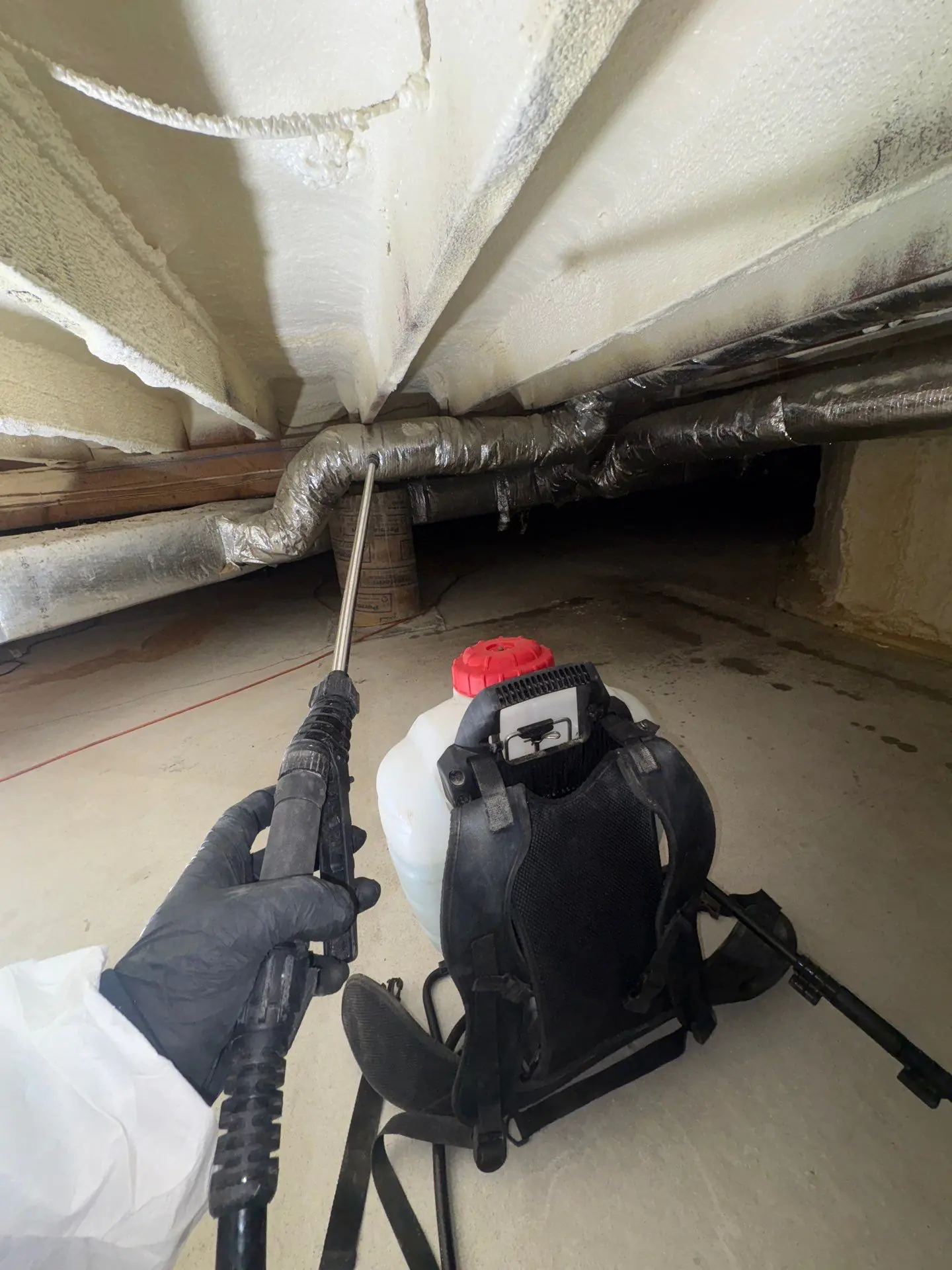
Every exposed surface is HEPA-vacuumed, treated with an enzyme-based antimicrobial, and cleaned by hand stud by stud — IICRC S520. Spraying alone is not remediation.
Dry, encapsulate, clear
Dehumidifiers run until the structure reads dry; framing and sheathing in crawlspaces and attics get a fungicidal encapsulant. Then an independent NY-licensed assessor tests the air — not us — and you get written clearance.
What it costs, and how long it takes.
Most residential mold jobs on Long Island finish inside a week, clearance included. Cost depends on how far the growth has spread, where it is, and what has to come out — not on the colour of the mold.
Mold caused by a sudden, covered water loss is usually paid for by insurance up to the policy’s mold cap; K.O.S. documents the loss from day one and bills your carrier directly.
Square footage of affected material, not how bad the visible patch looks. Growth behind one wall panel is a small job; a crawlspace or full attic is a multi-day one.
- Under 10 sq ft: often a contained single-room job
- One wall or ceiling cavity: removal plus cleaning
- Whole attic or crawlspace: insulation out, full encapsulation
Attics and crawlspaces cost more per square foot than a basement wall: PPE, access, insulation removal, and encapsulation of framing and sheathing are all part of the scope.
Porous materials with growth — drywall, insulation, carpet pad — are removed and replaced. Framing, sheathing, and concrete are cleaned and kept.
- Drywall and insulation: removed
- Framing and sheathing: cleaned and encapsulated
- Concrete and masonry: cleaned
Remediation without fixing the water — a roof leak, a bath fan into the attic, an open crawlspace — is a return visit booked in advance. The fix is scoped alongside the remediation, whoever does it.
Moisture readings and photos of the full extent, then barriers, floor protection, and negative-air scrubbers before any demolition. A crew is on site in 45 minutes for an emergency; a scheduled inspection is free.
Affected materials out, HEPA vacuuming, antimicrobial treatment, and hand cleaning of every exposed surface inside the containment.
Dehumidifiers run until framing reads dry, then a fungicidal encapsulant seals crawlspace and attic framing. Most residential jobs finish inside a week.
A NY-licensed mold assessor — a separate company, by law — samples the air and surfaces and issues written clearance. Then containment comes down.
Mold is covered when the water that caused it was: a burst pipe, a failed water heater, storm damage through the roof. Mold from a slow leak, humidity, or a chronically damp crawlspace usually isn't. Many policies cap mold at $5,000–$10,000 even when the loss is covered.
New York licenses mold assessors and remediators separately and requires them to be independent. The company that tests your mold cannot be the company that removes it. K.O.S. is a licensed remediator; we coordinate an independent assessor for clearance and never test our own work.
On a covered loss, your deductible. K.O.S. documents the loss with photos and moisture logs from day one — the record most mold claims are denied for not having — and bills the carrier directly.
Call (631) 560-8999and a crew looks at no charge. You’ll know how far it’s spread, what has to come out, and whether the claim is likely to be covered before any work starts.
What gets cleaned, what gets removed.
The line is porosity. Hard, structural materials are cleaned and sealed; soft, porous ones that held the moisture come out. Knowing which is which is most of what separates remediation from redecorating.
Framing and sheathing
Studs, rafters, roof decking, and joists are cleaned in place — HEPA, antimicrobial, hand-scrubbed — then sealed with a fungicidal encapsulant so the surface can't support regrowth. Replacing structure is almost never necessary.
Guide · What is mold encapsulation?
Drywall and insulation
Porous materials with growth are removed, not cleaned: the paper facing on drywall and fibreglass or cellulose insulation hold spores and moisture that no treatment reaches. Cut back to clean boundaries and documented for the claim.
Ductwork and HVAC
A mold job in a house with forced air isn't finished until the ducts are. Spores pulled into returns during the growth period recirculate on every cycle. K.O.S. Cleaning handles duct cleaning in the same engagement.
Contents and belongings
Hard-surface items are cleaned and returned; porous contents with growth — cardboard, fabric, upholstered furniture — are documented and bagged. Everything moved out of the work zone is boxed by hand and put back.
Containment is the job.
Demolition is the highest-risk moment in mold work: it’s when spores that sat quietly in a wall cavity get thrown into the air. Everything K.O.S. does before the first cut exists to keep them there.
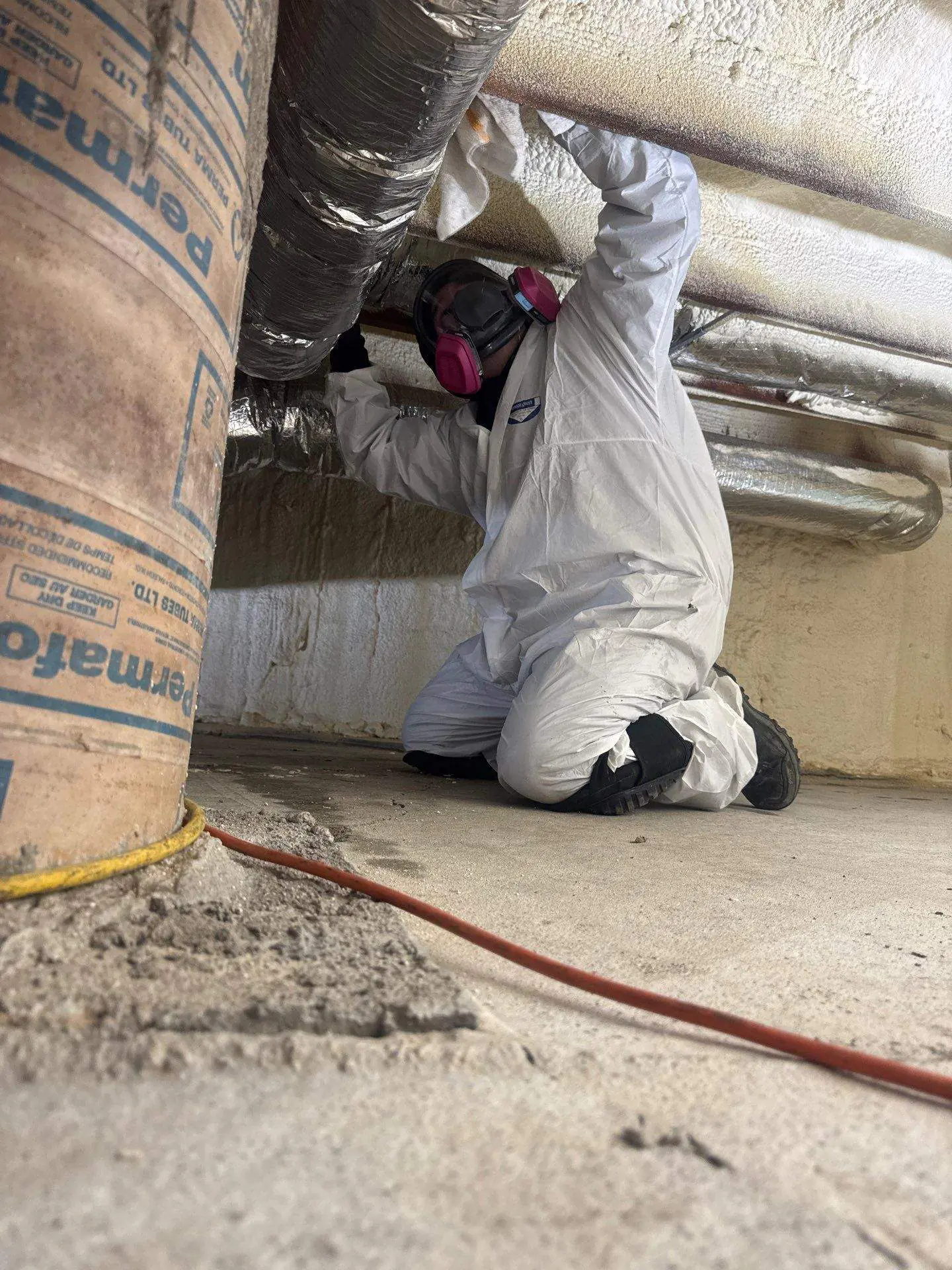
Sealed barriers with zippered access, protective sheeting on every path the crew walks, HEPA air scrubbers exhausting outside so the work zone runs under negative pressure, and full PPE — to IICRC S520. When it’s done, an independent assessor tests the air before the barriers come down.
Mold on Long Island is different.
K.O.S. Restoration has remediated attics, crawlspaces, and basements across Suffolk, Nassau, and Queens from Bellport since 2006. Coastal humidity, a high water table, and old housing stock decide where mold grows here — and how it has to be treated.
Crews dispatch from Bellport. Find your town on the service-area pages:
- Suffolk County
- The Hamptons & East End
- Nassau County
- Queens
Summer humidity does the growing
From June to September, outdoor air on the Island runs 70–80% relative humidity. An open-vented crawlspace or a closed-up summer house pulls that air in and holds it — mold needs 60% to grow.
Crawlspaces sit on the water table
South Shore and East End homes on piers or short crawlspaces have damp soil a few feet below the joists year-round. Encapsulation and a sealed vapor barrier are the fix, not another round of spraying.
Attics take the winter hit
Ice dams, bath and dryer fans vented into the attic instead of outside, and under-insulated roof decks that condense warm air in January. Our Glen Cove and Locust Valley attic jobs both started that way.
Post-war basements hide it well
Finished basements in 1950s–70s capes and splits put drywall and carpet against foundation walls that were never dry. The musty smell is usually the first and only sign until a panel comes off.
Featured work.
Attic mold remediation in Glen Cove.
Glen Cove, NY · September 2026 · Attic moisture
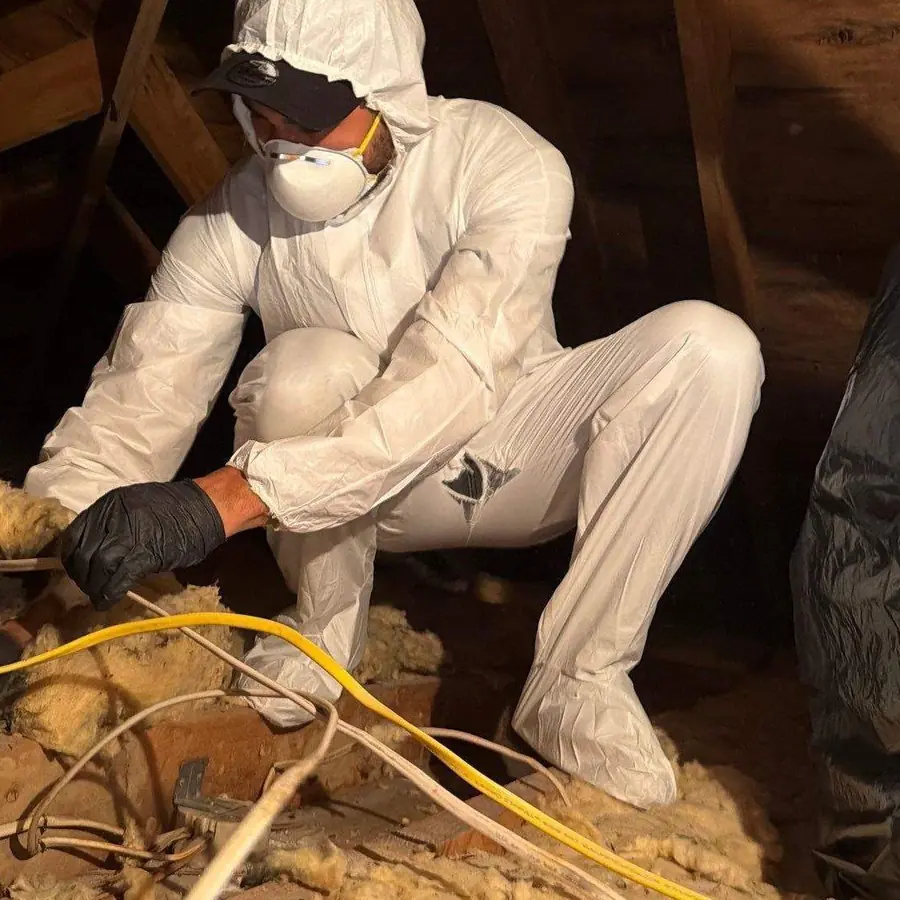
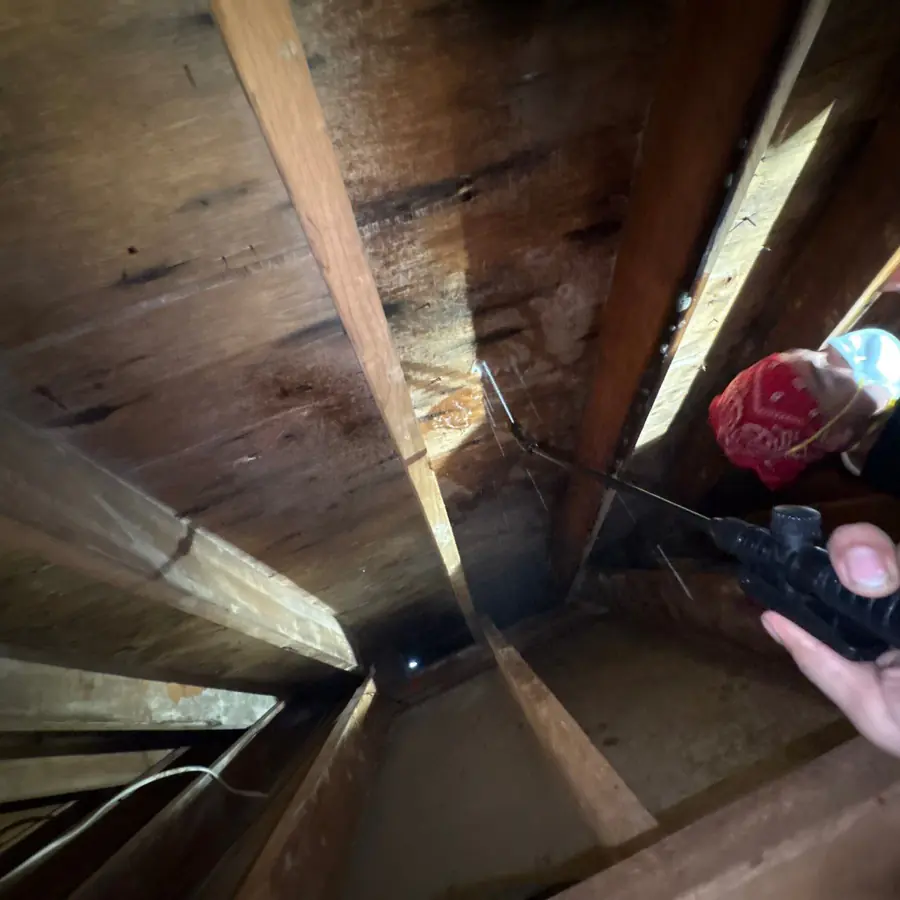
A perfectly normal-looking second floor, and mold developing above the ceiling. The homeowner found it by chance; the crew found the extent with moisture readings across the roof decking and framing before anything was touched.
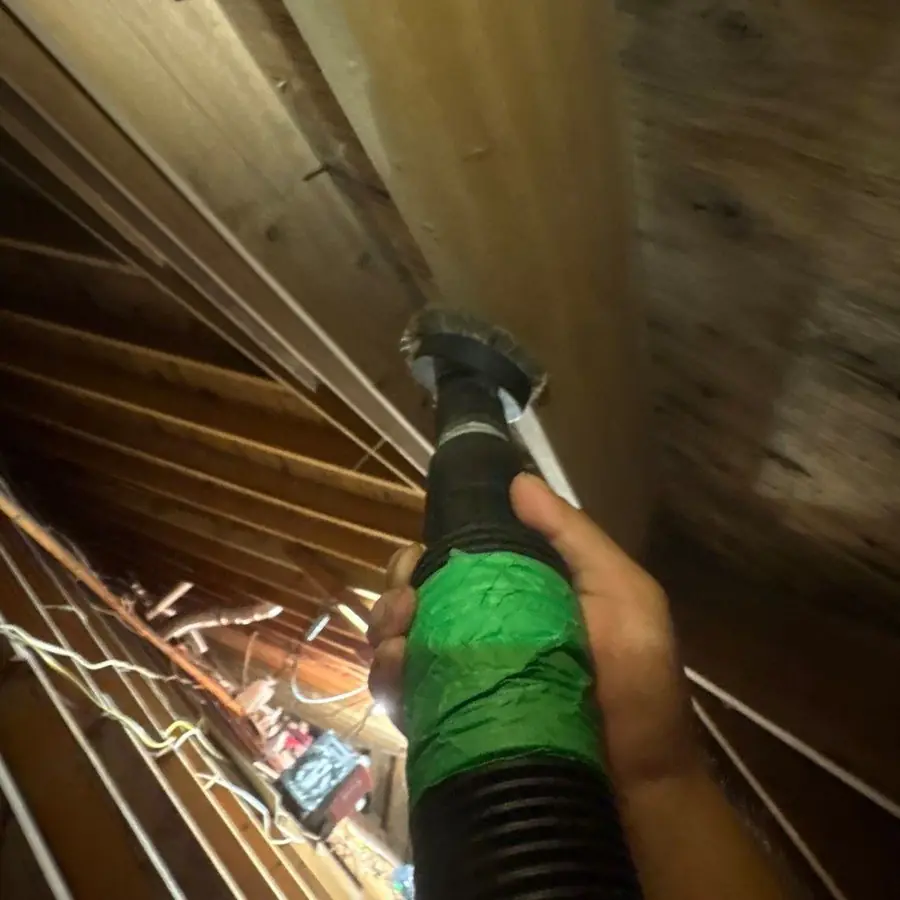
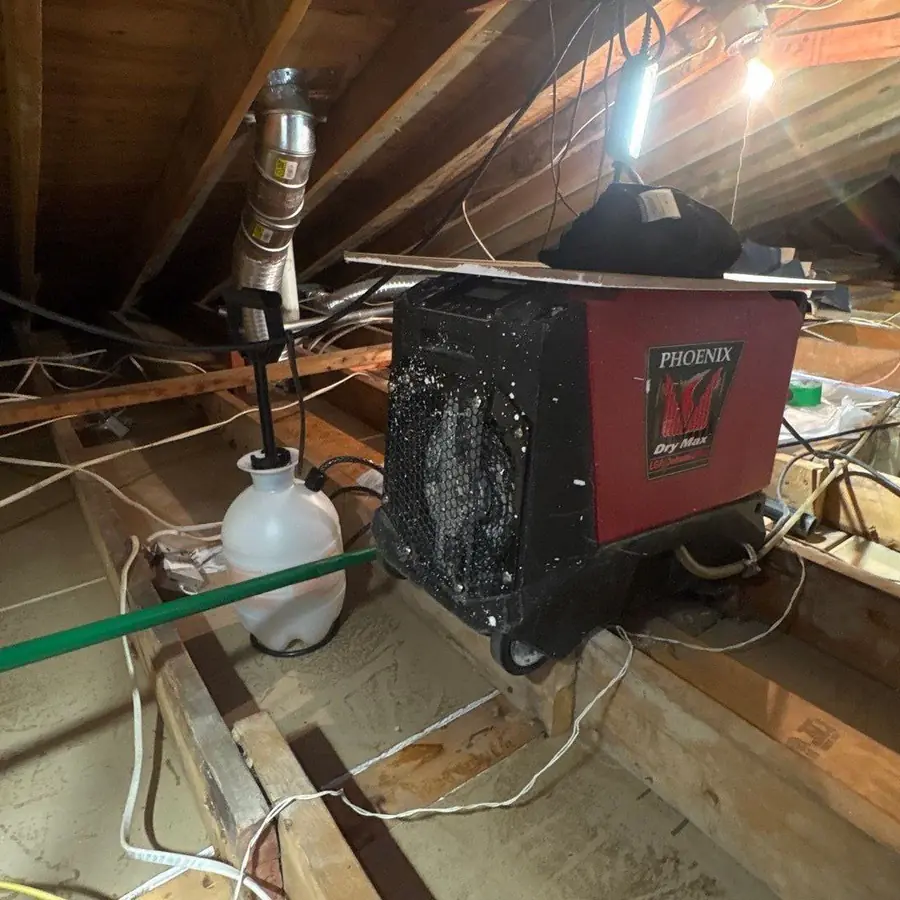
Stairs and hallway sheeted, insulation removed and bagged in full PPE, every exposed surface HEPA-vacuumed, treated with an enzyme solution and cleaned by hand — then drying equipment left running until the attic read dry, because cleaning mold without fixing the moisture just books the return visit.
Insurance handled
Mold is covered when the water that caused it was — and the claim lives or dies on the documentation.
Sudden, covered losses — burst pipes, failed water heaters, storm damage — usually include the mold that follows, up to your policy’s mold cap. K.O.S. photographs and logs moisture from the first visit and bills your carrier directly in Xactimate.
- State Farm
- Allstate
- Liberty Mutual
- GEICO
- USAA
- Travelers
- Mercury
- Mutual of Omaha
- Zurich
300+ neighbors have already called.
A 5.0 rating across Suffolk County. Read every review on Google.
Mold remediation questions
The questions people ask Google about mold remediation on Long Island — answered plainly, including the ones about cost and whether it's a rip-off.
What does mold remediation include?
Finding the moisture source and mapping how far the growth extends, sealing the area under negative air, removing porous materials with growth, HEPA-vacuuming and treating every exposed surface with an antimicrobial, drying the structure, encapsulating framing where needed, and independent clearance testing. K.O.S. does everything except the testing, which New York law requires to be a separate licensed company.
How much does mold remediation cost?
It depends on how far the growth has spread, where it is (attics and crawlspaces cost more than a basement wall), and what has to be removed. A contained single-room job and a full crawlspace are very different scopes. K.O.S. inspects free and gives you a written scope before any work starts; if the mold came from a covered water loss, your insurance usually pays and you owe the deductible.
Will insurance pay for mold remediation?
When the water that caused it was a covered, sudden event — a burst pipe, a failed water heater, storm damage — yes, though many policies cap mold coverage at $5,000–$10,000. Mold from humidity, a slow leak, or a damp crawlspace is usually excluded. The claims we see denied are almost always for missing documentation, which is why we photograph and log moisture from the first visit.
Can black mold be fully remediated?
Yes. Stachybotrys is removed the same way as any other mold — the material it's growing on comes out, the surfaces around it are HEPA-cleaned and treated, and the moisture that fed it is fixed. The colour of the mold doesn't change the process; the extent and the moisture source do. What can't be done is spraying it and leaving the wet drywall in place.
Is mold remediation a rip-off?
It can be, which is why New York regulates it. Red flags: a company that offers to both test and remove your mold (illegal in NY), a quote without a written scope, 'fogging' or spraying as the whole job, and no containment. A real job removes the affected material under negative air and ends with an independent clearance test. Small surface mold on a hard, non-porous surface under about ten square feet is a reasonable DIY job.
What kills mold immediately?
Nothing you spray. Bleach kills surface mold on tile and glass but its water content soaks into drywall and wood and feeds the roots it doesn't reach. Antimicrobials work on cleaned surfaces, not through material. Mold on anything porous is removed, not killed, and the only thing that stops it coming back is drying the structure.
Can you stay in the house during remediation?
Usually. The work zone is sealed and under negative pressure, so spores don't travel into the rest of the house, and most jobs are one area — an attic, a crawlspace, one basement room. If the growth is extensive or someone in the home has asthma or a compromised immune system, we'll say so plainly and recommend staying elsewhere for the removal days.
Does mold come back after remediation?
Not if the moisture is fixed. Mold returns when the roof leak, the bath fan into the attic, or the damp crawlspace is left as it was. That's why the moisture source is part of the scope, framing is encapsulated in crawlspaces and attics, and the structure is dried to a measured standard before we leave.
What do you throw away after mold remediation?
Porous materials with growth: drywall, insulation, carpet and pad, ceiling tile, cardboard, and upholstered or fabric items that were in contact with it. Hard, non-porous items — metal, glass, sealed wood, plastics — are cleaned and kept. Everything removed is bagged inside containment and documented for the claim.
Do I need mold testing before remediation?
Not always. Visible growth with a known water source doesn't need a lab to confirm it's mold. Testing matters when growth isn't visible, when a landlord, buyer, or insurer needs a record, and always for clearance afterward. In New York the assessor must be independent of the remediator — K.O.S. can recommend one, but never tests its own work.
Guides.
If you’ve found mold — or think you smell it — these four answer what comes next: how fast it spreads, why claims get denied, when it’s safe to handle yourself, and what that smell actually is.
Written by the people who show up, from jobs on Long Island — not a national franchise’s content team.
How fast does mold grow after flooding?
The 24-to-48-hour window, what speeds it up in Long Island humidity, and why a dried house on day two rarely becomes a remediation on day ten.
Read the guide →
Top reasons home insurance denies mold claims
Gradual leaks, deferred maintenance, missing documentation — the denials we see most, and what to have in hand before you call your carrier.
Read the guide →
The real risks of DIY mold remediation
Why bleach doesn't work on drywall, how scrubbing without containment spreads spores through the house, and when a small patch is genuinely a DIY job.
Read the guide →
Is that smell mold, mildew, or something worse?
Telling a musty basement from a sewer gas problem from active mold growth — and what each one means you should do next.
Read the guide →
All mold guides →
Mold doesn’t wait for a convenient week.
Real person · 24/7 · 45-minute response
Start the clock(631) 560-8999