

When you need a mold test.
Most homeowners need the free inspection and not the lab. These are the three times the lab earns its fee.
A musty smell, nothing visible
In finished Long Island basements the growth is on the back of the drywall, against a foundation wall that was never dry — nothing shows on the painted side. A past leak that was 'fixed', a stain you can't explain, or symptoms that ease when you leave the house all point the same way. The free inspection finds the moisture; an air test confirms what's in the air.
Selling, leasing, or an insurance claim
A buyer's inspector flags a crawlspace, a landlord or tenant needs a record, an adjuster wants proof. They need a licensed assessor's lab report — not a contractor's opinion, and never a DIY kit. New York requires you to disclose known mold when you sell, not to remediate first; the clearance letter is what closes the deal.
Clearance after remediation
On any job over ten square feet, New York requires an independent assessor to sample again once the work is done and the structure is dry. The containment comes down only when the air passes — your proof it worked, from someone with no stake in saying so.
Inspection, assessment, and who does which.
A mold inspection finds moisture and visible growth — meters, a thermal camera, a look in the attic and crawlspace. A mold assessment adds sampling, a lab, and a written protocol, and in New York it must be done by a licensed assessor independent of whoever remediates.
K.O.S. Restoration inspects for free and remediates to the IICRC S520 standard. It does not test, and it coordinates an independent assessor whenever a test is the right next step.
Call and describe it
What you see, what you smell, and what happened before — a leak, a flood, a damp summer. Most of the time that conversation already says whether you need a free look or a formal test.
Free K.O.S. inspection
A crew on site in 45 minutes for an emergency, scheduled otherwise. Moisture meters on the walls, a thermal camera for water you can't see, a look in the attic or crawlspace, and a plain-English answer: is this mold, where's the moisture, and what would fixing it involve.
Independent assessment, if it's needed
When there's hidden growth, a sale or lease, a tenant or insurer who needs a record, or a health concern, K.O.S. coordinates a NY-licensed mold assessor — a separate company, by law. They sample air and surfaces, send it to a lab, and write the remediation protocol.
Remediation to the protocol
If the assessment finds mold, K.O.S. remediates to the assessor's written plan and the IICRC S520 standard: containment, negative air, removal, HEPA cleaning, drying, encapsulation where needed.
Clearance by the same independent assessor
The assessor — not K.O.S. — comes back, samples again, and issues written clearance before the containment comes down. That's your proof it worked, from someone with no stake in saying so.
What it costs, and how long it takes.
The inspection is free and same-day. A licensed assessment is priced by the assessor and takes a few days for lab results. Most homeowners need the first and not the second.
New York’s Article 32 is why the two are separate — and why a remediation that ends with an independent clearance letter is worth more than one that doesn’t.
Moisture readings, thermal imaging, a look in the attic or crawlspace, and an honest answer. No sampling, no lab, no charge — whether or not you hire us for anything afterward.
- Is it mold, and where is the moisture coming from
- Does it need a licensed assessment first
- What remediation would involve, in writing
Independent assessors price by home size, number of samples, and what's sampled — air, surface swab or tape, sometimes bulk material. Long Island assessors commonly publish a few-hundred-dollar range for a residential visit; lab fees are per sample. K.O.S. doesn't mark it up or take a cut.
A second assessor visit after remediation, priced like the first. On a covered water loss it's usually part of the claim.
Petri-dish kits grow whatever lands in them — every house 'tests positive'. They can't tell you where growth is, how much, or whether the air is a problem, and no buyer, landlord, or insurer accepts them. Save the money for the inspection that answers the question.
On site in 45 minutes for an emergency; a scheduled inspection is usually within a day or two. You leave the visit knowing what you're dealing with.
K.O.S. coordinates the assessor around your schedule. The visit itself is an hour or two for most homes.
Samples go to an accredited lab; the assessor writes up the results and, if remediation is needed, the protocol K.O.S. works to.
The assessor returns once the work is done and the structure is dry, samples again, and issues written clearance. Then the containment comes down and the rebuild can start.
Since 2016, New York licenses mold assessors and mold remediators separately, for any job over 10 square feet, and prohibits the same company from doing both on the same project. It's the strongest consumer protection in the country against the 'we found mold, we'll remove it' upsell.
The assessor inspects, samples, writes the remediation plan, and clears the job afterward. The remediator — K.O.S. — does the work to that plan. Neither can be paid by the other.
- Assessor: licensed, independent, samples and clears
- Remediator: licensed, does the work to the protocol
- You: hire each directly, keep both reports
You can. New York's Property Condition Disclosure requires you to disclose known mold and water problems; you don't have to remediate before listing. Most buyers' lenders and inspectors will want it addressed, so a remediation with an independent clearance letter is what closes the deal.
Test its own work, recommend an assessor it's paid by, or 'inspect' visible mold with a plan to remediate before anyone independent has looked. If a contractor offers you a free test and a remediation quote in the same visit, that's the violation the law was written for.
What the tests actually measure.
Four kinds of evidence, three of them from a lab. Knowing which question each one answers is how you avoid paying for the wrong test.
Air sampling
Spore-trap cassettes run indoors and outdoors for comparison; the lab counts and identifies what's in the air. The standard for 'is the air a problem' and for clearance.
Surface sampling
Tape lifts or swabs from a stain or a suspect surface — is it mold, and which kind. Cheap and definitive for a visible patch.
Moisture mapping and thermal imaging
What K.O.S. does on the free inspection: pin and pinless meters on walls and floors, a thermal camera for water behind finishes. Finds the source and the extent; doesn't need a lab.
Guide · Signs of attic mold infestation
Bulk sampling
A piece of the material itself — drywall, insulation, carpet pad — sent for analysis. Used when the assessor needs to prove contamination inside a material for a claim or a dispute.
What a free inspection finds.
Most mold on Long Island is found with a moisture meter, not a lab. Readings across a wall show where water travelled; a thermal camera shows what’s wet behind a finish; a flashlight in the attic or crawlspace shows the rest.
You get a straight answer on the spot: whether it’s a moisture problem, how far it goes, and whether an assessor’s test would change what should happen next.
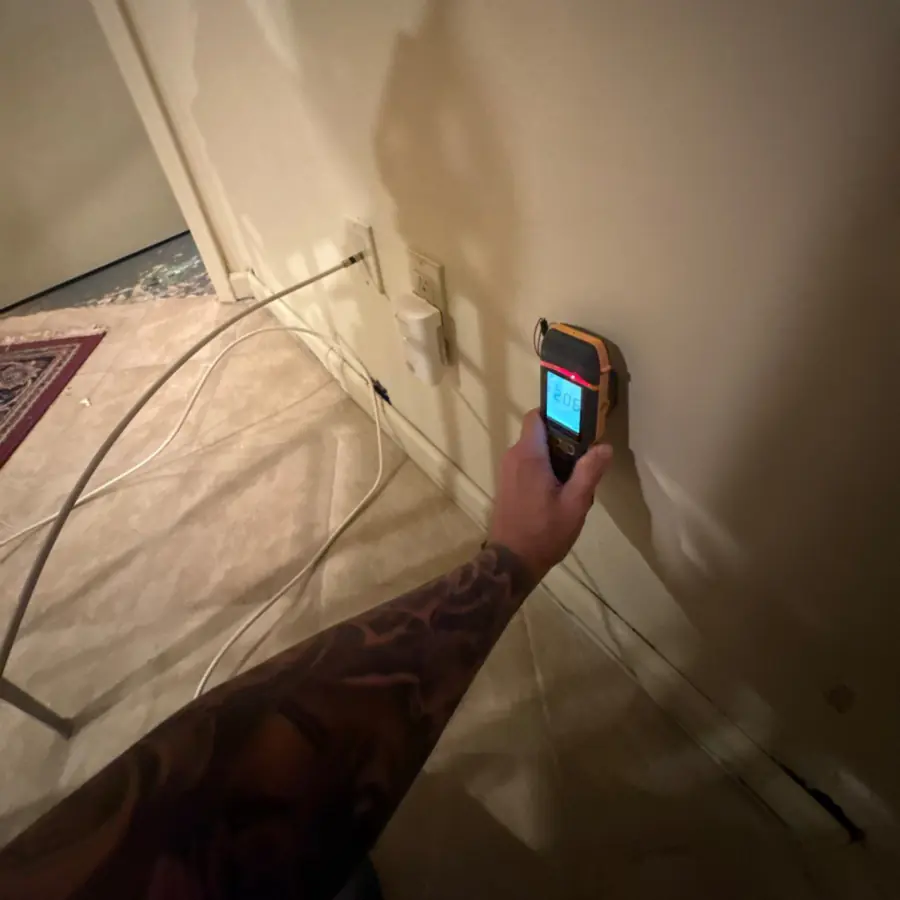
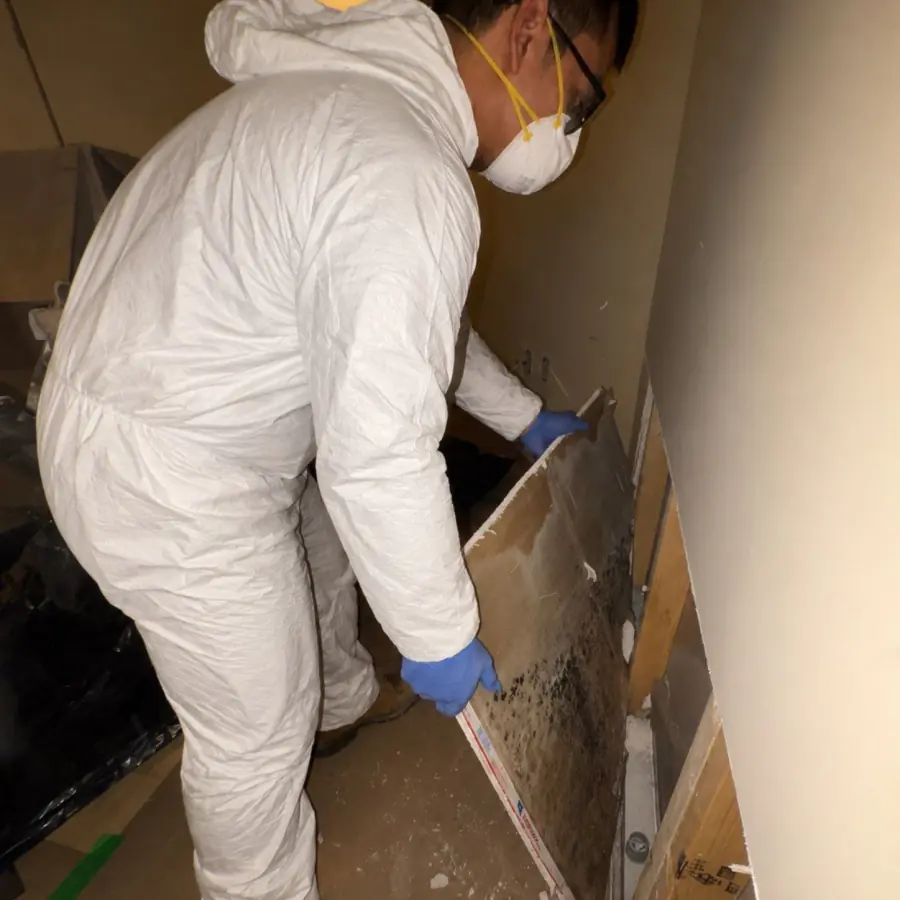
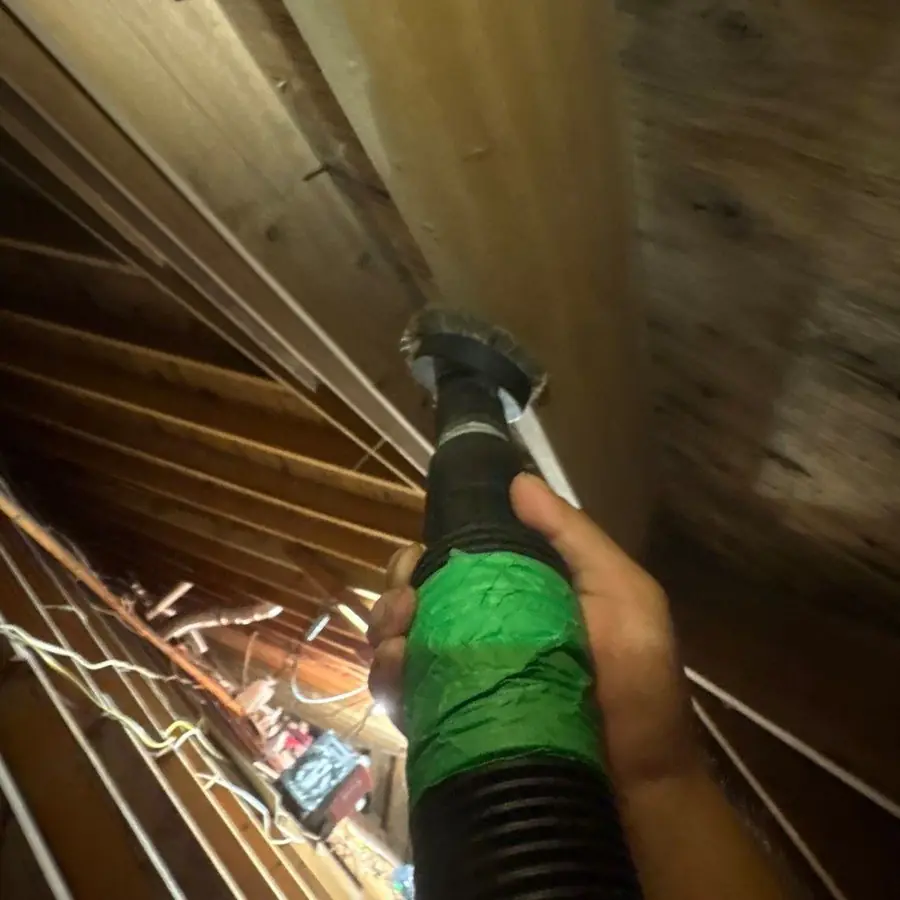
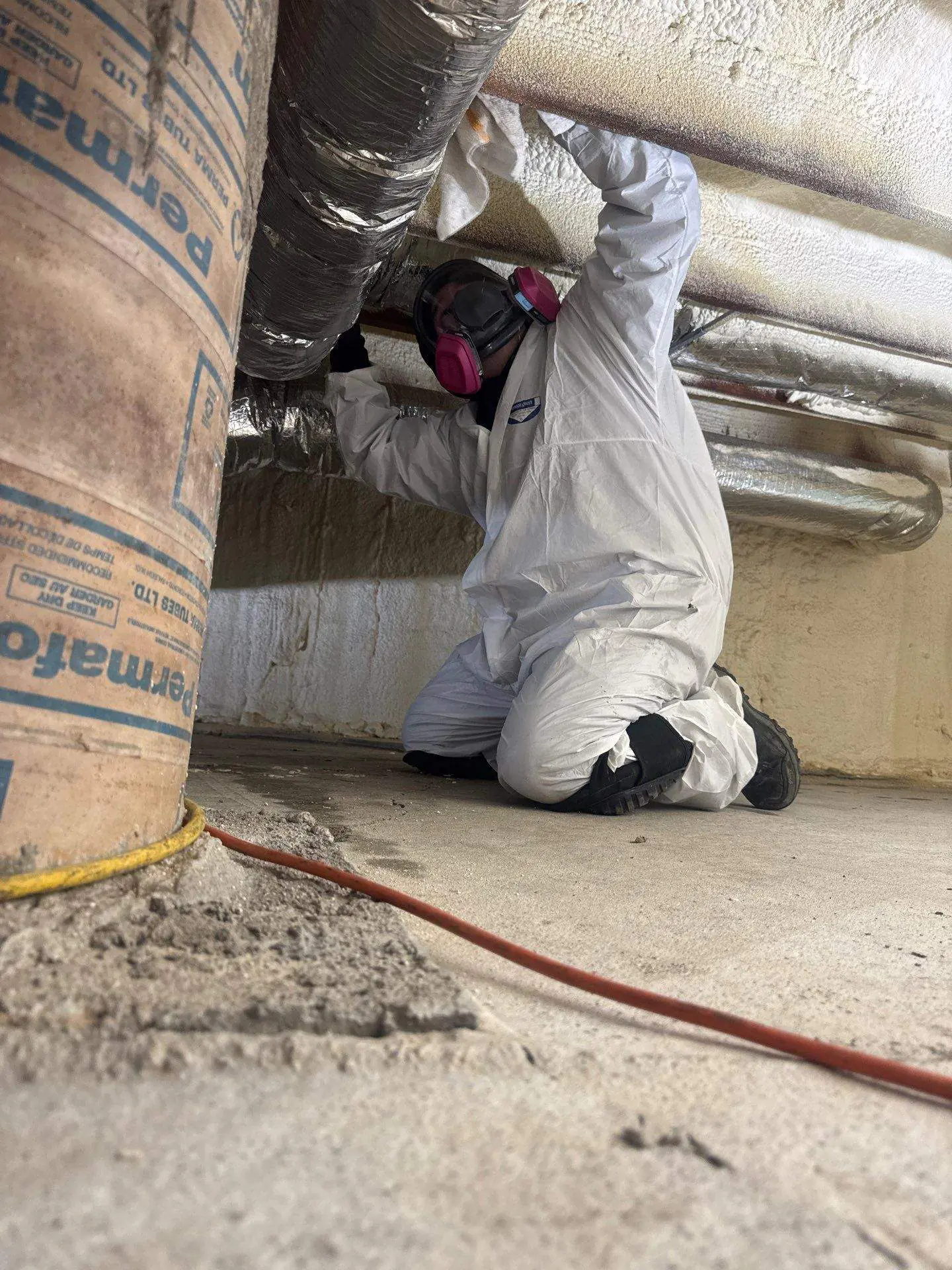
Inspecting for mold on Long Island.
K.O.S. Restoration has inspected basements, attics, and crawlspaces across Suffolk, Nassau, and Queens from Bellport since 2006. The housing stock and the climate decide where mold hides here — and when a lab test is worth the money.
Crews dispatch from Bellport. Find your town on the service-area pages:
- Suffolk County
- The Hamptons & East End
- Nassau County
- Queens
The smell is usually the only sign
In finished Long Island basements the growth is on the back of the drywall, against a foundation wall that was never dry. Nothing shows on the painted side. A moisture meter finds it in minutes; a lab test on the air confirms it.
Attics get inspected during other work
Roofers, insulators, and HVAC techs find most attic mold here. Discoloured decking in Glen Cove, Locust Valley, and Kings Park all came to us that way — a free look before you pay for a test is the right order.
Real-estate season drives testing
Spring listings on the North Shore and the East End are where formal assessments matter: a buyer's inspector flags a crawlspace, and the seller needs a licensed report and a clearance letter, not a contractor's opinion.
Summer humidity muddies air tests
Outdoor spore counts on the Island in July are high everywhere. A good assessor samples outdoors for comparison; a bad reading in August doesn't mean what it would in February. That's why the inspection comes first.
Featured work.
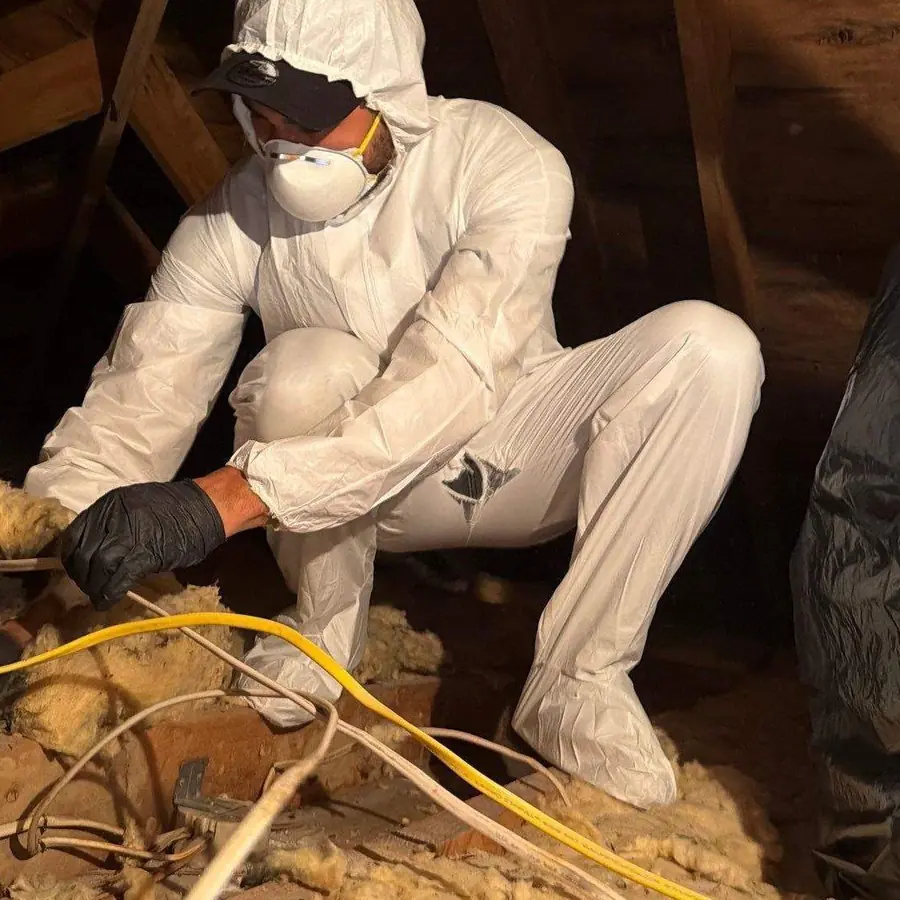
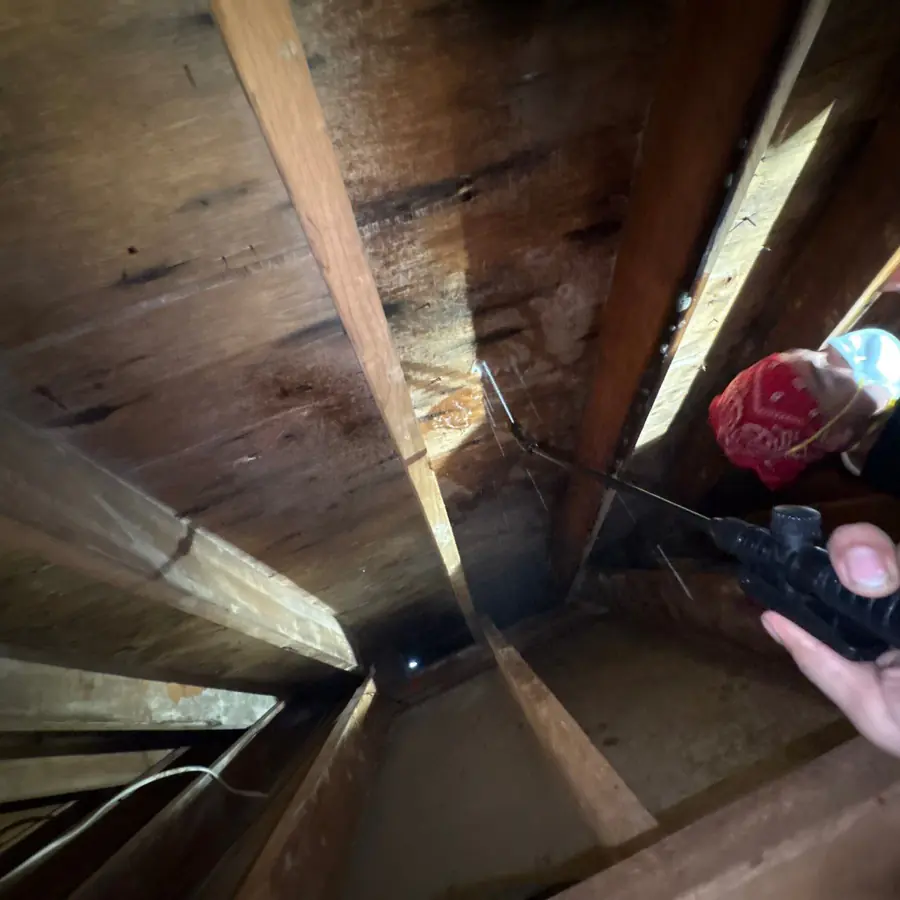
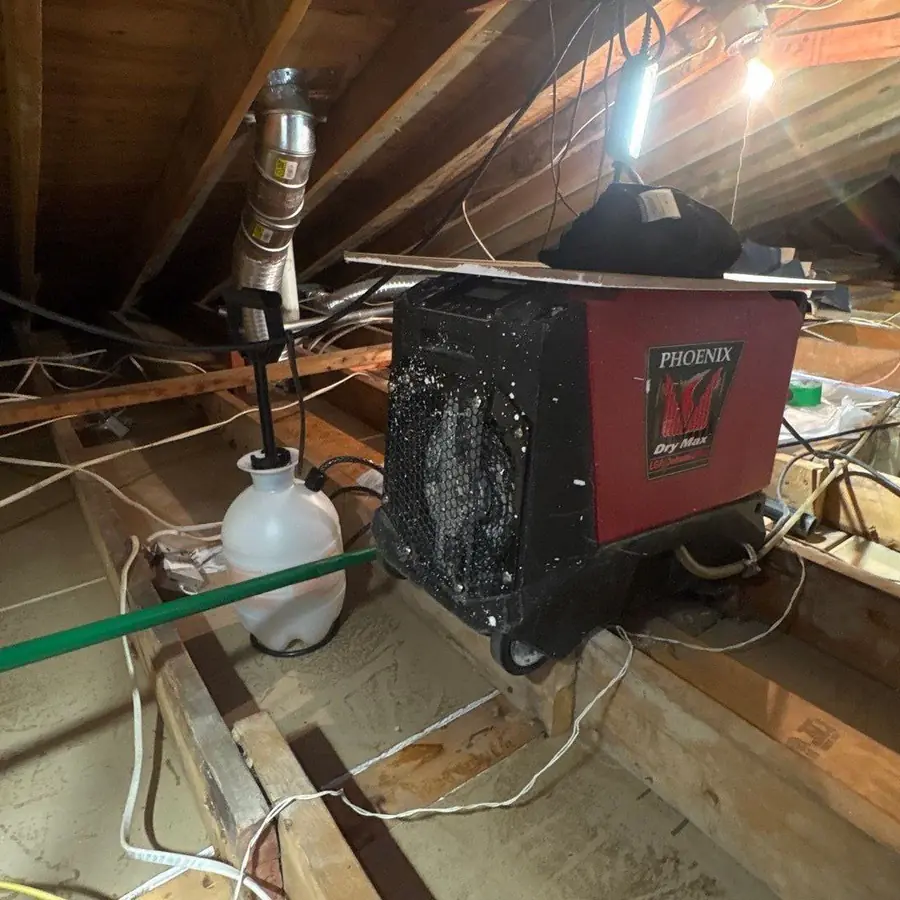
Attic mold remediation in Glen Cove.
Glen Cove, NY · September 2026 · Attic moisture
A perfectly normal-looking second floor, and mold developing above the ceiling. The homeowner found it by chance; the crew found the extent with moisture readings across the roof decking and framing before anything was touched.
Stairs and hallway sheeted, insulation removed and bagged in full PPE, every exposed surface HEPA-vacuumed, treated with an enzyme solution and cleaned by hand — then drying equipment left running until the attic read dry, because cleaning mold without fixing the moisture just books the return visit.
Insurance handled
An independent assessment is the documentation a mold claim usually lives or dies on.
When mold follows a covered water loss, the assessor’s report, the protocol, and the clearance letter are the records your carrier asks for. K.O.S. photographs and logs moisture from the first free visit and bills the remediation directly in Xactimate.
- State Farm
- Allstate
- Liberty Mutual
- GEICO
- USAA
- Travelers
- Mercury
- Mutual of Omaha
- Zurich
300+ neighbors have already called.
A 5.0 rating across Suffolk County. Read every review on Google.
Mold testing questions
The questions people ask Google about mold testing on Long Island — including whether you can sell with mold and how to get a look for free — answered plainly.
Does K.O.S. do mold testing?
No — by New York law it can't, and neither can any company that remediates. K.O.S. does a free inspection (moisture readings, thermal imaging, a visual check of attics and crawlspaces) and, when sampling is needed, coordinates an independent NY-licensed mold assessor who tests, writes the protocol, and clears the job afterward. K.O.S. never tests its own work.
How can I get my house tested for mold for free?
Lab testing isn't free — assessors charge for the visit and per sample. What is free is a K.O.S. inspection: a crew with moisture meters and a thermal camera tells you whether you have a moisture problem, where it is, and whether a paid assessment is actually needed. For most visible mold with a known water source, it isn't.
What is the average cost of a mold test on Long Island?
Independent assessors set their own prices; a residential visit with a few air or surface samples is commonly quoted in the low hundreds of dollars, with lab fees per sample on top. The number depends on home size, how many areas are sampled, and whether you need a written protocol. K.O.S. can recommend assessors it has worked alongside and takes nothing from the fee.
What are the signs you need mold testing?
A musty smell with nothing visible, a stain you can't explain, a past leak that was 'fixed', allergy or asthma symptoms that ease when you leave the house, or anyone — a buyer, landlord, tenant, insurer — who needs a lab record. Visible mold with a known water source usually doesn't need a test; it needs a moisture inspection and a remediation plan.
Do I need a test if I can already see mold?
Usually not. Visible growth with an obvious cause — a leak, a flood, a damp crawlspace — doesn't need a lab to confirm it's mold, and the remediation would be the same whichever species it is. Where a test earns its cost: the extent isn't visible, someone else needs documentation, or the job is large enough that New York requires an assessor's protocol.
Can you sell a house with mold in New York?
Yes. New York's Property Condition Disclosure Statement requires you to disclose known mold and water damage; it doesn't require you to remediate before you list. In practice a buyer's inspector will flag it and the lender may condition on it, so a remediation with an independent clearance letter is what gets the sale closed. K.O.S. can do the work; the assessor supplies the letter.
Air test or swab — what's the difference?
A swab or tape lift tells you what a visible patch is. An air sample tells you what's in the air you're breathing, compared to outside — it's how hidden growth is found and how a job is cleared. An assessor chooses based on what question you're asking; most inspections that need a test use both.
Can the same company inspect and remediate my mold?
Not in New York. Labor Law Article 32 requires the assessor and the remediator to be independent on any job over ten square feet. A company offering a 'free mold test' and a remediation quote in one visit is the conflict of interest the law was written to stop. K.O.S. is a licensed remediator and coordinates a separate assessor.
What if I used a DIY mold test kit?
Treat it as no information. Petri-dish kits grow spores that are in every house, so they always come back positive, and they say nothing about where growth is or how much. No buyer, insurer, or assessor accepts them. A free inspection answers the real question.
Is black mold more dangerous?
Colour doesn't tell you the species, and the remediation is the same for all of them: remove the contaminated material, clean and dry the structure, fix the moisture. What matters is how much there is, how long it's been growing, and who lives in the house. An assessor's lab report identifies the species if you need to know.
Guides.
If you’re trying to decide whether to call anyone at all, these four are the place to start: what that smell is, what a musty basement means, the attic signs worth acting on, and why mold claims get denied.
Written by the people who show up, from jobs on Long Island — not a national franchise’s content team.
Is that smell mold, mildew, or something worse?
Telling a musty basement from a sewer gas problem from active mold growth — and what each one means you should do next.
Read the guide →
That musty smell in your basement? Here's what's really going on
What a musty basement smell is made of, why it's usually the first and only sign, and the three places to look before you call anyone.
Read the guide →
Signs of attic mold infestation
Discoloured roof decking, damp insulation, frost on nails in January — the attic signs that mean an inspection, and the ones that don't.
Read the guide →
Top reasons home insurance denies mold claims
Gradual leaks, deferred maintenance, missing documentation — the denials we see most, and what to have in hand before you call your carrier.
Read the guide →
All mold guides →
Find out for free before you pay for a test.
Real person · 24/7 · 45-minute response
Start the clock(631) 560-8999