
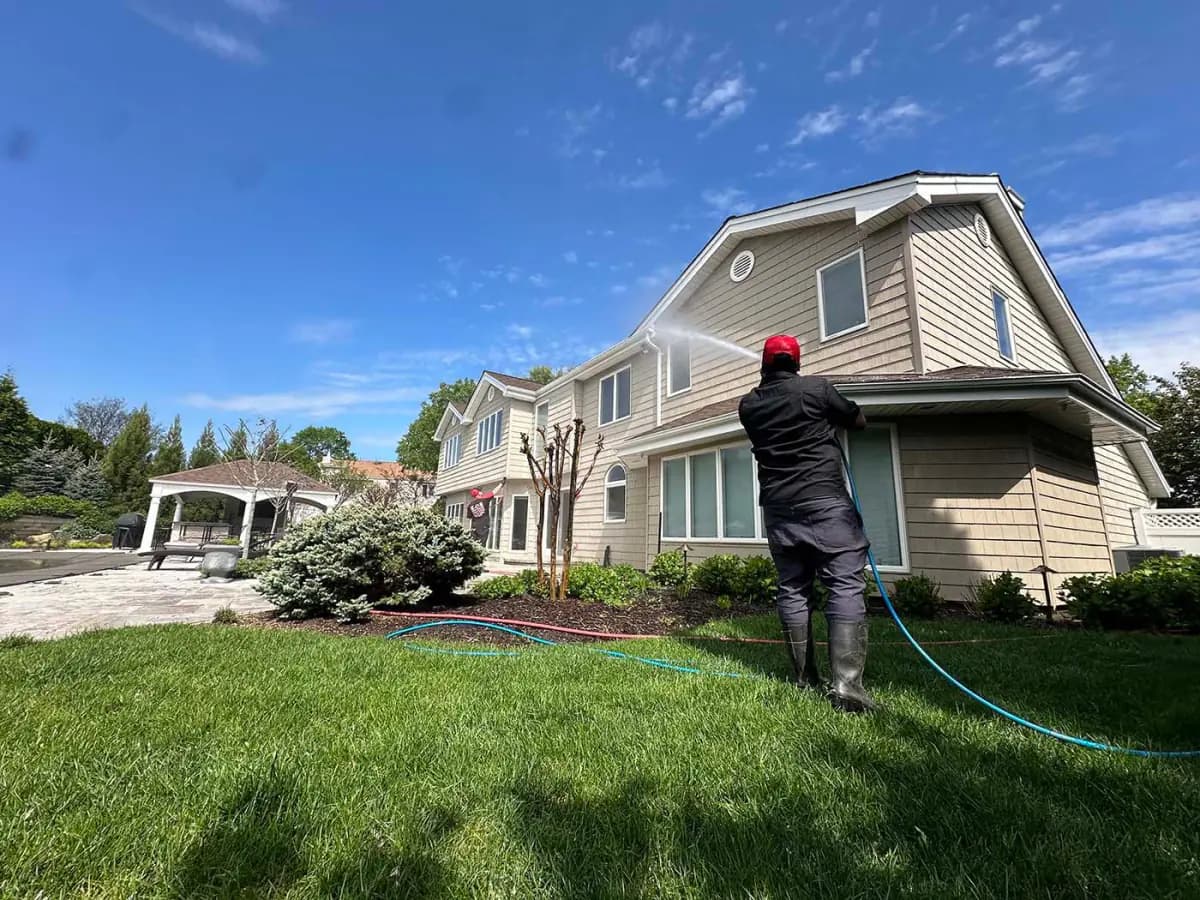
Soft washing, not pressure washing.
Soft washing cleans a house with a biodegradable solution applied at low pressure, then rinses it off gently. The solution kills algae, mold and mildew at the root — so it lasts longer than blasting the surface clean, and nothing gets cracked, stripped or forced behind the siding.
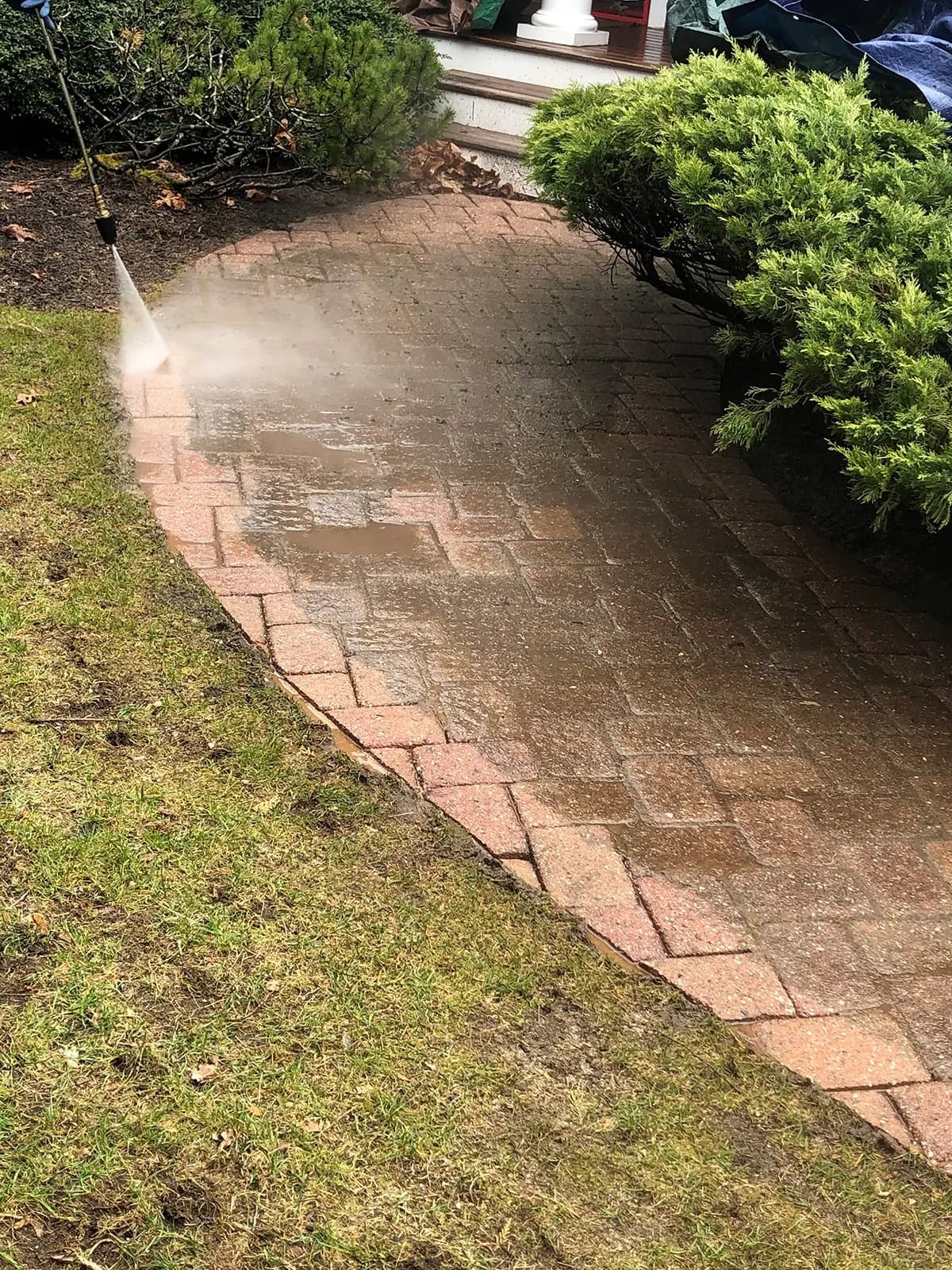
Pressure washing still has its place: concrete, pavers and driveways. Most homes need both, on different surfaces.
What we soft wash
- Vinyl sidingGreen algae and black streaks, north walls first.
- Painted wood and stuccoClean without stripping the finish.
- Brick and stoneHigh pressure erodes the face and dislodges mortar.
- Fences and screensThe same growth, the same method.
How we soft wash a house.
Most homes are done in just a few hours. Four steps, every job:
Pre-rinse and protect the plants
Beds, shrubs and lawn next to the house are rinsed first so the landscaping comes through the wash healthy.
Apply the cleaning solution
Biodegradable, eco-friendly solution goes on at low pressure — it does the cleaning, not the force of the water.
Let it dwell
The solution is given time to break down algae, mold and mildew at the root, instead of blasting the visible layer off and leaving the spores behind.
Low-pressure rinse
A gentle rinse carries it all away — no stripped paint, cracked siding or water forced behind the panels.
What it looks like.
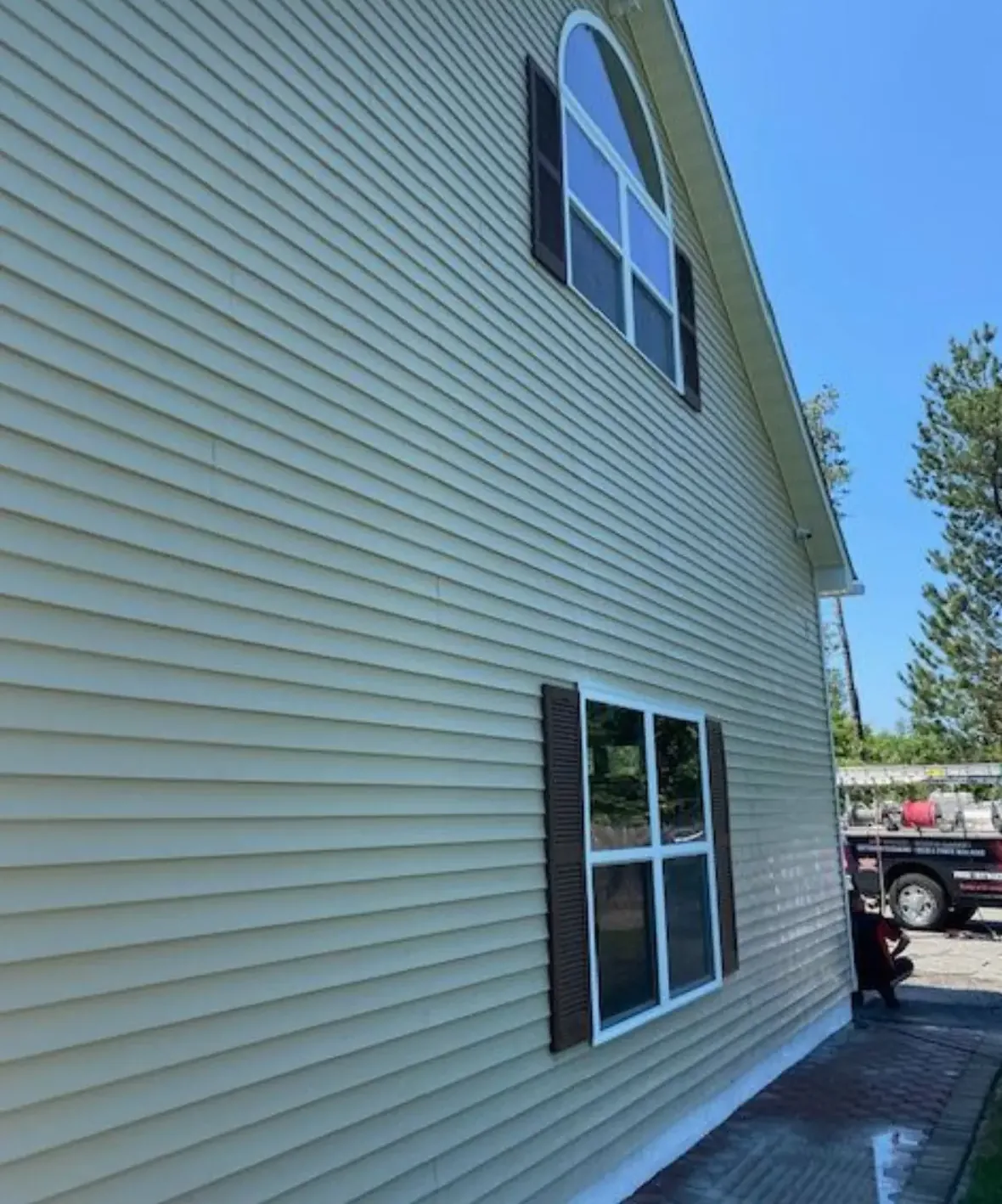
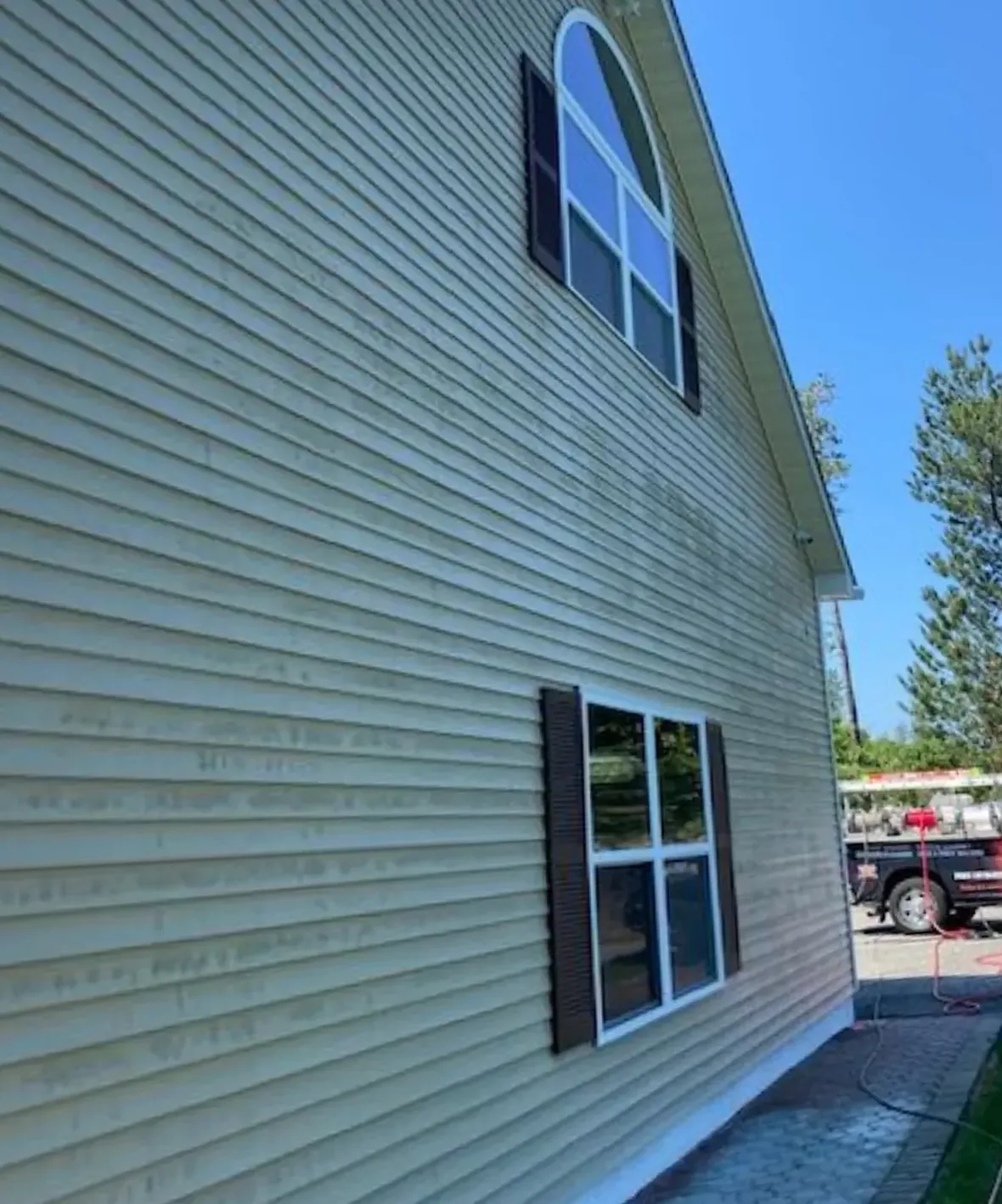
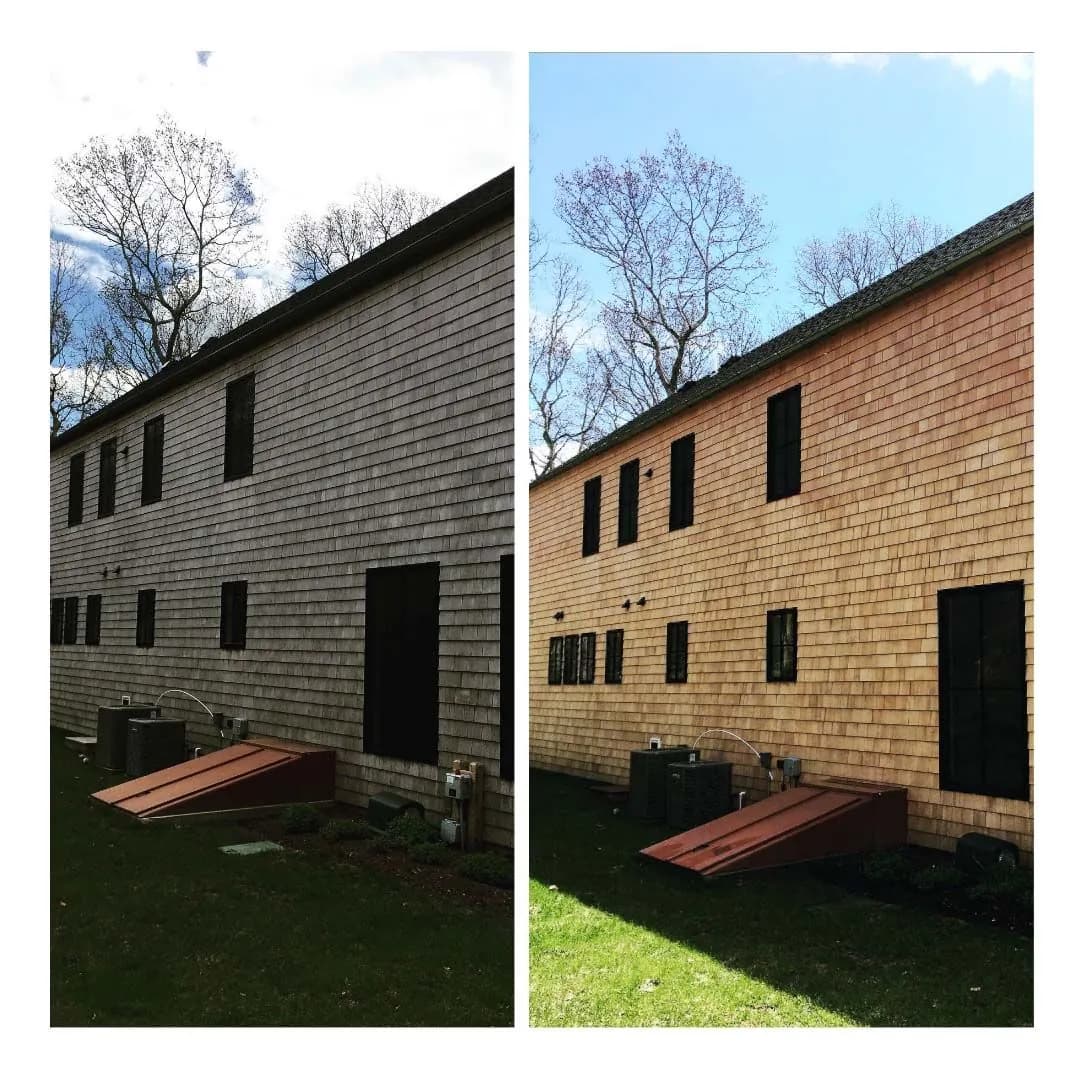
The same wall of vinyl siding, before and after a soft wash. Drag the handle to compare.
Free estimate. The price you’re quoted is the price you pay.
On the job.
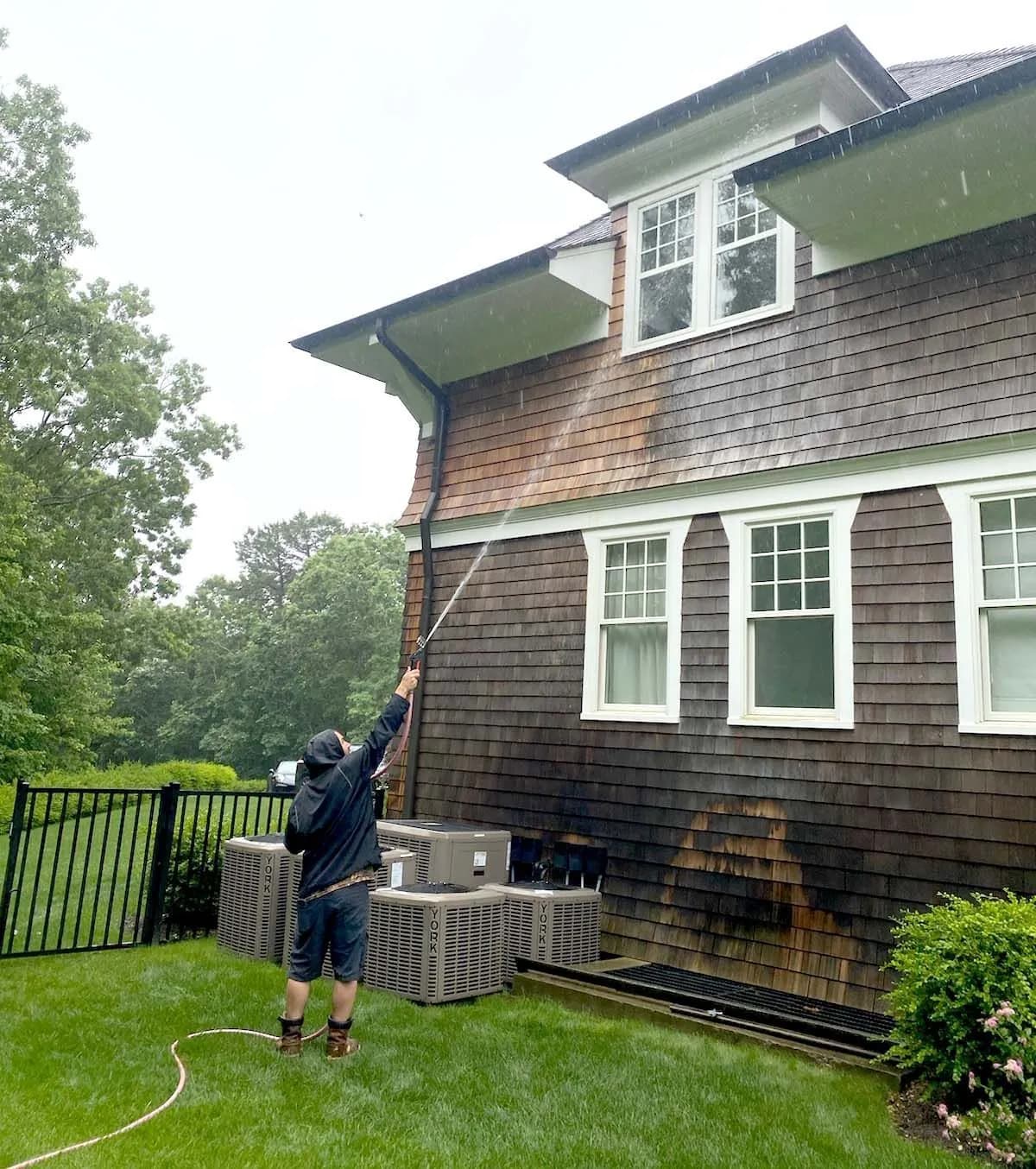
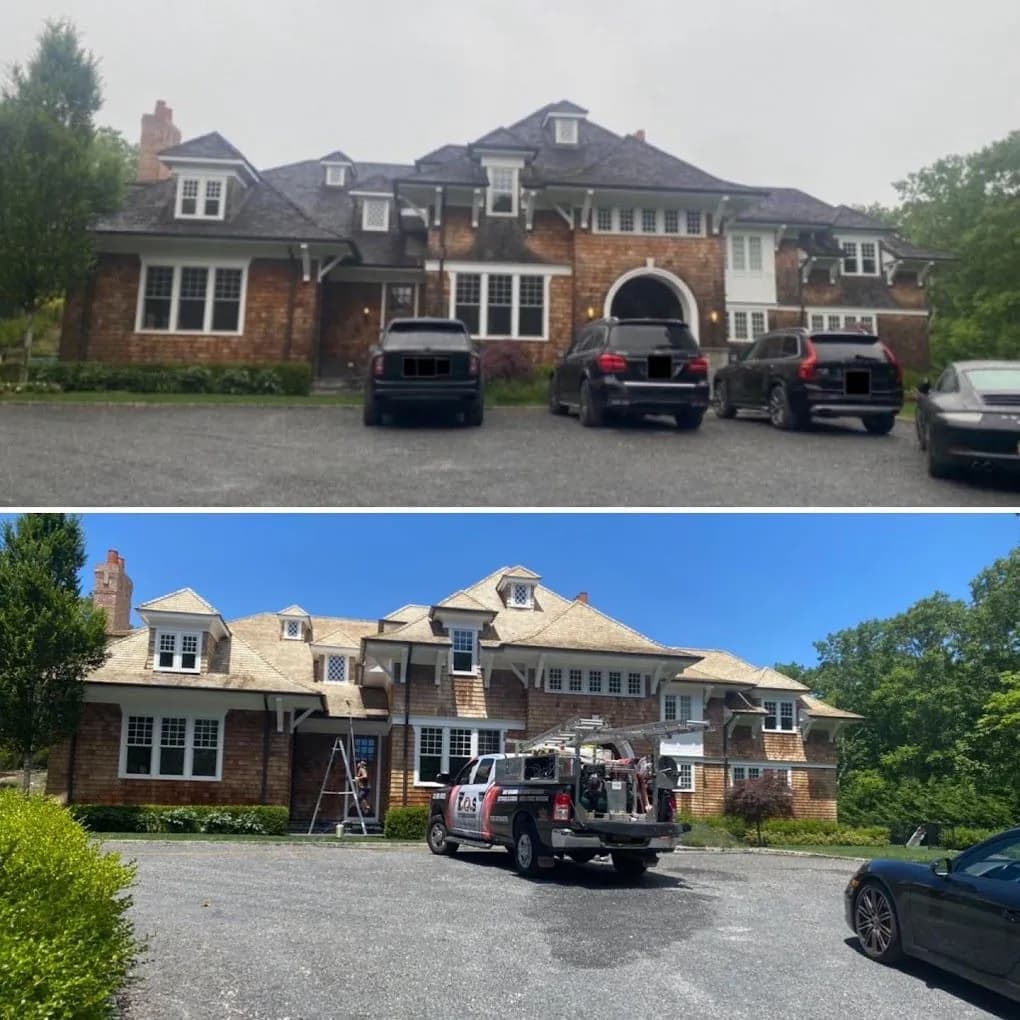
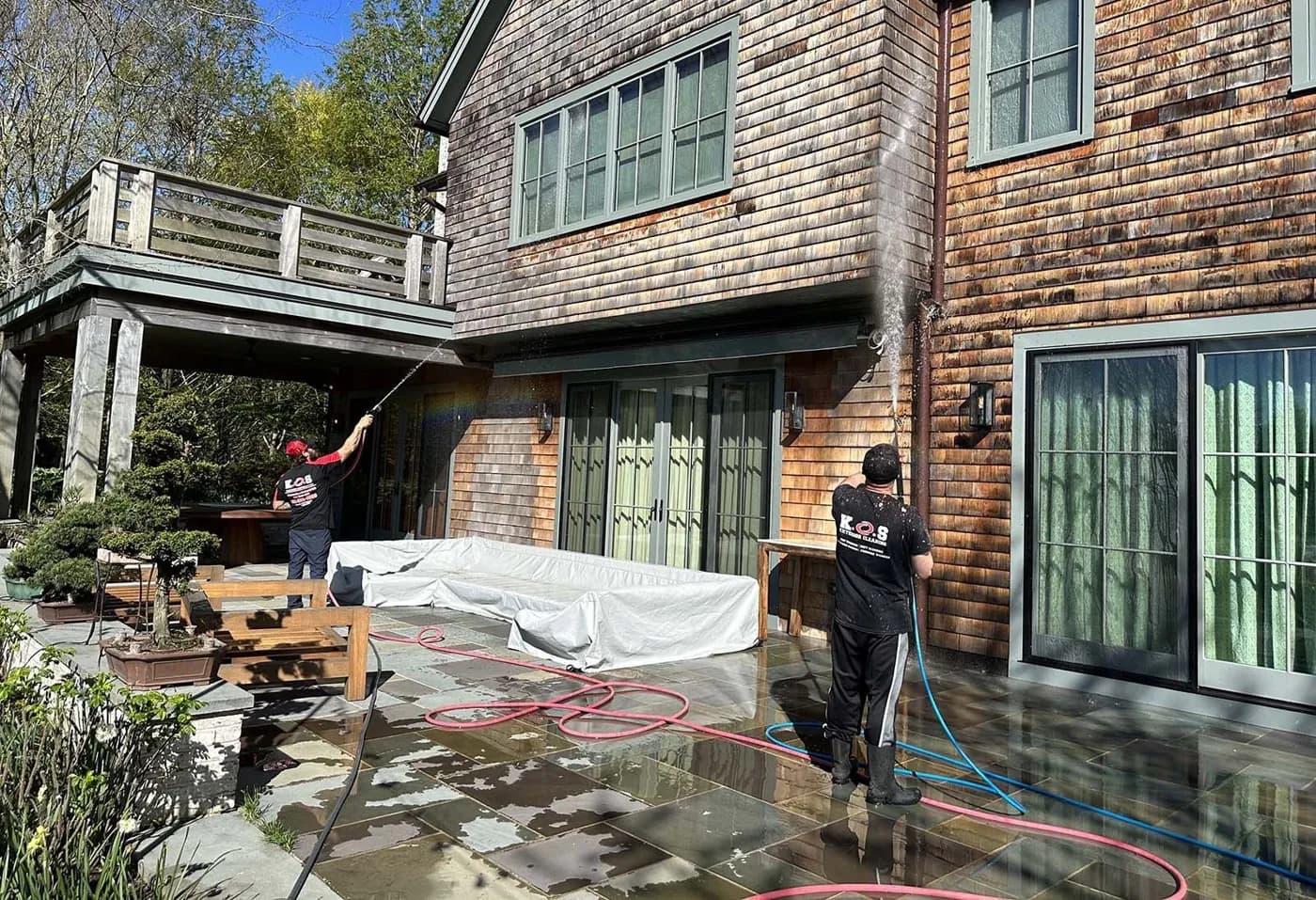
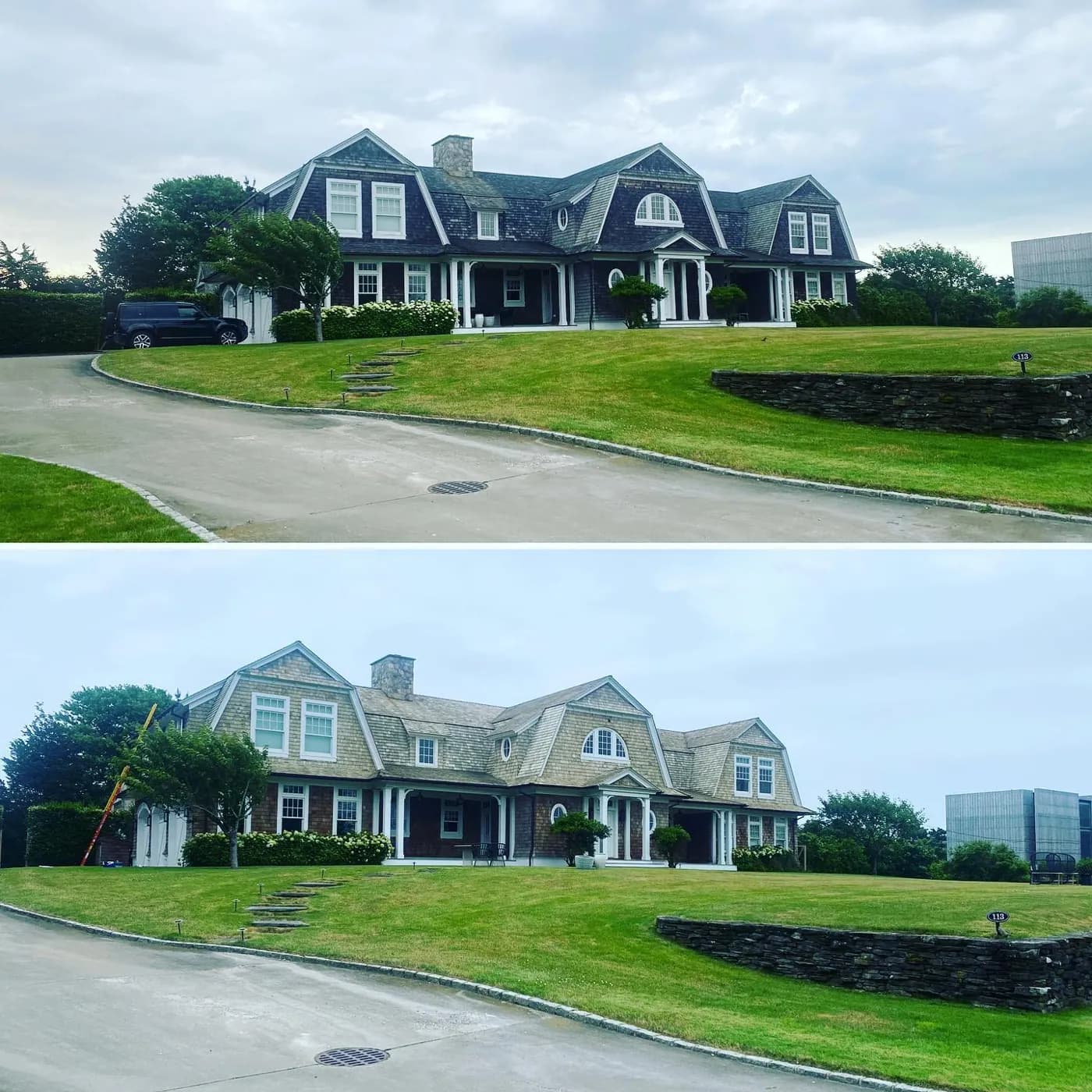
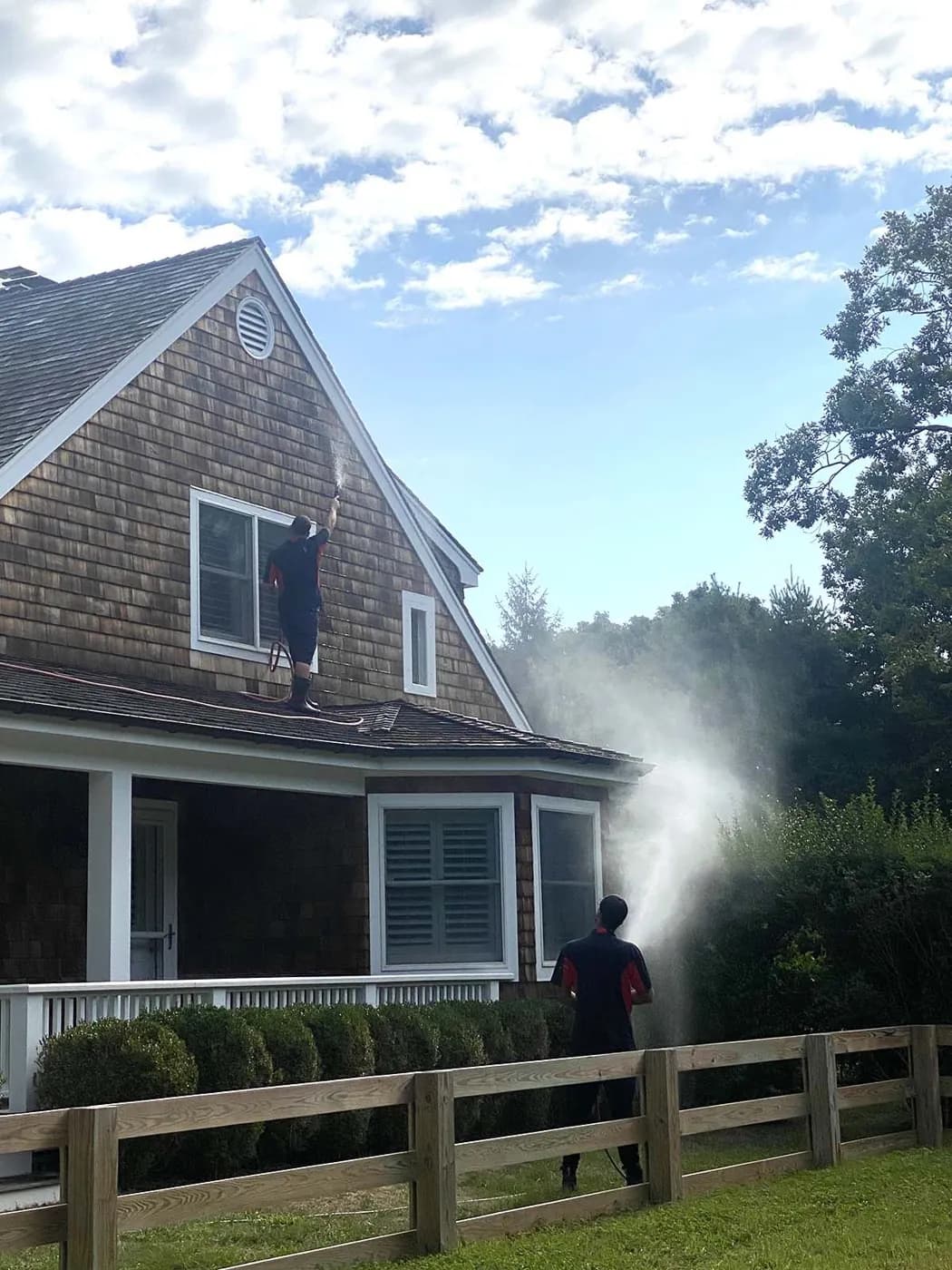
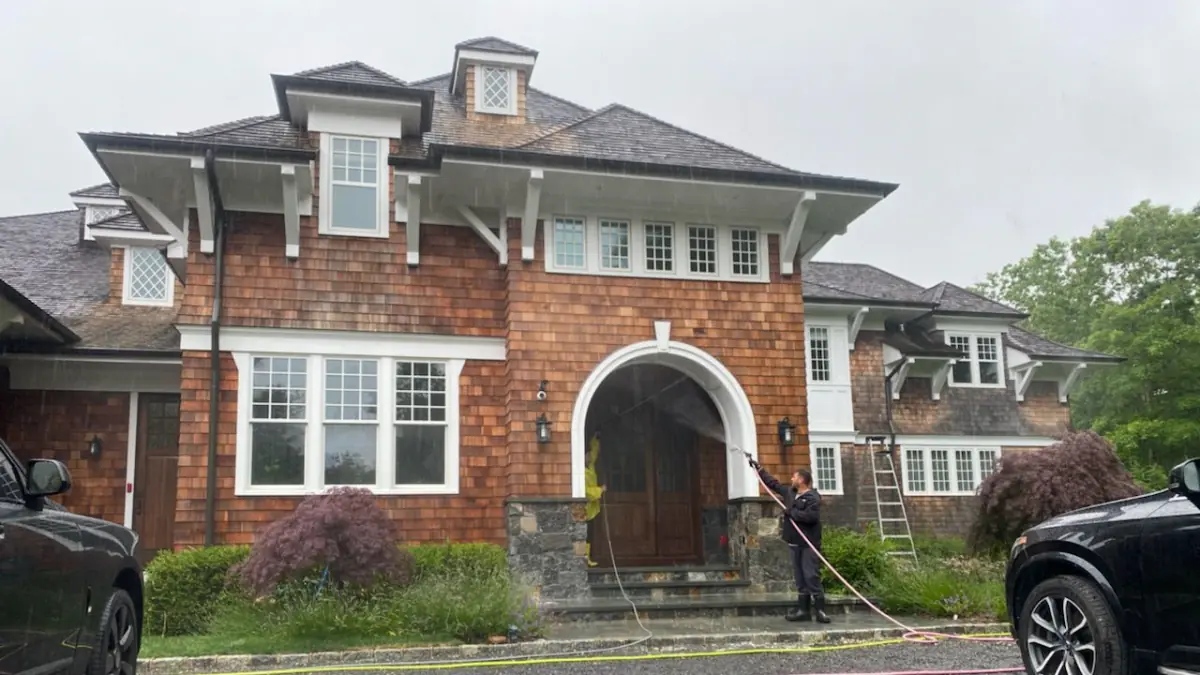
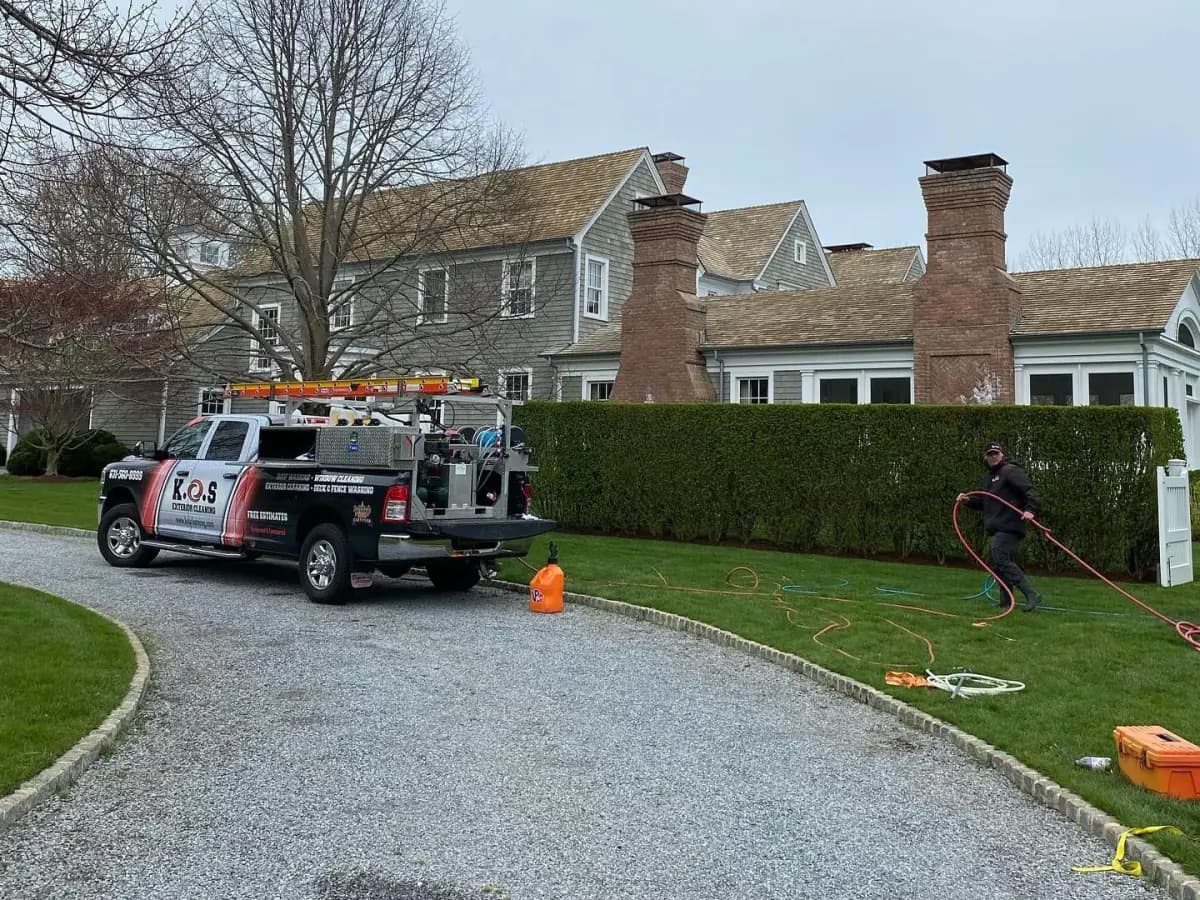
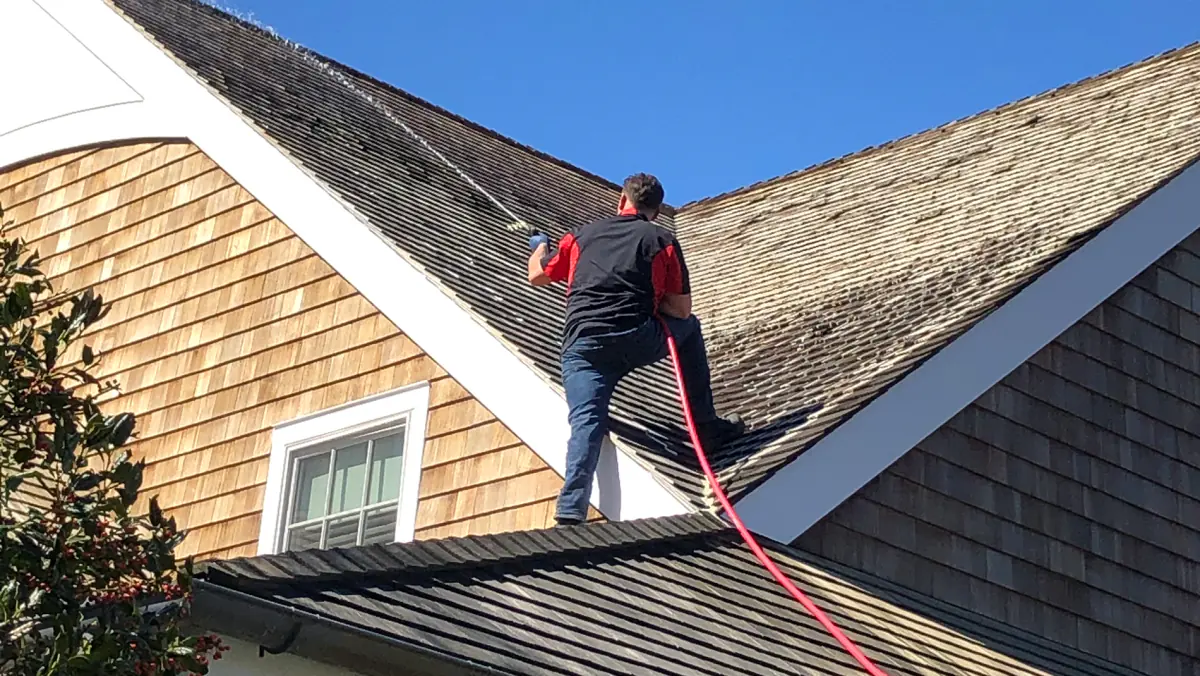
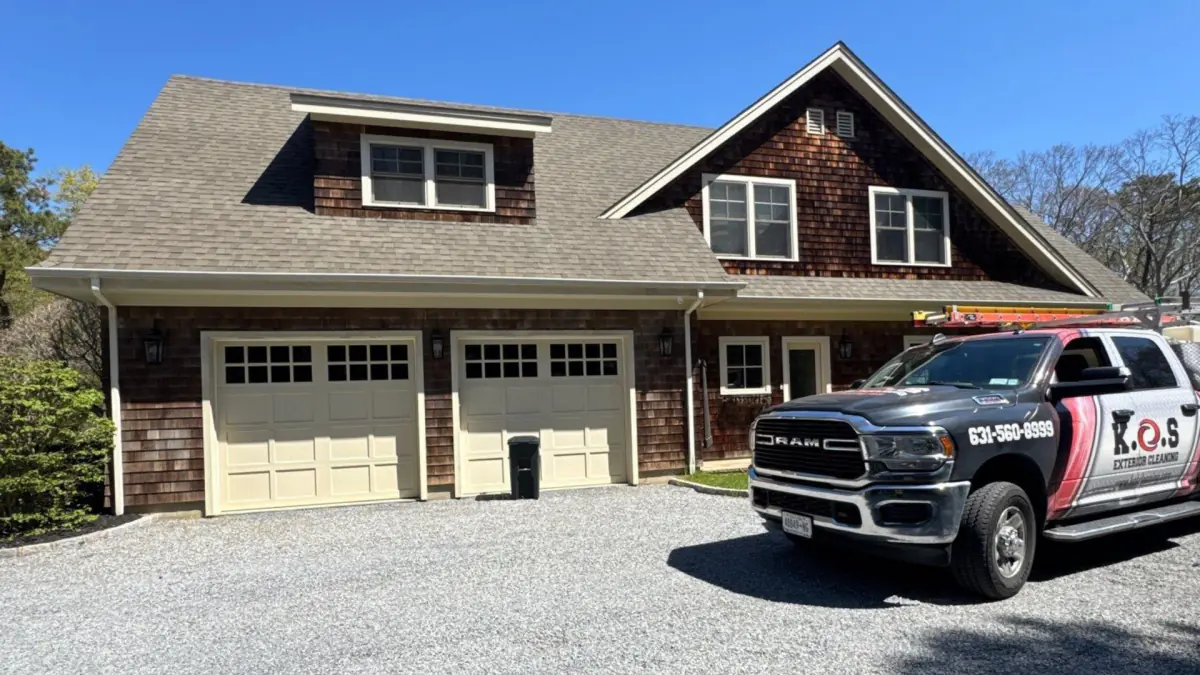
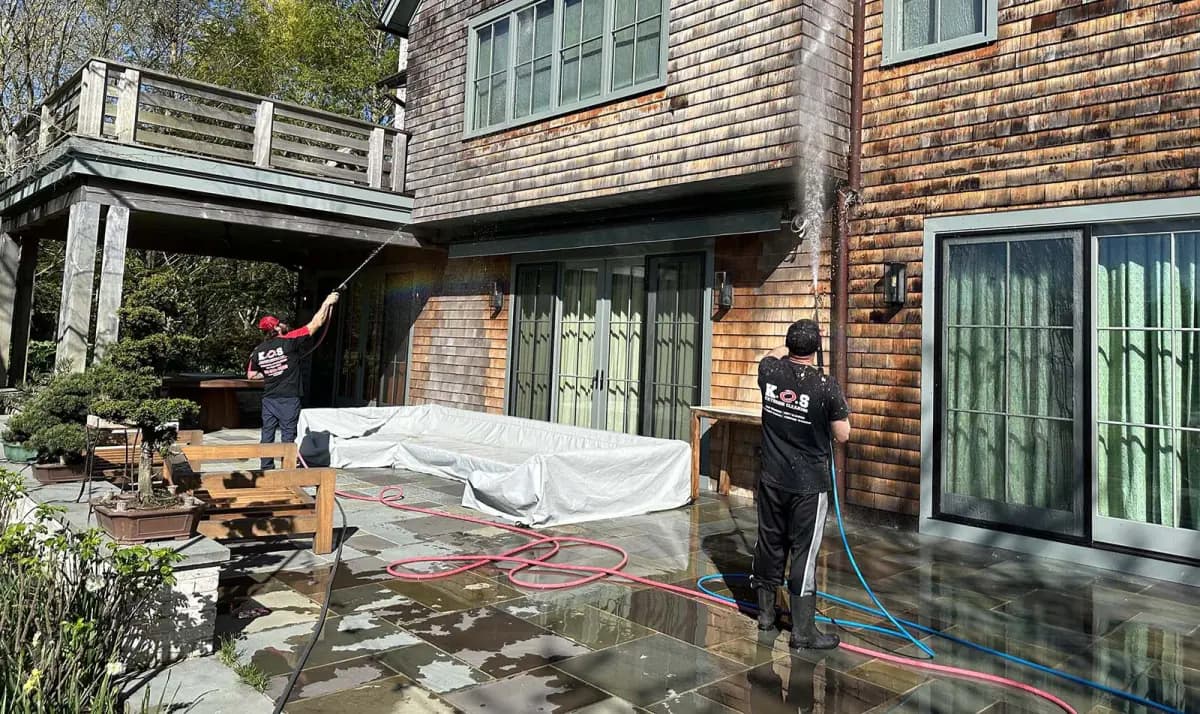
K.O.S. crews soft-washing Long Island homes — and the siding when they're done.
Why siding turns green.
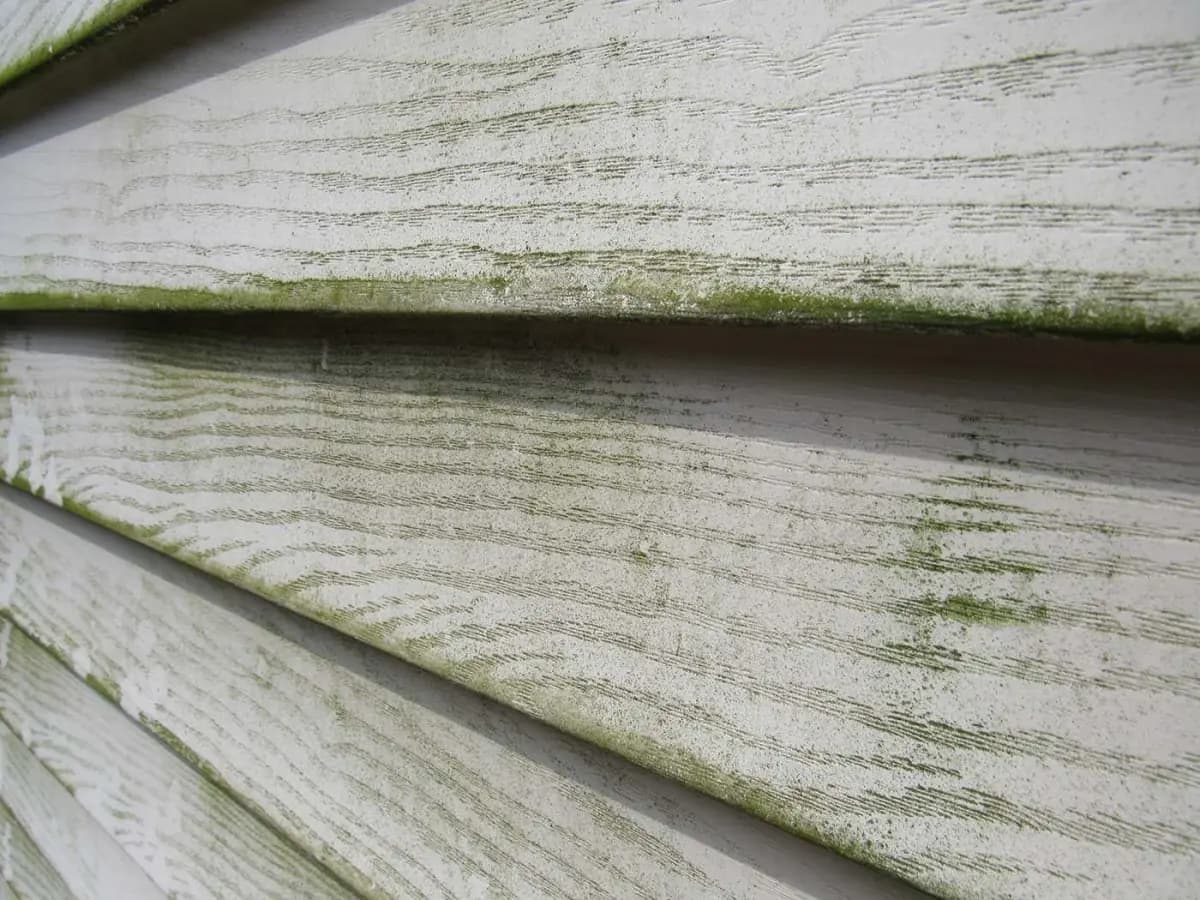
Algae needs three things, and Long Island supplies all of them: moisture from rain, dew and humidity; enough light; and nutrients — dust, pollen and organic matter from nearby trees that settle on the siding.
Shade keeps the surface from drying, which is why north-facing walls and houses under trees go green first. Left through a fall and winter, the stains set and get harder to remove.
Green discoloration
Usually on the shaded, north-facing sides.
Streaks or uneven color
Dark runs down the siding or around windows.
Buildup near gutters and rooflines
Where water overflows and sits.
It's been more than two years
Or you don't know when it was last done.
Roofs and cedar get their own care.
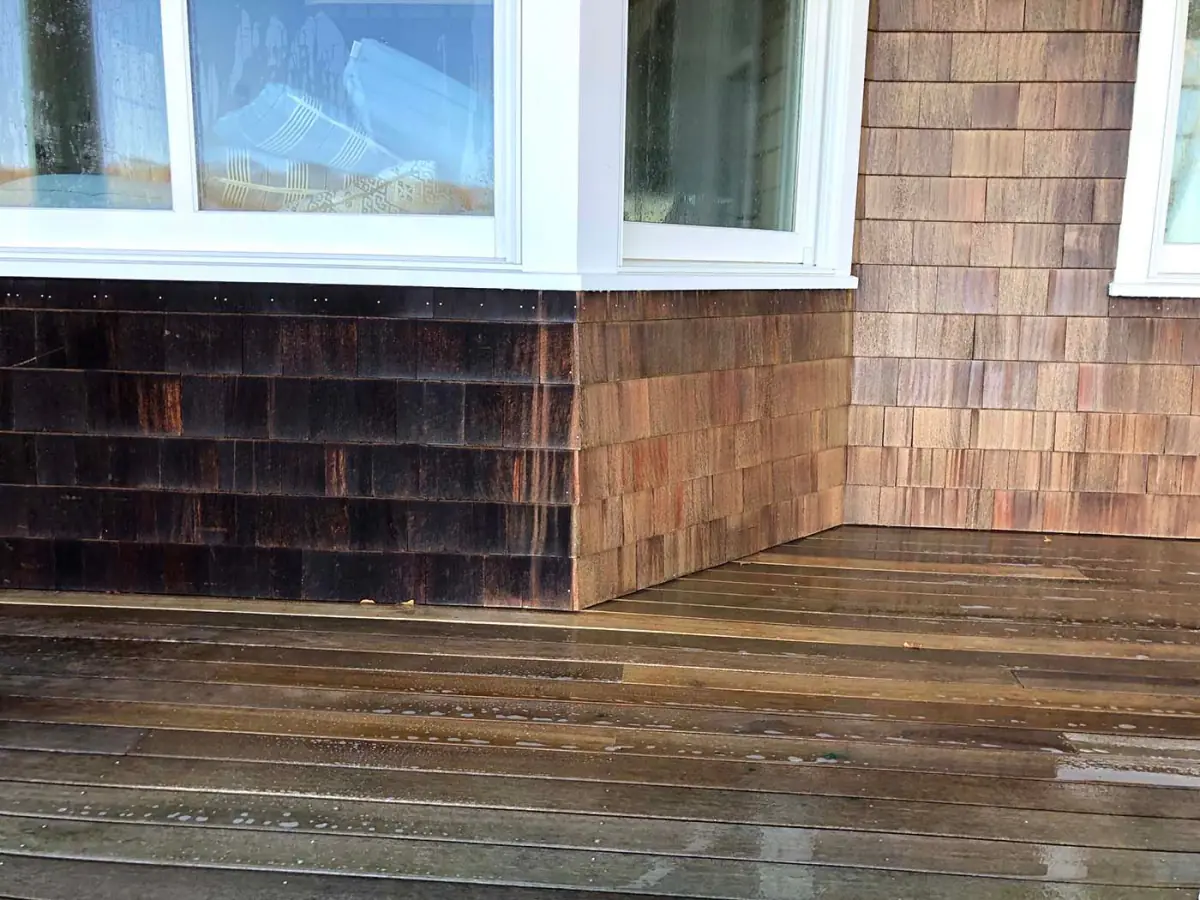
Both are soft-washed too — never pressure-washed — but each has its own problems and its own page.
What it costs.
There’s no flat price: a ranch and a three-story colonial aren’t the same job.
Free estimate. The price you’re quoted is the price you pay.
Size of the house
Square footage and number of stories set how much siding there is to treat and rinse.
Surfaces
Siding only, or brick, stone, fencing and screens as well — each surface adds to the job.
How much growth
A season's algae clears quickly; years of buildup need more solution and longer dwell time.
Before you book.
Longer answers to the questions people ask before they call.
Soft washing vs. pressure washing on Long Island: which one your house actually needs
They're not the same service, and using the wrong one is how siding cracks and paint strips. Here's which surfaces take pressure, which need low-pressure chemistry, and why most homes need both.
Read the guide →
How Algae Forms on Your House Exterior
Discover how algae forms on your house exterior and how K.O.S. Cleaning's expert soft washing services can restore your Long Island home.
Read the guide →
Is Your Siding Ready for Fall? Why Late Summer Is the Best Time for Soft Washing
Get your siding ready for fall with professional soft washing. Safe, effective, and local—KOS Cleaning keeps Suffolk County homes spotless.
Read the guide →
Soft Washing Brick and Stone
Soft washing brick and stone is an alternative to pressure washing. Learn why soft washing might be the right solution for your property.
Read the guide →
Frequently asked questions
Straight answers on safety, timing and results.
Will soft washing damage my siding?
No. Soft washing uses low pressure and a cleaning solution designed for the surface. It's high pressure that cracks siding, strips paint and forces water behind the panels.
Soft washing or pressure washing — what's the difference?
Soft washing cleans with the solution and rinses at low pressure; it's for siding, painted wood, stucco, brick, stone, cedar and roofs. Pressure washing relies on the force of the water; it's for hard surfaces like concrete, pavers and driveways. Most homes need both, on different surfaces.
How often should I have my house washed?
Every 1–2 years for most Suffolk County homes, depending on shade, trees and how exposed the house is to the weather.
Is it safe for my plants?
Yes. Plants and lawn next to the house are pre-rinsed and protected before any solution goes on.
How long does it take?
Most homes are cleaned in just a few hours.
How long do the results last?
Longer than pressure washing, because the solution kills the algae and mildew at the root rather than removing the visible layer and leaving the spores behind to regrow.
When is the best time of year?
Before fall, if you can. Leaves, rain and cooler weather hold moisture against the siding through the winter and let stains set, which makes a spring cleaning harder.
Can you soft wash brick and stone?
Yes — and they should be. High pressure can erode the surface of brick and stone and dislodge mortar; soft washing cleans them without that risk.
Get a free soft washing quote.
Real person · free estimates · no obligation
Call for a quote(631) 560-8999