

What causes fire & smoke damage.
How the fire started decides where the smoke went — and what has to be cleaned.
Kitchen & grease fires
Cooking fires — grease, an unattended stove — are the most common call. The protein smoke they leave is nearly invisible, but it's the hardest odor to get out: it bonds into cabinets, drywall and every soft surface.
Furnace puff-backs
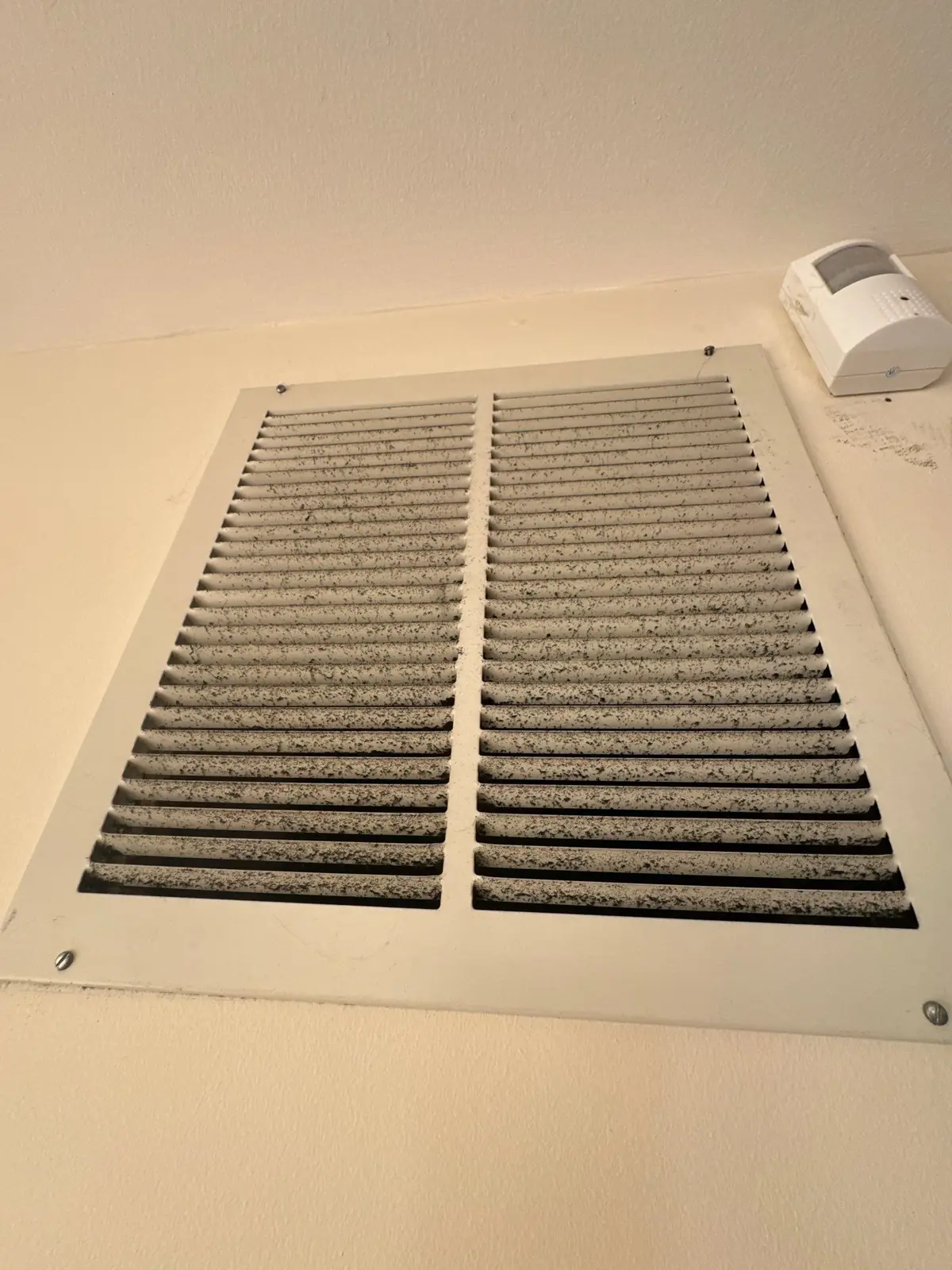
A large share of Suffolk homes still burn oil. When a burner misfires, a delayed-ignition puff-back blows soot through every register in seconds — no flames at all, but every room the ducts serve needs cleaning, and the ductwork too.
Electrical, chimney & dryer fires
Wiring, space heaters in drafty capes, chimneys that haven't been swept and dryer vents packed with lint. January and February are the busiest months for structure fires on the Island — and the water used to put them out adds a water job to the fire.
What fire damage restoration includes.
Fire damage restoration is securing the structure, removing the water used to put the fire out, cleaning soot and smoke residue from every affected surface, treating the odor at its source, and packing out and cleaning contents — documented for the insurance claim.
On Long Island, K.O.S. Restoration does it in five steps, with a crew on site in 45 minutes, and hands your contractor a dry, clean, documented shell to rebuild from.
Secure the structure
Windows and doors boarded, roof openings tarped, unsafe areas fenced off. Once the fire department releases the house it's open to weather and to anyone walking by; this is the first hour's work.
Get the water out
A house fire is also a water loss — hundreds of gallons from hoses and sprinklers in the floors and walls. Extraction and drying start the same day, before soot work, or the fire job turns into a mold job.
Stop the soot spreading
Soot is acidic and keeps etching metal, glass, and finishes for days. Traffic paths sheeted, HVAC shut down, air scrubbers running, and unaffected rooms sealed before cleaning begins.
Clean, deodorize, document
Dry-sponge and wet cleaning by surface type, HEPA vacuuming, and odor treatment — thermal fogging, hydroxyl, or ozone depending on the smoke. Every item and surface photographed for the claim.
Contents and the rebuild scope
Salvageable contents packed out, cleaned, and stored; unsalvageable ones inventoried for the adjuster. What has to be rebuilt is written up in Xactimate for your contractor — K.O.S. restores; a GC rebuilds.
What it costs, and how long it takes.
Mitigation for a single-room fire on Long Island is usually about a week; the rebuild that follows is a separate phase. Cost is driven by how far the smoke travelled, what kind of smoke it was, the firefighting water, and the contents.
Fire is the loss homeowners insurance is built for. K.O.S. documents from the first hour and bills your carrier directly in Xactimate.
Fire damage is usually one room; smoke damage is usually the whole house. Soot travels through open doors and the HVAC system, so the cleaning footprint is set by where the smoke went, not where the flames were.
- One room, doors closed: contained cleaning
- Open floor plan or forced air running: every surface on the floor
- Puff-back: every register and every room the ducts serve
Wet smoke from smoldering, low-heat fires (plastics, rubber) smears and needs solvent cleaning; dry smoke from fast, hot fires wipes. Protein smoke from a cooking fire is nearly invisible and the hardest to deodorize.
Firefighting water is a second loss on top of the first. Drying a house that was hosed for twenty minutes is a full structural-drying job — and starting it late adds mold to the bill.
Pack-out, cleaning, and storage of what's salvageable is priced by volume; the inventory of what isn't is the record your claim pays out on.
A crew on site in 45 minutes, any hour. The house is secured against weather and entry the same day the fire department leaves.
Extraction and drying run alongside soot cleaning; odor treatment comes last, once the source materials are out. A single-room fire is typically a week of mitigation.
Pack-out and cleaning of salvageable contents runs in parallel at the shop; items come back when the house is ready for them.
Framing, drywall, electrical, and finishes are your contractor's phase, scoped from K.O.S.'s Xactimate estimate. Weeks for a kitchen; months for a structure fire. K.O.S. hands over a dry, clean, documented shell.
Fire and smoke damage — including the firefighting water and the soot in rooms the fire never reached — is covered under essentially every homeowners policy, up to the dwelling and contents limits. This is the claim insurance exists for.
The claim has two halves. Mitigation is K.O.S.: securing, drying, cleaning, deodorizing, contents. Rebuild is the contractor: structure and finishes. Both are scoped in Xactimate; K.O.S. writes the first and documents what the second has to include.
If the house isn't habitable, most policies pay for where you live in the meantime. Ask your adjuster on day one; K.O.S.'s documentation of the smoke and water extent is what supports it.
Your deductible. K.O.S. bills the carrier directly and the inventory, photos, and moisture logs go to the adjuster from the first day.
What we clean, and how.
Fire leaves four problems behind, and each one is cleaned differently. Getting the method right the first time is the difference between restored and replaced.
Soot and smoke residue
Dry-sponge lifting on flat paint and ceilings, wet cleaning on sealed surfaces, degreasers for protein smoke. Cleaned by surface type, because the wrong method sets soot into the finish for good.
Guide · Why soot cleanup can't wait
Odor
Smoke odor is in the materials, not the air. Source removal first, then thermal fogging that follows the smoke's own path into cavities, hydroxyl generators in occupied spaces, ozone in empty ones. Sealed primer on framing where it's needed.
Contents
Hard goods cleaned on site or at the shop; textiles and soft goods sent for specialist cleaning; electronics assessed before anything is powered on. Everything inventoried, photographed, and stored until the house is ready.
Ductwork and HVAC
A running furnace or air handler pulls smoke through every duct in the house — and a puff-back starts there. K.O.S. Cleaning handles the duct cleaning in the same engagement, so the odor doesn't come back on the first cold night.
Secured the same day the fire department leaves.
The first hours after a fire decide how much of the house is still there a week later. Openings the fire department cut are boarded and tarped against weather and entry, and drying equipment goes in before the soot work starts.
Then the house is contained — HVAC off, paths sheeted, air scrubbers running — so the cleaning removes soot instead of spreading it.
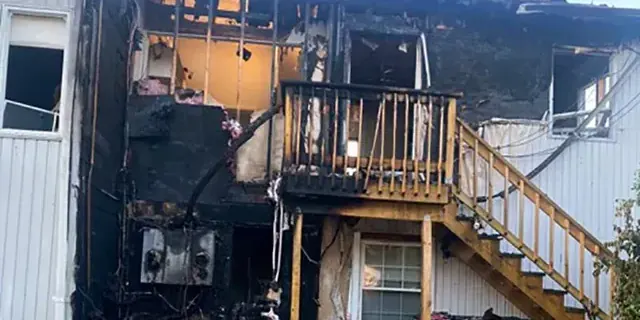
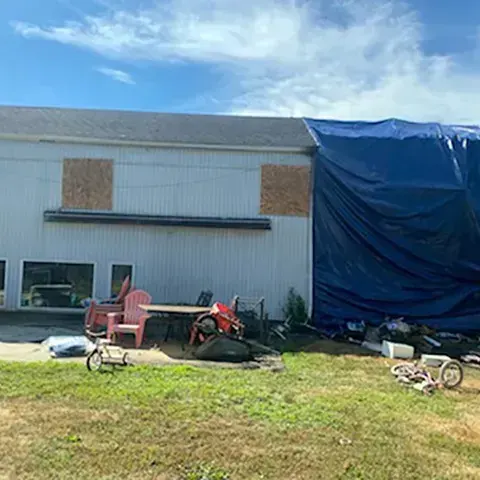
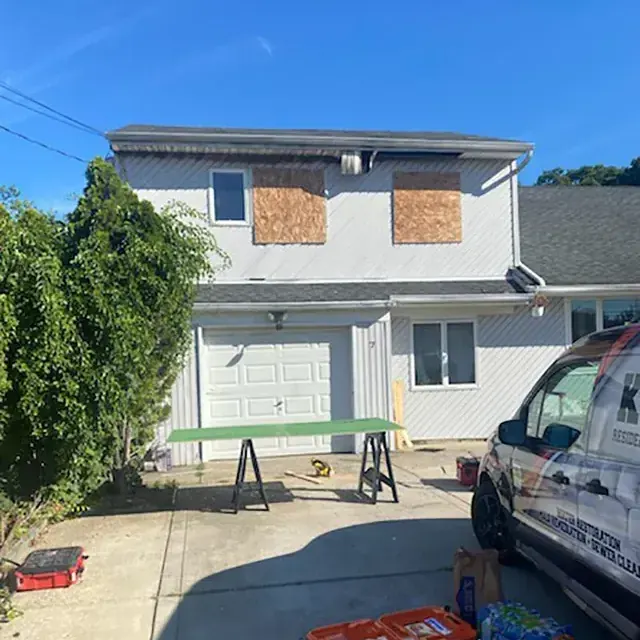
Inside a fire job.
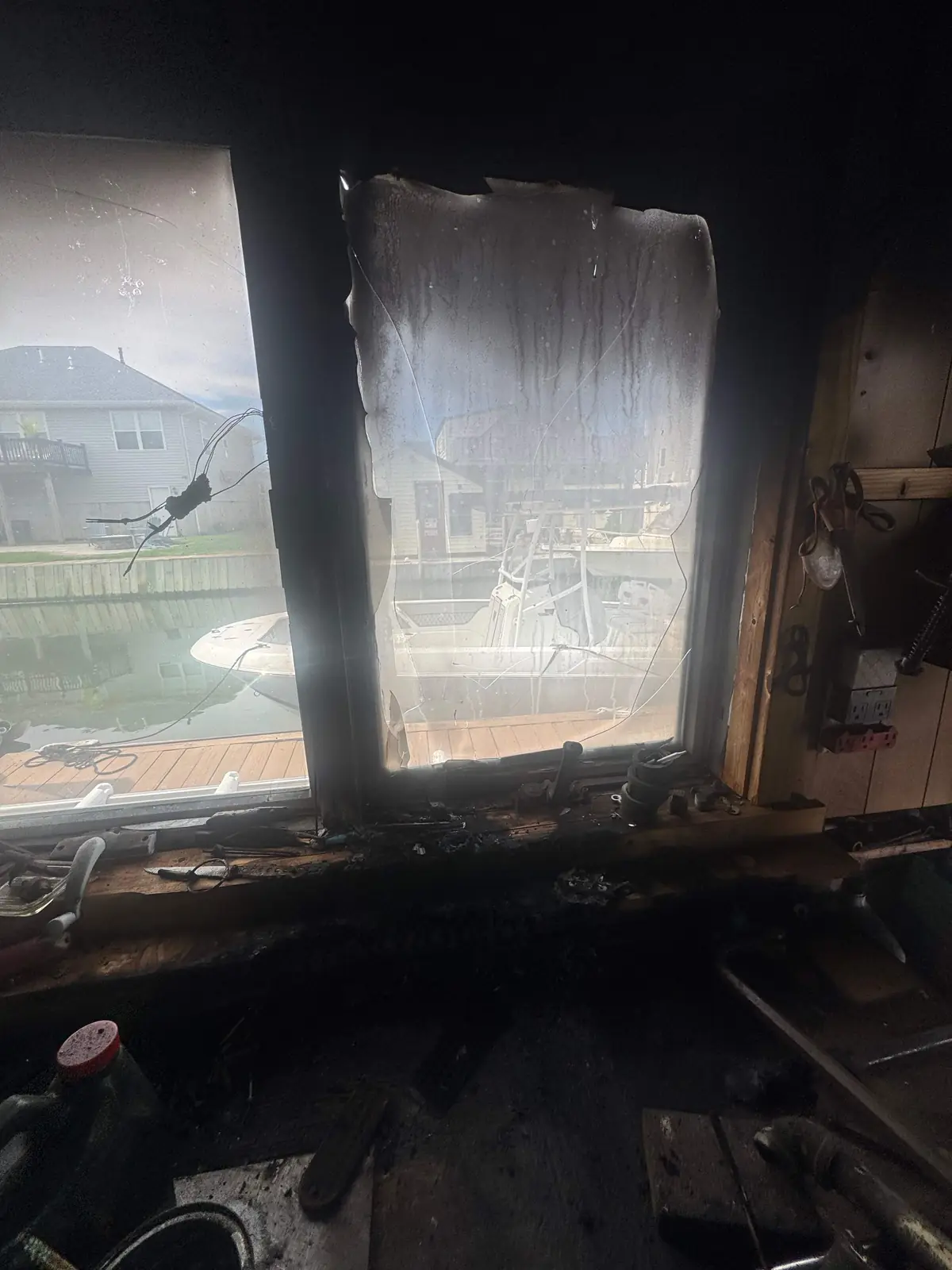
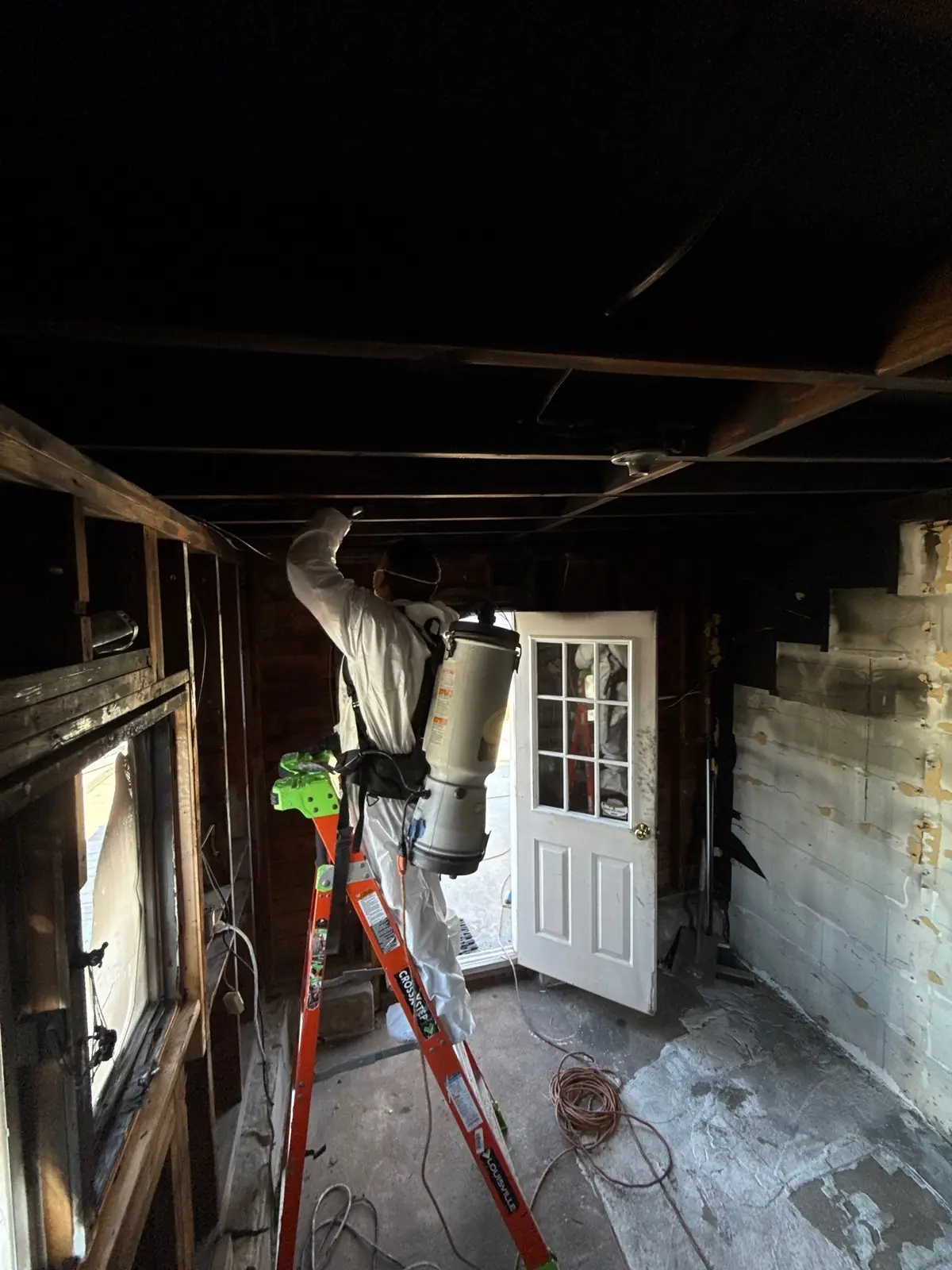
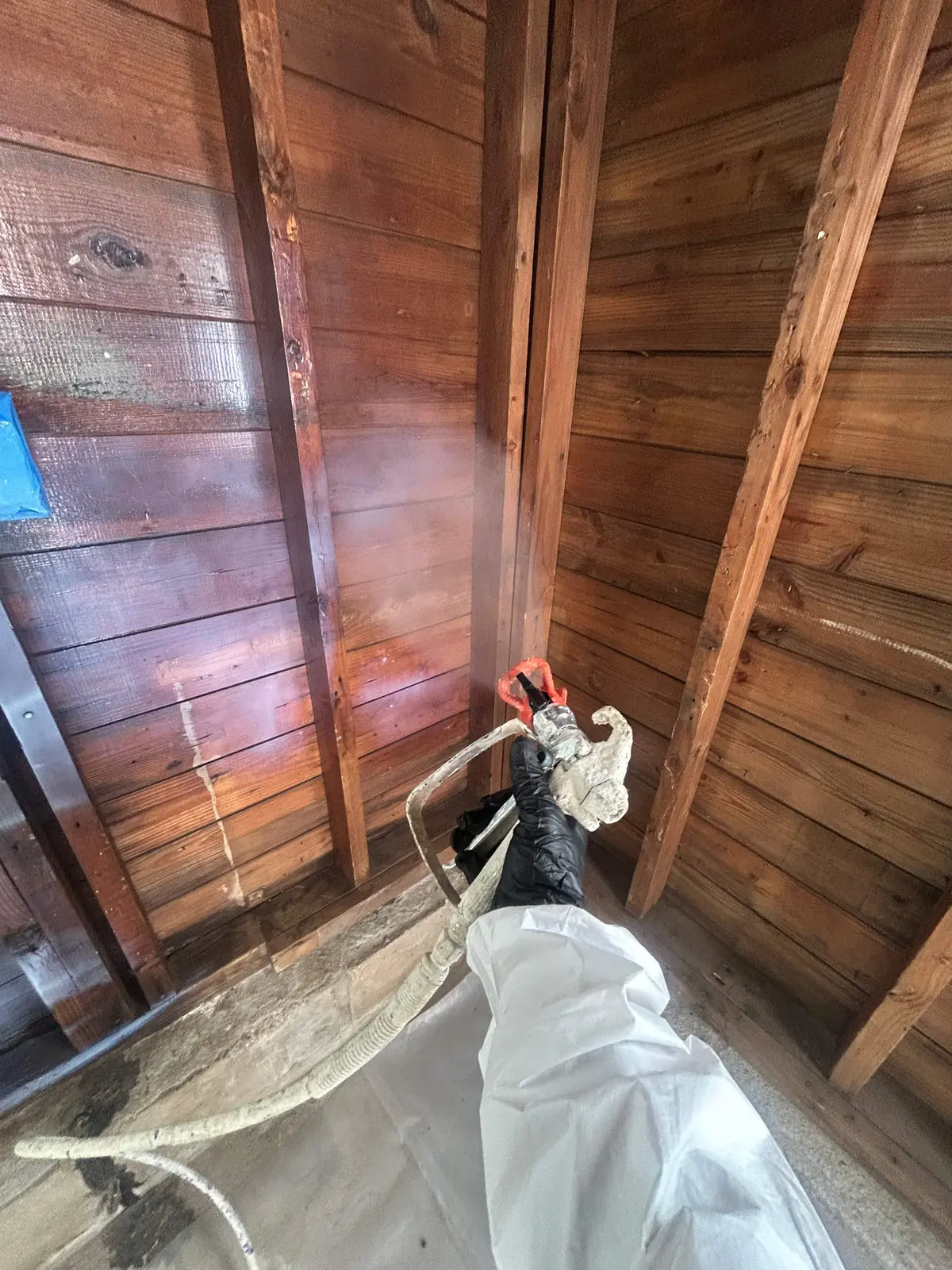
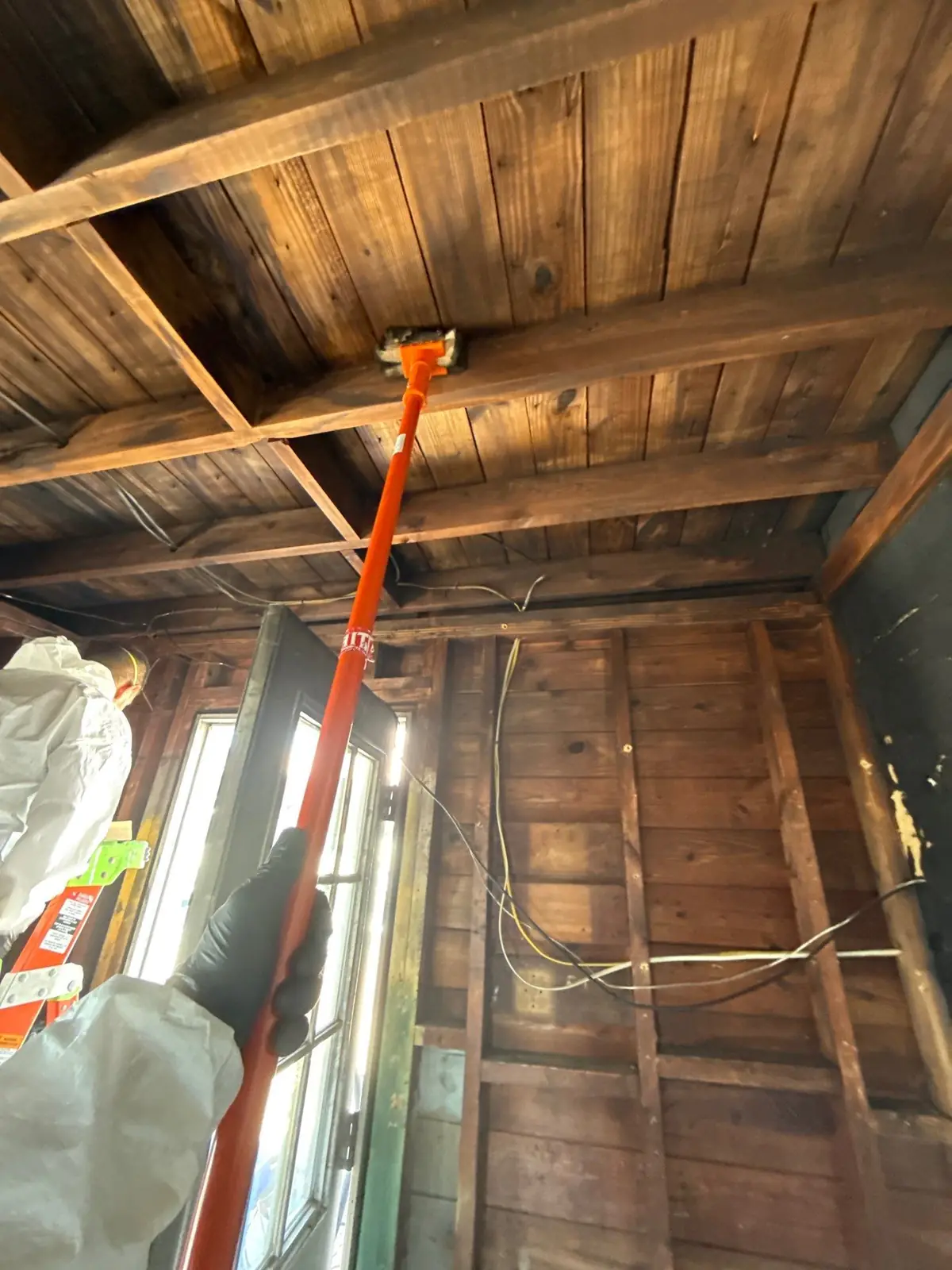
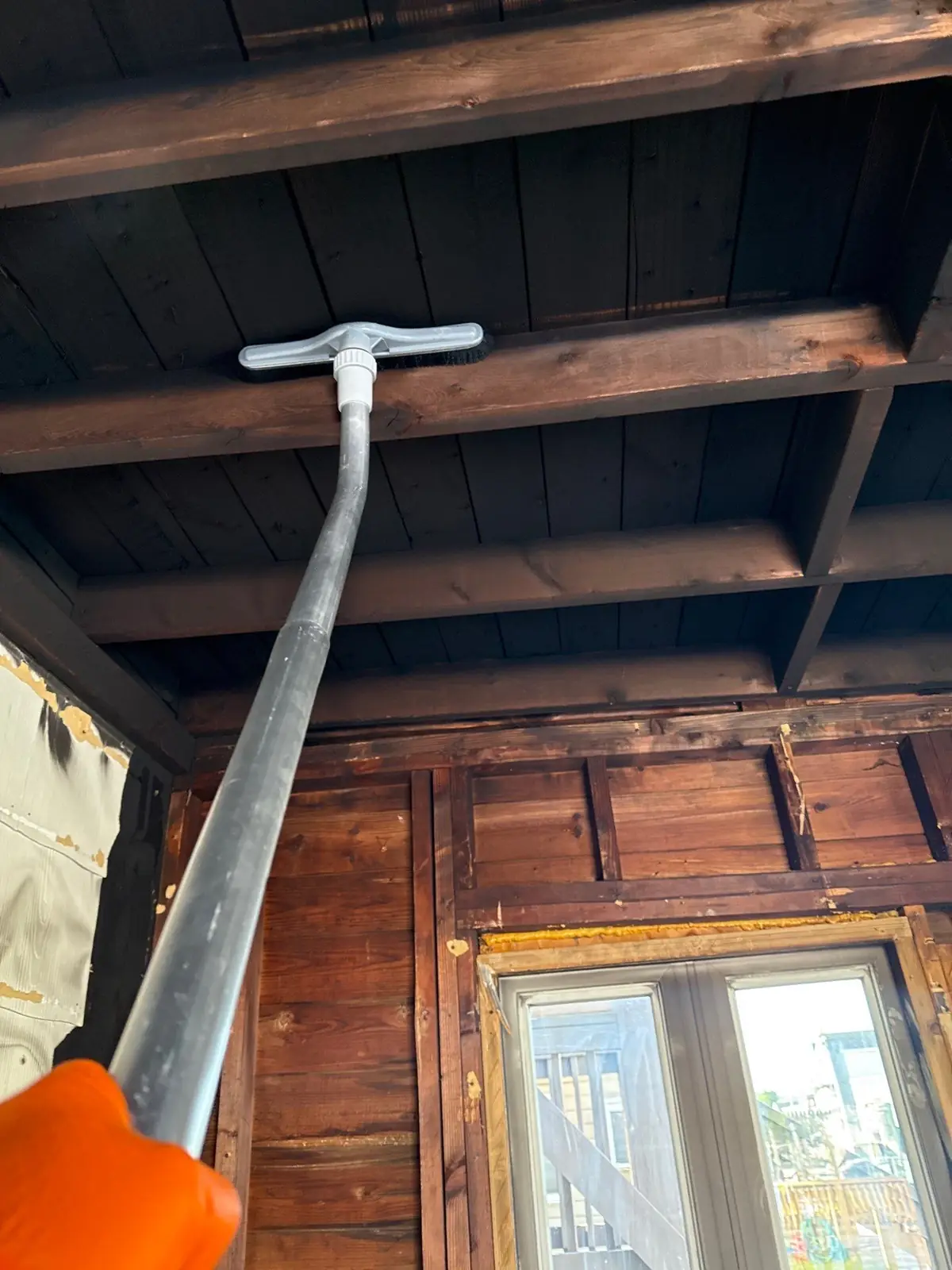
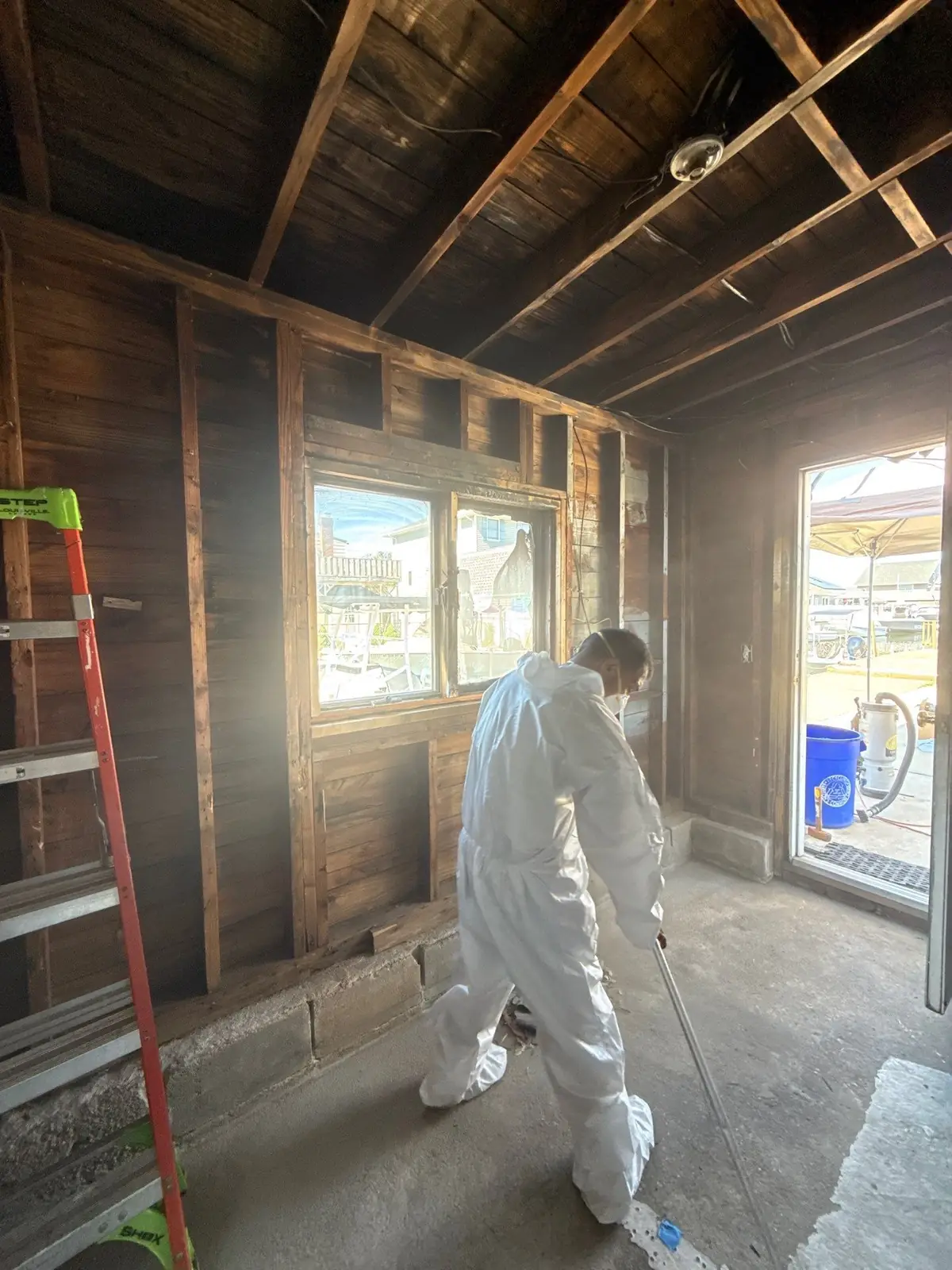
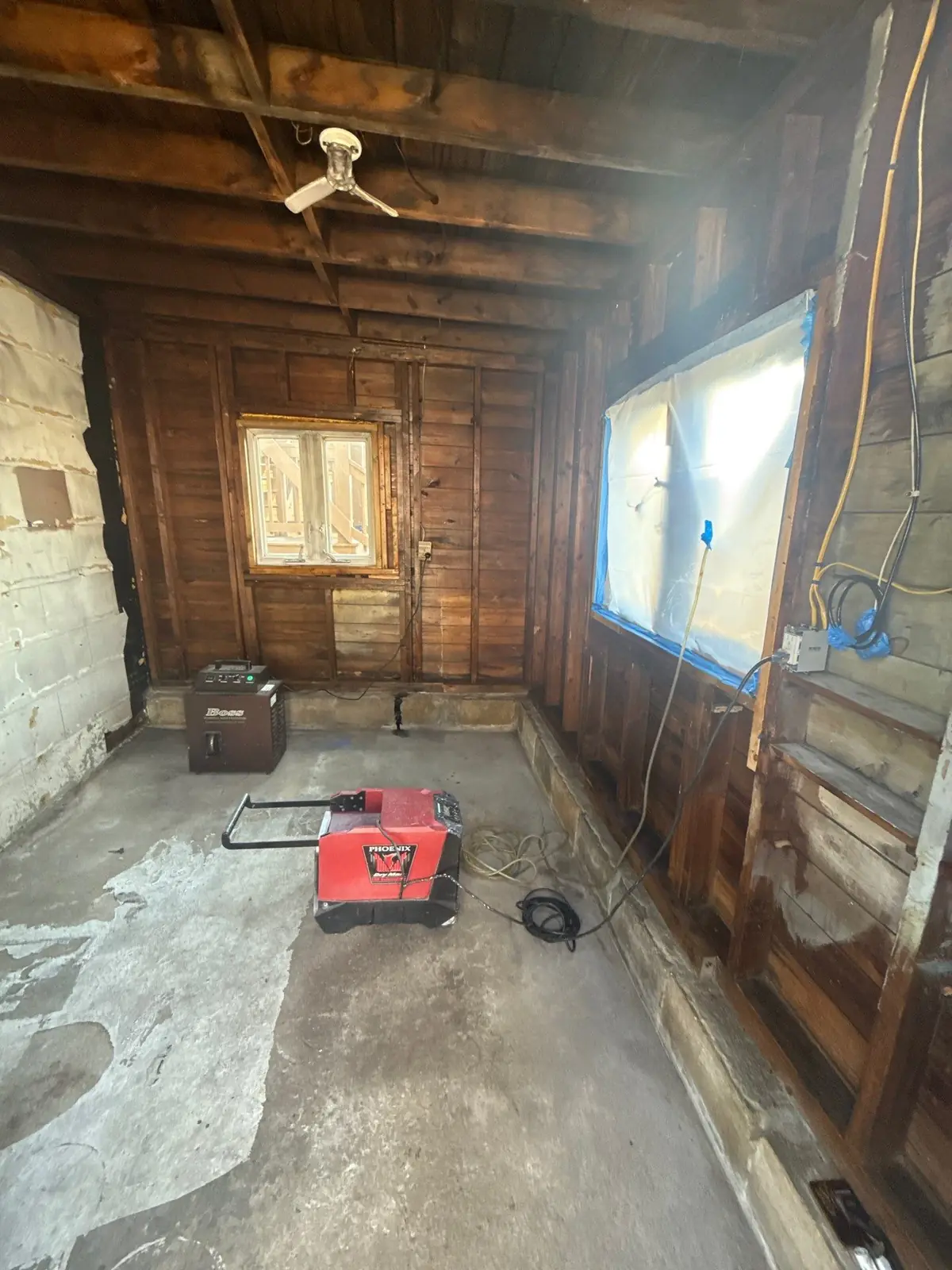
From recent K.O.S. fire jobs: the damage we walk into, the crew in full PPE HEPA-vacuuming and scrubbing soot off every board and joist, and the room stripped, sealed and under air equipment while it clears.
Fire damage on Long Island is different.
K.O.S. Restoration has responded to house fires and puff-backs across Suffolk, Nassau, and Queens from Bellport since 2006. Oil heat, old housing stock, volunteer departments, and seasonal homes shape what a fire leaves behind here.
Crews dispatch from Bellport. Find your town on the service-area pages:
- Suffolk County
- The Hamptons & East End
- Nassau County
- Queens
Oil heat means puff-backs
A large share of Suffolk homes still burn oil. A delayed-ignition puff-back blows soot through every register in seconds — most of our winter smoke calls have no flames at all.
Winter fires are heating fires
Space heaters in drafty capes, chimneys that haven't been swept, dryer vents packed with lint. January and February are the busiest months for structure fires on the Island, and the water used to put them out freezes in the walls.
Volunteer departments, fast knockdowns
Long Island's volunteer fire departments respond fast and put fires out with a lot of water. The result is usually a house with one burned room and every other room wet and smoked — a mitigation job more than a demolition.
Summer homes sit with the smoke in them
A cooking fire in a Hamptons or North Fork house in October can sit closed until May. Soot etches glass and metal in days and odor bonds into every soft surface. If the house is seasonal, the cleaning can't wait for the season.
Insurance handled
Fire is the claim your policy was written for — and it has two halves.
Mitigation (securing, drying, soot, odor, contents) is K.O.S.’s scope; the rebuild is your contractor’s. Both are written in Xactimate so your adjuster works from one record. K.O.S. bills the carrier directly and you pay your deductible.
- State Farm
- Allstate
- Liberty Mutual
- GEICO
- USAA
- Travelers
- Mercury
- Mutual of Omaha
- Zurich
300+ neighbors have already called.
A 5.0 rating across Suffolk County. Read every review on Google.
Fire damage questions
The questions people ask Google about fire damage restoration on Long Island — including who does the rebuild — answered plainly.
What do restoration companies do after a fire?
Secure the structure (board-up, tarping), remove the water the fire department left, contain and clean soot and smoke residue from every affected surface, treat odor at the source, pack out and clean salvageable contents, and document all of it for the insurance claim. K.O.S. does the mitigation; the rebuild — framing, drywall, finishes — is your contractor's phase, scoped from K.O.S.'s estimate.
How long does fire damage restoration take?
Board-up is the same day. Water, soot, and odor mitigation for a single-room fire is typically about a week; contents cleaning runs in parallel over two to three weeks. The rebuild that follows is separate — weeks for a kitchen, months for a structure fire — and depends on your contractor and the permit.
Can a house with fire damage be repaired?
Usually, yes. Most Long Island house fires are one room burned and the rest of the house smoked and wet; the structure is sound and the job is cleaning, drying, and rebuilding the burned area. A structural engineer's sign-off is needed when framing or the roof is charred, and the fire department or building department will say so. Total losses are rare.
How much does it cost to restore a fire-damaged house?
There are two numbers. Mitigation — securing, drying, soot and odor, contents — depends on how far the smoke travelled and what kind of smoke it was, and is what K.O.S. does. Rebuild depends on what burned and is your contractor's estimate. Both are covered under a standard homeowners policy up to its limits, and both are written in Xactimate so the adjuster is working from the same scope. K.O.S. inspects free and won't quote a rebuild it doesn't do.
Is fire damage covered by homeowners insurance?
Yes — fire is the loss every policy is built around, and it includes the smoke damage in rooms the fire never reached and the water used to put it out. Coverage is up to the dwelling and contents limits, and most policies also pay additional living expenses while the house is uninhabitable. K.O.S. bills the carrier directly and you pay your deductible.
Should I start cleaning the soot myself?
No. Wiping soot with water or household cleaners smears it into the finish and sets it permanently, and disturbing it puts it back in the air. Don't run the HVAC, don't use anything electrical that was in the smoke, and don't wash clothes or textiles until they've been assessed. Open windows if it's safe and leave the rest.
What is a furnace puff-back?
A small explosion of unburned oil in a furnace or boiler when it ignites late, which blows soot out through the ductwork into every room the system serves. There's no fire, but the cleaning is a whole-house smoke job: every register, every surface, often the ducts themselves. Common on Long Island's oil-heated homes in the first cold weeks.
Does K.O.S. rebuild the house?
No. K.O.S. does the restoration — board-up, water, soot, smoke, odor, contents — and writes the scope your contractor rebuilds from. Keeping mitigation and reconstruction separate means the estimate for each is honest and the drying is finished before anything gets closed up.
Guides.
Two reads for the first days after a fire: what happens hour by hour once you call, and why the soot has to come off before anything else.
Written by the people who show up, from jobs on Long Island — not a national franchise’s content team.
What happens in the first 24 hours after a fire
Hour by hour: the call, the safety check, board-up, pulling the firefighting water, and when soot and odor work starts — and why the order matters.
Read the guide →
Why soot cleanup can't wait
What soot actually is, why it etches metal and glass within days, the furnace puff-back nobody expects, and what to do before the crew arrives.
Read the guide →
All fire and smoke guides →
The fire’s out. The damage is still spreading.
Real person · 24/7 · 45-minute response
Start the clock(631) 560-8999