Attic Mold Remediation in Glen Cove, NY: Removing Mold Caused by Moisture
See how K.O.S. Restoration removed attic mold caused by moisture in a Glen Cove, NY home — insulation removal, HEPA vacuuming, and professional drying.
Tom Cwalinsky··6 min read·Glen Cove, NY
A homeowner in Glen Cove, NY recently discovered attic mold caused by ongoing moisture conditions and contacted K.O.S. Restoration for an inspection. Our IICRC-certified team took moisture readings, evaluated the affected roof decking and framing, and protected the home's stairways and living areas before beginning remediation.
Existing attic insulation was removed, and the affected surfaces were HEPA vacuumed, treated with an enzyme solution, and cleaned by hand to physically remove the mold contamination. Professional drying and dehumidification equipment was then installed to bring attic moisture levels under control and prevent the mold from returning.
Homeowners who discover similar signs — musty odors, discolored roof decking, or damp insulation — can request a professional inspection to identify moisture conditions before mold spreads further. K.O.S. Restoration has provided IICRC-certified mold remediation, water damage restoration, and moisture control services across Long Island since 2006, including Glen Cove, Nassau County, Suffolk County, and Queens.
A Glen Cove Homeowner Discovers Attic Mold
Discovering mold in your attic can be concerning, especially when you don't know how long moisture has been affecting the space or how far it may have spread. A homeowner in Glen Cove, NY recently contacted K.O.S. Restoration after noticing mold growth in the attic caused by moisture issues.
Our team arrived to assess the affected areas, take moisture readings, and develop a plan to safely remove contaminated materials and address the mold at its source. Because the work involved the attic and required moving equipment and materials through the home, protecting the living areas was just as important as the remediation itself.
Attic mold isn't always visible from inside the living space. A home can have a perfectly normal-looking second floor while moisture and mold are developing above the ceiling — which is exactly why this project started with an inspection, not a guess.
Initial Attic Inspection and Moisture Readings
Before any work began, K.O.S. Restoration inspected the attic and surrounding areas, took moisture readings across the affected roof decking and framing, and evaluated how far the contamination extended. This step matters because visible mold is often only part of the picture — moisture readings show whether surrounding materials are also holding excess moisture, even where no staining is visible yet.
Once the extent of the affected materials was understood, our technicians established a work area for containment and began preparing the attic for insulation removal and remediation.
Protecting the Glen Cove Home Before Mold Remediation
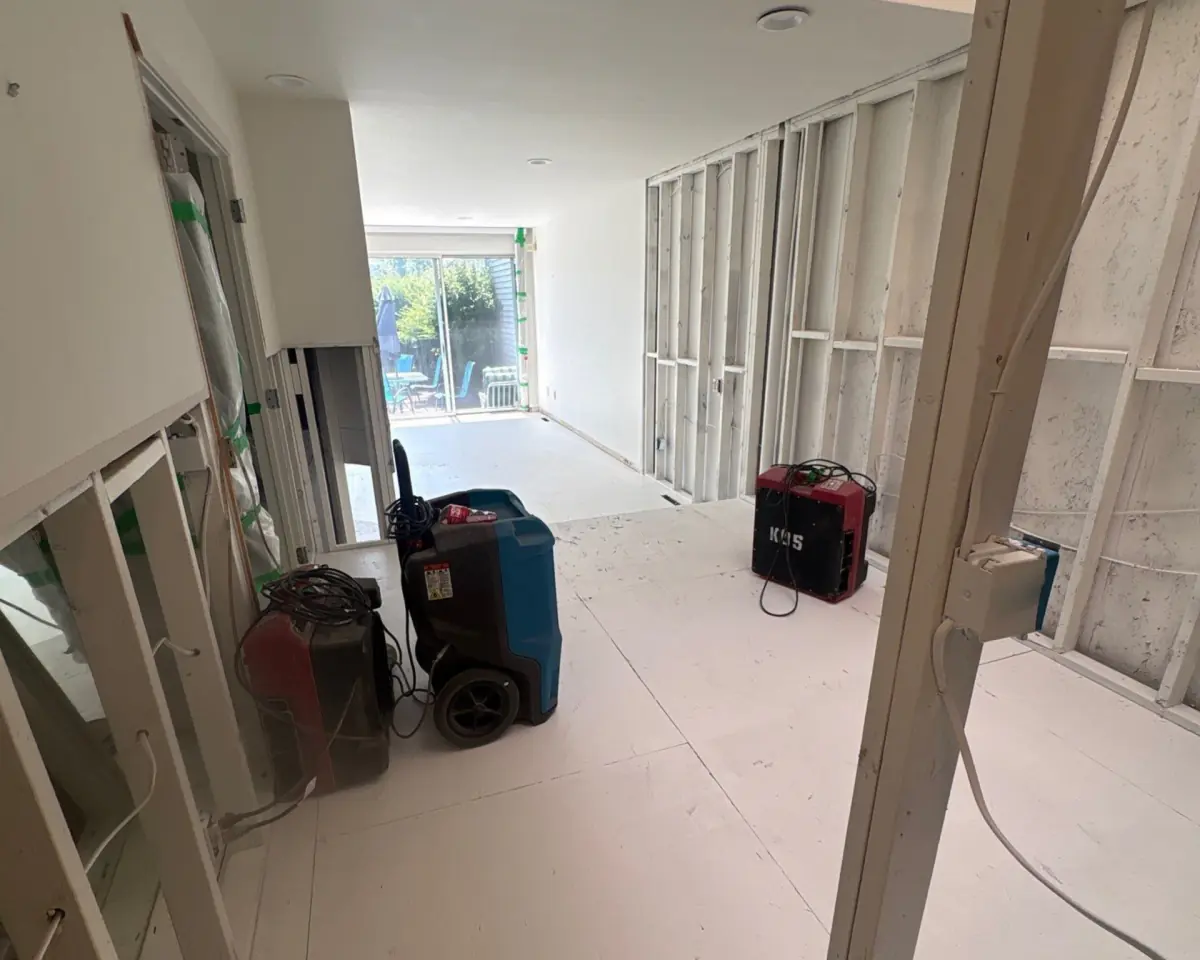
Attic mold remediation isn't limited to what happens above the ceiling. Technicians, equipment, insulation, and debris all have to travel through the house to reach the attic access point. Before removal work began, K.O.S. Restoration installed protective floor coverings along the stairway and hallway leading to the attic and established containment to help keep contaminants from being carried into the rest of the home.
This step is easy to overlook in a mold remediation project, but it's part of what separates a professional process from a quick fix — the goal is to leave the rest of the home exactly as it was found.
Removing Existing Attic Insulation
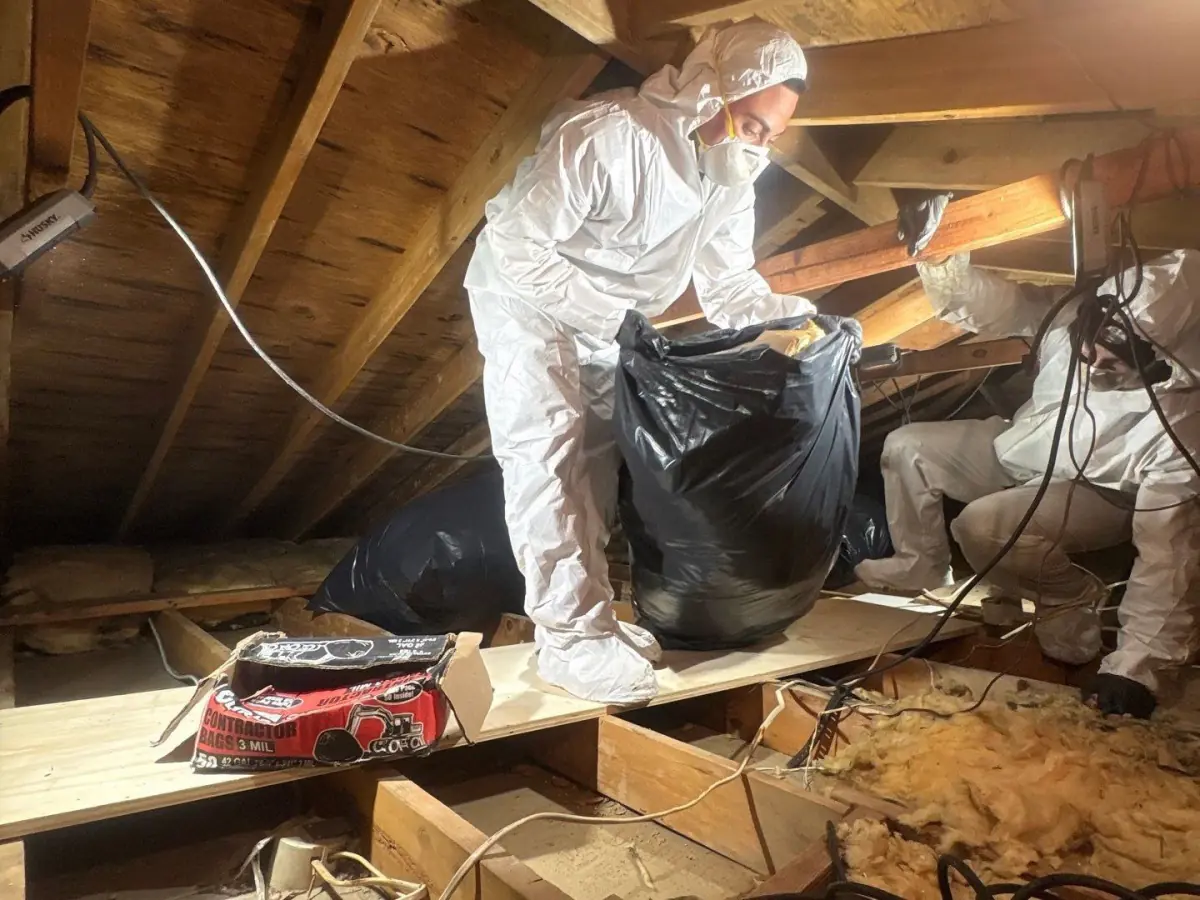
With the home protected, K.O.S. Restoration's technicians suited up in full PPE and began removing the existing attic insulation. This step gave our team direct access to the roof decking, rafters, and framing that needed to be cleaned and treated, and it removed insulation that had absorbed excess moisture and was no longer performing effectively.
Removed insulation was bagged on-site and carried out through the protected pathway for off-site disposal. Not every attic mold project requires full insulation removal — the right scope depends on how much moisture the material has absorbed and how close it is to the affected surfaces. For this Glen Cove home, the extent of the moisture and mold made removal the right call.
HEPA Vacuuming the Attic
With the insulation cleared, exposed attic surfaces were thoroughly HEPA vacuumed as part of the cleaning process. HEPA vacuuming captures mold spores and fine particulate down to a level a standard shop vacuum can't manage, which keeps contamination from spreading to other parts of the attic — or into the home — while the work continues.
Enzyme Treatment and Hand Cleaning
After HEPA vacuuming, the affected roof decking and framing were treated with an enzyme solution and manually cleaned by hand. The goal of this step is to physically remove mold contamination from affected surfaces and address the moisture conditions that allowed the problem to develop in the first place — not simply to mask what's visible.
Drying and Dehumidification
Cleaning mold without addressing excess moisture doesn't solve the underlying problem — it just delays it coming back. Once the affected surfaces were cleaned and treated, K.O.S. Restoration installed professional drying and dehumidification equipment in the attic to bring moisture levels down and keep them there while conditions were monitored. On projects that also involve water damage elsewhere in the home, this same structural drying process
extends beyond the attic to protect the rest of the structure.
Why Moisture Problems Can Lead to Attic Mold
Attic moisture typically comes from a handful of common sources: roof leaks, condensation from inadequate ventilation, bathroom or dryer vents discharging into the attic instead of outside, and general elevated humidity. We haven't confirmed a single specific cause for this Glen Cove project beyond ongoing moisture exposure, and every attic is different — for a closer look at how these conditions typically develop, see our breakdown of what causes attic mold on Long Island.
One thing is consistent across almost every attic mold case we see: removing visible mold without correcting the moisture source lets the same conditions redevelop. That's why moisture control is part of the remediation process, not an optional add-on.
Signs You May Have an Attic Moisture or Mold Problem
Attic mold isn't always obvious from inside the living space. Musty odors, damp or discolored insulation, staining on roof decking or rafters, and signs of past roof leaks are all worth a closer look — especially if they turn up during roofing, insulation, or HVAC work. We cover the full list of warning signs in our guide to signs of attic mold infestation.
If you're concerned about what you're seeing in your attic, avoid disturbing large areas of suspected mold or contaminated insulation. A professional assessment can determine how extensive the problem is and what needs to be addressed.
Attic Mold Remediation in Glen Cove and Long Island
K.O.S. Restoration is a locally owned, IICRC-certified restoration company that has served Long Island homeowners since 2006. Our team provides professional mold remediation, water damage restoration, moisture detection, containment, HEPA cleaning, and structural drying throughout Nassau County, Suffolk County, and Queens — including Glen Cove and the surrounding North Shore communities.
Found Mold in Your Attic? We Can Help.
Finding mold above your living space can leave you wondering how extensive the problem is and whether moisture is still present. K.O.S. Restoration can inspect the affected area, identify moisture conditions, and determine the appropriate steps for remediation.
The things people ask when they're looking at the same problem.
Does moldy attic insulation need to be removed?+
Not always — it depends on how much moisture the insulation has absorbed and how close it is to the affected surfaces. In this Glen Cove project, the extent of the moisture made removal the right approach, but K.O.S. Restoration evaluates each attic individually rather than assuming a one-size-fits-all scope.
How is mold removed from attic wood and roof decking?+
Professional remediation typically combines HEPA vacuuming, which captures spores and fine particulate from exposed surfaces, with enzyme treatment and hand cleaning of the affected wood. The goal is to physically remove contamination from the roof decking and framing while addressing the moisture that allowed it to develop.
How is the rest of the home protected during attic mold remediation?+
Because technicians, equipment, and materials have to travel through the house to reach the attic, K.O.S. Restoration installs protective floor coverings along stairways and hallways and sets up containment before work begins. This helps prevent contaminants from being carried into living spaces during the project.
Can attic mold come back after remediation?+
It can, if the moisture source that allowed it to grow isn't addressed. That's why drying and dehumidification are part of the remediation process rather than an afterthought — removing visible mold without correcting the underlying moisture condition allows the same conditions to redevelop.