Water Heater Leak, Garage Water Damage and Mold Remediation in Middle Island, NY
Faulty water heater plumbing soaked the drywall and stored belongings in a Middle Island garage. The crew cleared it out, saved what could be saved and remediated the mold behind the walls.
Tom Cwalinsky··8 min read·Middle Island, NY
When faulty plumbing at the water heater leaked in a Middle Island, NY home, the water ran into the attached garage, soaked the bottom of the drywall and got into everything stored along the walls. K.O.S. Restoration, an IICRC-certified water damage and mold remediation company based in the Town of Brookhaven, found the source, took moisture readings, and cleared the garage, sending unsalvageable items to an on-site dumpster and moving the rest into an on-site storage container. The crew then removed the wet drywall, set up drying and dehumidifying equipment, built containment to protect the rest of the house, and remediated the mold with HEPA vacuuming, enzyme treatment and hand cleaning.
A leak that started at the water heater
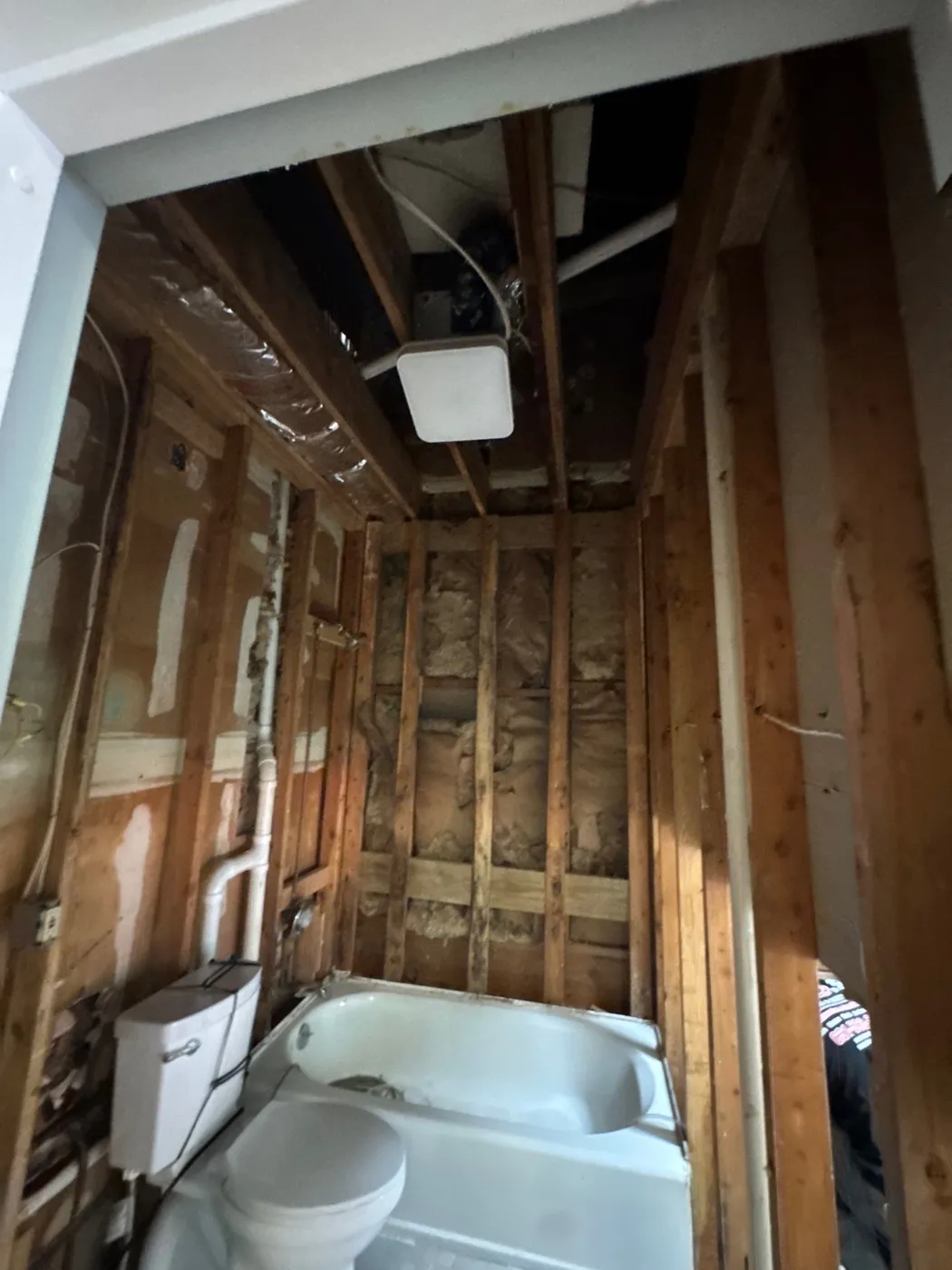
The water heater in this home sits in a utility closet off the garage, alongside the furnace and its vent piping. A fault in the water heater plumbing let water escape inside that closet, and from there it spread across the garage slab and into the base of the walls.
Water staining around the vent pipes in the utility closet, where the leak started.
Garages hide water well. The floor is concrete, so nobody sees a puddle soak in. The drywall usually runs right down to the slab, and its paper face and gypsum core wick water upward. Then there's everything stored against the walls: bins, boxes, shelving, tools. They cover the wet drywall and keep it from drying out.
When our technicians arrived, the first job was finding where the water came from and how far it went. They traced it back to the water heater plumbing, then took moisture readings along every garage wall and in the closet until they found dry material on all sides. That map decides what comes out and what can be dried in place.
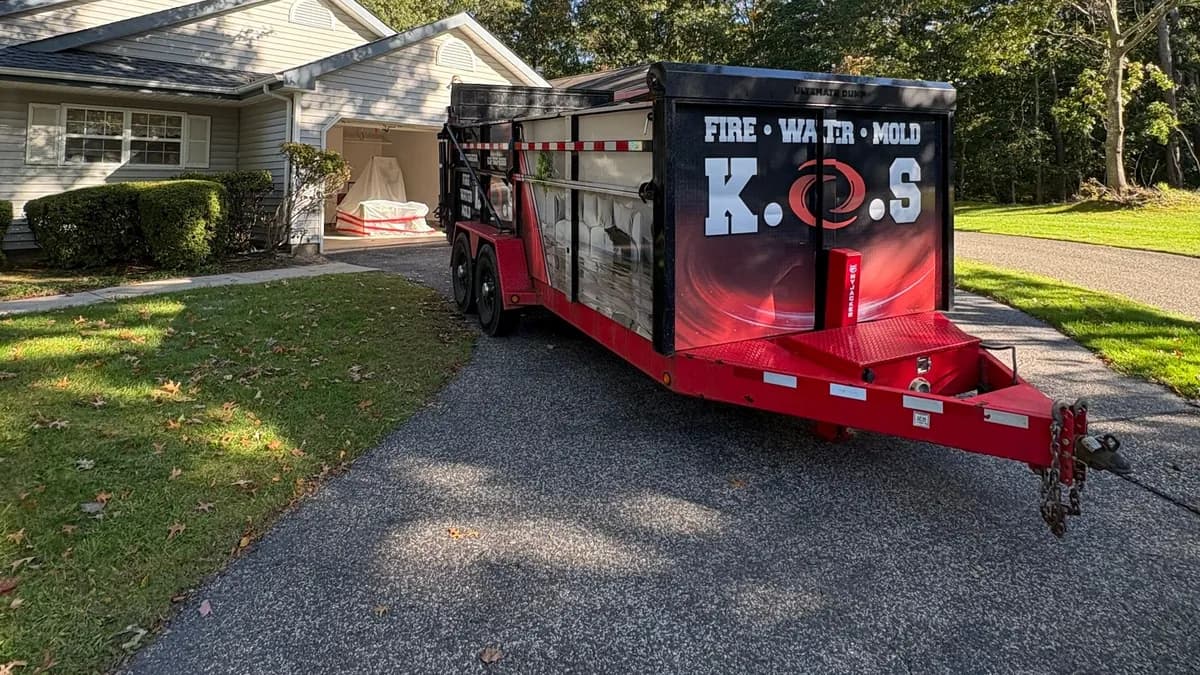
The K.O.S. van, the dump trailer and the on-site storage container, set up in the driveway on day one.
Clearing out the garage first
Before a single wall could be opened, the garage had to be emptied. The crew can't measure or dry walls they can't reach, and wet cardboard and fabric sitting against clean items spreads both moisture and mold.
Clearing the garage, one item at a time. Each piece was sorted into keep or discard.
Everything was sorted as it came out:
Saved: plastic bins, sealed containers, metal and wire shelving, tools and anything else that could be cleaned and dried. These went straight into a secure storage container parked on site.
Discarded: soaked cardboard boxes, paper, fabric, particleboard and other porous items that had absorbed water and couldn't be reliably cleaned. These went into our dump trailer in the driveway.
Unsalvageable items went into the on-site dump trailer.
What could be saved went into the storage container, out of the work area and protected until the garage is ready.
Keeping the containers on site matters for the homeowner. Their belongings stay at the house, locked and dry, instead of going to a warehouse across the county, and nothing gets thrown away without being sorted first.
Removing wet drywall and finding the mold
With the garage empty, the crew cut out the wet drywall along the bottom of the walls, a technique called a flood cut. The cut line is set by the moisture readings, high enough to remove all the wet material but no higher than needed.
Removing the wet drywall at the garage corner, down to the studs.
Behind the drywall was the reason this was also a mold job. The back of the removed panels had dark mold growth where the gypsum had stayed wet against the framing. Mold can start on wet drywall within 24 to 48 hours, and the back side of a garage wall, sealed off by stored belongings in front, gives it the dark, damp space it needs.
Mold on the back of a removed drywall panel. It was invisible from the garage side.
Every piece was bagged at the wall and carried straight out to the dump trailer, so moldy debris didn't sit in the garage or get tracked through the house.
Containment to protect the house
An attached garage shares a door, and often air, with the living space. Before the mold work started, the crew sealed the work area:
The door into the house was covered with plastic sheeting and a zippered entry, so the crew could get through without letting dust and spores in.
Items that stayed in the garage were wrapped in plastic and taped.
The work area was kept separate from the rest of the home for the whole remediation.
The emptied garage, with the house door sealed behind a zippered plastic barrier.
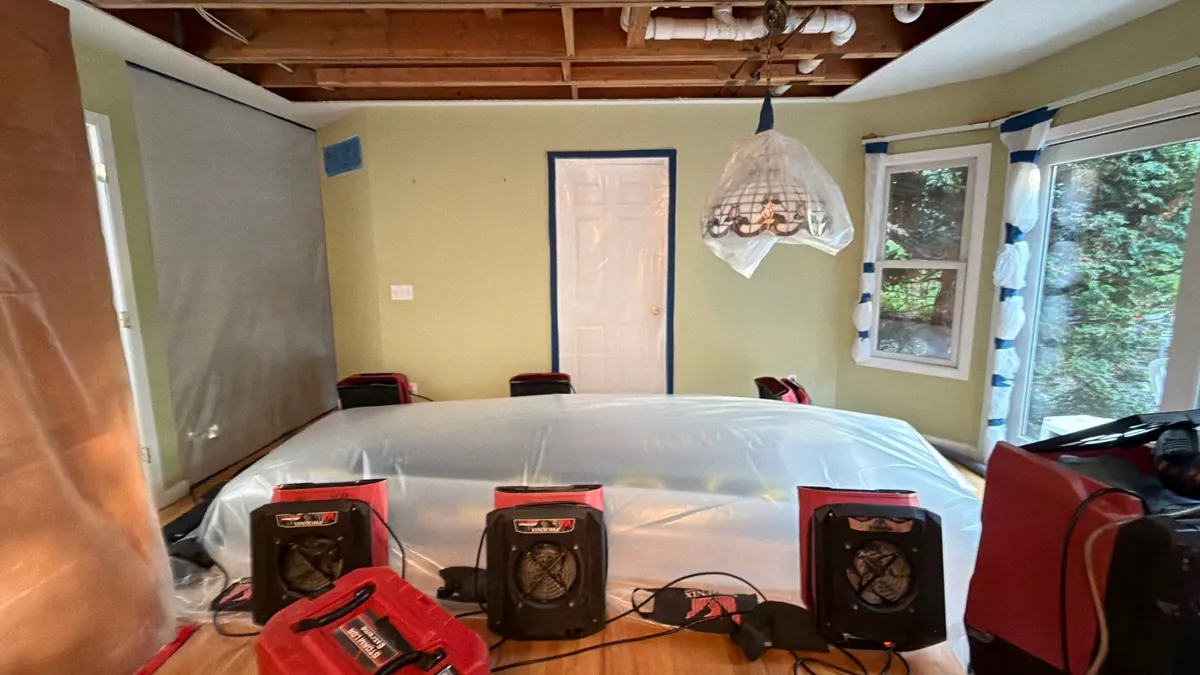
Drying the garage and utility closet
Removing wet drywall doesn't dry the studs, sill plates and slab behind it. The crew set up commercial drying equipment as soon as the walls were open:
Air movers push air across the exposed framing and concrete, pulling moisture out of the materials and into the air.
Commercial dehumidifiers pull that moisture out of the air so it doesn't settle back into the wood or move into the house.
A commercial dehumidifier and air mover working in the cleared garage.
The equipment stays until moisture readings in the framing match dry reference readings taken from unaffected parts of the same house. Drywall doesn't go back up until then. Closing up wet framing is how the same mold comes back a few months later.
Mold remediation: HEPA vacuuming, enzyme treatment and hand cleaning
With the area contained and the framing exposed, the crew cleaned every affected surface in the garage and the water heater closet:
HEPA vacuuming the studs, sill plates, slab edges and closet framing, so loose spores and debris are captured instead of blown around.
Enzyme treatment sprayed onto all impacted surfaces. Enzyme cleaners break down the organic material mold feeds on and lift residue out of the wood grain.
Hand cleaning the framing to remove what the vacuum and spray leave behind.
HEPA vacuuming along the bottom of the opened garage walls.
Working inside the water heater closet, where the leak started.
Treating the closet framing around the vent piping.
Hand cleaning the framing after vacuuming and treatment.
Enzyme cleaner going onto the slab edge and the exposed framing.
Bleach isn't part of the process. It whitens mold on the surface but doesn't remove it, and its water content soaks back into the wood. The IICRC S520 mold remediation standard calls for physically removing the growth and the materials it ruined, cleaning what stays, and fixing the moisture that caused it. The IICRC S500 water damage standard covers the drying side: remove what can't be dried, then dry the rest and confirm it with readings.
One garage bay after removal and cleaning, open to dry.
Where the job stands
The garage is cleared, the wet drywall and the mold are out, and the framing has been cleaned. Drying continues until the readings confirm the structure is dry. After that, the garage can be rebuilt and the homeowner's belongings can come back out of storage.
If your water heater has leaked into a garage, basement or closet, call (631) 560-8999 any time, day or night. We're IICRC-certified, we've served Long Island since 2006, and we'll find out how far the water went before anything comes down.
The things people ask when they're looking at the same problem.
Can a water heater leak cause mold in a garage?+
Yes. Garage walls are usually plain drywall sitting on a concrete slab, and the bottom edge of that drywall wicks water up like a sponge. Boxes, bins and cardboard stored against the walls hold the moisture in place and hide it. In this Middle Island garage, mold was growing on the back of the drywall where nobody could see it until the wall was opened.
What happens to belongings stored in a water-damaged garage?+
Everything gets sorted. Items that can be cleaned and dried, like plastic bins, metal shelving and sealed containers, are moved to a secure on-site storage container so they're protected and out of the work area. Porous items that soaked up water, like cardboard, paper, fabric and particleboard, usually can't be saved and go into an on-site dumpster. The homeowner sees what's being kept and what's being thrown away.
Why is the garage cleared out before any drywall comes down?+
The crew can't measure, remove or dry what it can't reach. Clearing the garage first exposes every wall for moisture readings, stops wet cardboard and fabric from spreading mold to clean items, and gives the drying equipment open floor to work on. It also keeps the saved belongings away from dust and debris during demolition.
How is mold removed from garage framing?+
Under the IICRC S520 standard, mold is removed physically, not covered up. The crew HEPA vacuums the exposed studs and sill plates, hand cleans them, and treats the surfaces with an enzyme cleaner that breaks down the residue mold feeds on. Moldy drywall is cut out and bagged. Bleach isn't used, because it whitens mold without removing it and soaks water back into the wood.
Is water heater leak damage covered by homeowners insurance?+
Sudden and accidental leaks from a water heater or its plumbing are often covered, while damage from a slow leak over a long time or a heater that simply wore out may not be. Mold coverage is frequently capped at a set amount. K.O.S. documents the damage with photos, moisture readings and a written scope to give the adjuster what they need.
Do you handle water damage and mold remediation in Middle Island?+
Yes. K.O.S. Restoration provides 24/7 water damage restoration and mold remediation in Middle Island and across the Town of Brookhaven, including Ridge, Coram, Yaphank and Rocky Point, with an average arrival time of 45 minutes in Suffolk County. Call (631) 560-8999.