Roof Leak Water Damage in Glen Head, NY
Glen Head, Nassau County — July 27, 2026
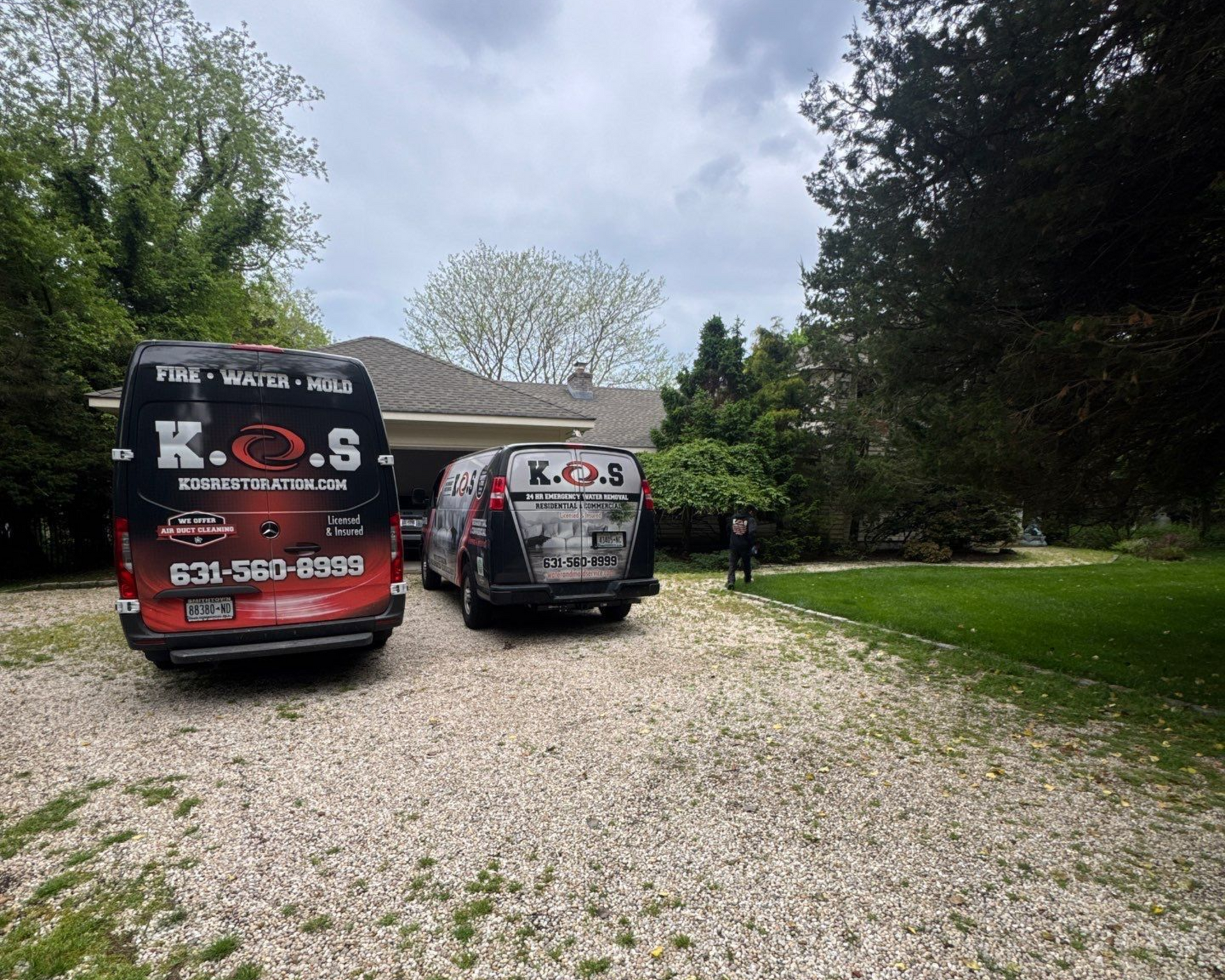
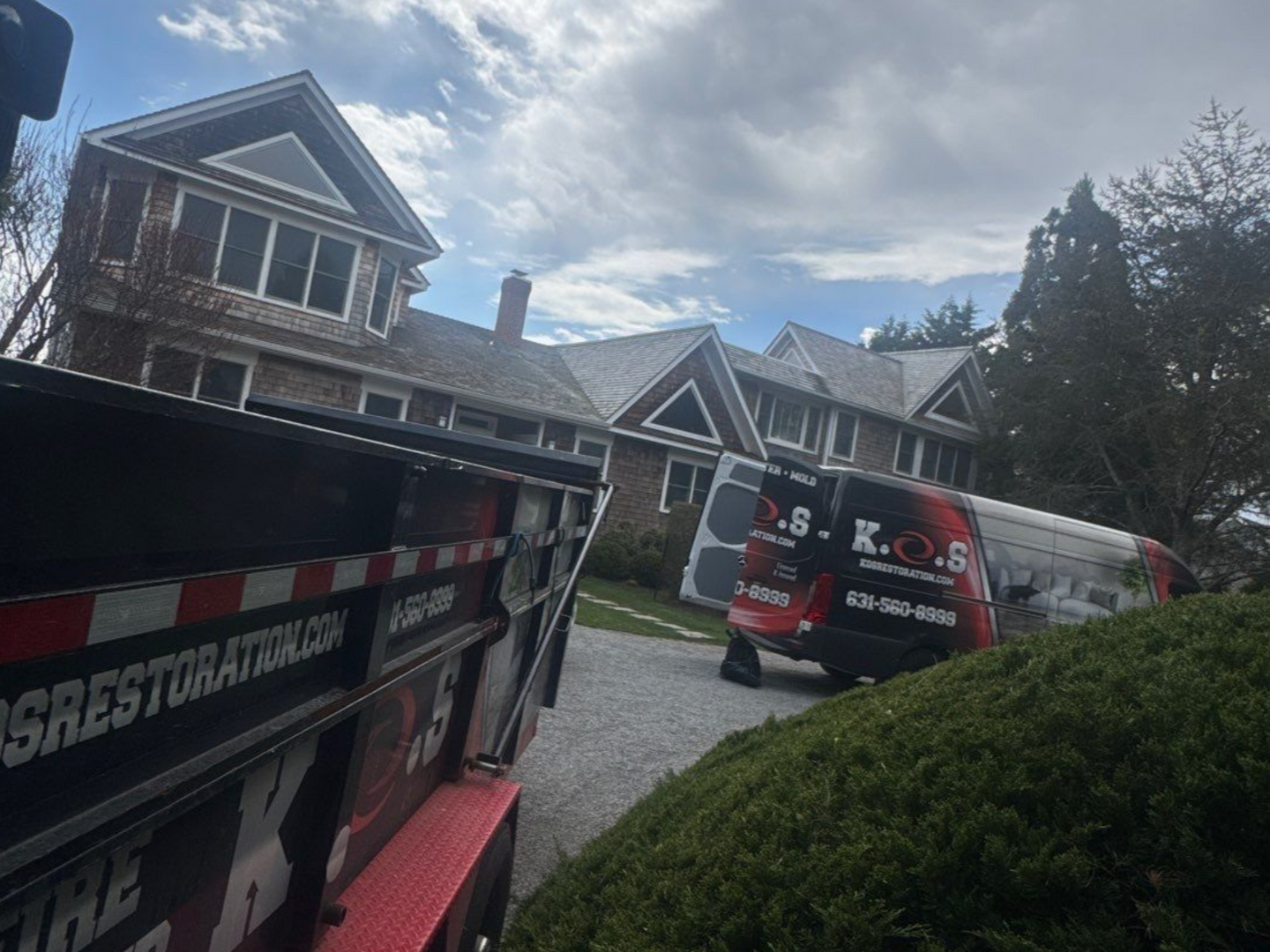
Our crew is on a job in Glen Head this week that's worth showing you, because it's one of the most common calls we get on Long Island — and one of the easiest to miss until it's expensive.
We got there Saturday morning at 8:00 AM. Here's what we found, what we're doing about it, and why it matters if you've ever had a roof leak.
Water damage or mold in your home? Call (631) 560-8999 — 24 hours a day, 7 days a week.
What the homeowners saw
Almost nothing. That's the part worth paying attention to.
A discolored patch on a wall in the finished basement. A smell that hadn't been there before. No standing water, no flood, no burst pipe — nothing that looks like an emergency.
They'd had a roof leak a while back. It got repaired. As far as anyone knew, that was the end of it.
It wasn't.
What we found
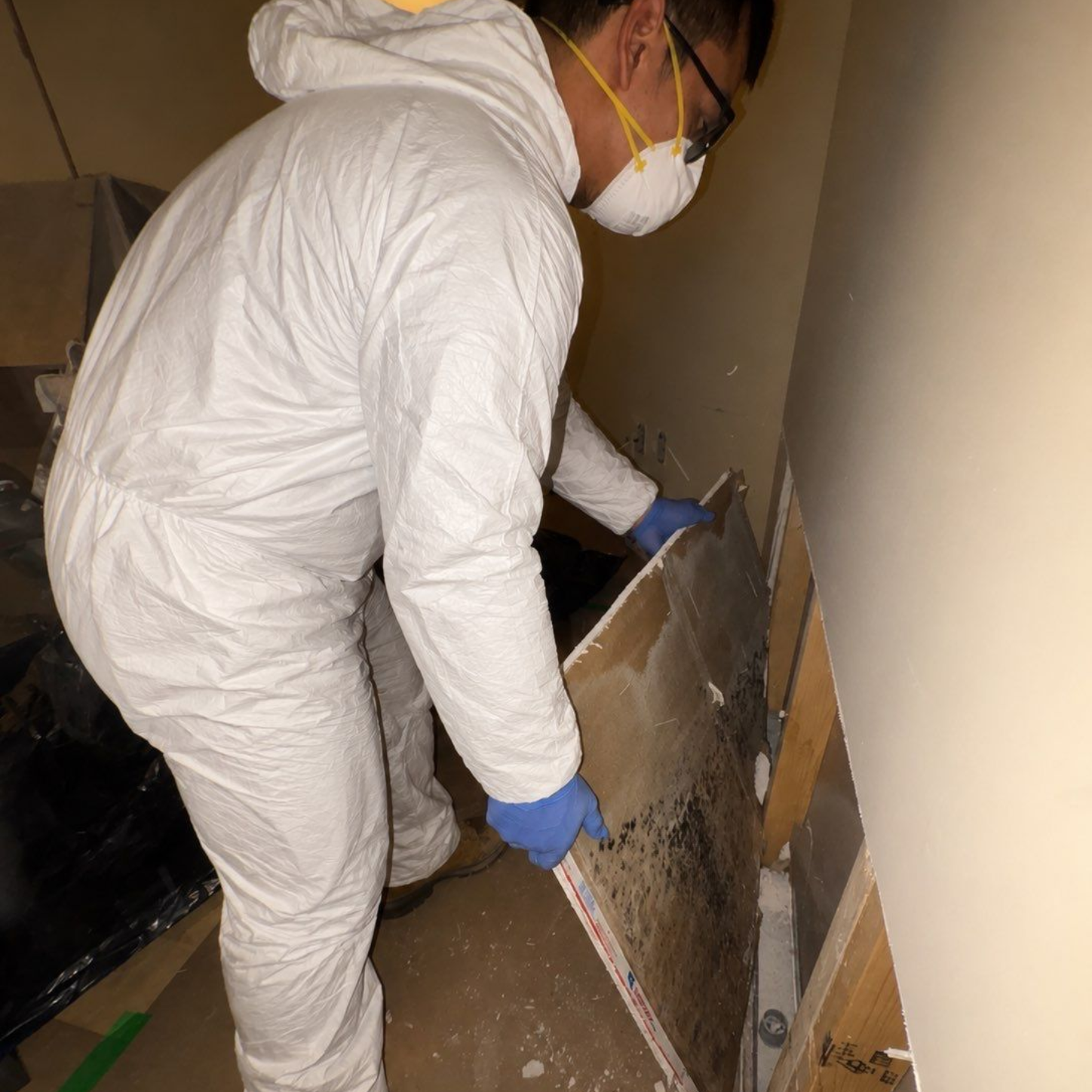
When we pulled the first panels of drywall off that basement wall, the front was clean and the back was covered in mold.
That photo tells the whole story better than we can write it. The family had been living on the other side of that wall with no idea.
Here's why it happens. When water gets past a roof, it doesn't stay put — it runs down , following framing and insulation, traveling inside wall cavities, sometimes through two or three levels of a house before something stops it. In this home, that something was the finished basement.
And because the water was moving inside the walls, it soaked the drywall from the back side first. The painted surface everyone looked at every day stayed dry and normal-looking. Meanwhile the paper backing on the hidden side stayed damp, in the dark, with no airflow.
That's close to a perfect mold incubator. Mold can start growing in 24 to 48 hours under those conditions.
The homeowners didn't do anything wrong. They fixed the roof. The catch is that fixing a roof stops new water — it does nothing about the water already sitting in your walls.
Moisture mapping: finding water you can't see
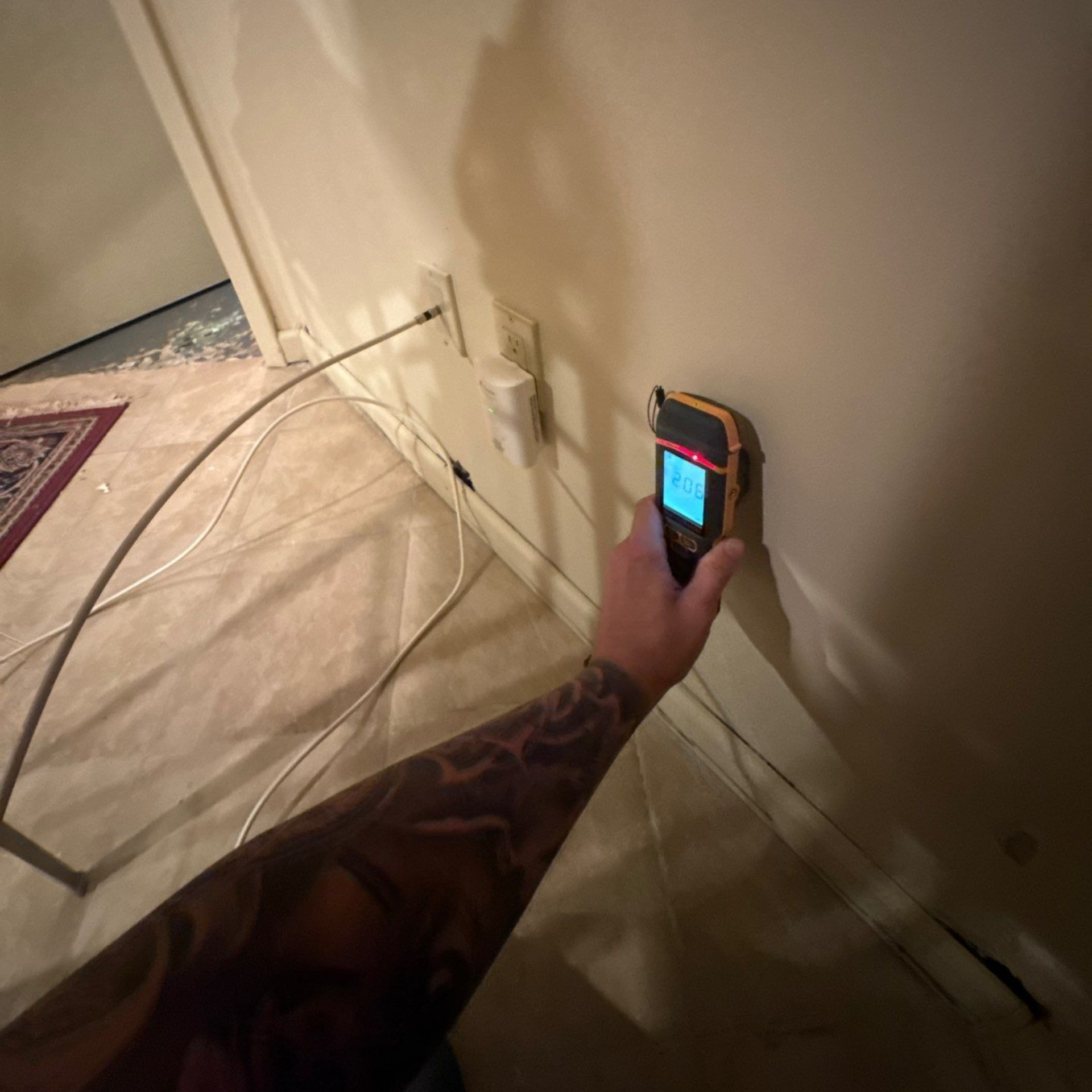
You can't dry what you haven't found, and the visible stain is almost never the edge of the damage.
Before touching a single piece of drywall, our technician mapped the moisture — working outward from the visible damage with a moisture meter, reading walls, framing, and finishes, tracking where the numbers climbed and where they came back down to normal.
Walls that looked completely fine were reading wet inside.
This is the step that separates a job that's actually finished from one that comes back as a mold complaint six months later. Guess at the boundary and you either tear out more than you need to, or — much worse — seal wet material inside a wall.
Protecting the house first
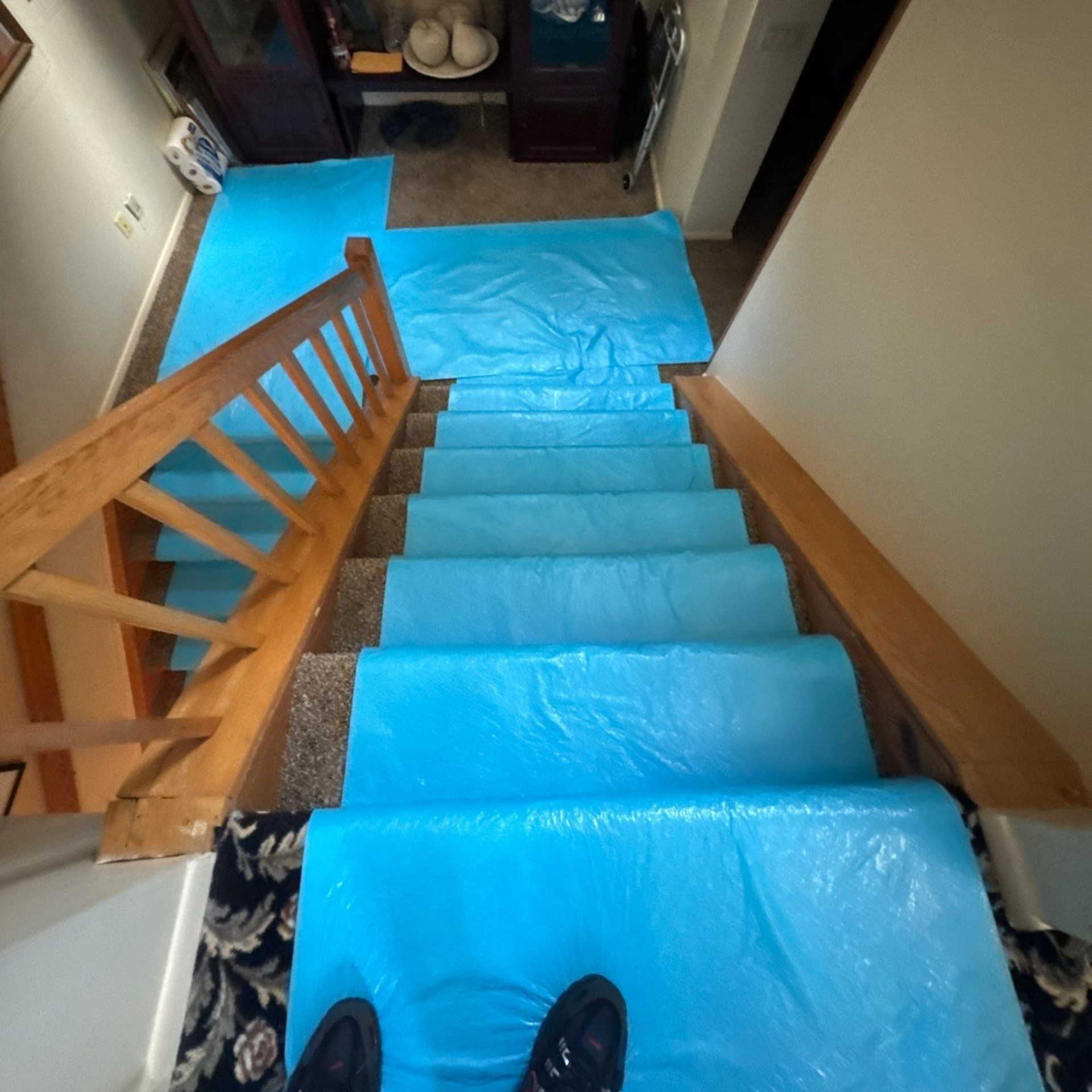
Before any demolition, we protected everything that wasn't damaged.
Protective covering ran the full length of the staircase and every path the crew would walk. We moved and boxed the family's belongings out of the work zone by hand — clothing, furniture, framed pictures, stored keepsakes. Then we built containment: sealed plastic barriers with zippered access, separating the work area from the rest of the house.
This is the part homeowners tell us they remember. Not the equipment — the fact that we treated their home like a home.
Controlled demolition
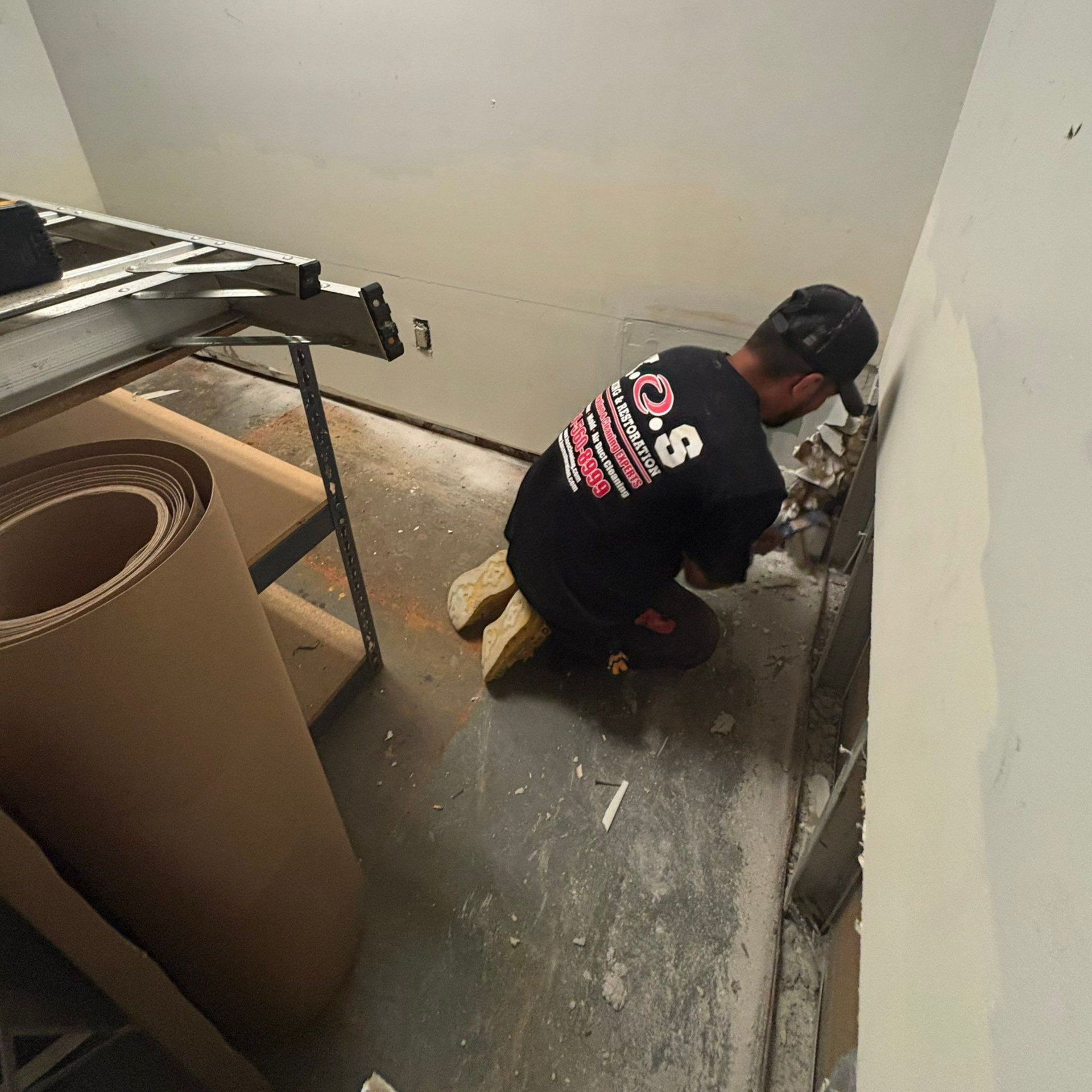
Once we knew where the moisture stopped, we removed the affected materials and only the affected materials.
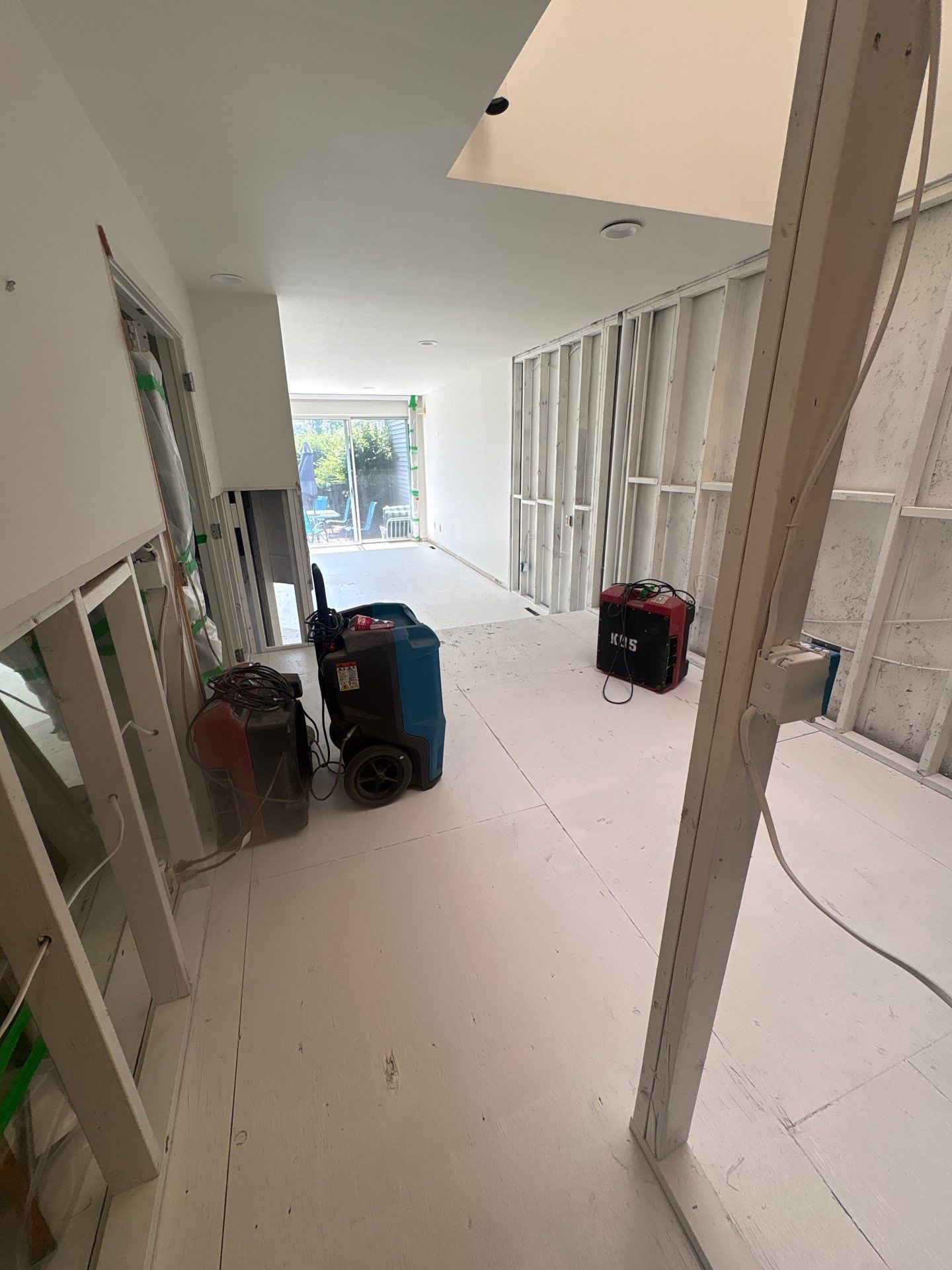
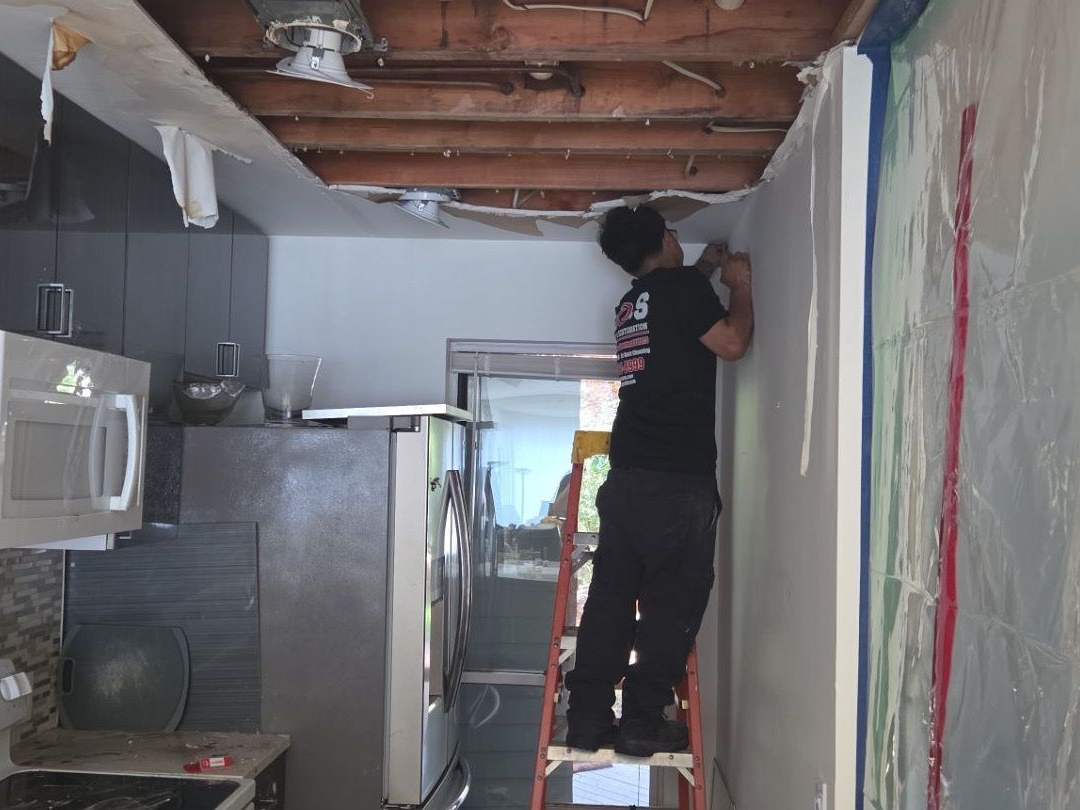
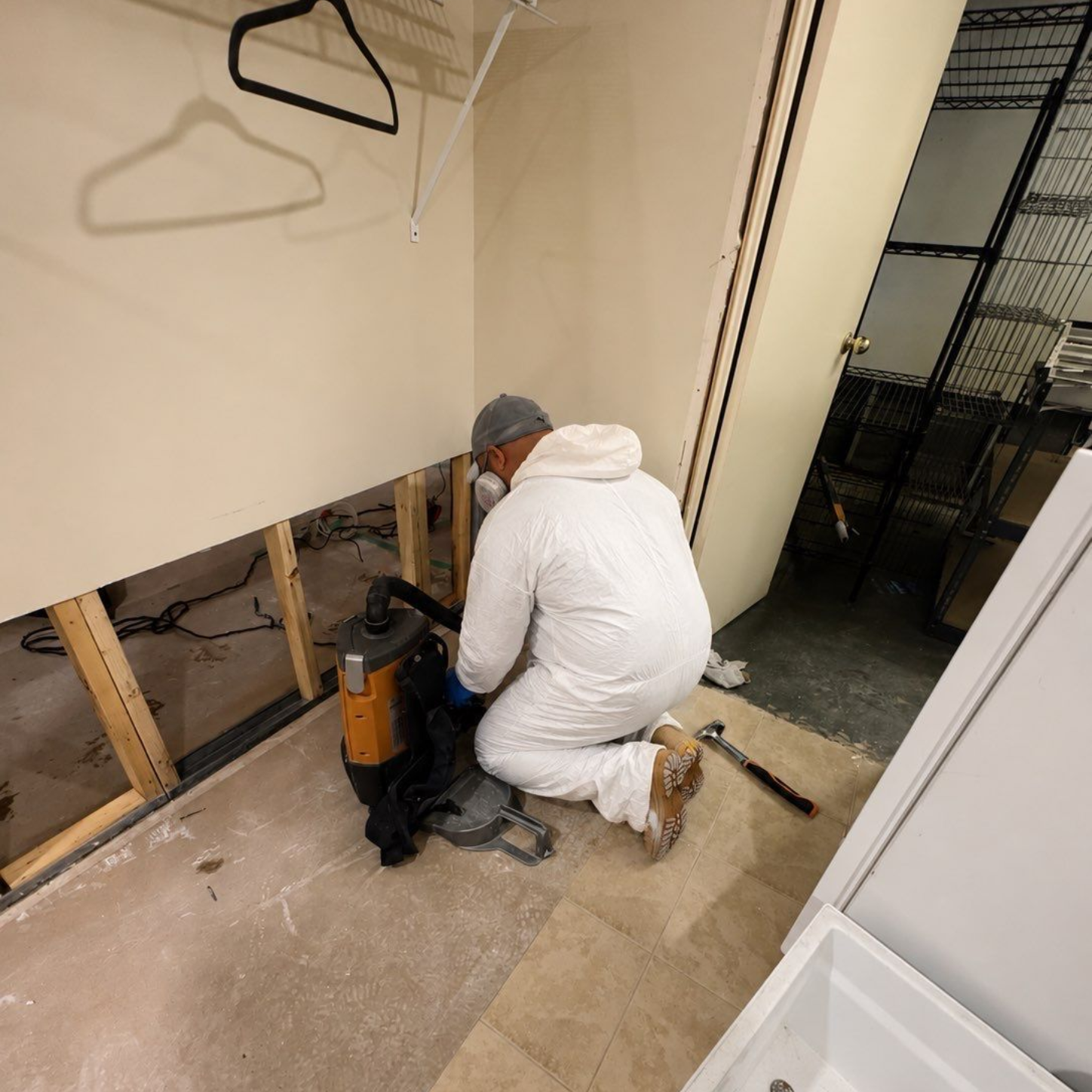
Our technicians worked in full protective suits and respirators, cutting out water-damaged and mold-contaminated drywall and saturated insulation, back to clean, dry, defined boundaries — the straight horizontal flood cuts you can see in the photos.
With the drywall gone, the framing was exposed and could finally be cleaned, treated, and dried.
Mold remediation to IICRC S520
Mold work is where cutting corners does the most damage, because everything that goes wrong is invisible until it isn't.
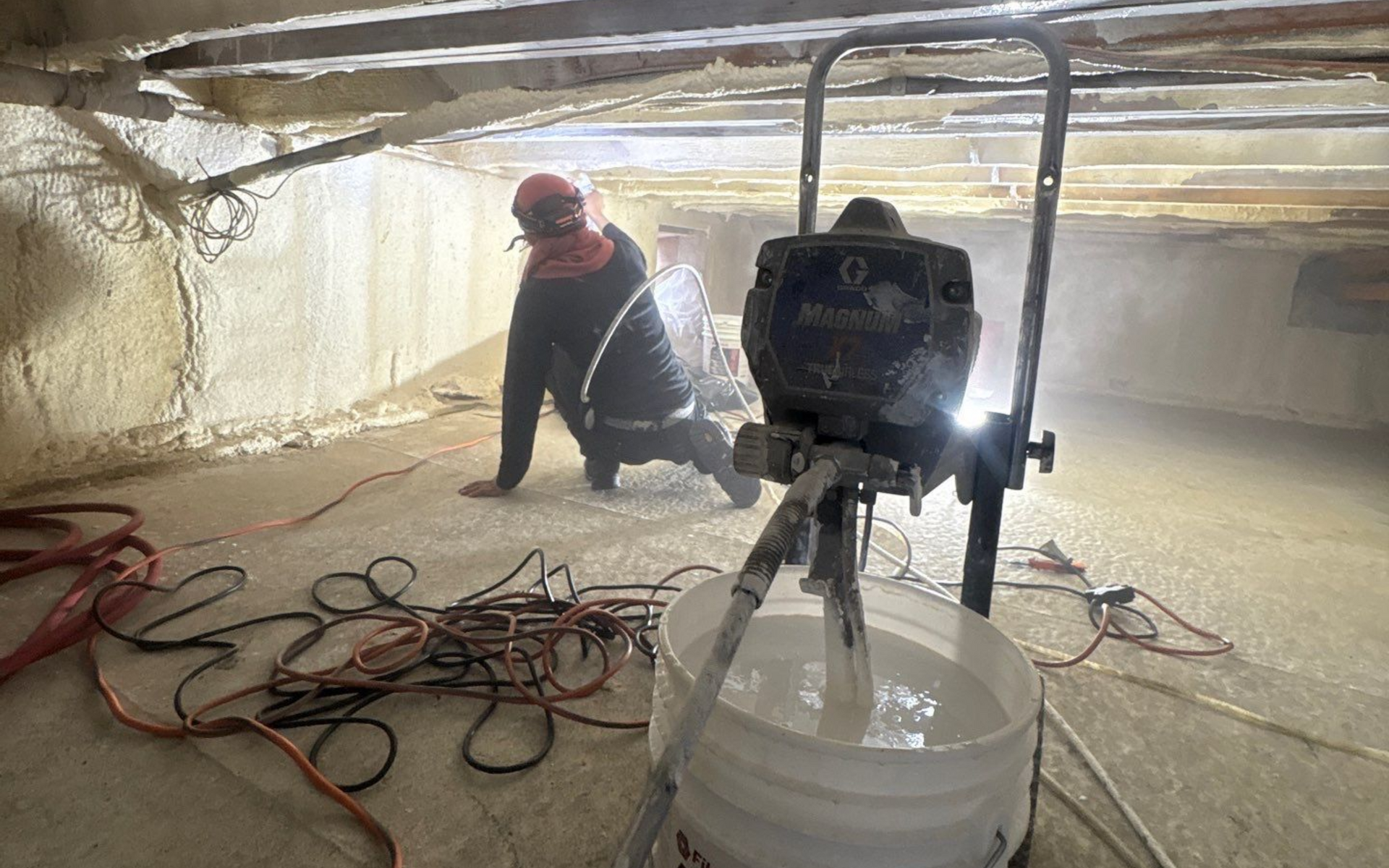
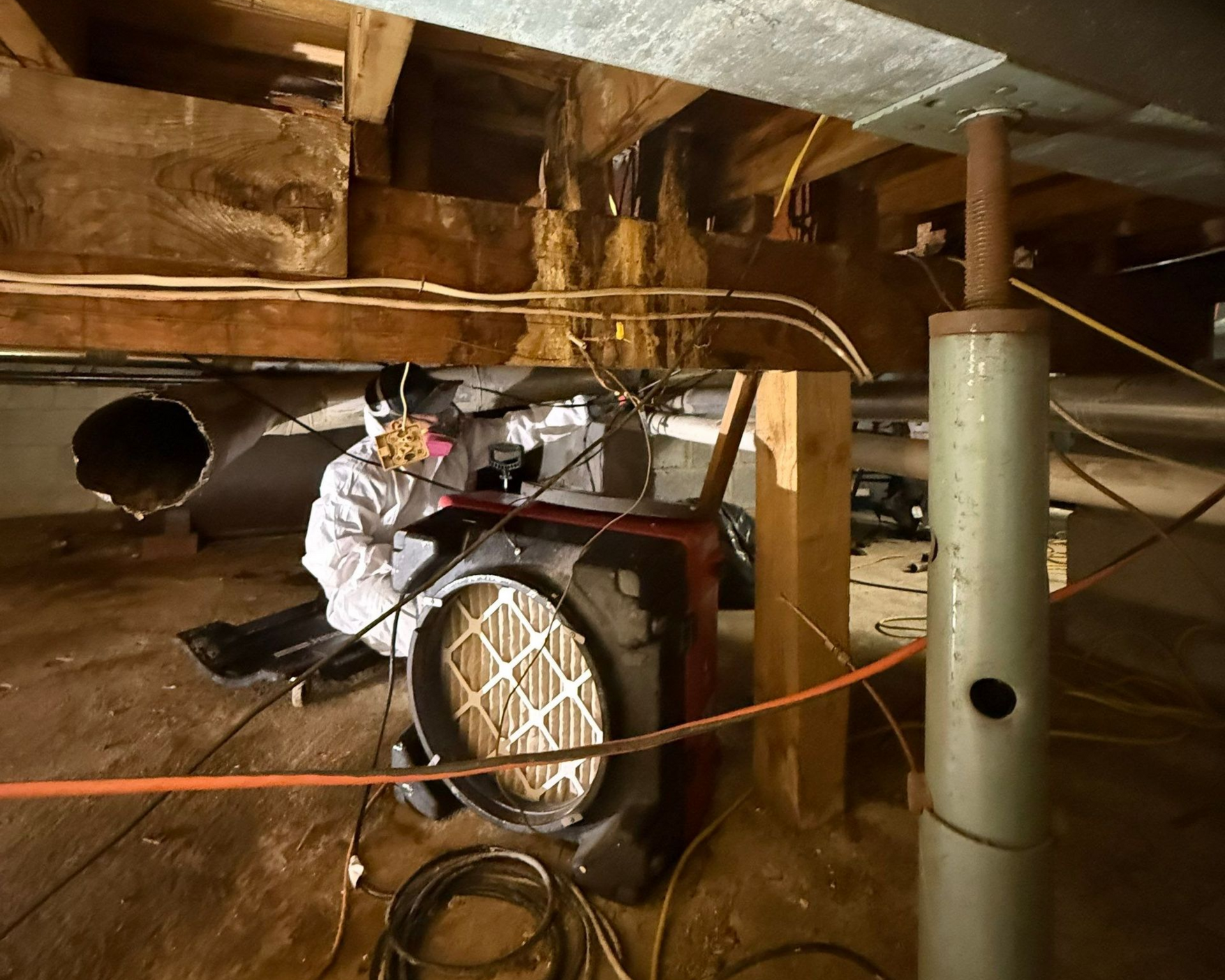
Following IICRC S520 standards, our team worked inside sealed containment under negative air pressure — so airflow moved into the work zone and never out into the family's living space. HEPA air scrubbers ran continuously to capture airborne spores. All exposed framing was HEPA vacuumed, treated with antimicrobial, and detail-cleaned stud by stud. Contaminated material was bagged and carried out through controlled exit points.
Demolition is the highest-risk moment in any mold job — it's when spores that were sitting quietly in a wall cavity get thrown into the air. Containment isn't an optional extra. It's the entire reason remediation doesn't turn one wall into a whole-house problem.
A note for New York homeowners: New York State regulates mold work under Labor Law Article 32. Licensed professionals are required for mold remediation, and the state requires that the company assessing your mold and the company remediating it be independent of each other. If a contractor offers to both test and remediate, that's a red flag worth asking about.
Structural drying to IICRC S500
Removing wet material isn't drying. The framing and remaining structure were still holding moisture, and that's what has to come out.
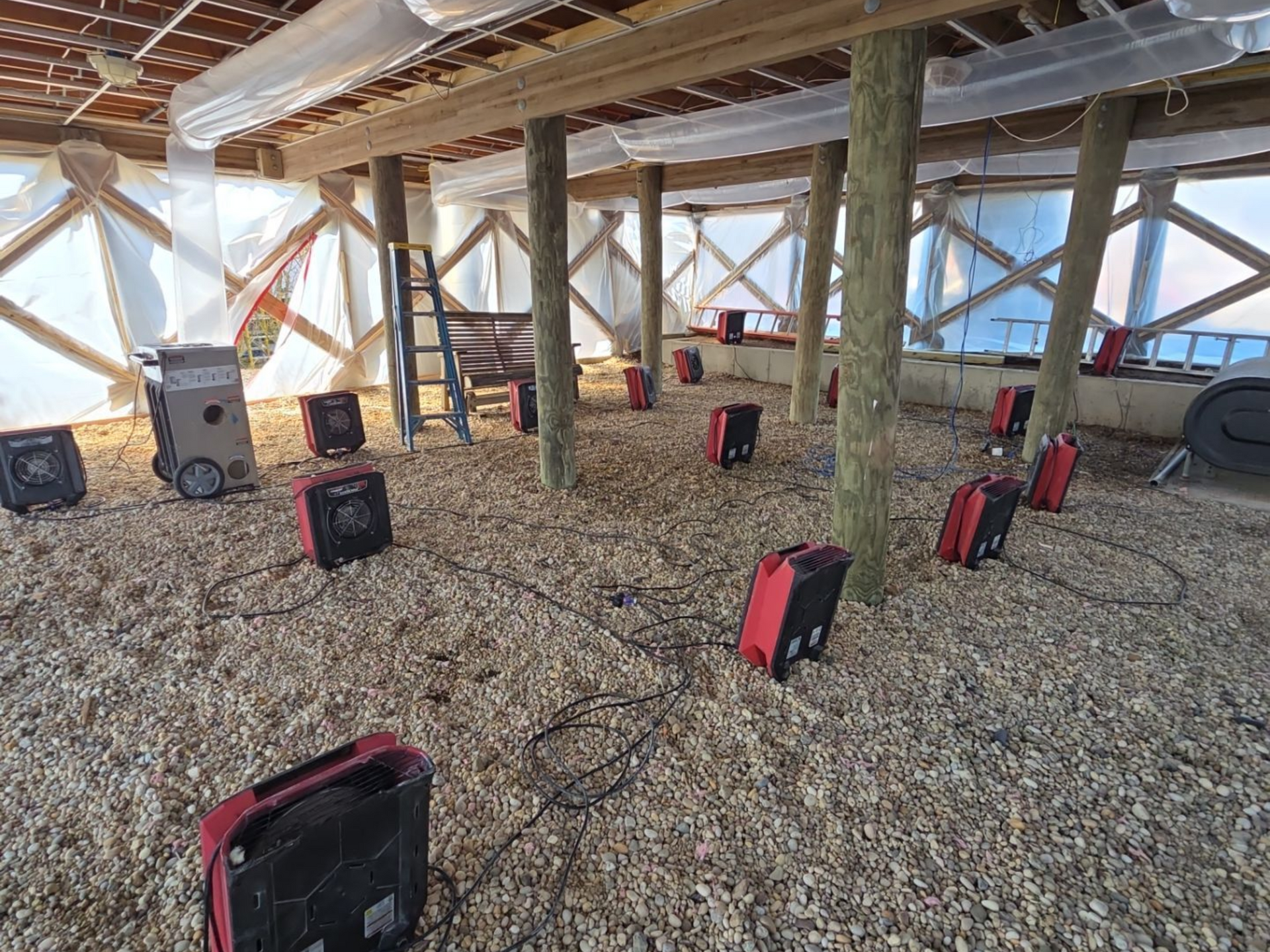
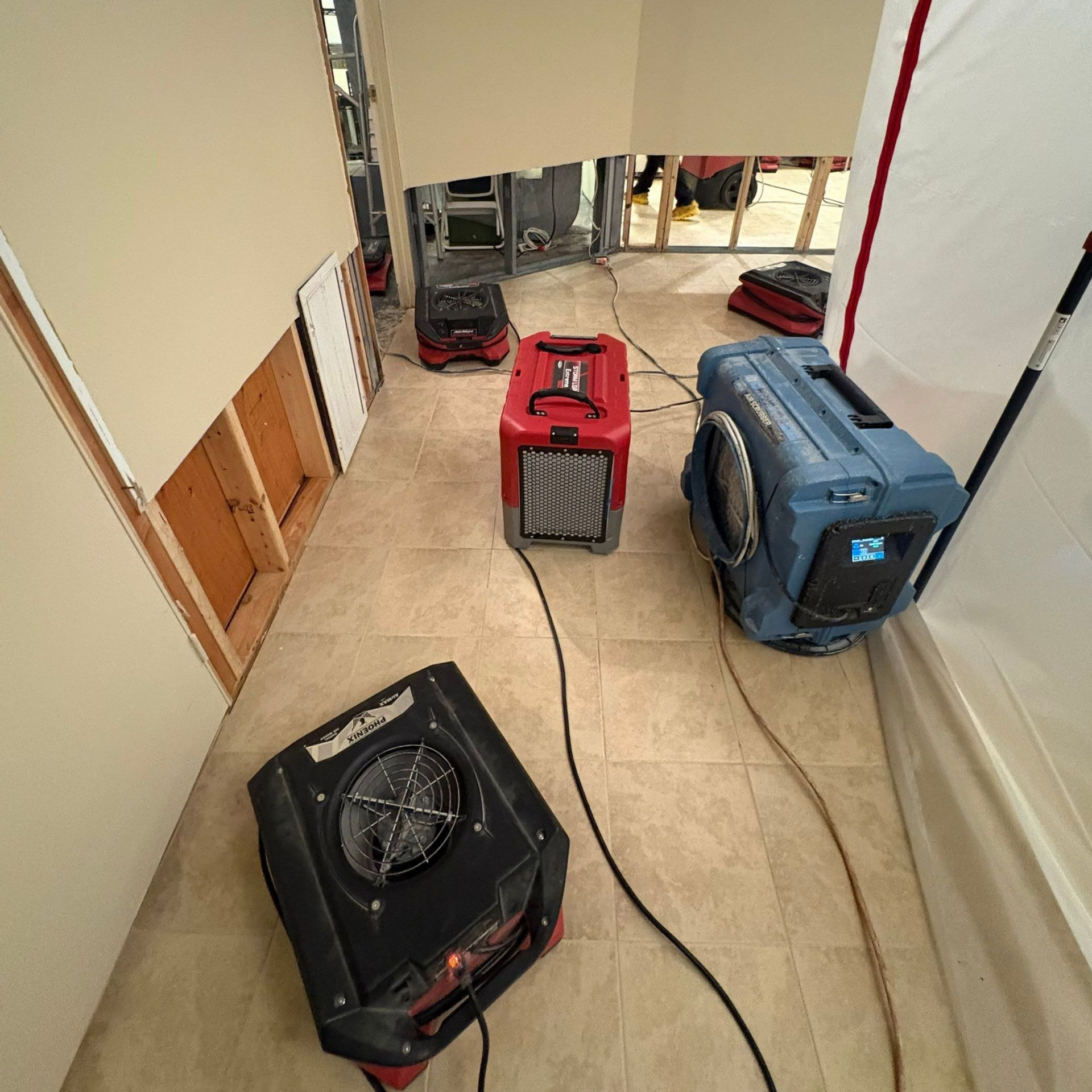
Right now the home has high-velocity air movers positioned to sweep airflow across every wet surface, commercial LGR dehumidifiers pulling that moisture back out of the air and out of the building, and HEPA air scrubbers running throughout.
Placement isn't casual — air movers get angled to create circulation across wet surfaces, not just dropped in the middle of a room, and dehumidifiers get sized to the space and the moisture load.
Then we come back. Every day. Same monitoring points, fresh readings, logged and compared against yesterday's numbers, equipment adjusted based on what the data shows.
We don't dry by the calendar. "Three days is usually enough" is how you end up with mold sealed inside a finished wall. A structure is dry when the readings say it's dry, measured against unaffected areas of the same home — and not a day before. That's why we don't quote a fixed number of days up front. We quote a standard, and we stay until the numbers meet it.
That's where this job stands as of today: equipment running, readings logged daily, drying underway.
Would you know if this were happening in your house?
That's the uncomfortable question, and it's why we're writing this one up.
After any roof leak — even a small one, even one that's already been repaired — watch for:
- Water stains on walls or ceilings, especially ones well below the actual leak
- A musty, earthy smell that doesn't go away with cleaning or airing out
- Drywall that feels soft, spongy, or cool to the touch
- Bubbling, peeling, or cracking paint
- Warped trim, baseboards, or door casings
- Damp or discolored carpet near walls
- Any visible mold, however small
- Allergy-type symptoms that ease up when you leave the house
What makes roof leaks especially deceptive: the damage often shows up on a completely different floor than the leak. Homeowners find a stain in the basement and go looking for a basement problem. The source is three levels up.
If you're seeing any of this, you're not overreacting. Don't wait and watch — mold gets more expensive and more invasive every week it sits.
Not sure what you're looking at? Call (631) 560-8999. We'll come look. Estimates are free, and we answer the phone at 2am.
Common questions
How long does it take mold to grow after a roof leak?
Mold can begin growing within 24 to 48 hours when moisture, organic material, and moderate temperature are present. Because roof leaks trap water inside wall cavities where it can't evaporate, mold often starts days before a homeowner sees anything — and keeps growing for months after the roof itself is repaired.
Can mold grow behind drywall with no visible sign?
Yes, and it's common. Water traveling inside a wall cavity soaks the paper backing of drywall from the back side while the painted front stays dry and normal-looking. Mold colonizes the hidden side first, and often the only early clue is a musty smell. Moisture meters and thermal inspection find this; a visual walkthrough usually doesn't.
My roof was already fixed. Do I still need water damage restoration?
Very possibly. Repairing a roof stops new water — it does nothing about water already inside your walls, insulation, and framing. That trapped moisture can't evaporate inside a sealed cavity, so it keeps feeding mold long after the roof is sound. If the leak lasted more than a day or two, a moisture inspection is worth doing.
Does homeowners insurance cover mold from a roof leak?
It depends on your policy and the cause. Many policies cover mold resulting from a covered sudden water loss but exclude mold from long-term neglect or deferred maintenance — which is exactly why prompt documentation matters. We document every loss with photos, moisture logs, and daily drying records, and we work directly with adjusters. We're not insurance agents, so confirm specifics with your carrier, but we'll give them everything they need.
Do you need a license to remediate mold in New York State?
Yes. New York regulates mold assessment and remediation under Labor Law Article 32, administered by the NYS Department of Labor. The state also requires that mold assessment and remediation be performed by independent parties — the company that tests your mold shouldn't be the company that removes it. Always ask a contractor for their license before work begins.
How long does structural drying take?
Most residential water losses dry in three to five days, but that's an average, not a promise. It depends on how much water was absorbed, which materials were affected, how long moisture sat before drying began, and humidity conditions. Drying is complete when moisture readings return to documented dry standard — which is why we monitor daily and log the numbers rather than working to a schedule.
Will you have to tear out my whole basement?
Almost never. Moisture mapping exists so we can define exactly where the damage stops and remove only what can't be dried or safely restored. On this Glen Head job we made clean, defined cuts and left everything above the moisture line untouched.
Do you respond on weekends?
Yes. This Glen Head job started at 8:00 AM on a Saturday. We're available 24 hours a day, 365 days a year — water damage doesn't keep business hours.
Do you service Glen Head and the North Shore?
Yes. K.O.S. Restoration serves all of Nassau County — Glen Head, Glenwood Landing, Sea Cliff, Old Brookville, Roslyn Harbor, Greenvale, Locust Valley, Brookville and the surrounding North Shore communities — along with Suffolk County and Queens.
Why Long Island homeowners call K.O.S. Restoration
We've been doing this on Long Island since 2006. Same family, same phone number, nearly twenty years of showing up at people's worst moments — including Saturday mornings.
- 24-hour emergency response , 365 days a year — a real person answers
- Approximately 30-minute response across our core service area
- Full Nassau County coverage , including Glen Head and the North Shore
- IICRC-certified technicians — WRT (Water Damage Restoration), AMRT (Applied Microbial Remediation), ASD (Applied Structural Drying)
- Advanced moisture detection — meters and thermal imaging, not guesswork
- Insurance claim experts — we document everything and work directly with your adjuster
- 250+ five-star Google reviews from your Long Island neighbors
- Locally owned and operated since 2006
Water damage restoration and mold remediation in Glen Head, NY
Roof leak, burst pipe, failed water heater, sewage backup, storm flooding — the pattern is almost always the same: the damage you can see is smaller than the damage you can't.
We understand how overwhelming this is. You didn't plan for it, you don't know how bad it is yet, and you're trying to figure out who to trust while water is still sitting somewhere in your house. That's exactly where this Glen Head family was on Saturday morning.
We'd like to help. Our IICRC-certified team responds fast anywhere in Nassau County, finds the moisture you can't see, remediates mold safely, dries your home properly, and documents all of it for your insurance company.
Call (631) 560-8999 for 24/7 emergency service, or request a free estimate.
K.O.S. Restoration · 11 Farber Drive, Unit F, Bellport, NY 11713 · Serving Nassau County, Suffolk County and Queens
Services mentioned in this post
Emergency water damage restoration · Mold remediation · Structural drying · Mold encapsulation · Storm and flood cleanup · Contact us
References
Share This Post