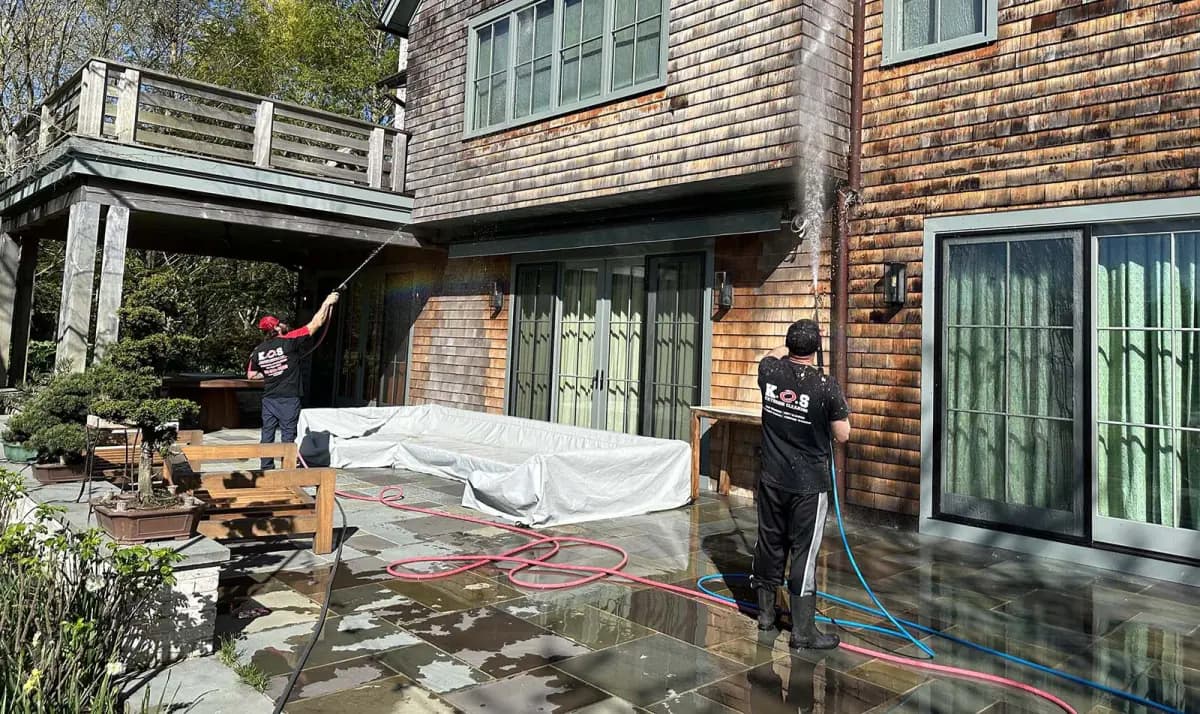
Learn why driveways turn dark and how to safely remove algae and buildup from pavers and concrete surfaces in Suffolk County, Long Island.
Tom Cwalinsky··4 min read
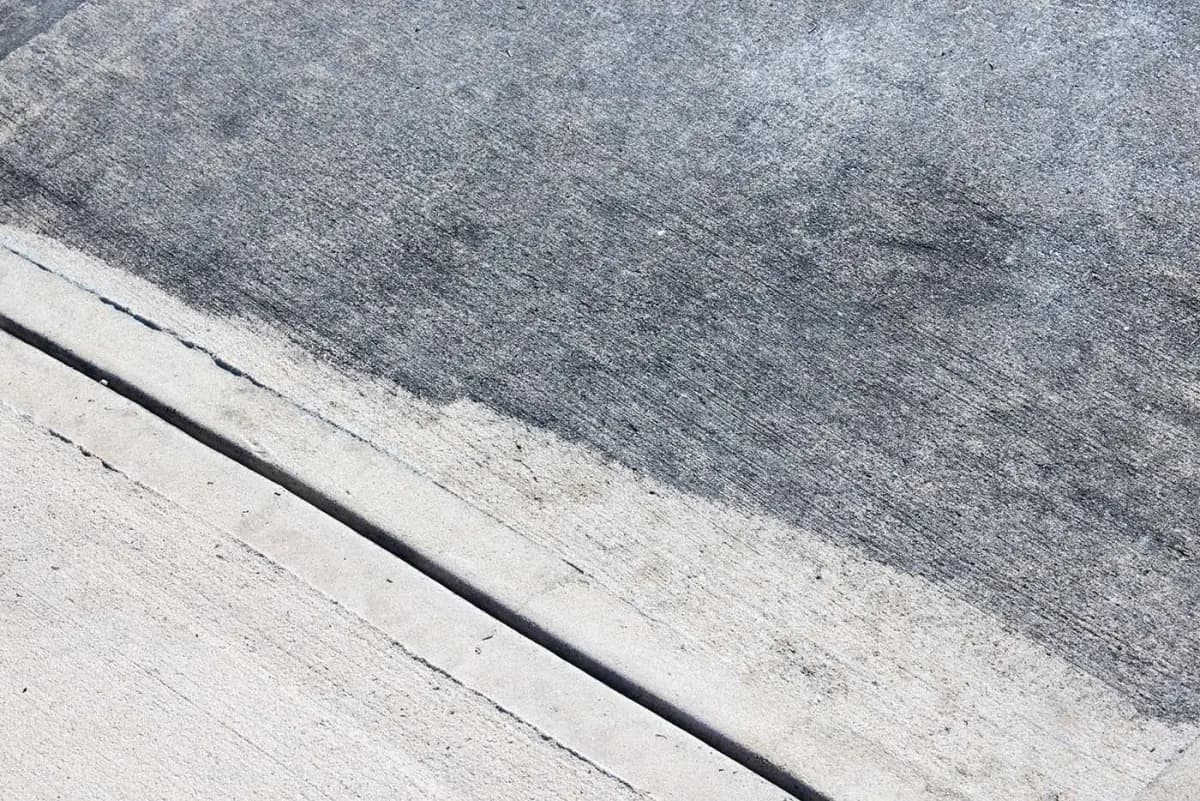
Driveways turn dark over time due to a buildup of algae, mold, dirt, and vehicle-related stains. Concrete and pavers are porous, meaning they absorb moisture and contaminants, which leads to discoloration and staining. Professional cleaning removes this buildup and restores the original appearance of the surface.
Why Your Driveway Suddenly Looks Dirty
If you’ve looked at your driveway recently and thought:
“Why does this look so dark all of a sudden?”
You’re not alone.
Most homeowners don’t notice the change right away. It happens slowly over time—until one day, the driveway that used to look clean now looks stained, dull, and uneven.
And once you see it… it’s hard to ignore.
The 5 Most Common Reasons Driveways Turn Dark
1. Algae and Organic Growth
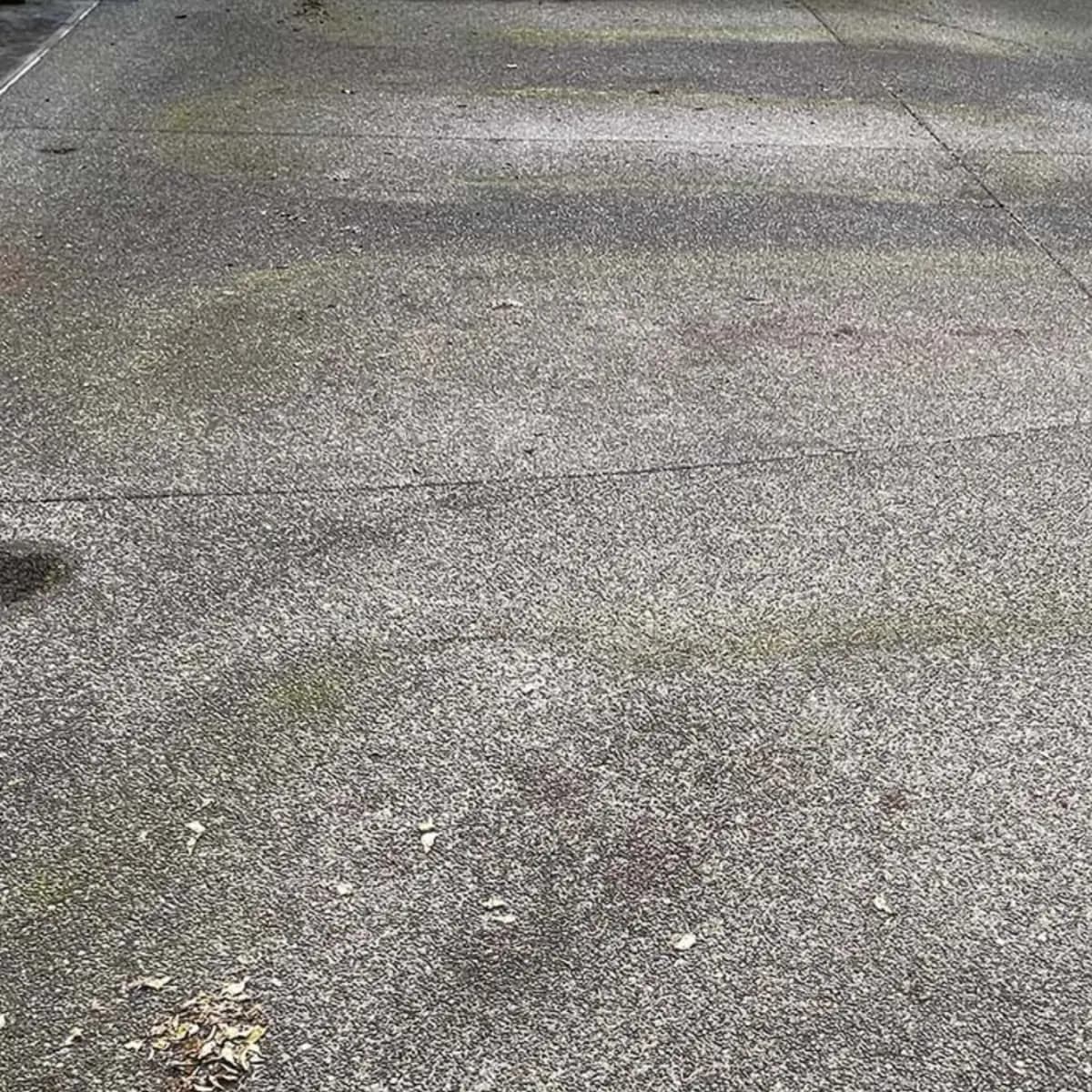
One of the biggest causes of dark driveways is algae, mold, and mildew.
These organisms thrive in:
• damp environments • shaded areas • humid climates (like Long Island)
They spread across the surface and create:
• green patches • black streaks • slippery areas
2. Dirt and Environmental Buildup
Your driveway collects dirt every single day.
Over time:
• dust • pollen • debris • pollution
all settle into the surface. Because concrete is porous, this buildup gets embedded and gradually darkens the appearance.
3. Oil and Vehicle Stains
Driveways naturally collect:
• oil leaks • transmission fluid • tire marks
**These stains soak into the surface and can create deep, dark patches that standard cleaning can’t remove easily. **
4. Moisture and Poor Drainage
Water plays a major role in driveway discoloration.
When moisture sits on the surface:
• it feeds algae growth • it carries dirt into the pores • it creates uneven staining
Shaded areas or low spots tend to darken faster because they stay wet longer.
Why This Gets Worse in Spring
Spring is when most homeowners really start to notice the problem.
That’s because:
• winter leaves behind dirt and debris • spring brings moisture and humidity • algae begins to grow rapidly • pollen and organic material increase
All of this accelerates the darkening process.
Is a Dark Driveway Just Cosmetic?
It might seem like just an appearance issue—but it’s more than that.
A dark driveway can lead to:
• slippery surfaces (especially when wet) • long-term staining • surface deterioration over time • reduced curb appeal • a “neglected” look for your home
**Algae and mold buildup can even create safety hazards if left untreated. **
How to Restore a Dark Driveway
The most effective way to restore a driveway is professional pressure washing combined with proper treatment.
This process removes:
• algae and organic growth • embedded dirt and grime • oil and surface stains
Professional cleaning ensures:
• even results (no streaking) • deeper cleaning than DIY • restoration of the original surface color
DIY vs Professional Cleaning
DIY Cleaning
• uneven results • limited stain removal • time-consuming • can leave streaks or “lines”
Professional Cleaning
• commercial-grade
pressure washing equipment • consistent, even cleaning • deeper stain removal • faster and more effective
In many cases, pressure alone isn’t enough—proper treatment is what prevents the stains from coming back quickly.
How to Keep Your Driveway Looking Clean
Once your driveway is cleaned, simple maintenance can keep it looking its best:
• schedule cleaning every 1–2 years • remove leaves and debris regularly • address oil stains early • improve drainage where possible
Properties with more shade or moisture may require more frequent cleaning.
This Problem Usually Isn’t Just the Driveway
If your driveway is turning dark, chances are you’re also seeing:
We know how frustrating it is to see your home start to look worn down from the outside.
We can help bring it back.
Serving homeowners and businesses across Suffolk County and Long Island. Call
(631) 560-8999 to
schedule service or an estimate at your home or business.
Why is my driveway turning black?This is usually caused by algae, mold, dirt buildup, and moisture being absorbed into the surface.
Can pressure washing remove dark stains?Yes, especially when combined with proper cleaning solutions.
Is a dark driveway dangerous?It can be—algae buildup can create slippery conditions when wet.
How often should I clean my driveway?Most driveways should be professionally cleaned every 1–2 years.
This is usually caused by algae, mold, dirt buildup, and moisture being absorbed into the surface.
Yes, especially when combined with proper cleaning solutions.
It can be—algae buildup can create slippery conditions when wet.
Most driveways should be professionally cleaned every 1–2 years.