
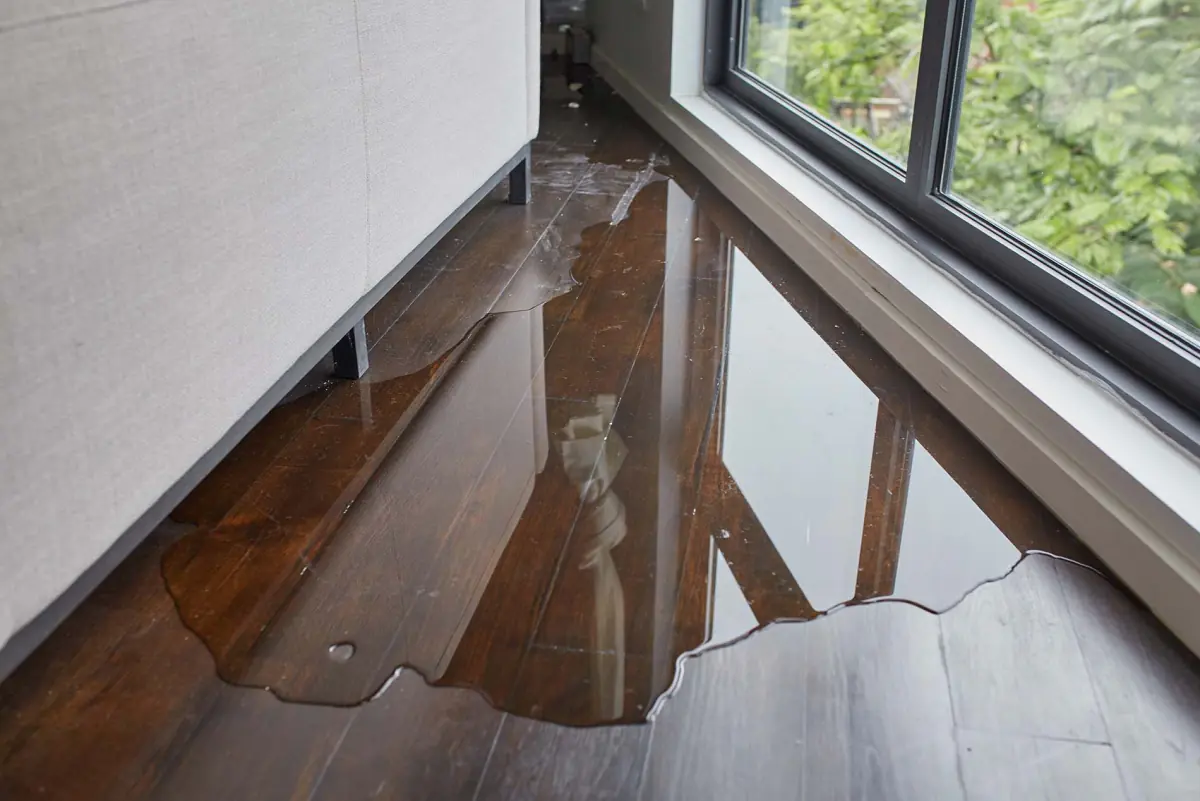
Water damage
The Importance of Quick Drying After a Flood or Leak
After a flood, drying floors, carpets and structural items around your home quickly is crucial. The team at K.O.S. is here to help 24/7.
· 2 min read
The homeowner called about water damage on the living room ceiling. The leak was in the garage roof, and the water had traveled far enough inside to leave mold on the framing above the ceiling. Here's how the crew contained the area, opened it up, cleaned it and sealed it.
East Northport, Suffolk County
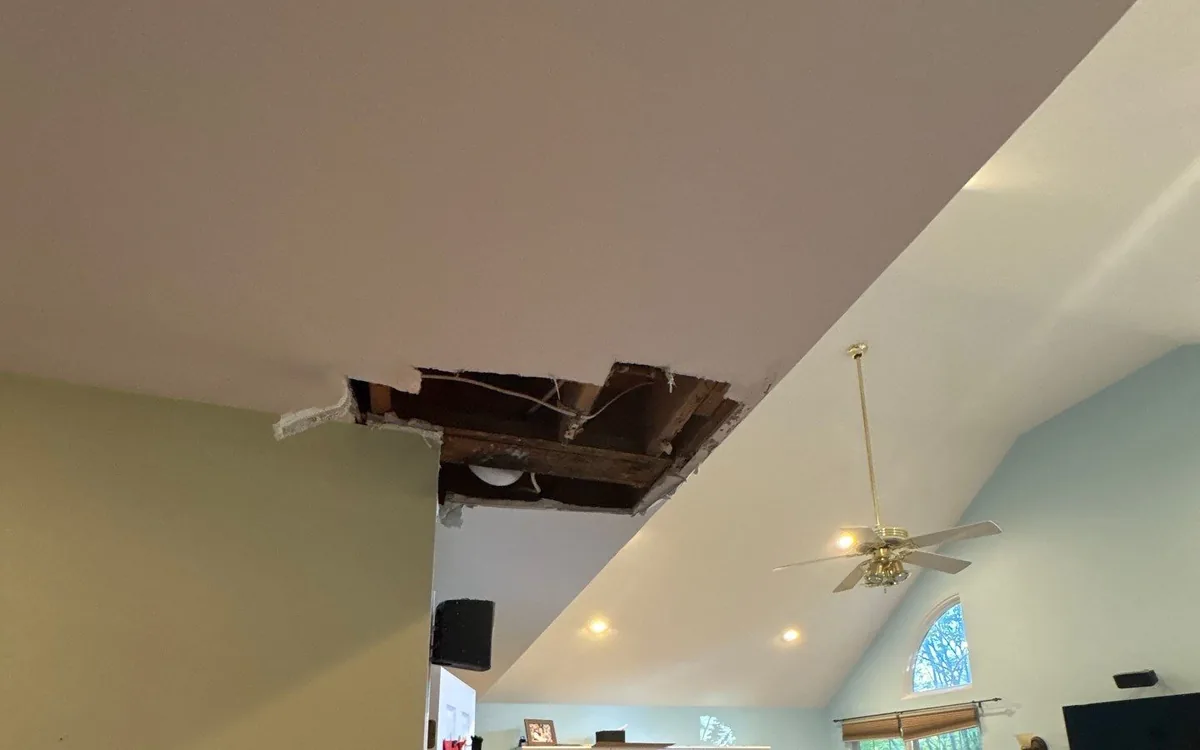
The call was about the living room ceiling. The homeowner had found water damage up where the flat ceiling meets the vault, and wanted to know how bad it was.
The answer was that the ceiling was the last place to show it, and the leak wasn't even in that part of the house.
Water damage or mold in your home? Call (631) 560-8999 — 24 hours a day, 7 days a week.
A damaged patch of ceiling in an otherwise ordinary living room. No standing water, no dripping, nothing dramatic. Just a section of ceiling that had clearly been wet.
That's usually how a roof leak introduces itself indoors. It doesn't announce where it started.
The source was a leak in the garage roof. Water getting in there didn't fall straight down into the garage; it ran along the framing and sheathing and traveled inside the house, far enough to reach the ceiling of the living room.
That travel is the part homeowners rarely expect. Water follows the structure, not a straight line, and an attached garage shares that structure with the rooms next to it. The distance between where water gets in and where it finally shows up can be considerable.
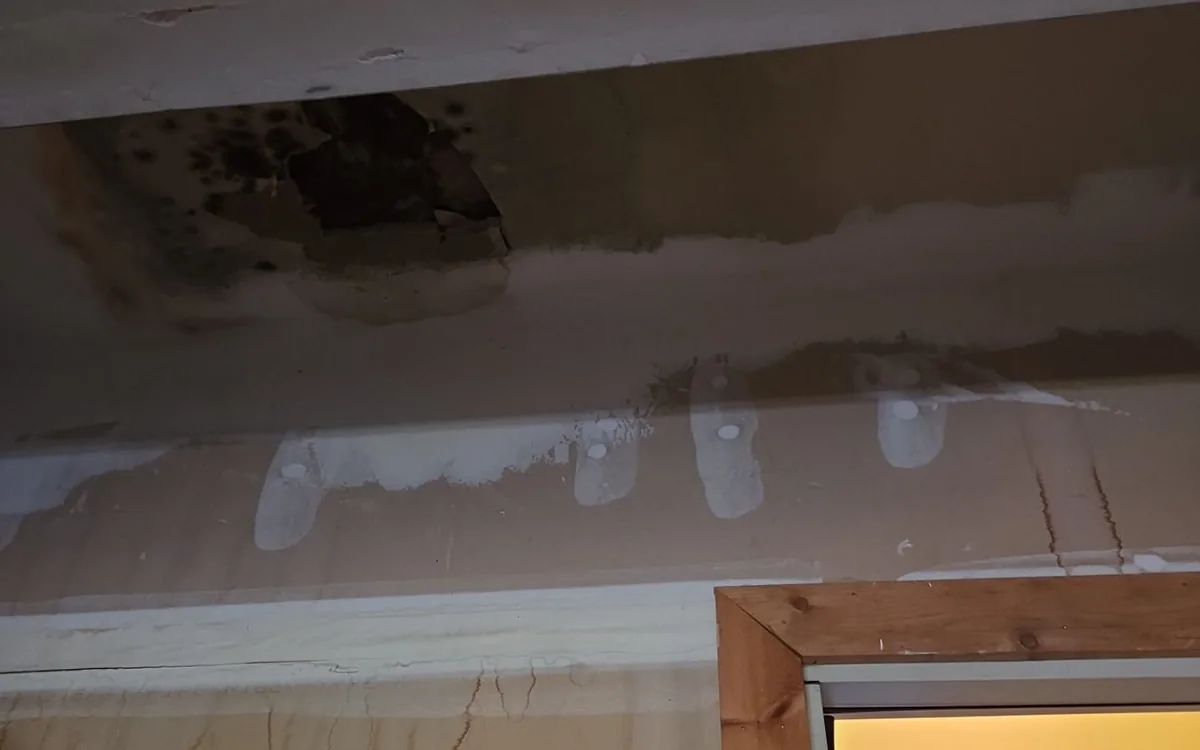
Moisture readings came first, to map how far the water had actually spread, and the readings decided where the ceiling needed to come open.
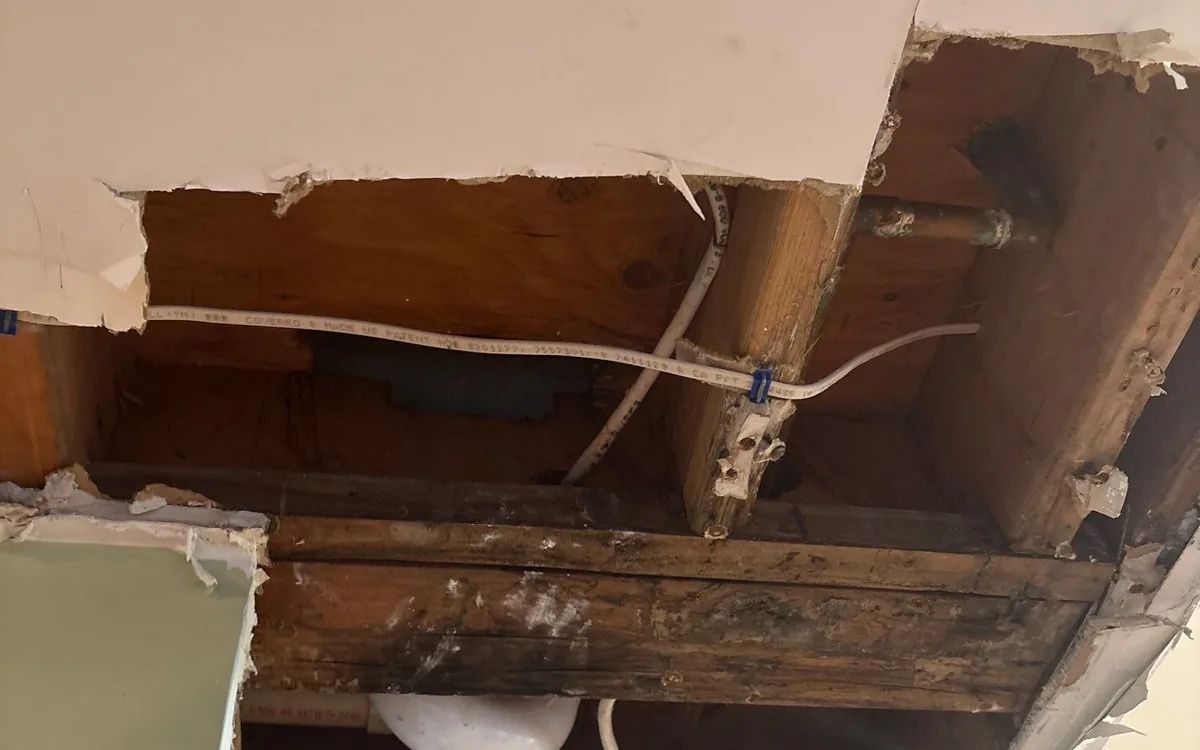
What that exposed was mold on the framing and the underside of the sheathing, along with water staining that ran well past the patch visible from the room.
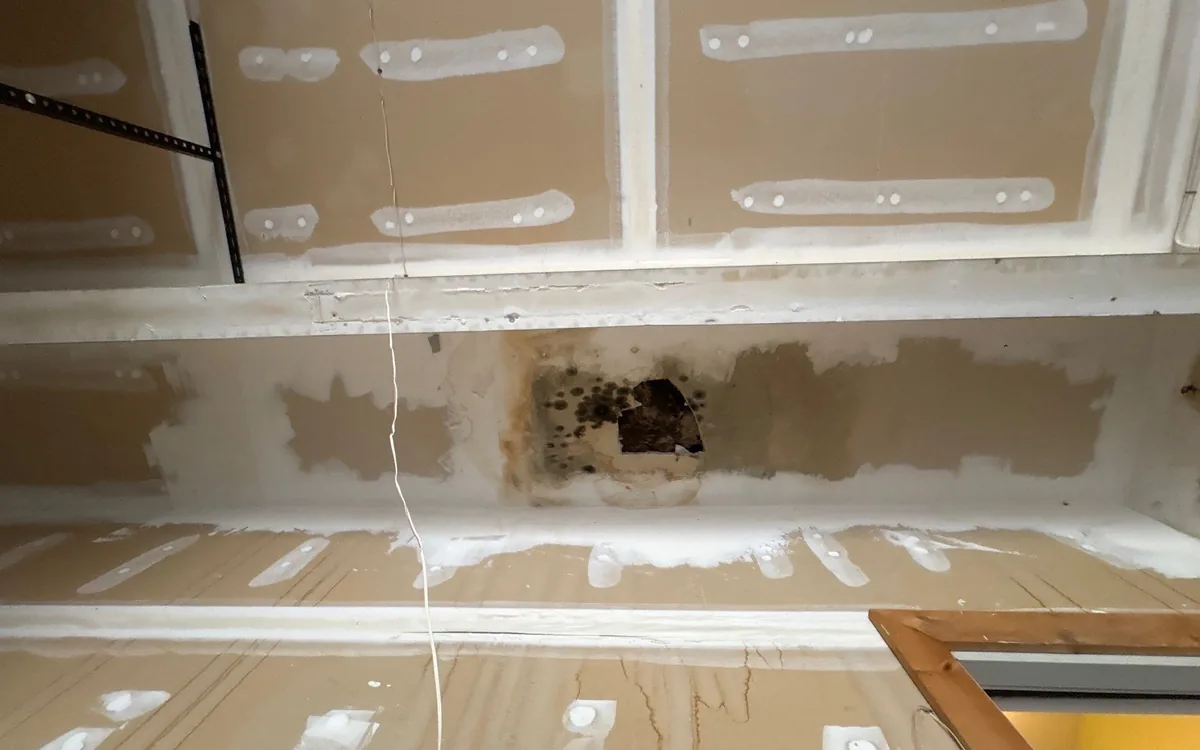
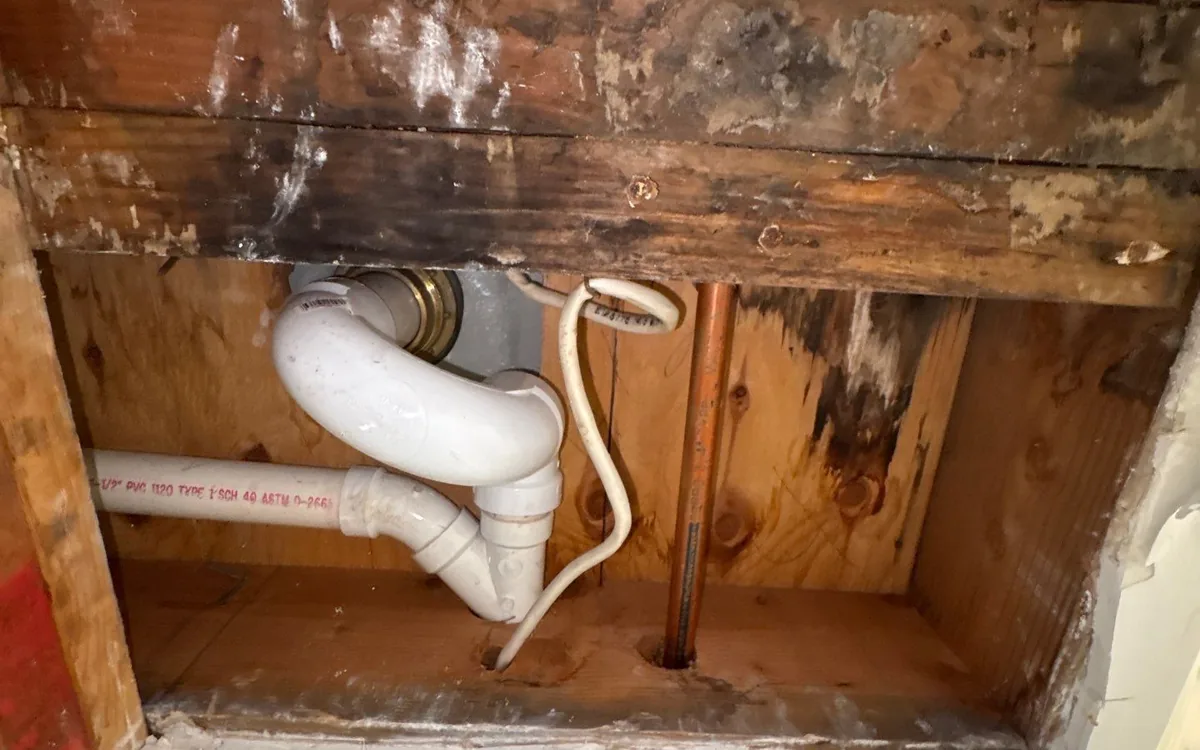
Damp wood in a dark, still cavity is close to ideal for mold, and a roof leak keeps feeding it every time it rains.
Nothing comes down until the rest of the house is protected. The work is in the middle of a lived-in home, and the route to it runs through finished floors.
Protective floor coverings went down over the hardwood, taped at the seams, from the entry through the hallway and into the work area.
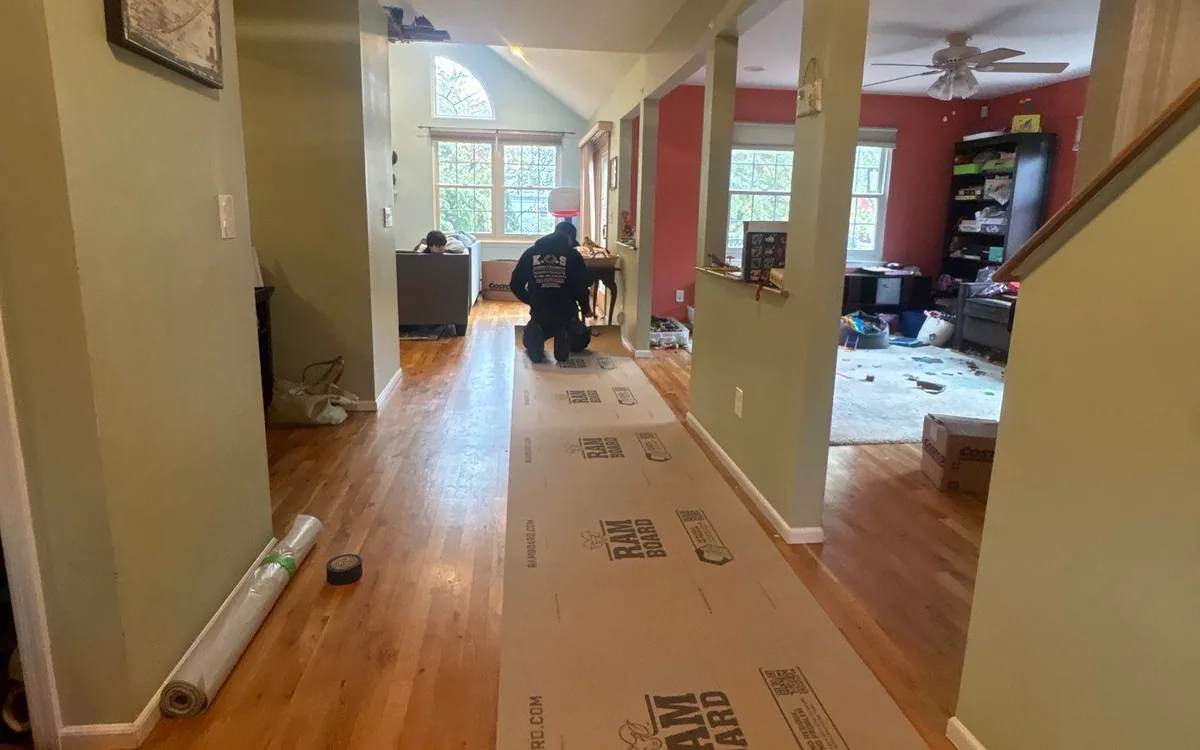
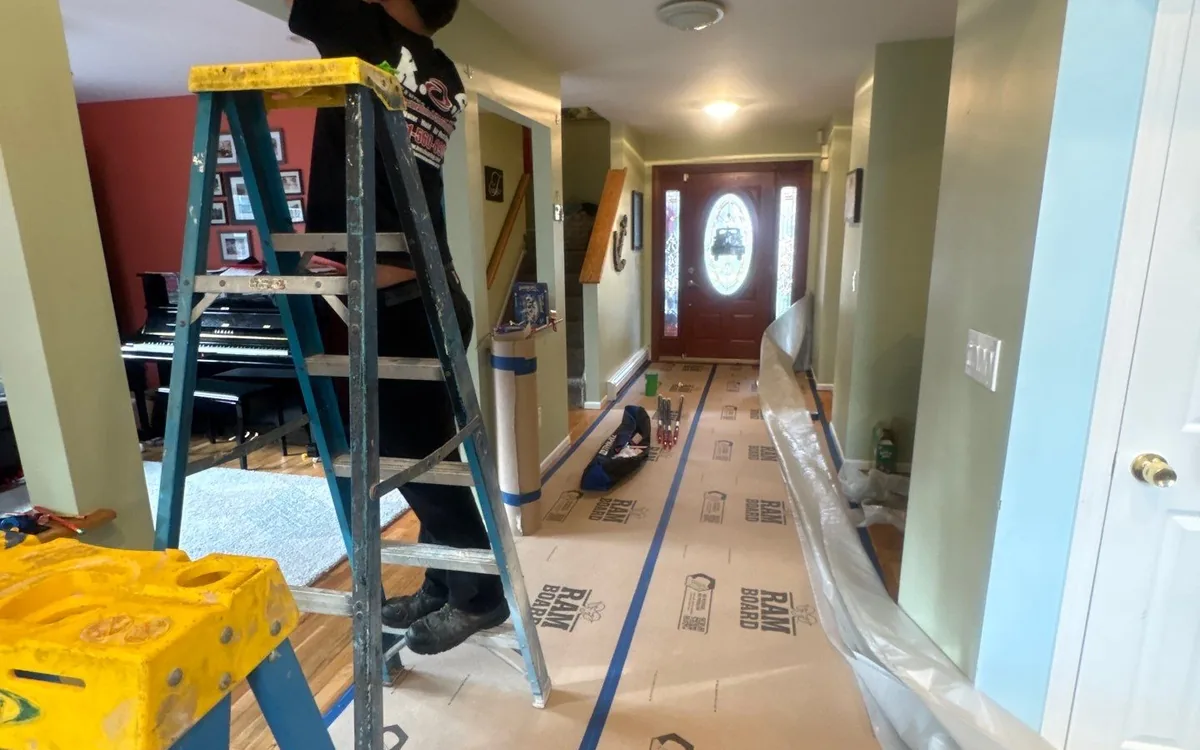
Opening a ceiling with mold above it releases dust and spores. Containment keeps that in one place instead of letting it travel through the rest of the house.
Plastic sheeting went up to close off the work area, sealed at the edges.
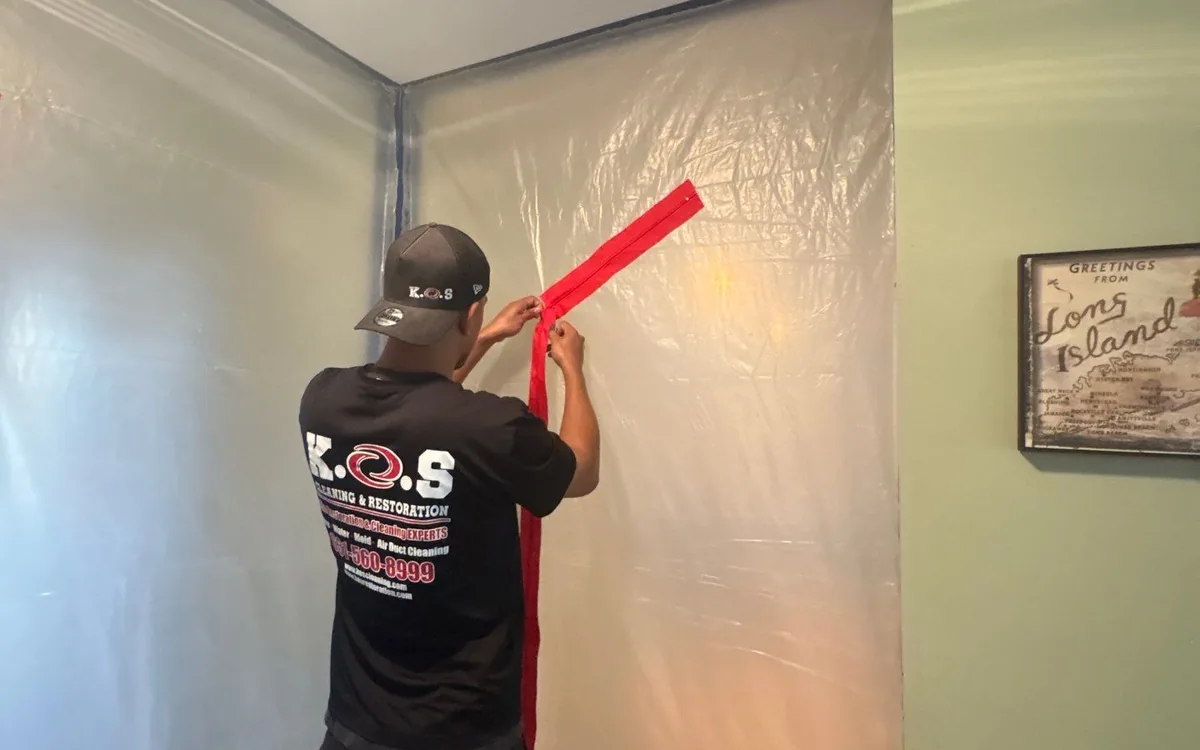
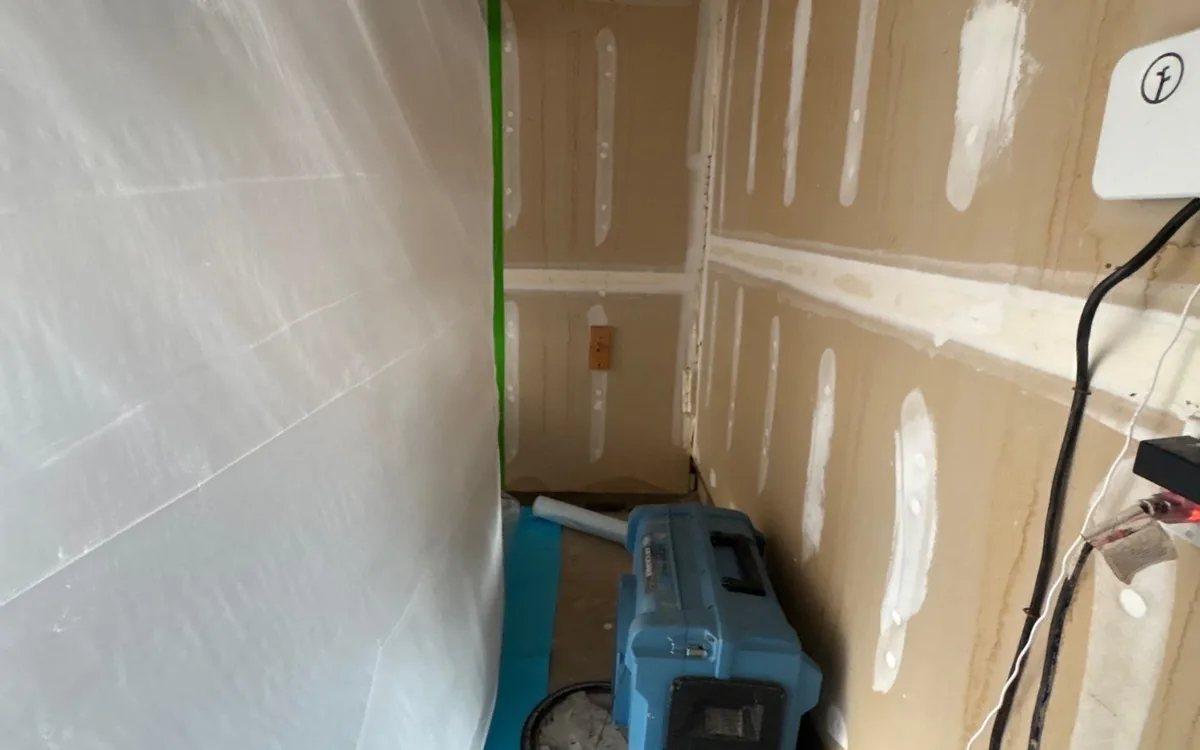
Wet drywall and saturated insulation don't recover. They hold water against the framing and keep feeding whatever is growing on it, so they come out.
Materials were cut out and bagged inside the containment, which keeps the debris from shedding on its way out of the house.
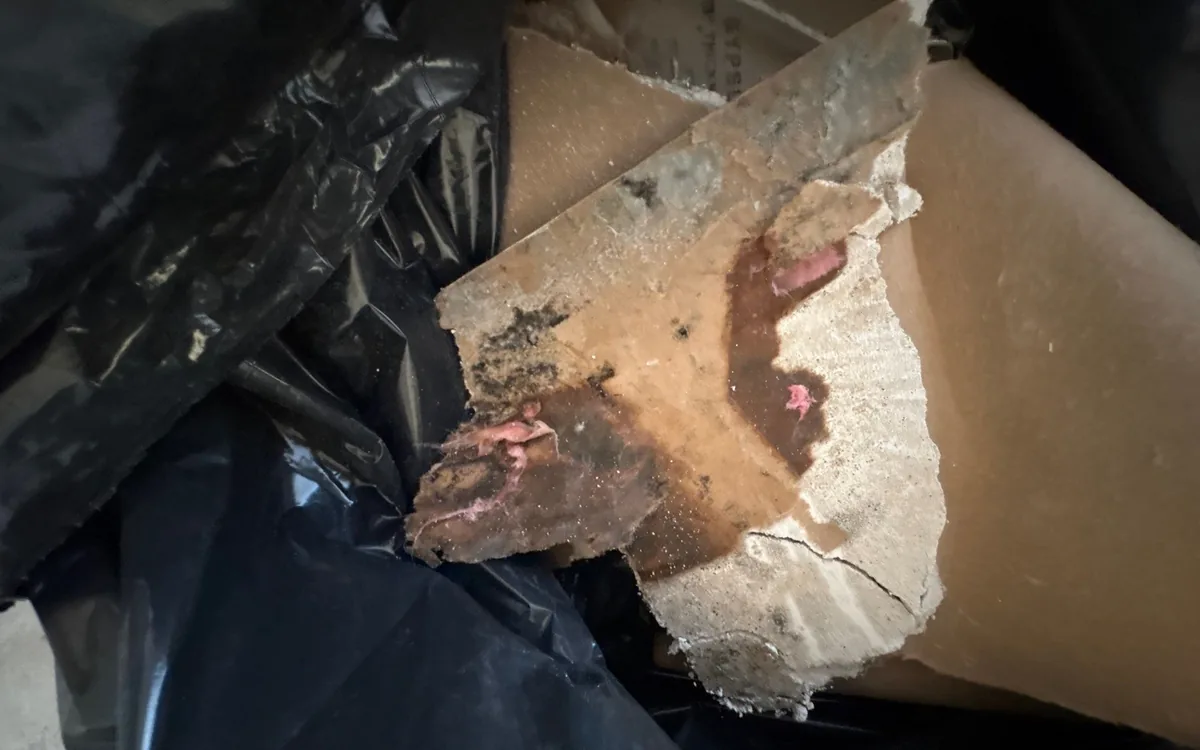
Taking it out does something else, too. It exposes the framing so the moisture underneath can actually be reached, dried and cleaned.
What stays is the structure: the joists, the sheathing, the framing around the opening. All of it gets cleaned.
That means HEPA vacuuming the surfaces to lift the loose material, enzyme spraying, and hand cleaning the wood, rather than relying on any one of the three.
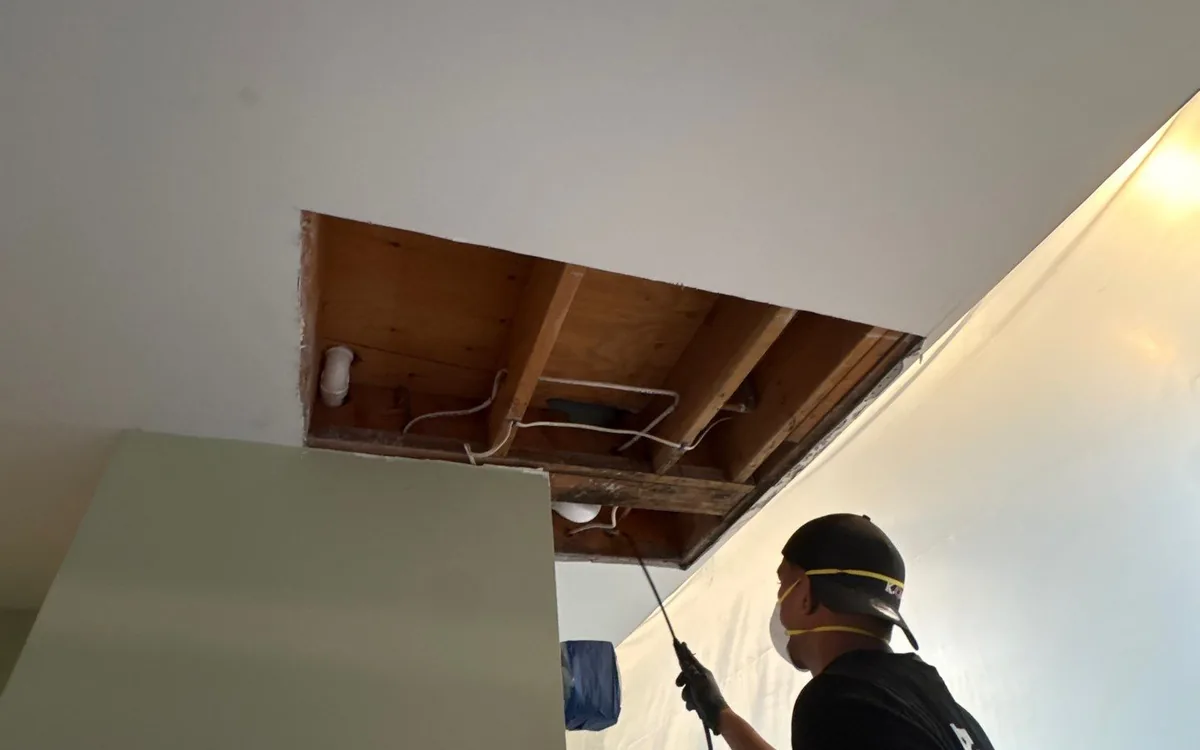
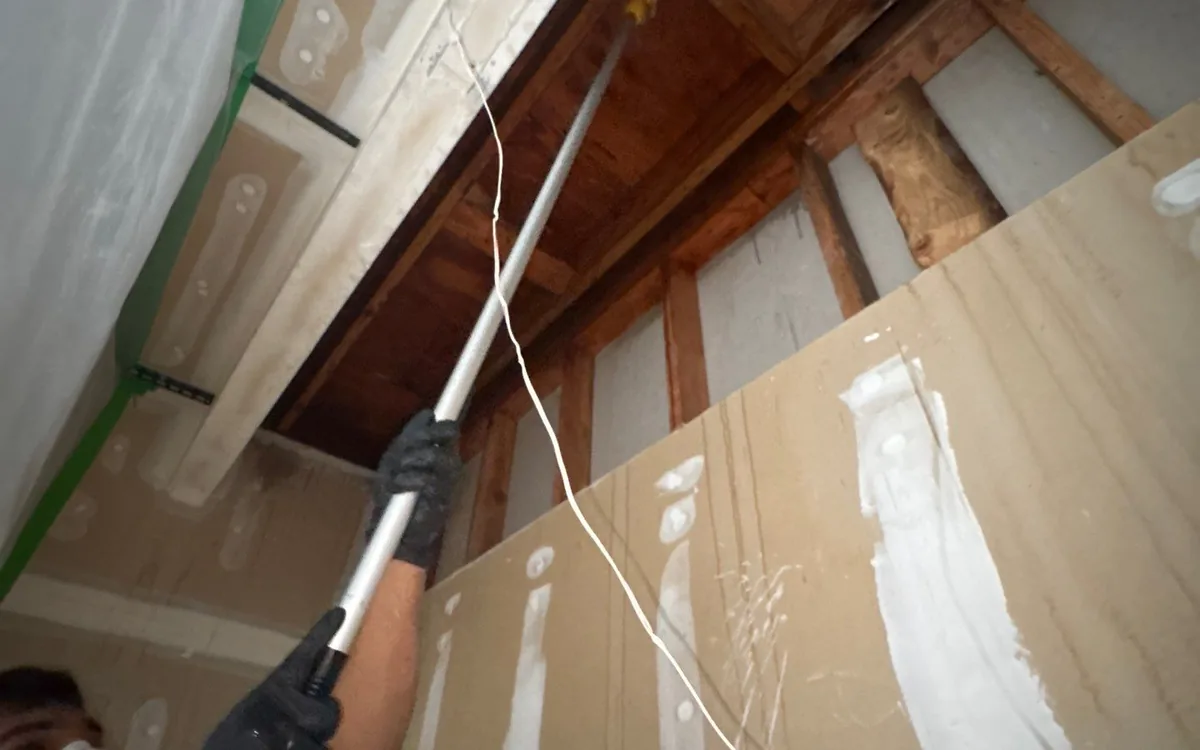
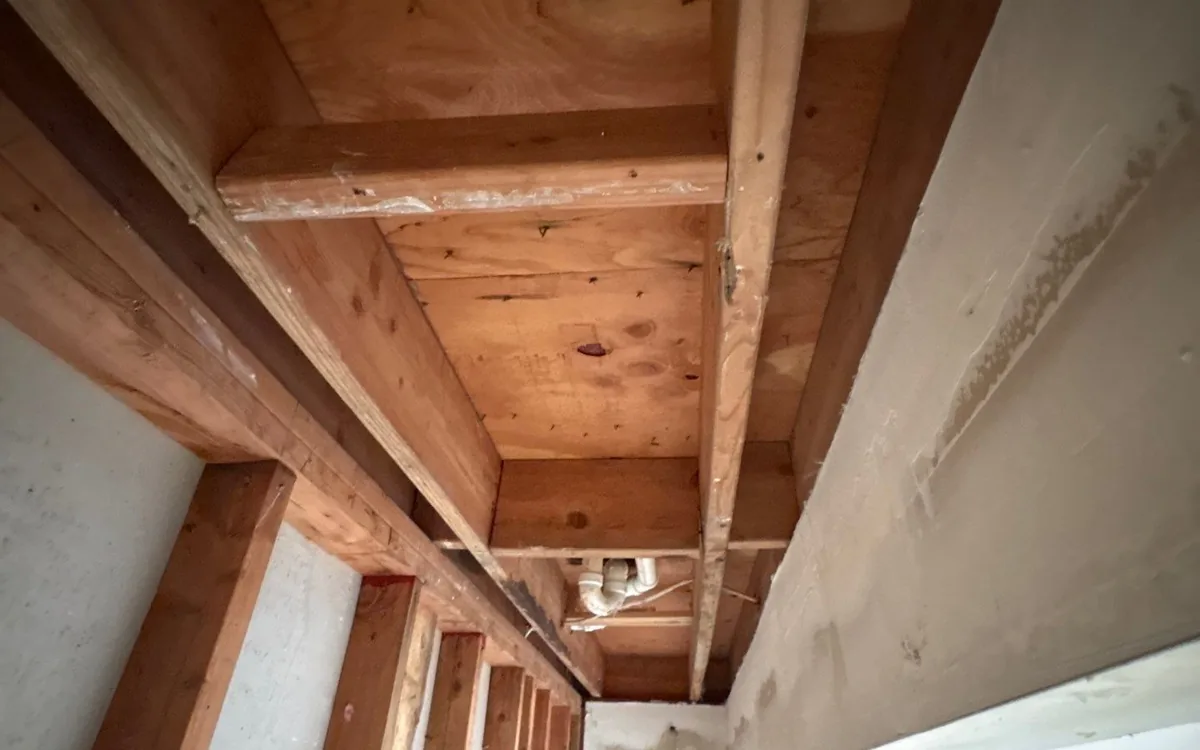
Cleaning doesn't finish the job while the wood is still damp. Air movers and dehumidifiers ran in the opened area to pull the remaining moisture out of the framing and the surrounding materials.
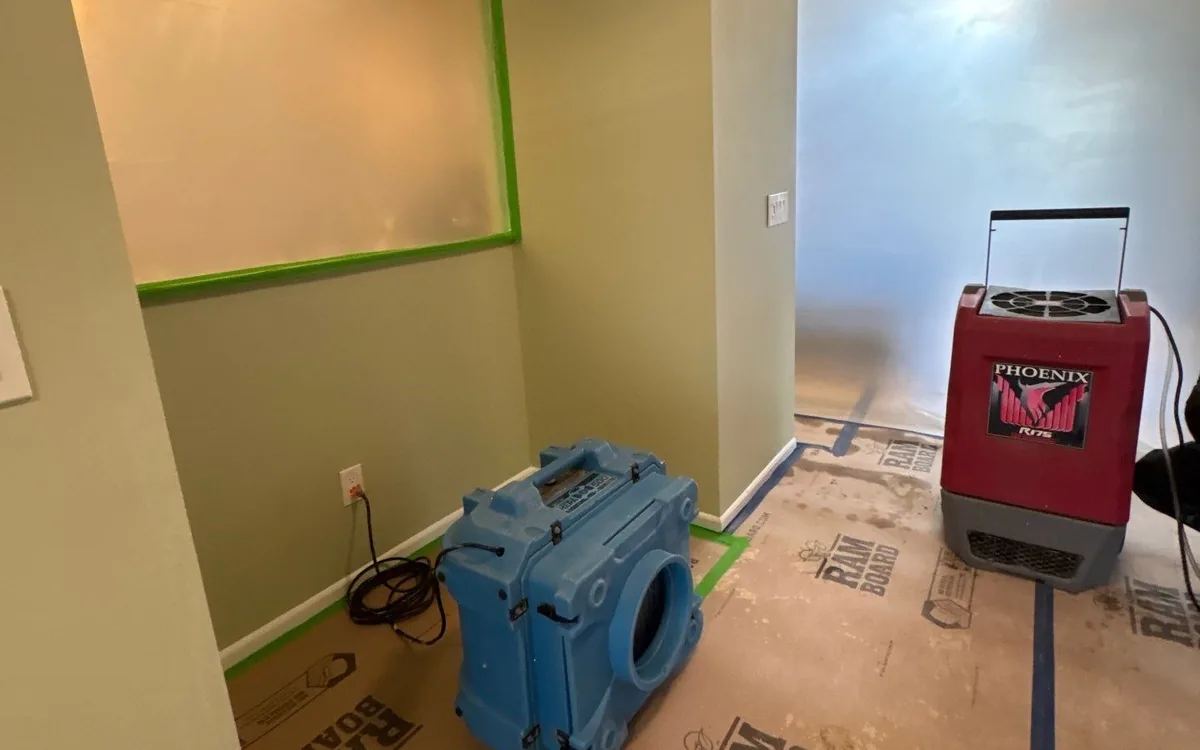
Drying is what makes everything before it hold. Material that is cleaned but left damp is material that can grow again.
Last comes encapsulation: a sealant applied over the cleaned, dried framing in the areas that had been affected.
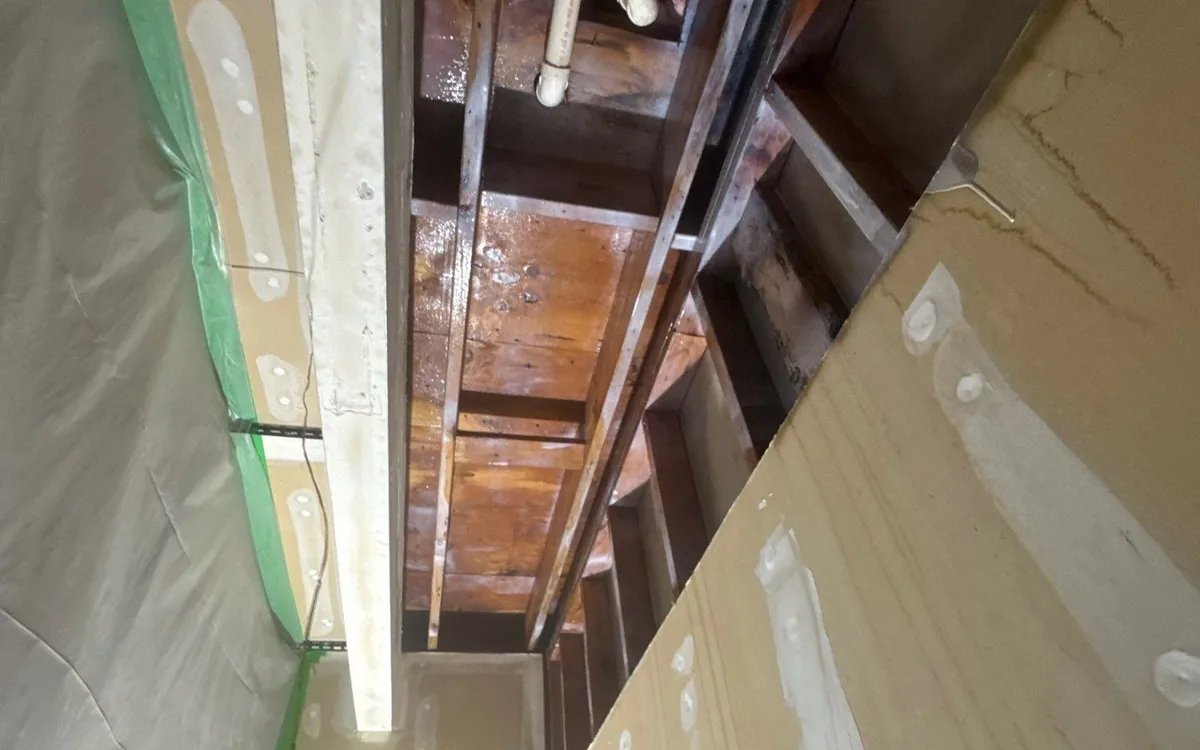
The order matters more than the coating does. Encapsulation seals wood that has already been cleaned and dried — it is not a substitute for remediation, and it isn't something to spray over material that hasn't been dealt with first. Done at the end of the process, on sound framing, it seals the surface that was affected. Done instead of the process, it just covers the problem up.
With the materials out, the structure cleaned, dried and sealed, what's left on a job like this is putting the ceiling back, and keeping the roof from doing it again. A leak that isn't repaired will find the same path a second time.
For a similar cause on another job, see how we handled a roof leak in Glen Head, and for nearby work, our water damage and mold remediation in Greenlawn.
K.O.S. Restoration handles water damage restoration and mold remediation in East Northport and throughout the Town of Huntington, from Northport and Greenlawn to Huntington Station, Commack, Elwood and Dix Hills. For another job in the area, see our water damage restoration in Huntington Station.
If water has come through your ceiling, call (631) 560-8999 any time, day or night. We're IICRC-certified, we've served Long Island since 2006, and mold inspections are free.
The things people ask when they're looking at the same problem.
Yes, and it's one of the easier ones to miss. Water that gets through roofing doesn't drop straight down. It runs along whatever it lands on, the sheathing, a rafter, a top plate, until it finds somewhere to collect or soak in. That path can cross from an attached garage into the living space, which is exactly what happened here: the leak was in the garage roof, and the damage showed up on the living room ceiling on the other side of the wall.
A stain is the end of the water's path, not the beginning. By the time it bleeds through the paint, the material above it has usually been damp for a while. The drywall is the last thing to show it, so the framing, sheathing and insulation above the ceiling have had the moisture longer than the stain suggests. The only way to know how far it spread is to take moisture readings and open the ceiling where the readings call for it.
Painting over a stain hides the symptom and leaves the wet material in place. Drywall, insulation and wood that have been damp hold the moisture against each other, and air movers can't dry what's sealed behind a finished ceiling. Opening the ceiling exposes the framing so it can dry, shows how far the water actually traveled, and lets the crew find and clean anything growing above the drywall.
No. Encapsulation is a sealant applied to framing that has already been cleaned, and it comes last. On this job the unsalvageable material was removed, the surfaces were HEPA vacuumed, treated and hand cleaned, and the area was dried first. The coating goes on afterward to seal the cleaned wood. It is never a substitute for remediation, and coating over material that hasn't been cleaned and dried just traps the problem.
Mold can start on damp building materials within about 24 to 48 hours, and the space above a ceiling is dark, still and slow to dry, which makes it a comfortable place for it. A roof leak is often intermittent, wetting the same materials every time it rains, so growth can develop over multiple cycles long before anything is visible from the room below.
Yes. K.O.S. Restoration is IICRC-certified and handles water damage restoration and mold remediation in East Northport and across the Town of Huntington, including Northport, Greenlawn, Huntington Station, Commack, Elwood and Dix Hills. We answer 24/7 at (631) 560-8999, and mold inspections are free.
After a flood, drying floors, carpets and structural items around your home quickly is crucial. The team at K.O.S. is here to help 24/7.
· 2 min read
Faulty water heater plumbing soaked the drywall and stored belongings in a Middle Island garage. The crew cleared it out, saved what could be saved and remediated the mold behind the walls.
Middle Island, NY · · 8 min read
Inside a Glen Head, NY job this week: a repaired roof leak left hidden moisture and mold behind basement drywall. How our IICRC-certified team handles it.
Glen Head, NY · · 10 min read
Real person · 24/7 · 45-minute response
Start the clock(631) 560-8999