Crawlspace mold in the Hamptons — and why encapsulation is what makes it stay gone
A waterfront home where the mold had already been removed once. The full crawlspace was cleaned and encapsulated, sealing the framing against the humidity that living on the water guarantees.
Tom Cwalinsky··2 min read·The Hamptons, NY
The short answer
A waterfront Hamptons homeowner had already had crawlspace mold
professionally removed once — and wanted to know it wouldn't come back.
K.O.S. cleaned the space again to IICRC S520, then encapsulated the entire
crawlspace: a mold-resistant coating over clean framing, sealing the wood
against the humidity that never leaves a waterfront property.
You did everything right, and you're still worried
The homeowner had called a certified remediation company. The mold was
removed. The problem was supposed to be behind them.
But living this close to the water, there's a quiet worry that doesn't go
away: what if it comes back?
It's a reasonable worry, and on the East End it's usually a correct one —
because remediation removes what grew, and it doesn't change the conditions
that grew it.
Why crawlspaces on the water are different
If your home has a crawlspace within sight of the bay or the ocean,
moisture is effectively unavoidable:
summer air on the East End runs 70–80% relative humidity, and mold needs
roughly 60% to grow
damp soil sits a few feet under the joists year-round
an open-vented crawlspace pulls humid outside air in and holds it
seasonal homes sit closed for months with nobody noticing the smell
Remediate that space and do nothing else, and you have bought time rather
than a solution.
What we did
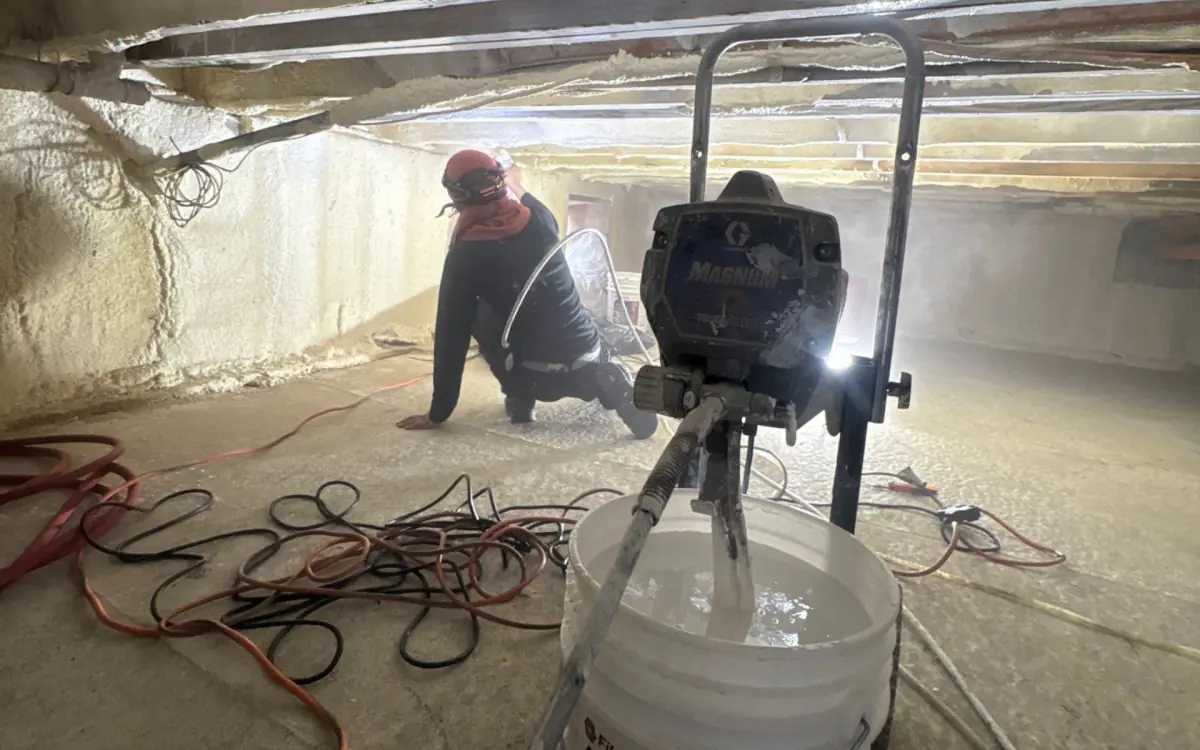
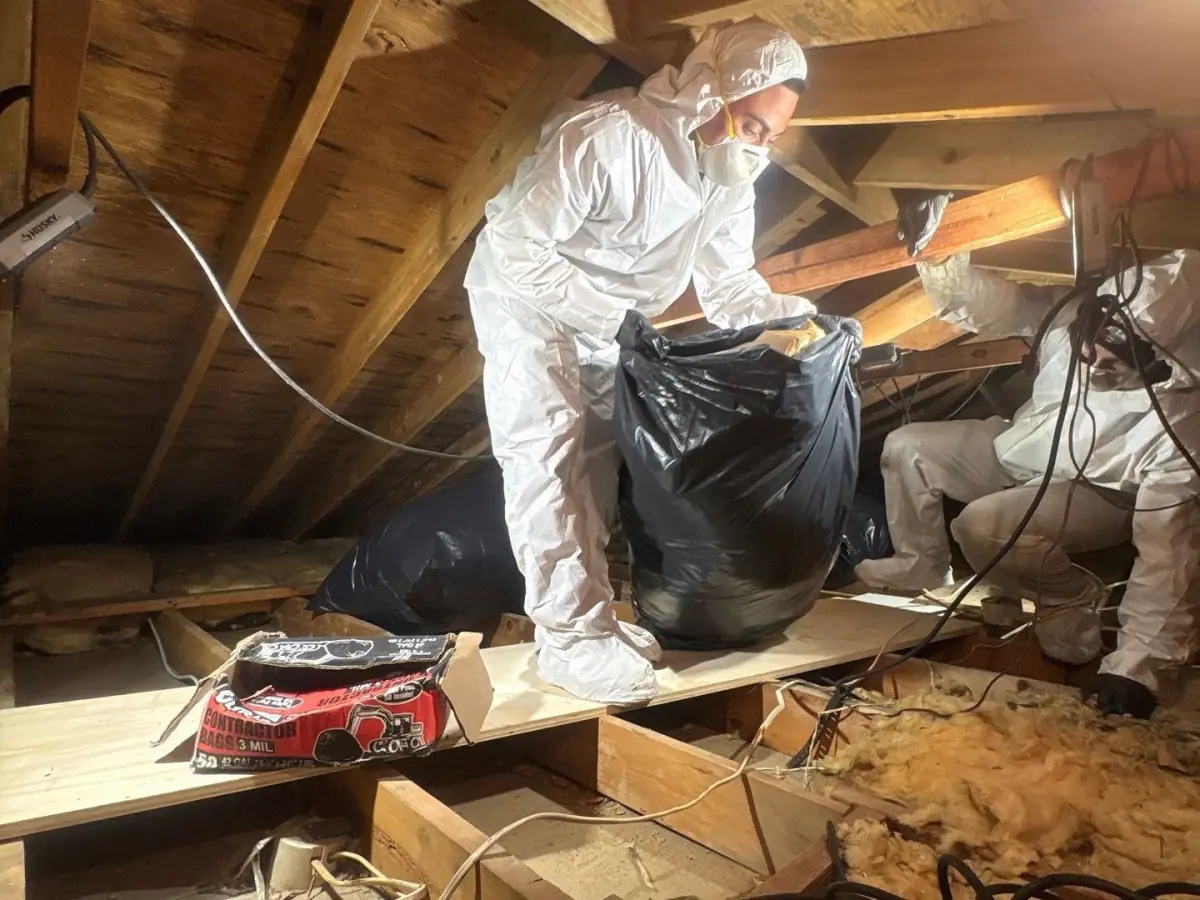
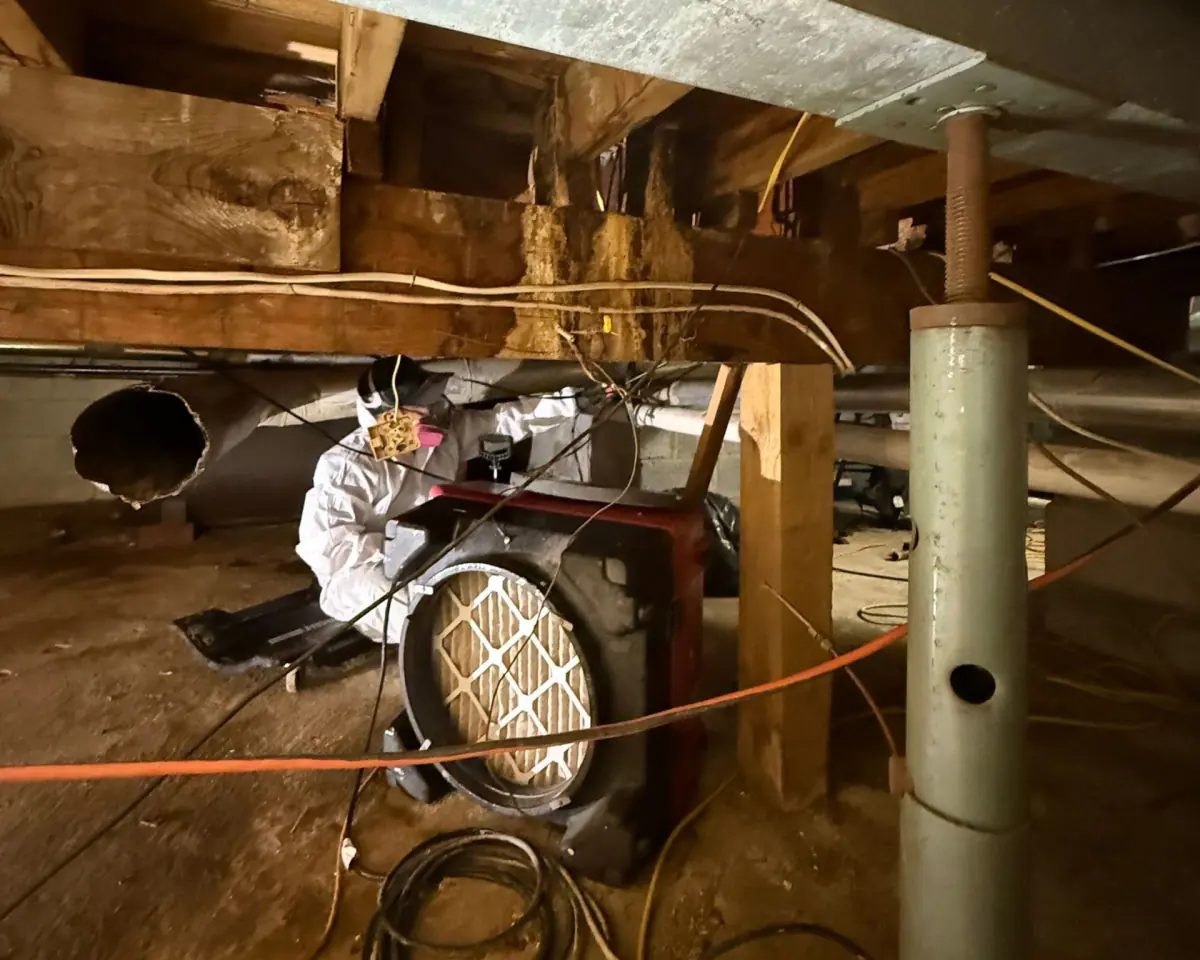
The crawlspace was contained and put under negative air, the remaining
growth removed, and every surface HEPA-vacuumed and treated with an
antimicrobial. Standard S520 work — and the part most companies stop at.
Then the framing, joists and subfloor were coated with a professional
mold-resistant encapsulant, and the ground sealed with a vapor barrier. The
coating bonds to clean wood and gives mold nothing to take hold in; the
barrier stops ground moisture evaporating up into the space.
What changes afterwards
The crawlspace stops being a moisture reservoir. Indoor air quality in the
rooms above improves, because a large share of the air in a house comes up
through the floor. And the wood that holds the house up is no longer
spending every August at mold-growing humidity.
The things people ask when they're looking at the same problem.
What is crawlspace encapsulation?+
A mold-resistant coating applied to cleaned framing, usually with a sealed vapor barrier across the ground, so the space stops feeding moisture into the wood. It is the step after remediation, never a substitute for it.
Does encapsulation work if the mold is still there?+
No. Coating over live growth traps the problem rather than solving it. The mold is remediated first, the framing is HEPA-vacuumed and treated, and only then is the coating applied.
Why does mold come back in waterfront homes?+
Because the moisture source is the air itself. Summer humidity on the East End runs 70–80%, and mold needs about 60%. Remediation removes what grew; controlling humidity is what stops the next round.
Who tests the air afterwards?+
An independent licensed assessor. New York's Labor Law Article 32 requires the company doing the remediation to be separate from the one doing the assessment and clearance, and we coordinate that for every job.