Why Basement Mold Encapsulation Matters More Than You Think
Discover why basement mold encapsulation is critical for Long Island homeowners.
Tom Cwalinsky··12 min read
The Hidden Threat Beneath Your Home
Ever opened your basement door and been hit with that unmistakable musty smell? Trust me, it's more than just an unpleasant odor – it's your home trying to tell you something important.
Here on Long Island, we've got the perfect storm for basement
mold problems. Our humid summers, coastal location, and seasonal weather swings create ideal conditions for moisture buildup. It's like we've rolled out the red carpet for mold growth without even realizing it.
We get it. Finding mold in your basement is stressful. As your
Suffolk County neighbors, we've helped countless homeowners who first noticed that familiar musty smell or spotted those telltale dark patches on their walls. These aren't just minor annoyances – they're early warning signs that deserve attention before they become much bigger headaches.
Why Basement Mold Is More Than Just an Eyesore
Let's be honest – basement mold isn't just ugly. It's a whole-home problem waiting to happen:
It messes with your family's health: Those sneezes and coughs might not be just seasonal allergies. Mold spores can trigger all sorts of respiratory issues – especially tough on kids, grandparents, or anyone with asthma. One family we helped had been struggling with mysterious "colds" for months until we discovered extensive mold behind their basement walls.
It feeds on your home's materials: Mold feeds on wood, drywall and insulation. Porous finishes usually have to come out, while framing can almost always be cleaned and kept.
It hits your wallet when selling: Ask any real estate agent – a moldy basement can knock thousands off your home's value. Today's buyers know to look for moisture issues and often walk away rather than deal with potential mold problems.
That smell just won't quit: No amount of air freshener will mask that basement smell once it takes hold. One customer told us they couldn't even store seasonal decorations in their basement because everything would come out smelling musty.
How to Tell If You've Got a Mold Problem (Even If You Can't See It)
Not sure if your Long Island basement has a mold issue? Here are the telltale signs we look for:
The obvious stuff: Those black, green, or white fuzzy patches on walls or stored items are definite red flags. One homeowner recently called us thinking he had "a little mold" – turns out it had spread behind his finished walls throughout the entire basement.
The nose knows: That classic "old basement" smell is usually mold's calling card. If it smells musty, there's a good chance mold is lurking somewhere.
Touch test: Does your basement feel damp? Do the walls feel cool and clammy? That excessive moisture is basically an invitation for mold to move in and get comfortable.
History lessons: Had a flooded basement last spring? Even if you cleaned it up, mold could still be developing behind walls or under flooring. Water problems rarely solve themselves completely.
Mystery symptoms: We've had families tell us they feel better whenever they leave home for a few days. If headaches, scratchy throats, or itchy eyes magically improve when you're away, your basement might be harboring mold.
Why Band-Aid Solutions Just Don't Cut It
Here's the thing about basement mold in Suffolk County – spraying some bleach on visible spots is like putting a bandage on a broken arm. It might look like you're doing something, but it's not fixing the real problem.
That's why remediation comes first. Contaminated materials come out, framing is cleaned and dried, and the moisture source is fixed. Encapsulation is the last step: a mold-resistant coating on the cleaned framing, so the next humid summer finds nothing to grow on.
One customer told us they'd been fighting the same basement mold spots for years before calling us. After our encapsulation process, they've enjoyed years with no signs of mold return – and finally felt comfortable finishing their basement as a family room.
How We Handle Basement Mold (The Right Way)
We've been tackling Long Island's toughest mold problems for years, and we've got our process down to a science:
We play detective first: Before doing anything, we thoroughly check your basement to find ALL the moisture sources and mold hiding spots – even the sneaky ones behind finished walls or under carpeting.
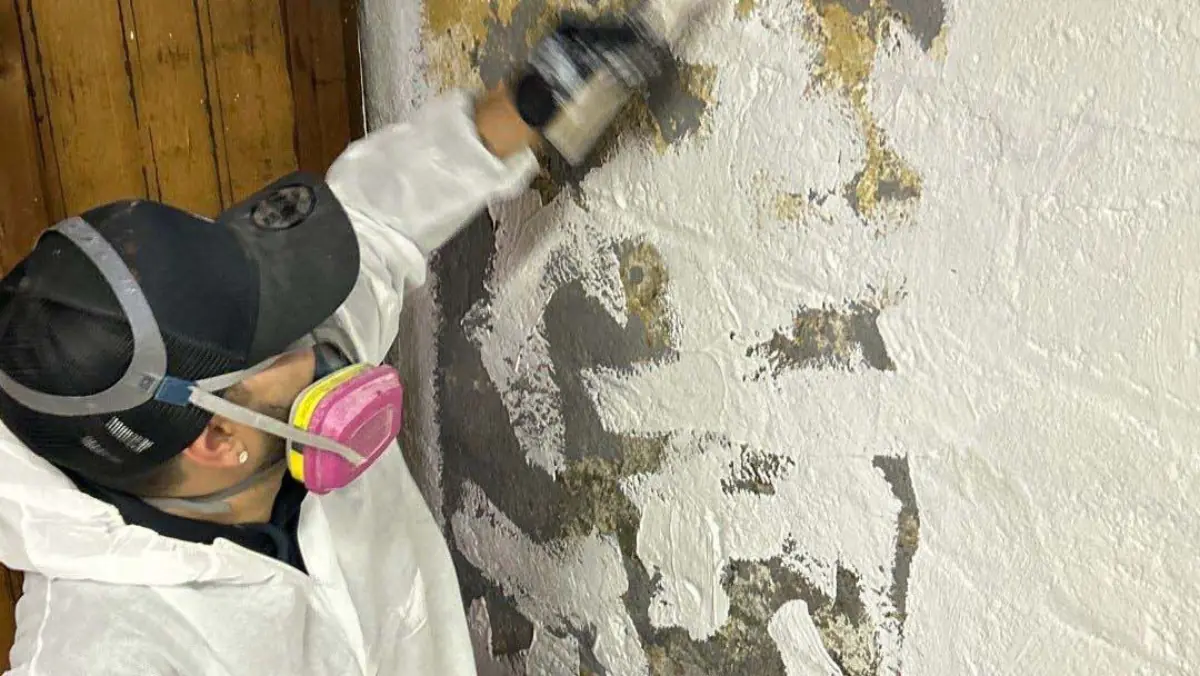
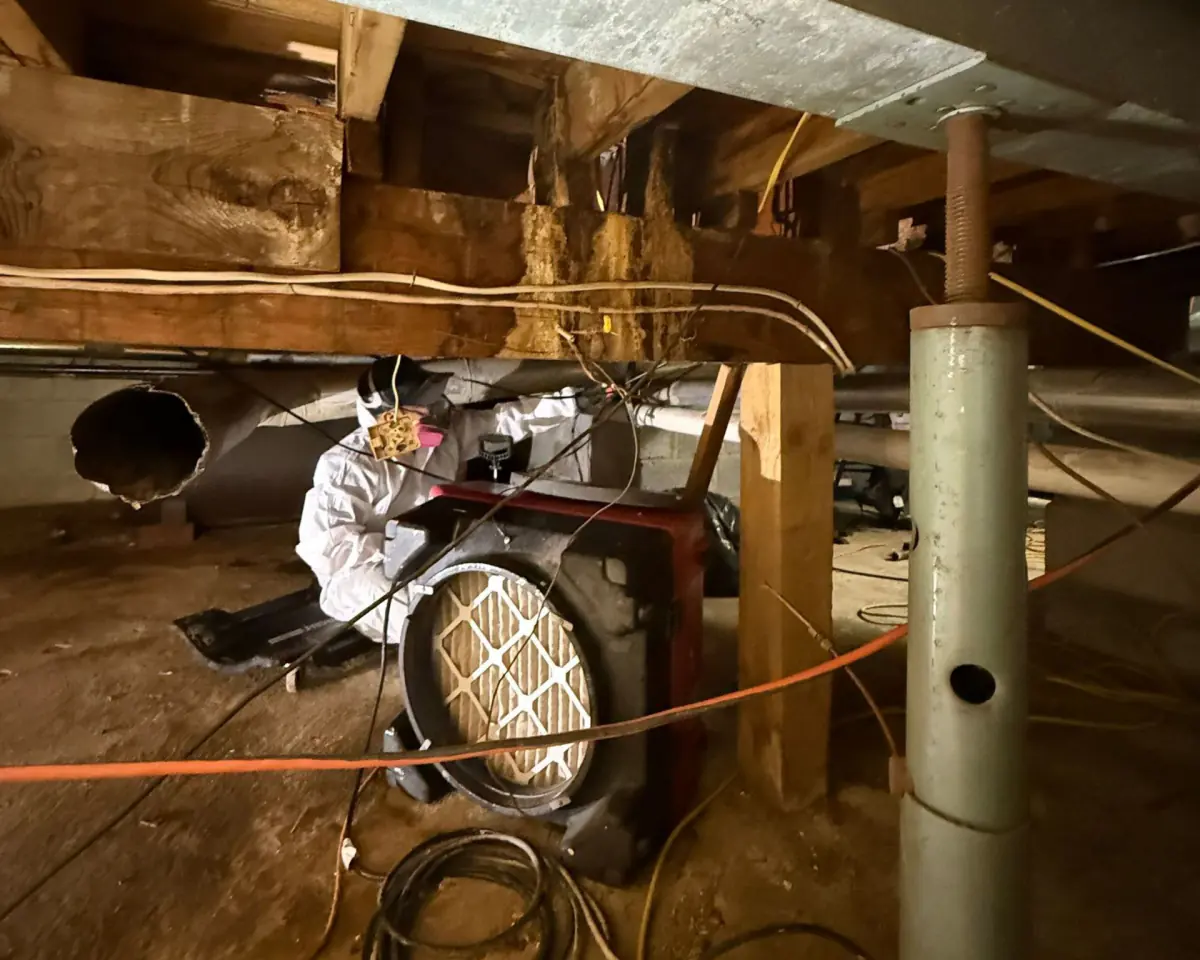
We remove the bad stuff safely: Using proper containment and HEPA filtration (not just a bottle of spray cleaner), we get rid of existing mold following strict IICRC professional guidelines.
We fix what's causing the moisture: Maybe it's cracks letting in groundwater, poor drainage around your foundation, or just too much humidity. Whatever's causing the dampness, we address it directly.
We seal the deal: Once the framing is clean and metered dry, we apply a professional mold-resistant coating so the surface can't support new growth.
We control the climate: For many basements, we recommend dehumidification systems that maintain optimal humidity levels year-round – like having a climate control system specifically for your basement.
We prove it works: We don't just finish and leave. We verify that moisture levels are under control and your basement environment is protected before we consider the job complete.
What Professional Encapsulation Means for You and Your Family
Investing in proper basement mold encapsulation isn't just about solving a current problem – it's about protecting your future:
Breathe easier (literally): One mom told us her child's asthma attacks decreased dramatically after we encapsulated their basement. Removing mold from your home environment can make a remarkable difference in how you feel every day.
Protect your biggest investment: Your home is probably your largest asset. Why let moisture slowly damage its foundation? One customer estimated our services saved them tens of thousands in potential structural repairs by catching problems early.
Gain usable space: Imagine transforming that damp storage area into a comfortable family room, home office, or guest space. Many of our customers end up with 500+ square feet of newly usable living space after encapsulation.
Sleep better at night: There's real peace of mind knowing your home is protected against one of the most common problems Long Island homeowners face.
Why Your Neighbors Choose K.O.S. Restoration
When it comes to something as important as your home's health, experience and local knowledge really matter. Here's what makes our approach different:
We're properly certified: Our technicians hold IICRC certifications – the gold standard in mold remediation. This isn't a side hustle for us; it's what we specialize in.
We're your neighbors: As a Long Island company, we've seen it all when it comes to local moisture challenges. The solutions that work in other parts of the country often need adjustment for our unique coastal environment.
We fix problems, not symptoms: Many companies will just clean visible mold and call it a day. We investigate to find what's actually causing the moisture and address that too.
We keep you in the loop: Throughout the entire process, we explain what we're doing and why. No technical jargon or surprises – just clear communication about your home.
We're there even after the job ends: Questions about maintaining your newly protected basement? Notice something that concerns you months later? We're still here to help.
Don't Wait Until Your Small Problem Becomes a Big One
We've seen it happen too many times – what starts as a small spot of mold or occasional musty smell turns into a major remediation project six months later. When it comes to basement mold on Long Island, catching problems early saves both money and headaches.
Let's Get Your Basement Healthy Again
Your family deserves a healthy, mold-free home. If you've noticed any warning signs or just want peace of mind, we're ready to help. Our team provides professional basement mold encapsulation services throughout Long Island, with solutions tailored specifically to your home's needs.
Ready to tackle that basement mold for good? Request your no-obligation estimate now by calling(631) 560-8999or requesting anestimate. Let's turn that problem basement into one of your home's best features!
Frequently Asked Questions About Basement Mold Encapsulation
What exactly is basement mold encapsulation?Basement mold encapsulation is a fungicidal, mold-resistant coating applied to basement framing after the mold has been remediated, the wood cleaned and dried, and the moisture source fixed. It's the last step of the job, not a substitute for remediation.
How do I know if I need basement mold encapsulation after remediation?If your basement stays damp, has flooded, or sits near water, encapsulation is worth adding once remediation is done and the moisture source is fixed. It doesn't replace remediation. If mold keeps coming back, find the moisture source first, because a coating won't solve that.
How long does the basement mold encapsulation process take?Coating a full basement level usually takes one to two days. If there's active mold, remediation comes first and adds time. During your free assessment, we'll provide a specific timeline based on your unique situation. We work efficiently to minimize disruption to your household while ensuring thorough, professional results.
Is basement mold encapsulation worth the investment?Absolutely. Encapsulation isn't a replacement for mold cleaning. It's the smaller line at the end of the job, and it provides significant long-term value. Our Suffolk County customers typically see returns through: 1) Avoided costs of repeated mold remediation (saving thousands over time), 2) Prevention of structural damage that would require expensive repairs, 3) Increased property value (encapsulated basements are a selling point), and 4) Health benefits from improved indoor air quality. Many homeowners also gain valuable living space that was previously unusable due to moisture issues.
Does homeowners insurance cover basement mold encapsulation?Insurance coverage varies by policy. Most standard homeowners policies don't cover mold remediation or encapsulation unless it's directly related to a covered peril (like a burst pipe). However, if your mold resulted from a sudden, covered water event, the remediation and coating are usually part of the same claim, up to your policy's mold cap. We recommend checking your specific policy and can provide documentation to support your claim if needed.
How long does basement mold encapsulation last?How long it lasts depends on where it's applied and whether the moisture stays under control. The biggest factors are fixing all moisture sources before encapsulation, proper application, and ongoing home maintenance.
Is basement mold dangerous to my family's health?Yes, basement mold can pose significant health risks, particularly when exposure occurs over extended periods. Mold produces allergens, irritants, and sometimes toxins that can cause respiratory problems, allergic reactions, and other health issues. Common symptoms include coughing, wheezing, throat irritation, nasal stuffiness, eye irritation, and skin irritation. For people with asthma, mold exposure can trigger attacks. Children, elderly individuals, and those with compromised immune systems are particularly vulnerable. Since basement air typically circulates throughout your home, mold problems below can affect air quality in your entire living space.
How can I prevent basement mold after encapsulation?After professional encapsulation, maintaining a mold-free basement is much easier. We recommend: 1) Maintaining proper humidity levels (ideally 30-50%) using a dehumidifier if necessary, 2) 2)Ensuring proper drainage around your home's exterior, 3) Promptly addressing any water leaks or intrusion, 4) Using bathroom and kitchen exhaust fans to reduce moisture throughout the home, and 5) Keeping air circulating in your basement with periodic ventilation. These simple steps will help protect your investment and keep your basement dry and healthy.
What makes K.O.S. Restoration's encapsulation process different from other companies on Long Island?Unlike many general contractors who offer mold services as a side business, K.O.S. Restoration specializes in mold remediation and moisture control with IICRC-certified technicians. Our encapsulation process is distinctive because:1) We conduct comprehensive moisture source identification before beginning work. 2) We use professional-grade coatings with an EPA-registered antimicrobial. 3) We clean and dry the framing before anything is coated. 4) We incorporate proper ventilation and dehumidification into our solutions. 5) We document moisture readings, and an independent licensed assessor clears mold remediation. We never test our own work. 6) We're still here to answer questions after the job is done. Many competitors apply a coating without remediating first or fixing the moisture, which hides the problem instead of solving it.
Basement mold encapsulation is a fungicidal, mold-resistant coating applied to basement framing after the mold has been remediated, the wood cleaned and dried, and the moisture source fixed. It's the last step of the job, not a substitute for remediation.
If your basement stays damp, has flooded, or sits near water, encapsulation is worth adding once remediation is done and the moisture source is fixed. It doesn't replace remediation. If mold keeps coming back, find the moisture source first, because a coating won't solve that.
Coating a full basement level usually takes one to two days. If there's active mold, remediation comes first and adds time.
During your free assessment, we'll provide a specific timeline based on your unique situation. We work efficiently to minimize disruption to your household while ensuring thorough, professional results.
Absolutely. Encapsulation isn't a replacement for mold cleaning. It's the smaller line at the end of the job, and it provides significant long-term value.
Our Suffolk County customers typically see returns through:
Avoided costs of repeated mold remediation (saving thousands over time),
Prevention of structural damage that would require expensive repairs,
Increased property value (encapsulated basements are a selling point), and
Health benefits from improved indoor air quality.
Many homeowners also gain valuable living space that was previously unusable due to moisture issues.
Insurance coverage varies by policy. Most standard homeowners policies don't cover mold remediation or encapsulation unless it's directly related to a covered peril (like a burst pipe).
However, if your mold resulted from a sudden, covered water event, the remediation and coating are usually part of the same claim, up to your policy's mold cap.
We recommend checking your specific policy and can provide documentation to support your claim if needed.
How long it lasts depends on where it's applied and whether the moisture stays under control. The biggest factors are fixing all moisture sources before encapsulation, proper application, and ongoing home maintenance.
Yes, basement mold can pose significant health risks, particularly when exposure occurs over extended periods.
Mold produces allergens, irritants, and sometimes toxins that can cause respiratory problems, allergic reactions, and other health issues. Common symptoms include coughing, wheezing, throat irritation, nasal stuffiness, eye irritation, and skin irritation. For people with asthma, mold exposure can trigger attacks.
Children, elderly individuals, and those with compromised immune systems are particularly vulnerable. Since basement air typically circulates throughout your home, mold problems below can affect air quality in your entire living space.
After professional encapsulation, maintaining a mold-free basement is much easier. We recommend:
Maintaining proper humidity levels (ideally 30-50%) using a dehumidifier if necessary, 2) 2)Ensuring proper drainage around your home's exterior,
Promptly addressing any water leaks or intrusion,
Using bathroom and kitchen exhaust fans to reduce moisture throughout the home, and
Keeping air circulating in your basement with periodic ventilation.
These simple steps will help protect your investment and keep your basement dry and healthy.
Unlike many general contractors who offer mold services as a side business, K.O.S. Restoration specializes in mold remediation and moisture control with IICRC-certified technicians.
Our encapsulation process is distinctive because:
We conduct comprehensive moisture source identification before beginning work. 2) We use professional-grade coatings with an EPA-registered antimicrobial.
We clean and dry the framing before anything is coated.
We incorporate proper ventilation and dehumidification into our solutions.
We document moisture readings, and an independent licensed assessor clears mold remediation. We never test our own work.
We're still here to answer questions after the job is done.
Many competitors apply a coating without remediating first or fixing the moisture, which hides the problem instead of solving it.