Water Damage Restoration on Long Island After a Pipe Burst Inside the Wall
When a pipe bursts inside your walls, the damage is already happening before you even know there's a problem. Water moves fast — soaking into drywall, insulation, flooring, and framing — and every hour that passes without professional drying increases the risk of mold growth and structural damage. We know how overwhelming that moment of discovery feels, and we want you to know: you don't have to face it alone.
This is a real job we completed for a homeowner here on Long Island. A corroded pipe had been quietly failing inside the wall, and by the time the damage became visible, moisture had already spread well beyond what the eye could see. We're sharing this case study so that if you're dealing with something similar right now — or if you just want to understand what water damage restoration actually looks like — you have a clear picture of exactly what to expect when K.O.S. Restoration shows up at your door.
The Cause: A Corroded Pipe That Failed Inside the Wall
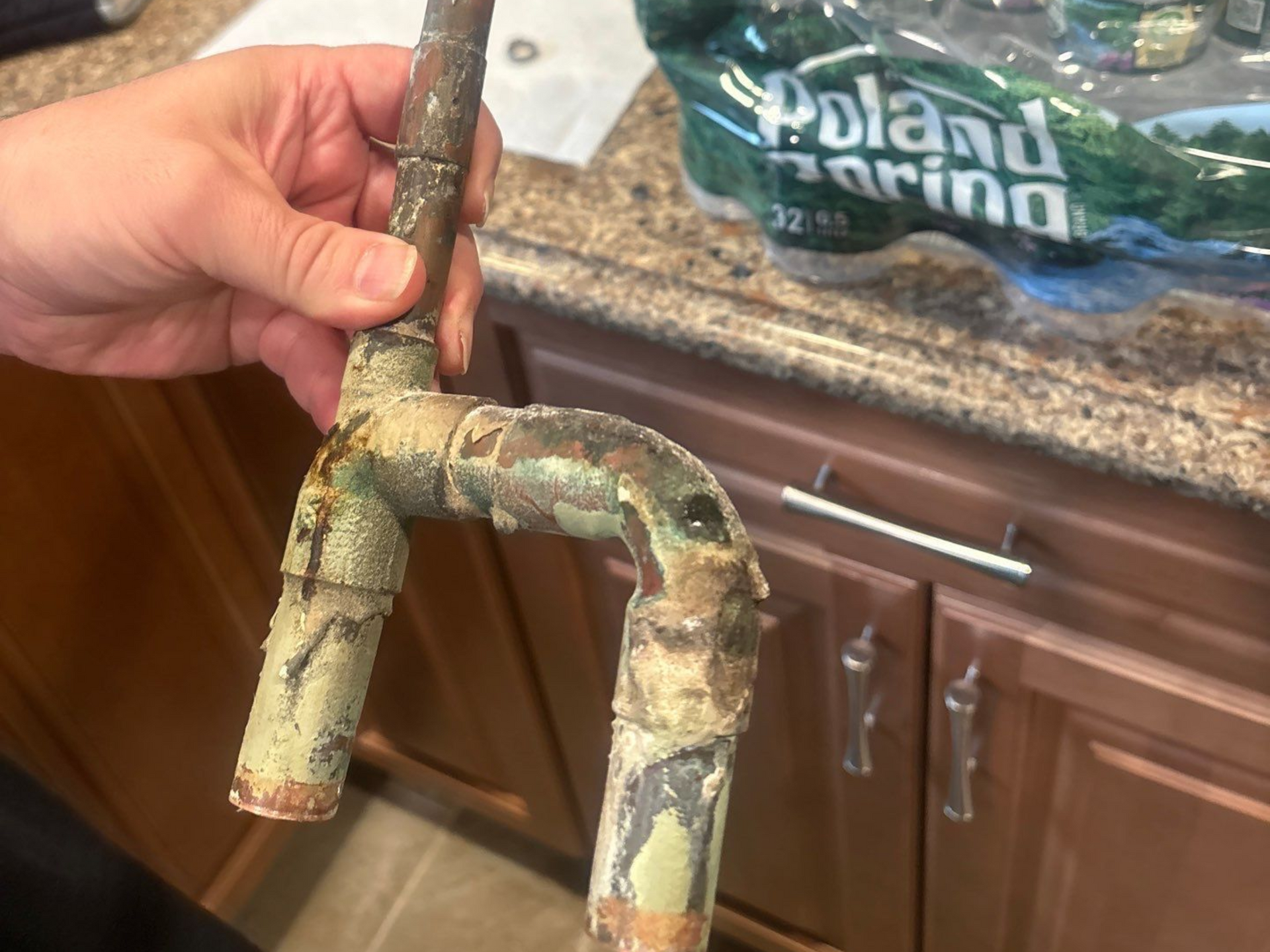
Older homes across Long Island — particularly in Suffolk County and Nassau County — are full of copper and galvanized steel pipes that have been quietly aging for decades. This home was no exception. When our team opened the wall, they pulled out a corroded pipe assembly that had deteriorated to the point of failure. You could see the green oxidation, the weakened joints, and the point where the pipe had finally given way.
This is one of the most stressful kinds of water damage because there's no dramatic flood event — no burst hose you can point to and shut off immediately. The water just seeps. It travels through wall cavities, soaks into the subfloor, and saturates the baseboard trim, all while looking completely normal from the outside. By the time a homeowner notices a soft spot, a musty smell, or paint that's starting to bubble, the damage is already deep.
If you've noticed any of those signs in your home and something feels off, please don't wait. Water damage doesn't get better on its own — it only gets worse, and mold can begin developing within 24 to 48 hours of moisture exposure.
Step 1: Arrival and Moisture Mapping
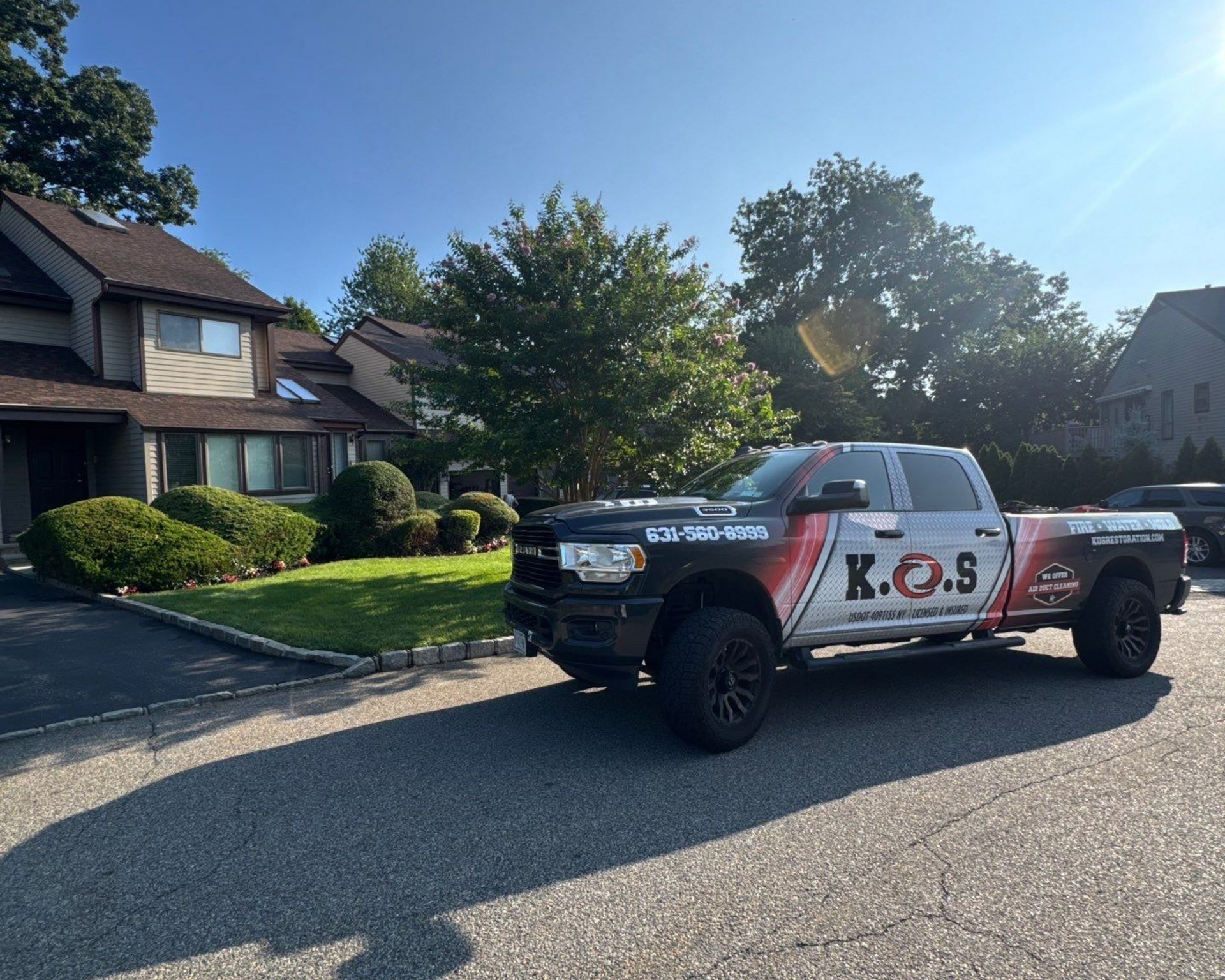
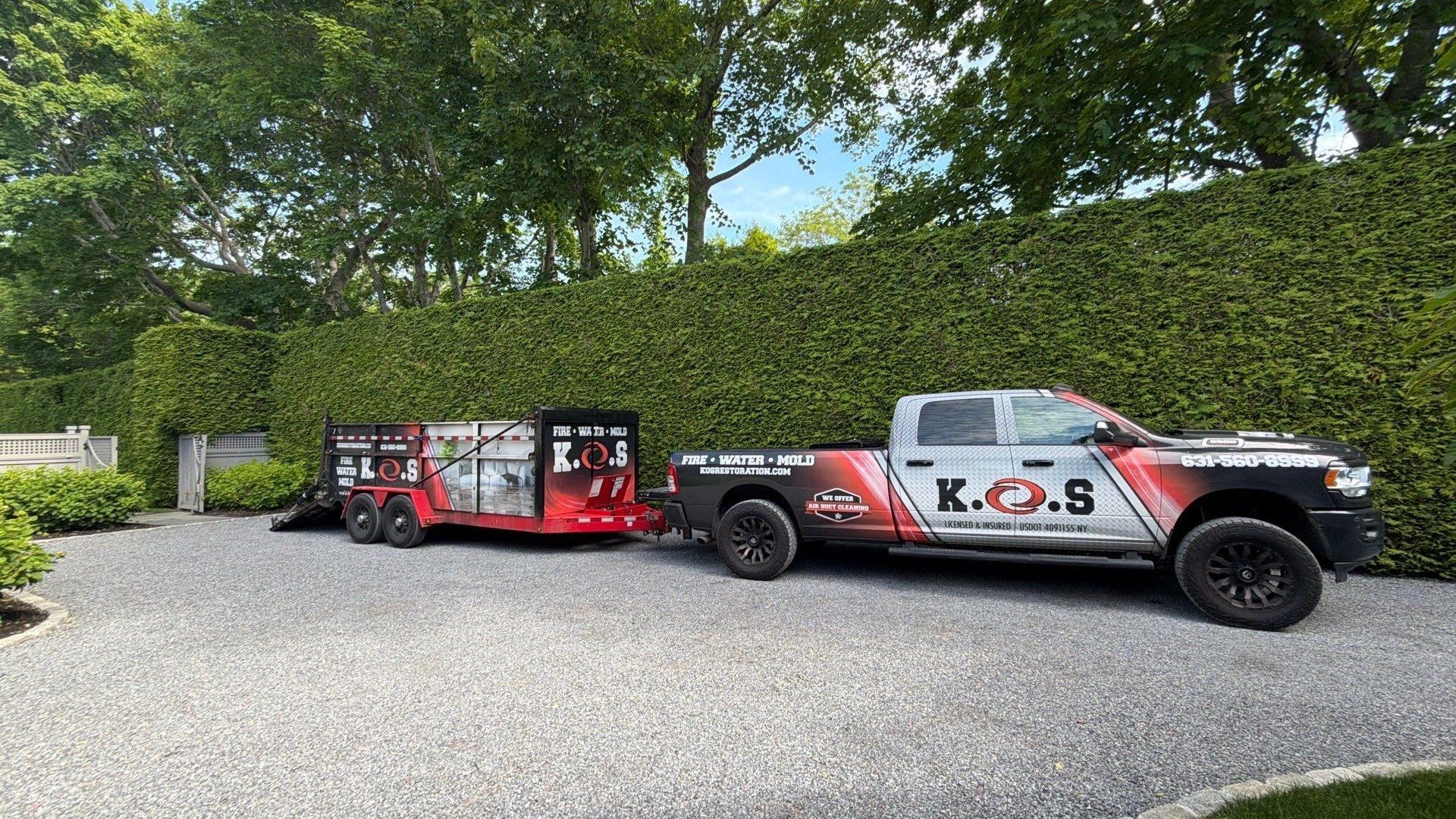
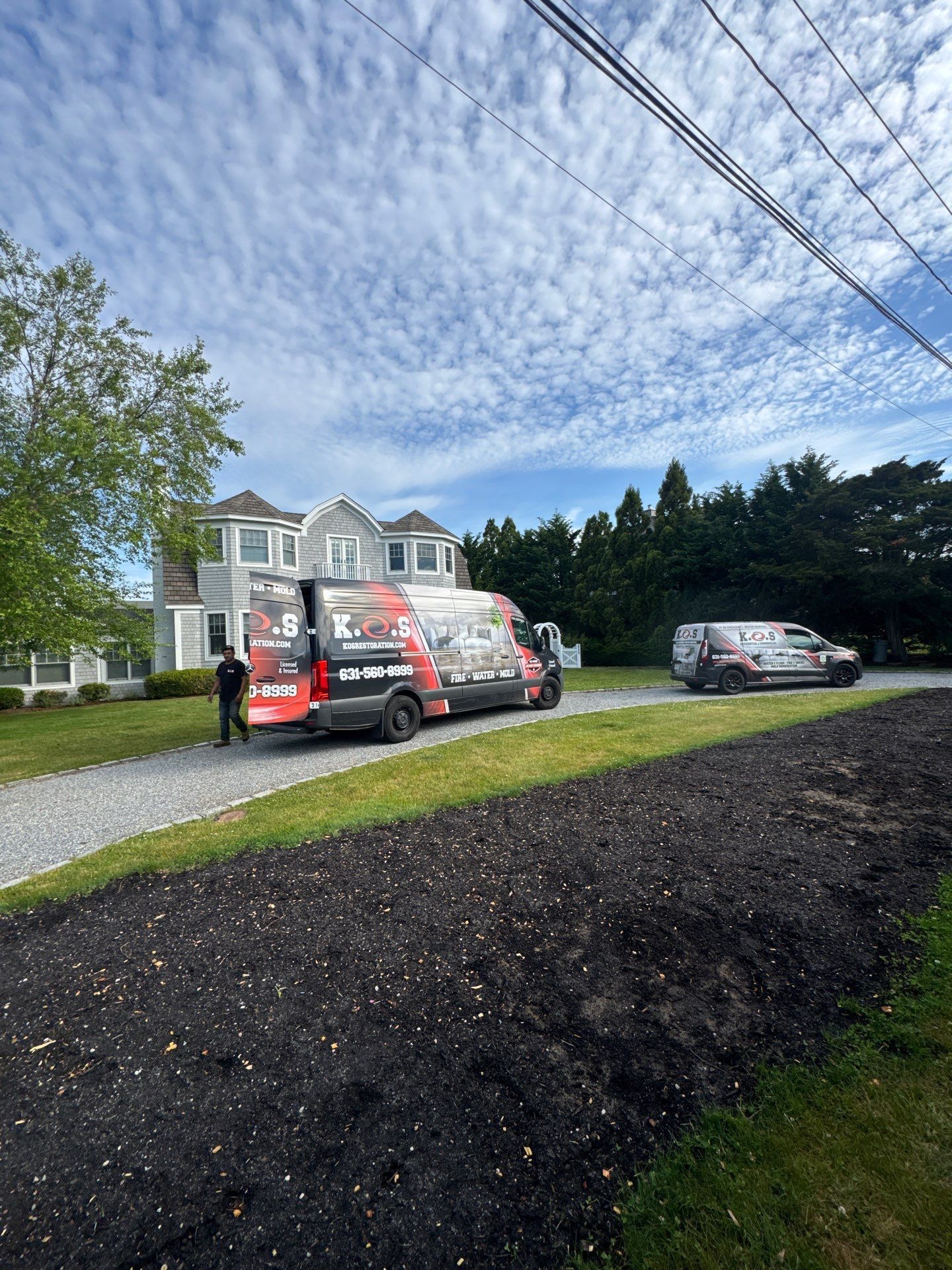
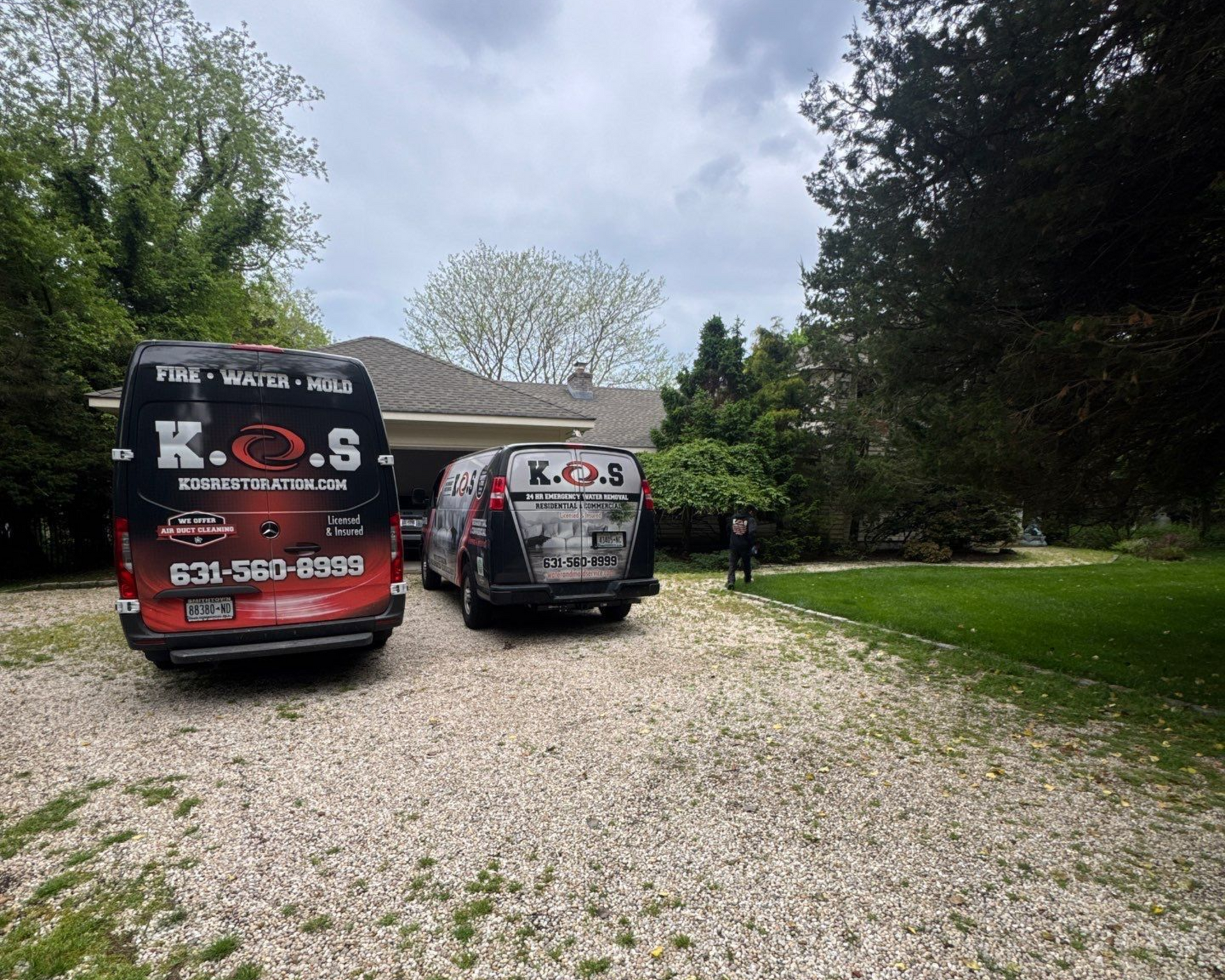
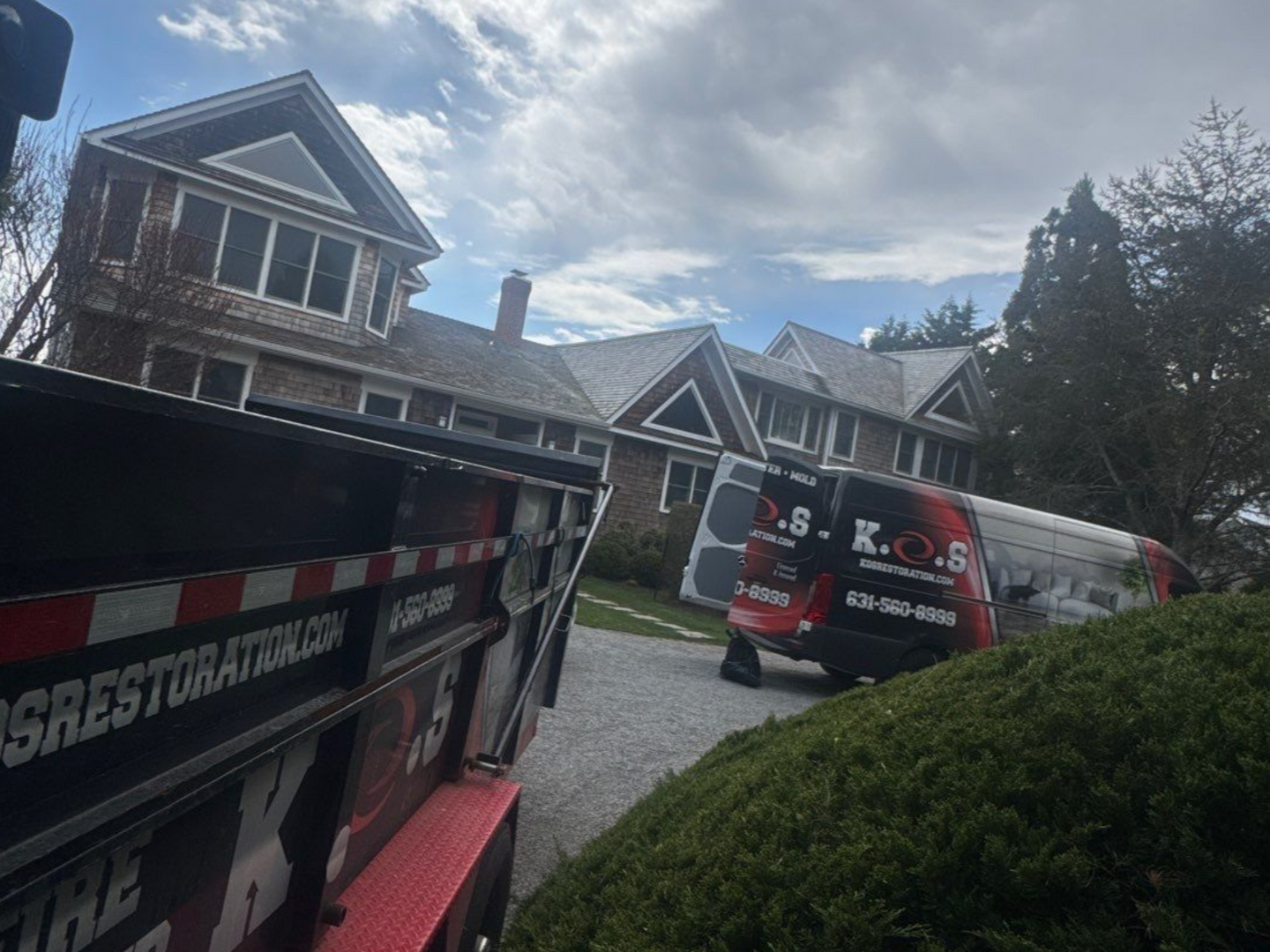
The K.O.S. Restoration team arrived on-site quickly, bringing the full fleet — truck, van, and equipment trailer — loaded with everything needed to assess and respond immediately. Fast arrival isn't just a courtesy; in water damage restoration, every hour matters. The sooner we can get professional drying equipment running, the better the outcome for your home and your wallet.
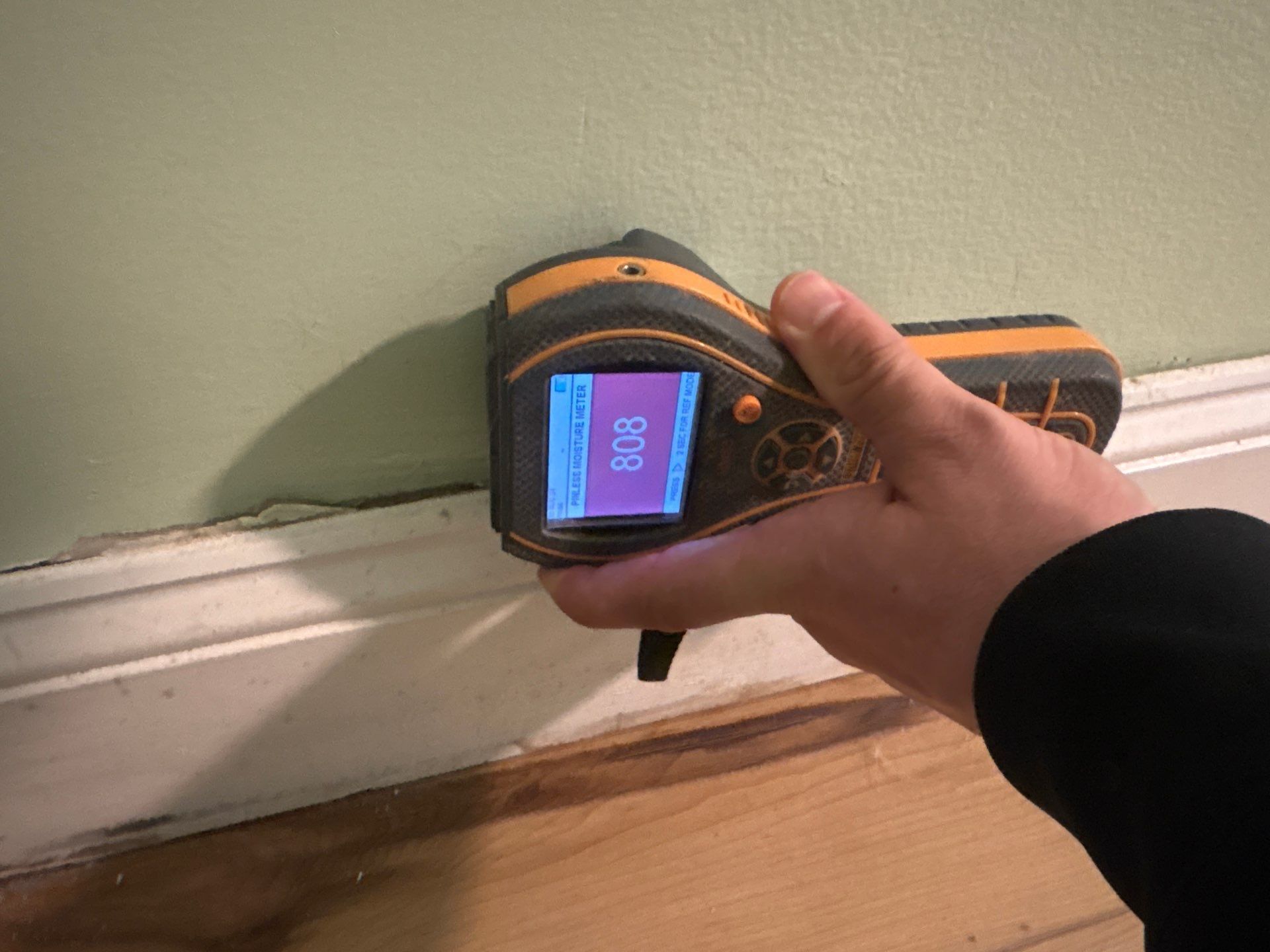
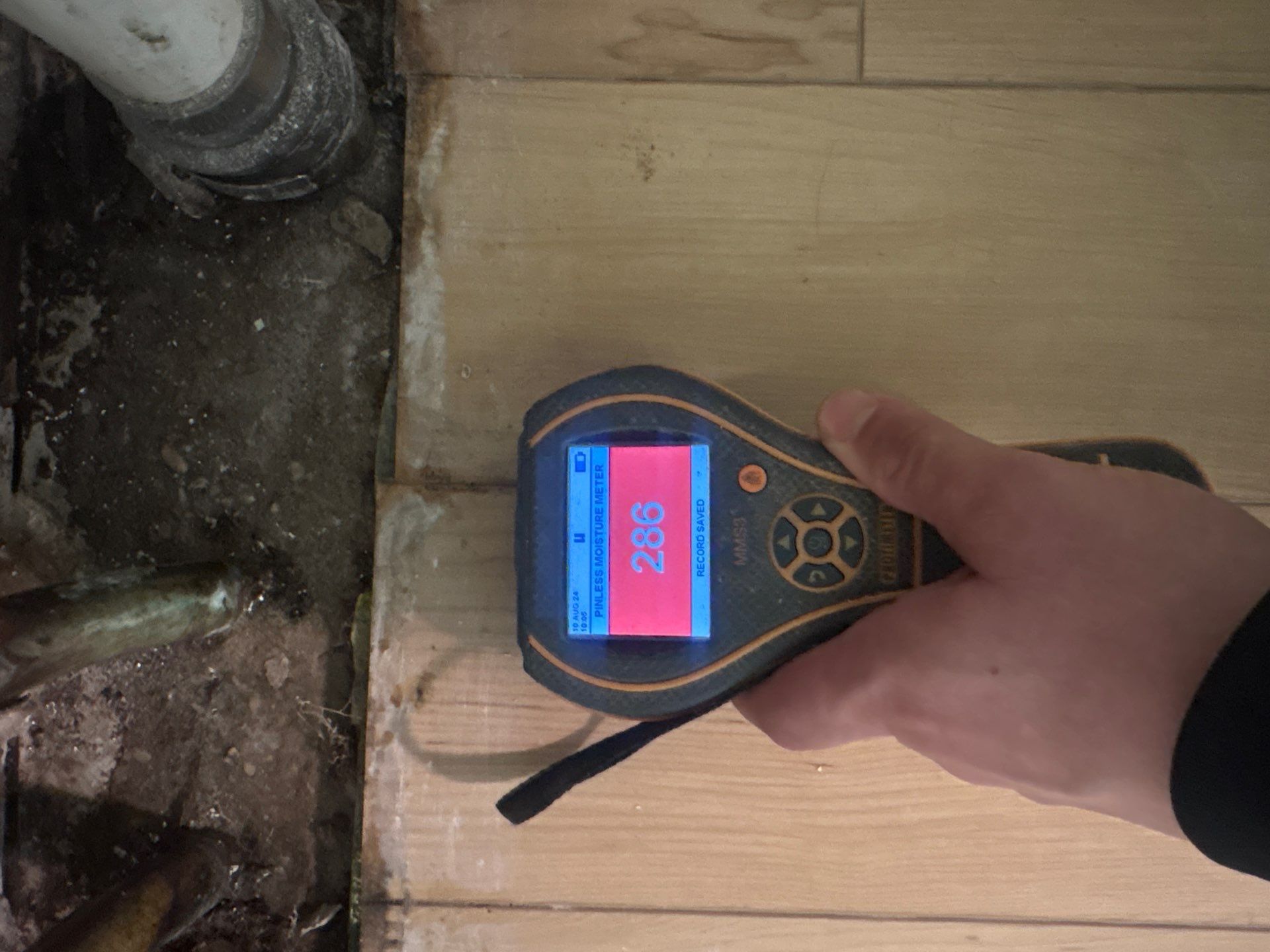
Our first step was a complete moisture assessment using professional-grade pinless moisture meters. What we found was alarming — and it's exactly why we never rely on visual inspection alone. The meter read 286 on the subfloor near the pipe location. At the baseboard, it read 808. For context, wood and building materials should read below 20 under normal dry conditions. A reading of 808 means the material is holding enormous amounts of water — far beyond what any household fan or dehumidifier could address.
These numbers told us the damage had spread significantly. Without mapping the full extent of the moisture, it's impossible to know how much material needs to be removed and where drying equipment needs to be placed. Skipping this step is how "fixed" water damage turns into a mold problem three weeks later.
Step 2: Opening the Walls and Removing Damaged Materials
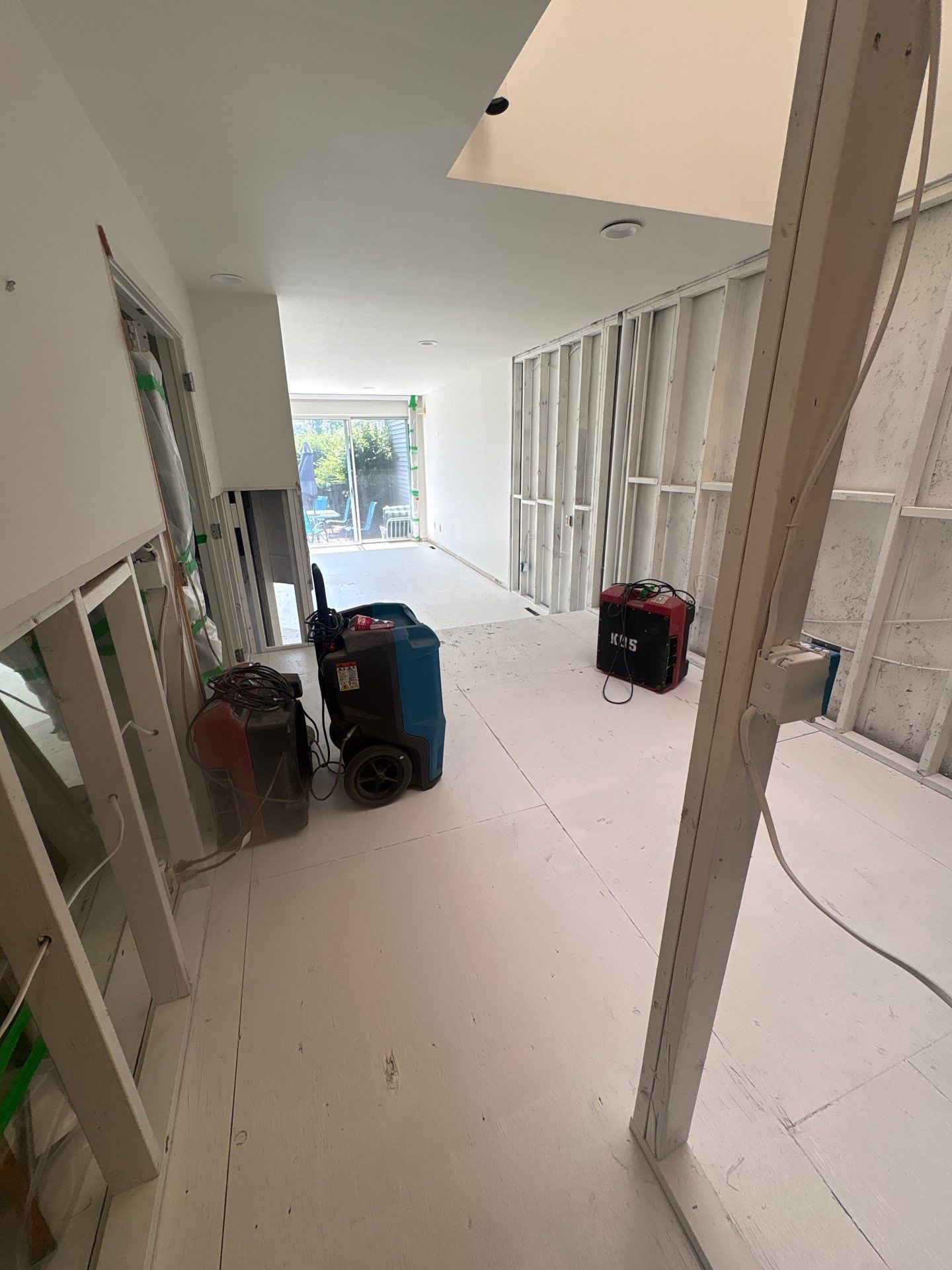
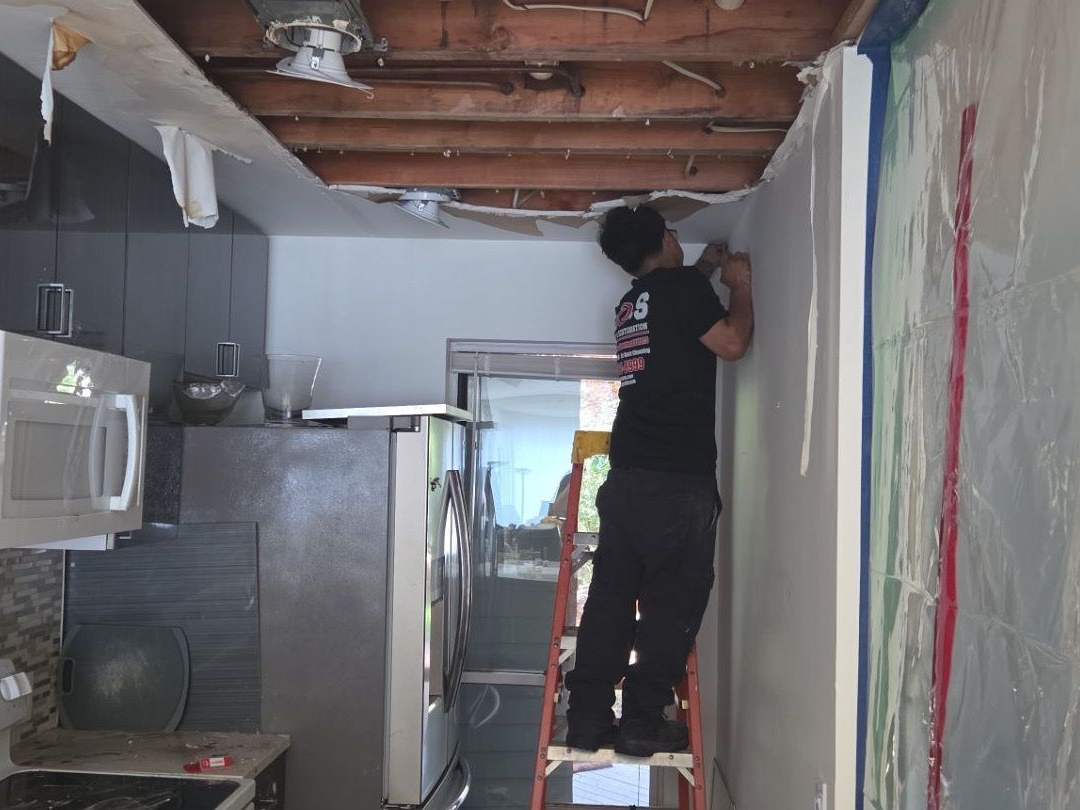
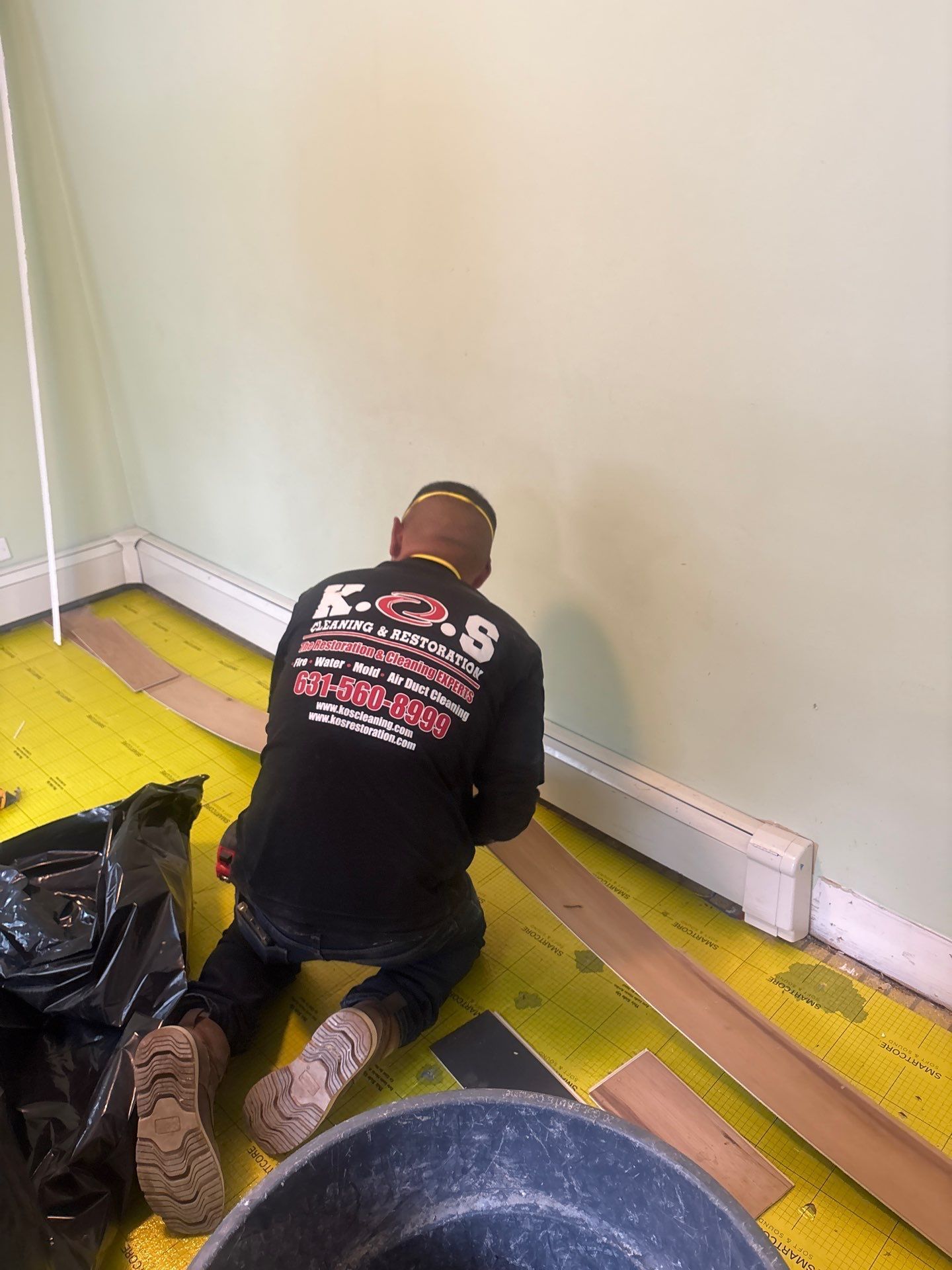
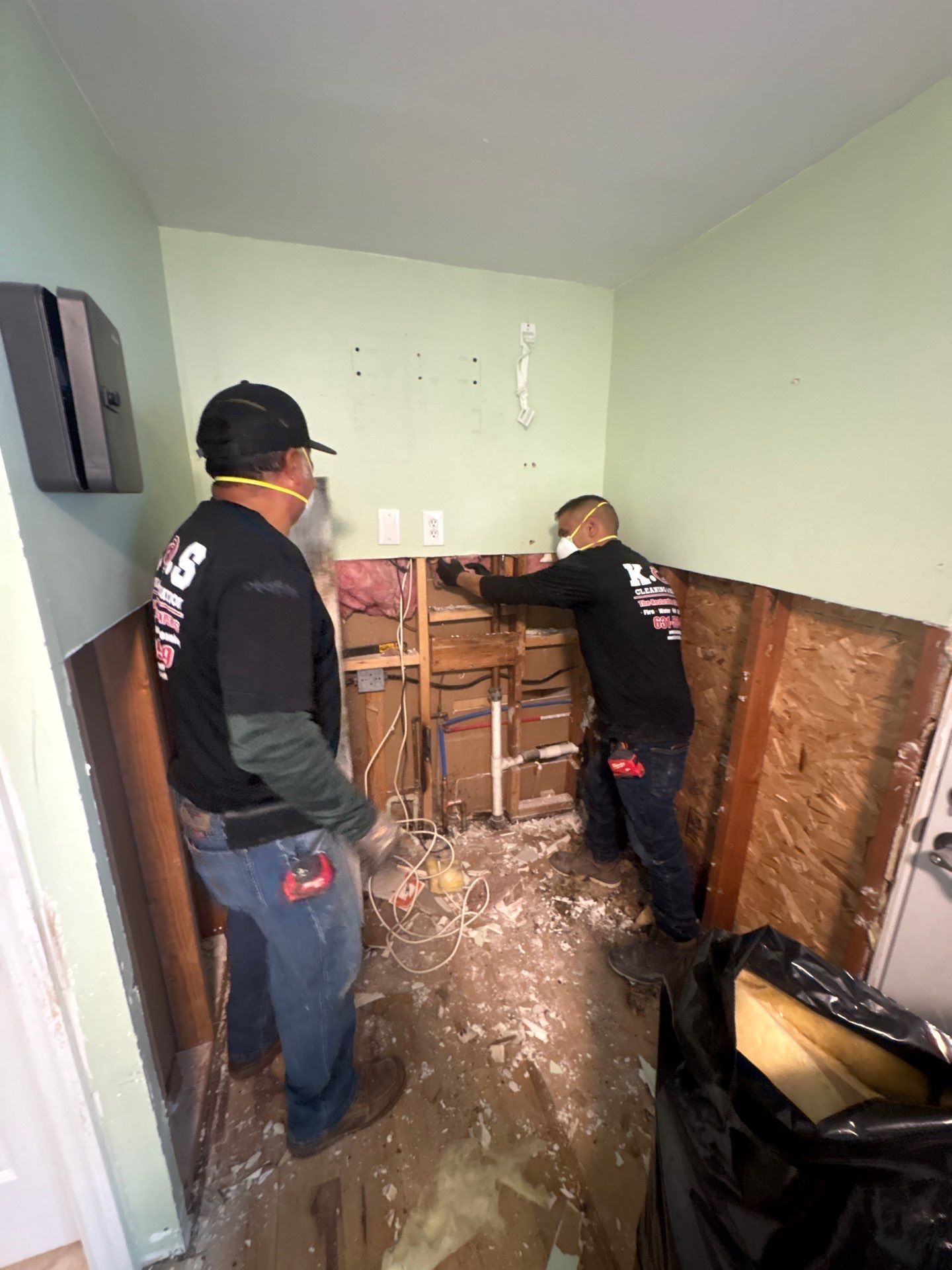
Once we knew where the moisture had traveled, our certified technicians began the controlled demolition phase — removing the sections of drywall, insulation, and baseboard trim that had absorbed water and could no longer be dried in place. This is the step that separates a proper restoration from a surface-level cover-up.
We understand this part can be hard to watch. It's your home, and seeing walls opened up is unsettling. But we want to be honest with you: leaving saturated materials inside a closed wall is how serious mold infestations start. Mold doesn't need much — just moisture, an organic surface, and a little time. The materials we removed were already beyond saving, and leaving them in place would have created a much bigger and more expensive problem down the road.
Our team worked carefully and methodically, wearing masks and protective gear, bagging debris cleanly, and making sure the rest of the home stayed livable throughout the process. We take the responsibility of being in your home seriously — and we treat every job with the same care we'd want in our own homes.
Step 3: Containment — Protecting the Rest of the Home
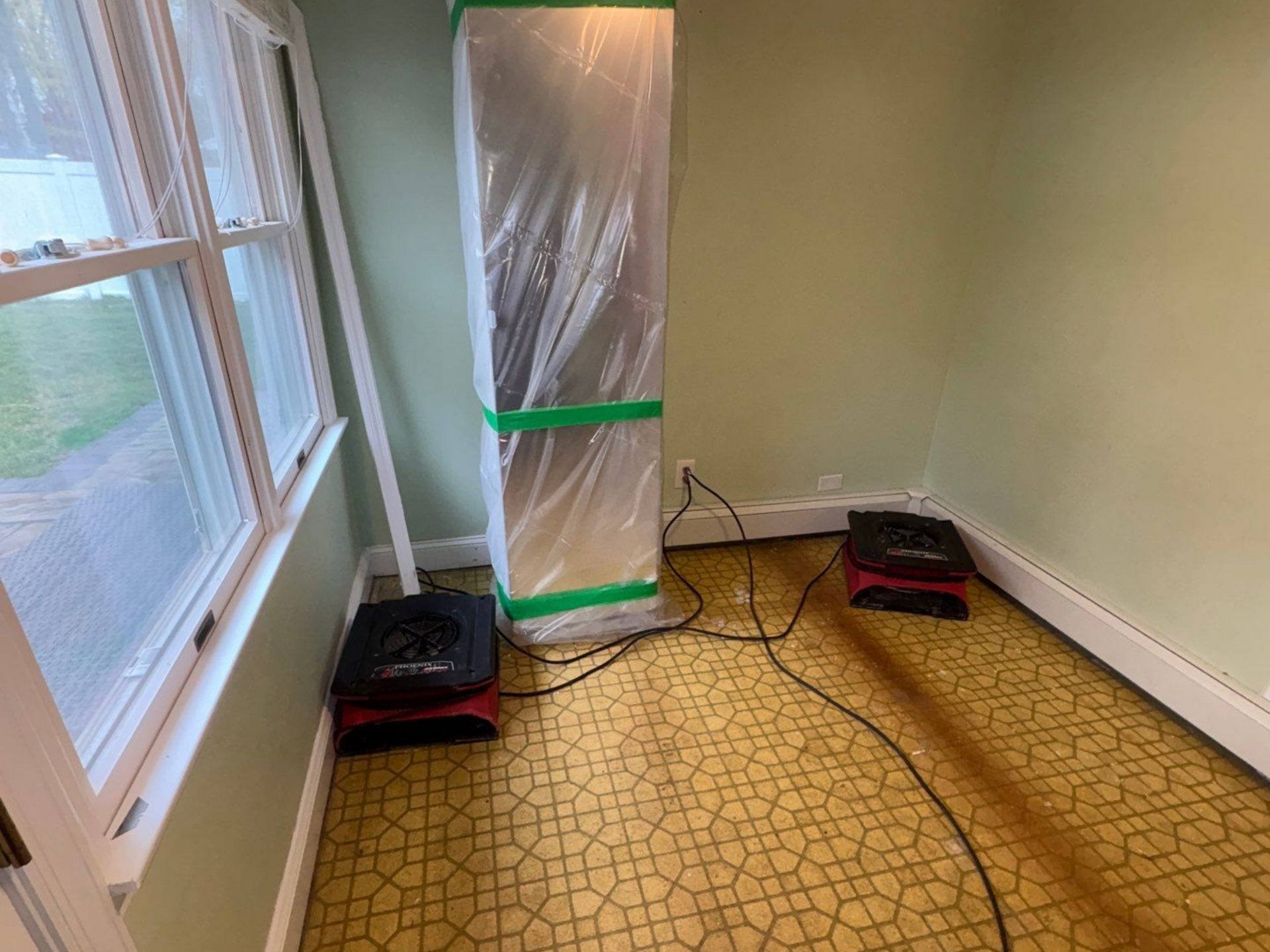
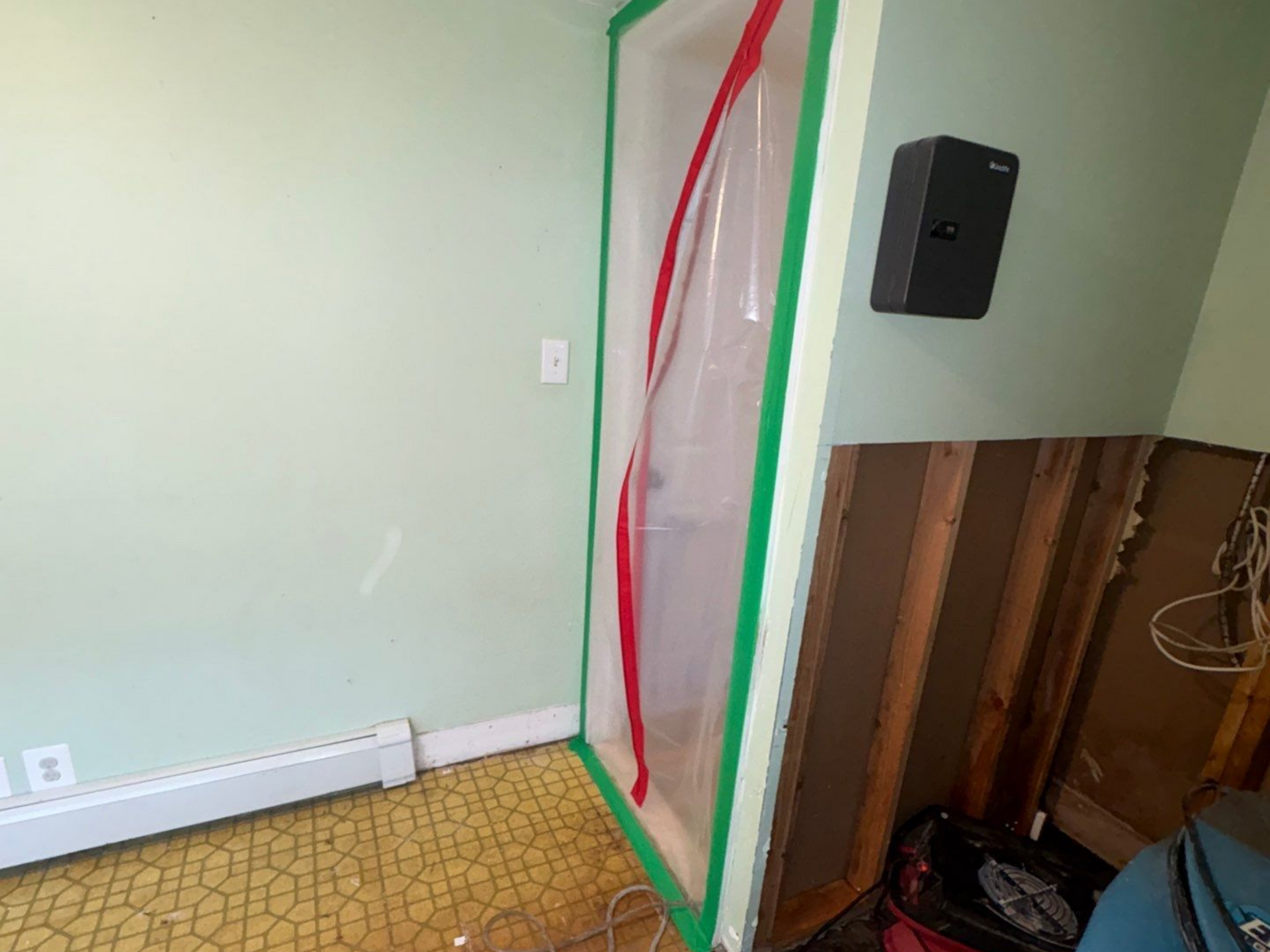
Before drying equipment went in, we installed professional containment barriers — heavy plastic sheeting secured with green tape, creating a sealed work zone with a zipper-door entry. This isn't just about keeping dust contained (though it does that too). Containment serves a critical function: it allows us to control the airflow and humidity levels inside the drying area precisely, which makes the drying process significantly faster and more effective.
It also protects the rest of your home. When drywall is opened and materials are disturbed, particles and potential contaminants need to be isolated. Our containment setup ensured that the work zone stayed separate from the living areas, so the homeowner's daily life was disrupted as little as possible during the restoration process.
Step 4: Professional Drying and Dehumidification
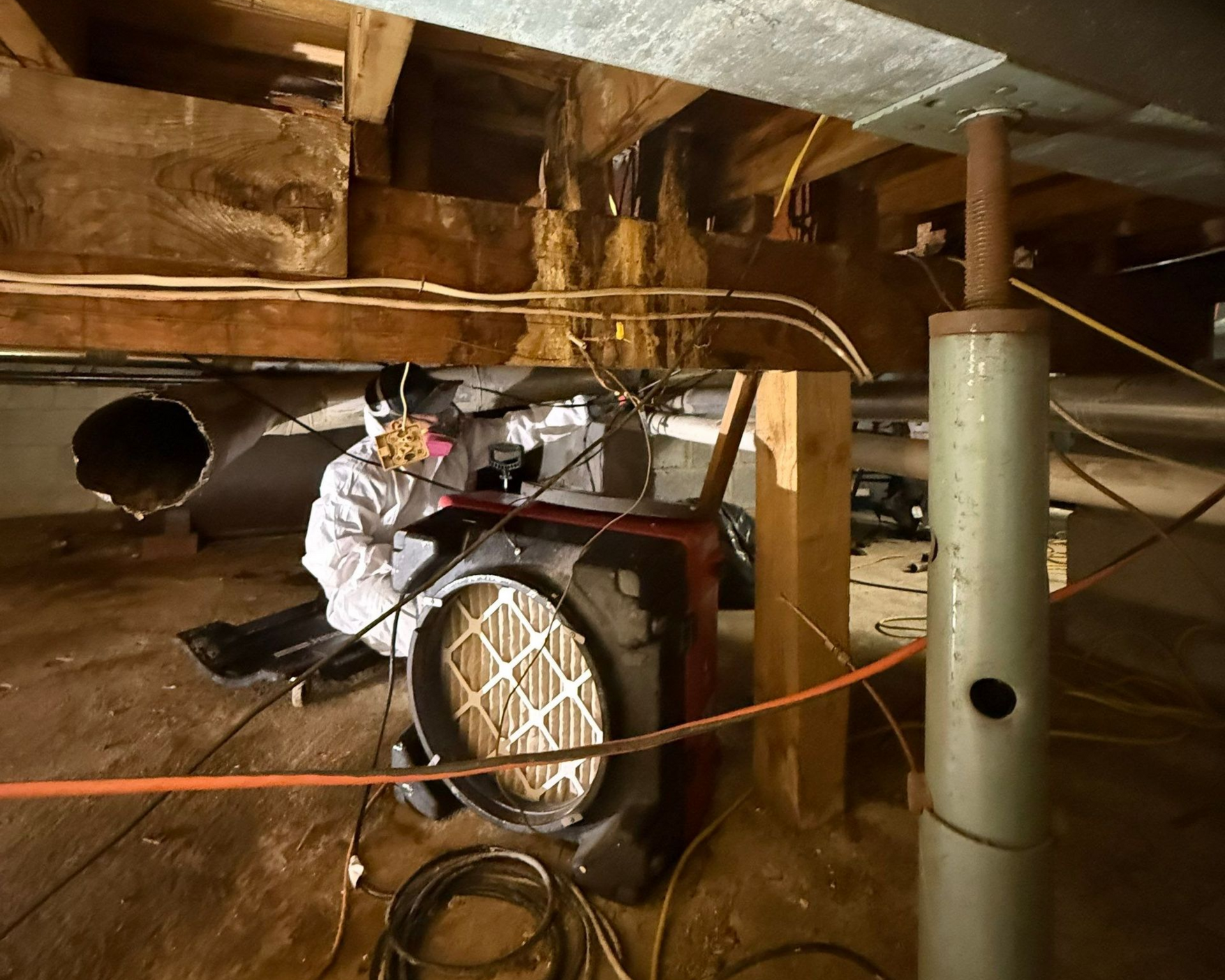
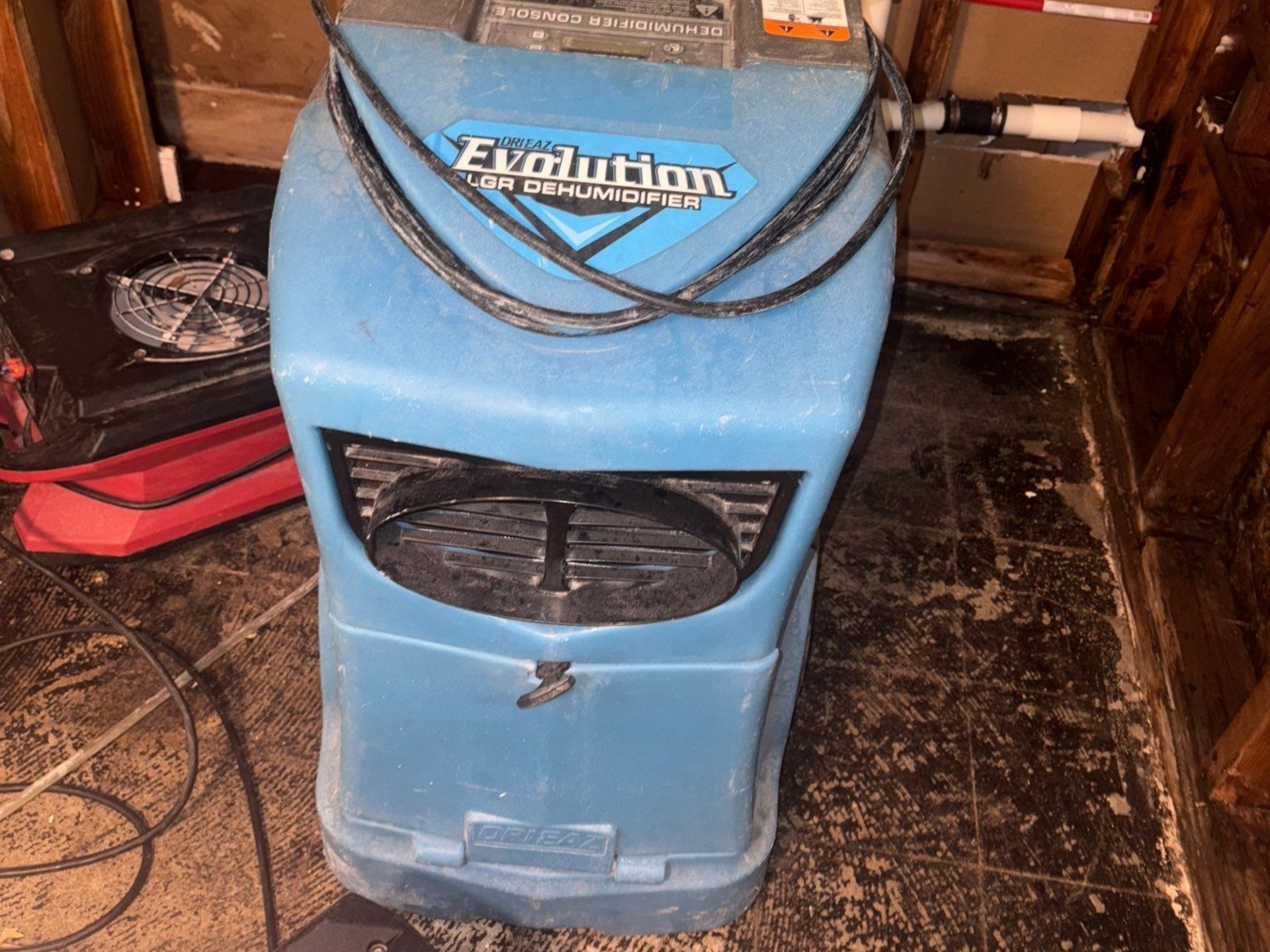
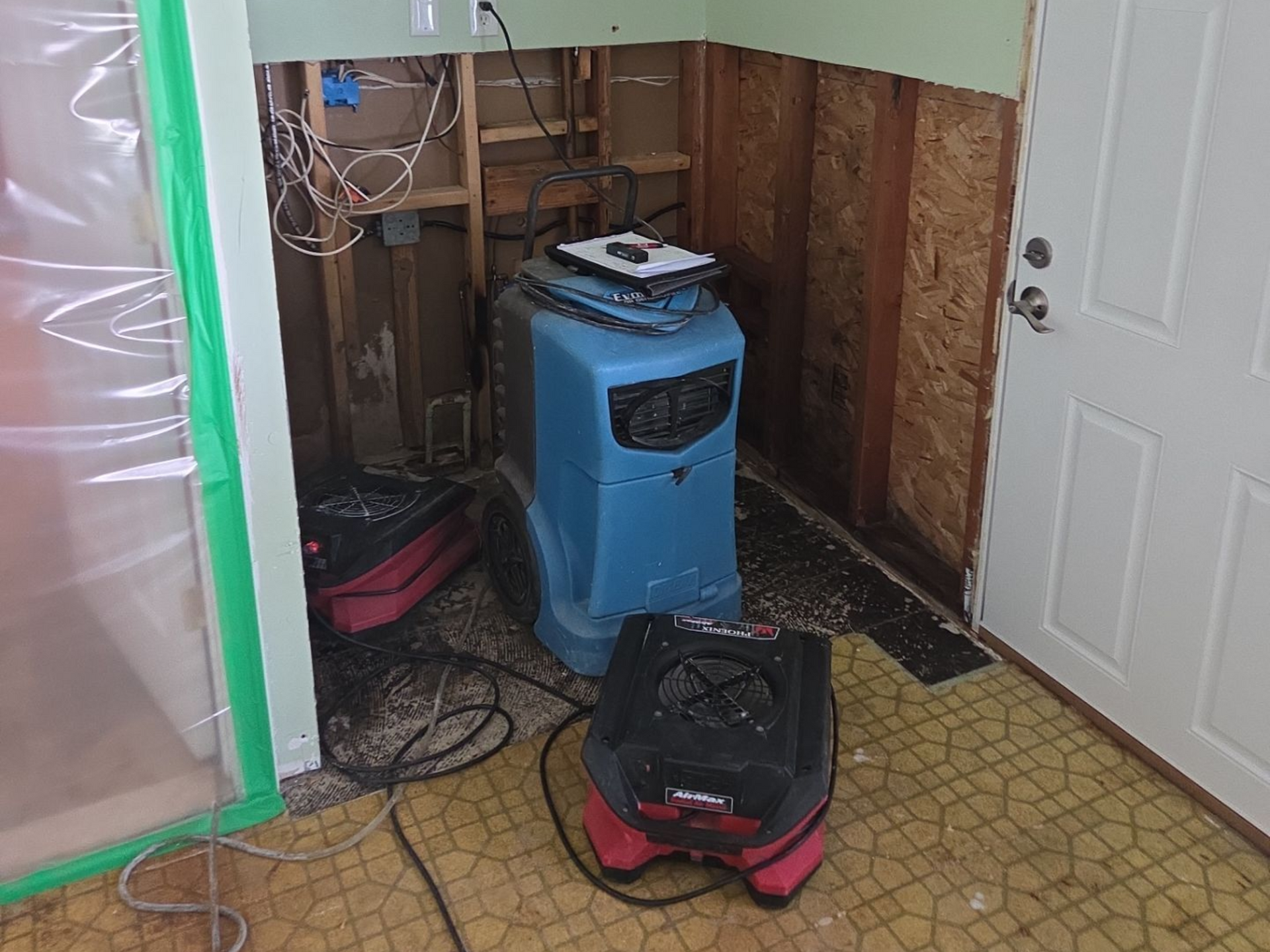
This is where the real science of water damage restoration happens. Once the damaged materials were removed and containment was in place, we deployed our commercial drying equipment — AirMax air movers positioned low along the floor to force airflow across wet surfaces, and a Dri-Eaz Evolution LGR dehumidifier pulling moisture out of the air continuously. This equipment is not available at your local hardware store, and there's a reason for that. It's engineered specifically for structural drying and operates at a level of capacity that consumer units simply can't match.
The air movers and dehumidifier work together as a system. The air movers accelerate evaporation from the wet structural materials — the wood framing, the subfloor, the air pockets behind remaining walls — and push that moisture-laden air toward the dehumidifier, which extracts it and exhausts dry air back into the space. This cycle runs continuously, 24 hours a day, until moisture readings return to acceptable levels throughout the affected area.
Drying typically takes between 3 and 5 days depending on the severity and the materials involved. Our team monitors the readings daily and adjusts equipment placement as needed to make sure the drying is complete — not just good enough. Incomplete drying is one of the most common causes of mold growth after water damage, and it's completely preventable when the job is done right.
Why Fast, Professional Response Makes All the Difference
We've been serving Long Island homeowners since 2006, and in nearly two decades of water damage restoration work, the single most consistent thing we see is this: the homeowners who call us quickly have dramatically better outcomes than those who wait. Not because the damage is smaller — sometimes it's identical — but because fast, professional drying prevents the secondary damage that makes restoration far more expensive and disruptive.
Mold is the big one. But beyond mold, delayed water damage leads to warped and buckled hardwood floors, swollen door frames that no longer close properly, compromised structural framing, and odors that become embedded in materials over time. None of these are inevitable — they're all preventable with a fast, thorough response.
We carry IICRC certification in both water damage restoration and mold remediation, which means our team is trained to the industry's highest standard. We work directly with insurance companies, handle the documentation, and make the claims process as smooth as possible for you. Because when you're dealing with water damage in your home, the last thing you need is more stress.
Serving Suffolk County, Nassau County, and Queens, NY
K.O.S. Restoration responds to water damage emergencies across all of Long Island and into Queens, New York. Whether you're in Stony Brook, Setauket, Smithtown, Huntington, Patchogue, Babylon, Mastic Beach, or anywhere across Nassau County and Suffolk County, our team can be on-site within 45 minutes. We are available 24 hours a day, 7 days a week, 365 days a year — because pipe bursts and water emergencies don't follow a 9-to-5 schedule.
If you're dealing with water damage right now — or if you suspect hidden moisture behind your walls, under your floors, or in your basement — please reach out. We would genuinely love to help you get your home back to normal. That's what we've been doing on Long Island for nearly 20 years, and it's what we'll be here to do for you.
Related Water Damage Resources
Frequently Asked Questions
How do I know if water is behind my walls?
Common signs include soft or discolored drywall, paint that is bubbling or peeling, baseboards that feel damp or are pulling away from the wall, musty odors, or visible staining at floor level. If you notice any of these, call us — moisture meters can detect hidden water that visual inspection will miss entirely.
Do you always have to open the walls after a pipe burst?
Not in every case, but when moisture readings confirm that water is trapped inside the wall cavity, removal of the affected section is necessary to properly dry the structure and prevent mold. Covering wet materials is never the right answer.
How long does the drying process take?
Most residential water damage jobs take between 3 and 5 days of active drying with commercial equipment. We monitor moisture levels daily and do not consider the job complete until readings have returned to acceptable levels throughout the affected area.
Do you work with insurance companies?
Yes. K.O.S. Restoration works directly with homeowners' insurance carriers and is experienced in the documentation and claims process. We can help make the experience as straightforward as possible for you.
What areas do you serve?
We serve all of Nassau County, Suffolk County, and Queens, New York, with 45-minute response times to most of Suffolk County. We are available 24/7 for emergency response.
Share This Post