Crawlspace Mold Encapsulation in the Hamptons, NY — Waterfront Home Case Study
Quick Answer — What Is Crawlspace Mold Encapsulation?
If your waterfront home in the Hamptons has a crawlspace, moisture is almost unavoidable. Even after professional mold remediation, humidity can return and cause mold to grow back. Crawlspace encapsulation seals and protects the entire space — helping prevent future mold growth, improve your indoor air quality, and protect your home's structural integrity for the long term. For homeowners near the water on Long Island, it's one of the most important steps you can take after remediation is complete.
We Understand How Unsettling This Can Feel
You did everything right. You called a certified remediation company, you got the mold removed, and you thought the problem was behind you.
But living this close to the water, there's always that quiet worry in the back of your mind: What if it comes back?
That's exactly the call we received from a homeowner in the Hamptons. After a full mold remediation of their waterfront property's crawlspace , they weren't ready to just move on and hope for the best. They wanted real, lasting protection. They wanted to know their home — and their family — was safe.
We know how hard it is to deal with something like this. The stress, the uncertainty, the cost — it's a lot to carry. That's why we showed up ready to give them a solution that would actually hold.
Project Overview
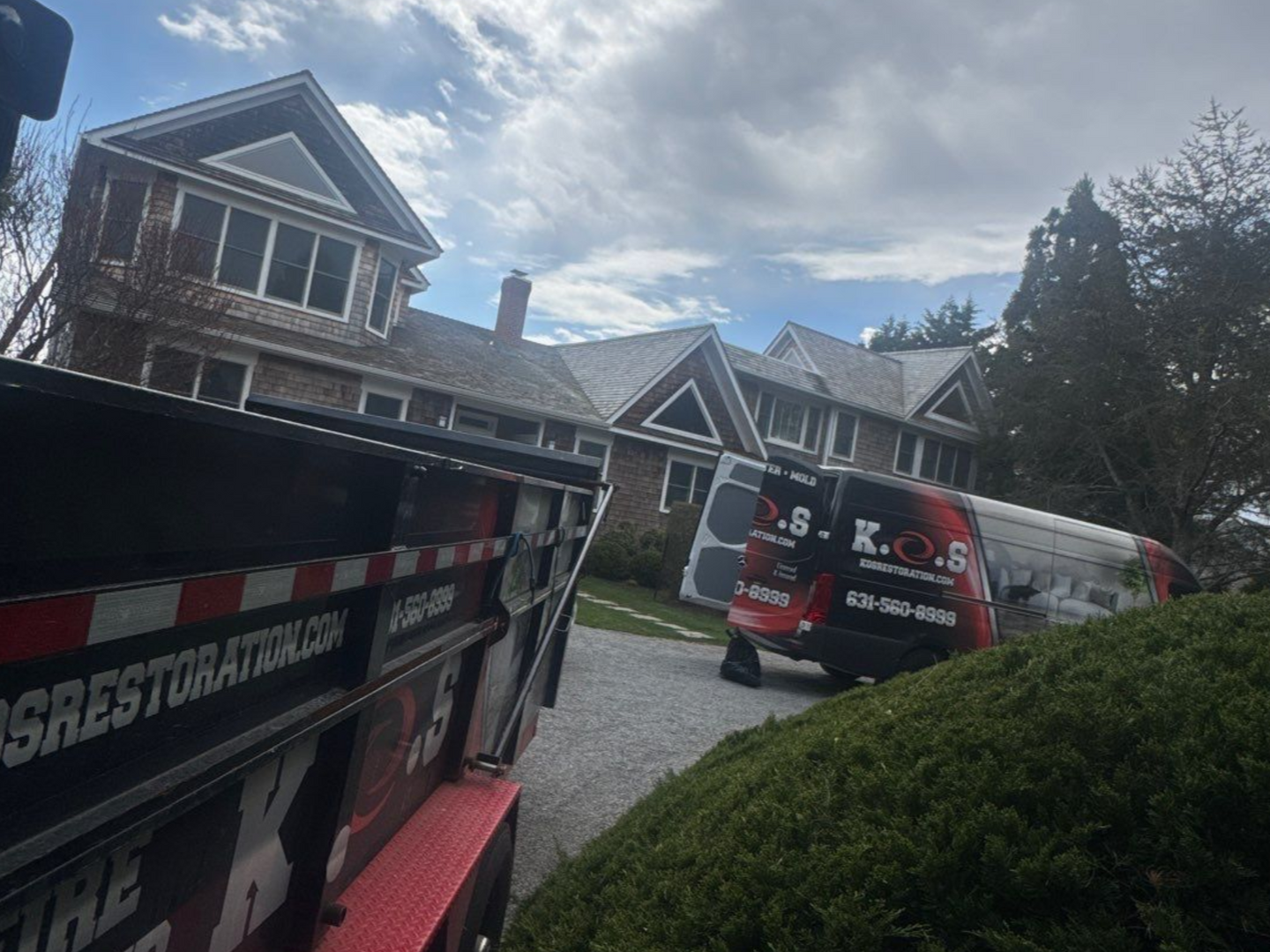
This job was performed at a waterfront residential property in the Hamptons, NY. The crawlspace covered approximately 3,000 square feet and had recently undergone complete mold remediation. Because of its direct exposure to coastal humidity and the inherent moisture risks that come with waterfront living, the homeowner made the decision to move forward with a full encapsulation system to protect the space long-term.
- Service Performed: Crawlspace Mold Encapsulation
- Location: Hamptons, NY (Waterfront Property)
- Crawlspace Size: ~3,000 Sq Ft
- Condition at Time of Service: Fully remediated, high residual moisture risk
- Goal: Long-term moisture control and mold prevention
Why Waterfront Crawlspaces Are One of the Highest-Risk Environments on Long Island
If you've never thought much about your crawlspace, you're not alone — most homeowners don't, until there's a problem.
But if your home sits near the water — whether that's in the Hamptons, along the South Shore, or anywhere else on Long Island — your crawlspace is quietly absorbing moisture every single day. The surrounding water raises ambient humidity levels. The enclosed, low-airflow environment underneath your home creates the perfect condition for condensation to build on wood framing, joists, and subflooring. And those organic materials? They're exactly what mold needs to grow.
Waterfront homes and older crawlspaces across the Hamptons, Southampton, East Hampton, Westhampton, Hampton Bays, and Montauk are among the highest-risk environments for recurring mold growth — even after proper, professional remediation. That's not a scare tactic. It's just the reality of living this close to the water on Long Island.
The mold can be removed. But if the moisture problem isn't addressed, the conditions that caused it in the first place are still there. That's the gap that encapsulation fills.
What We Found When We Arrived On Site
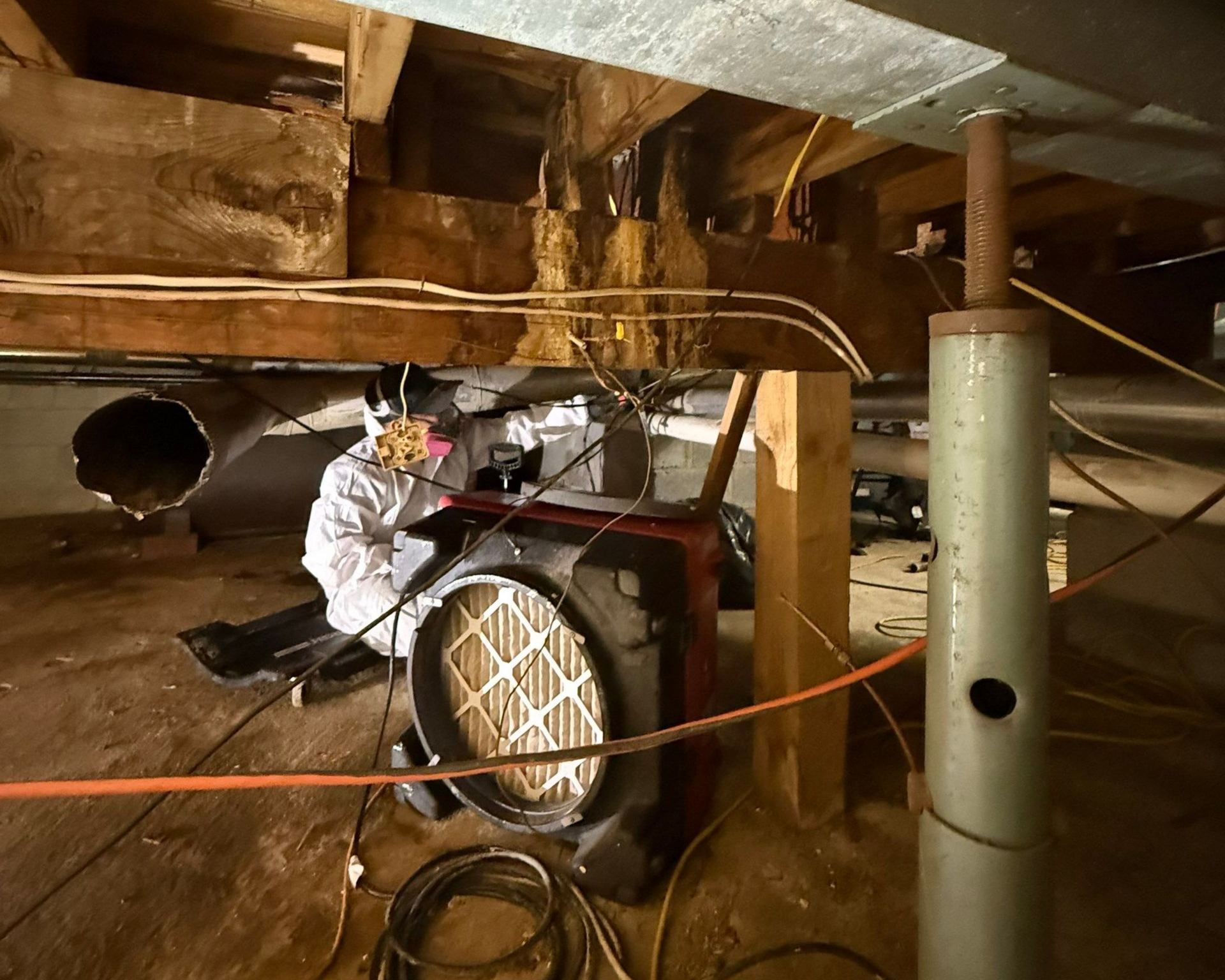
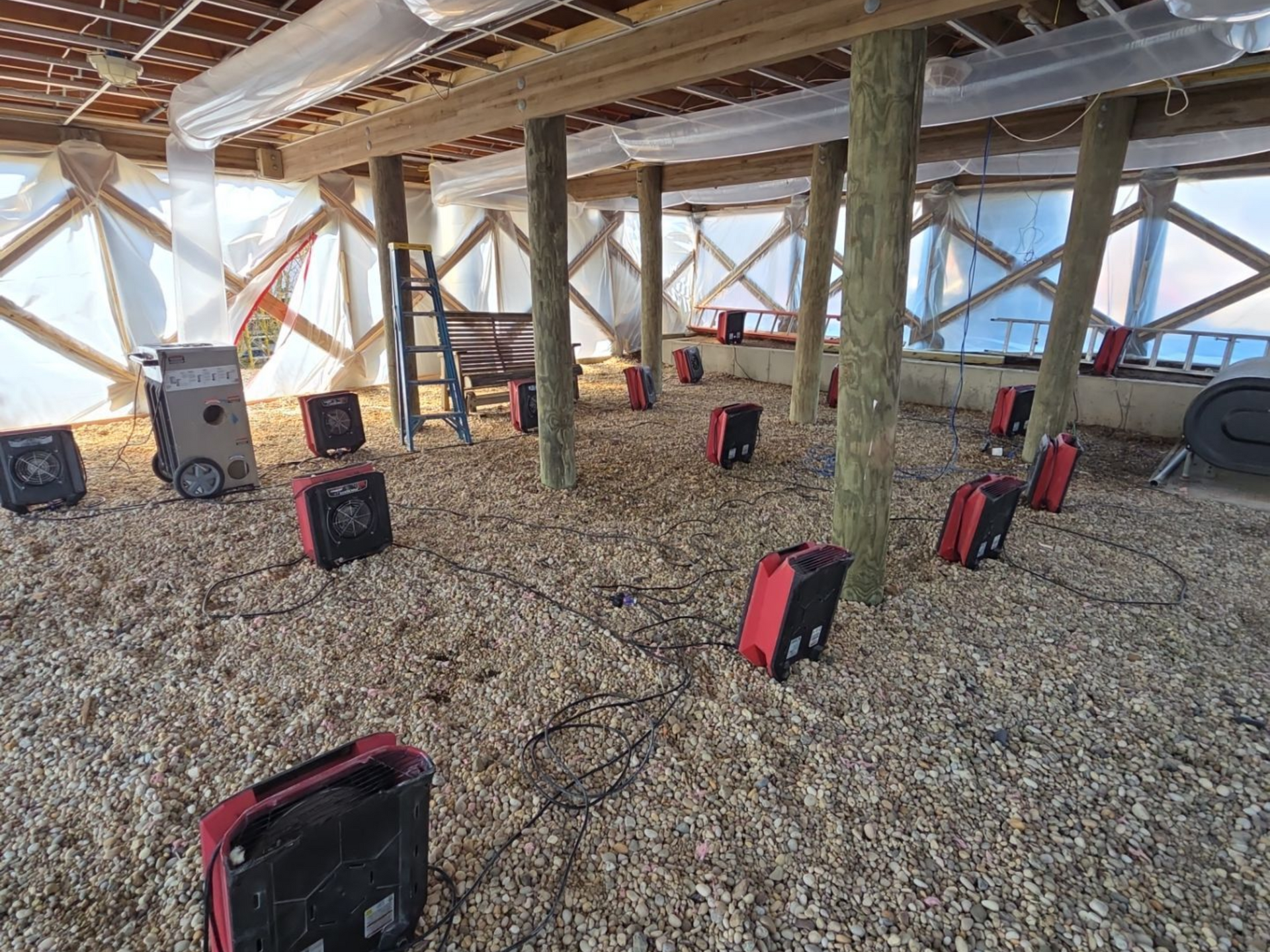
When our IICRC-certified team arrived at the property, the crawlspace had been properly remediated — the joists and structural framing were clean, and there were no visible signs of active mold growth. The remediation had been done correctly.
What was still present was the risk. The space was open to ambient coastal air, humidity levels were elevated, and there was no long-term moisture barrier system in place. Without encapsulation, it was only a matter of time before the conditions that created the original mold problem returned. The homeowner was right to call us back.
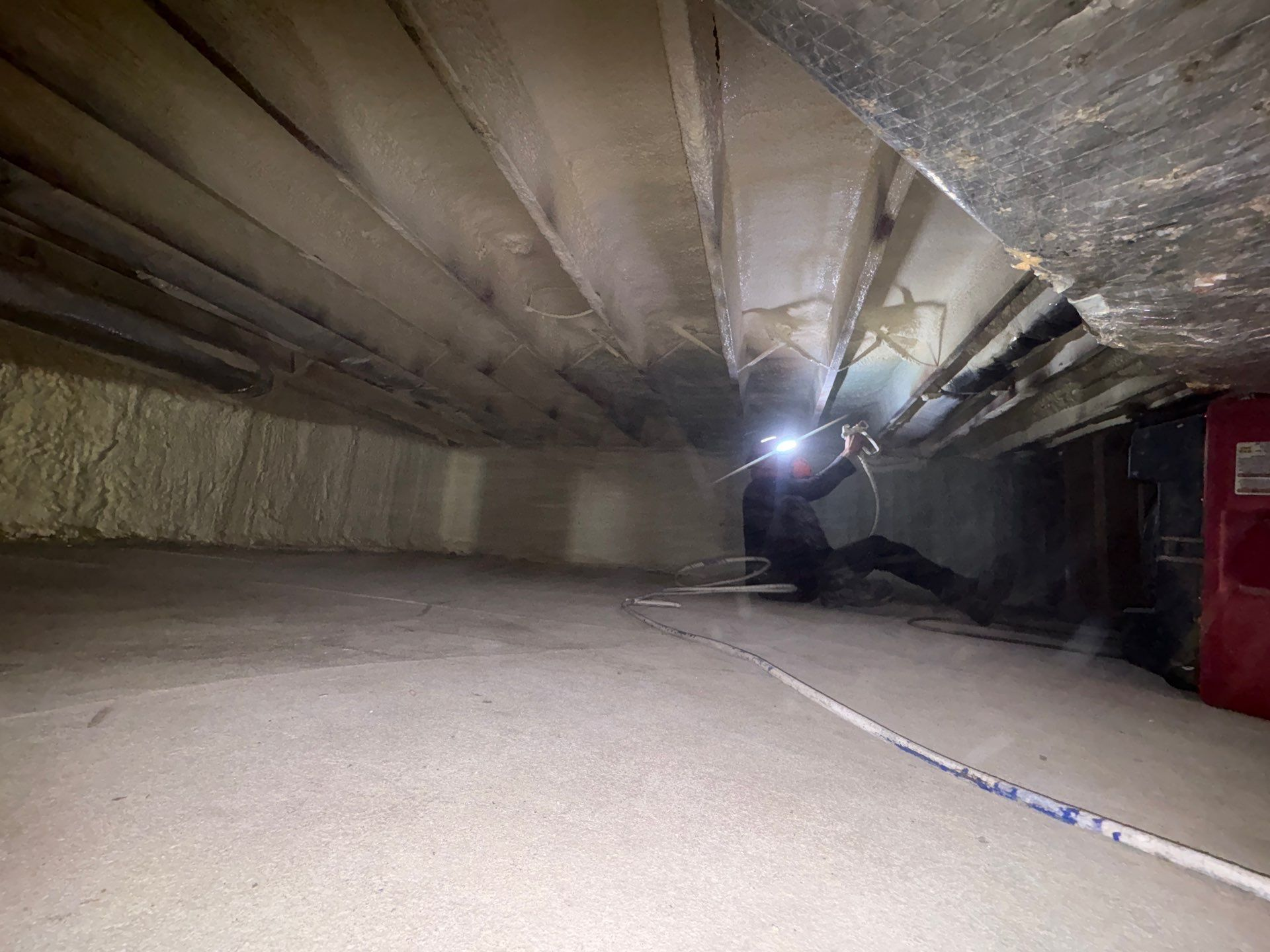
[IMAGE 2 — REPLACE WITH PHOTO: Wide establishing shot of the full crawlspace interior, technician visible in background, product buckets and equipment on the ground, partial foam coating on joists | Alt text: "crawlspace mold encapsulation project Long Island waterfront home KOS Restoration"]
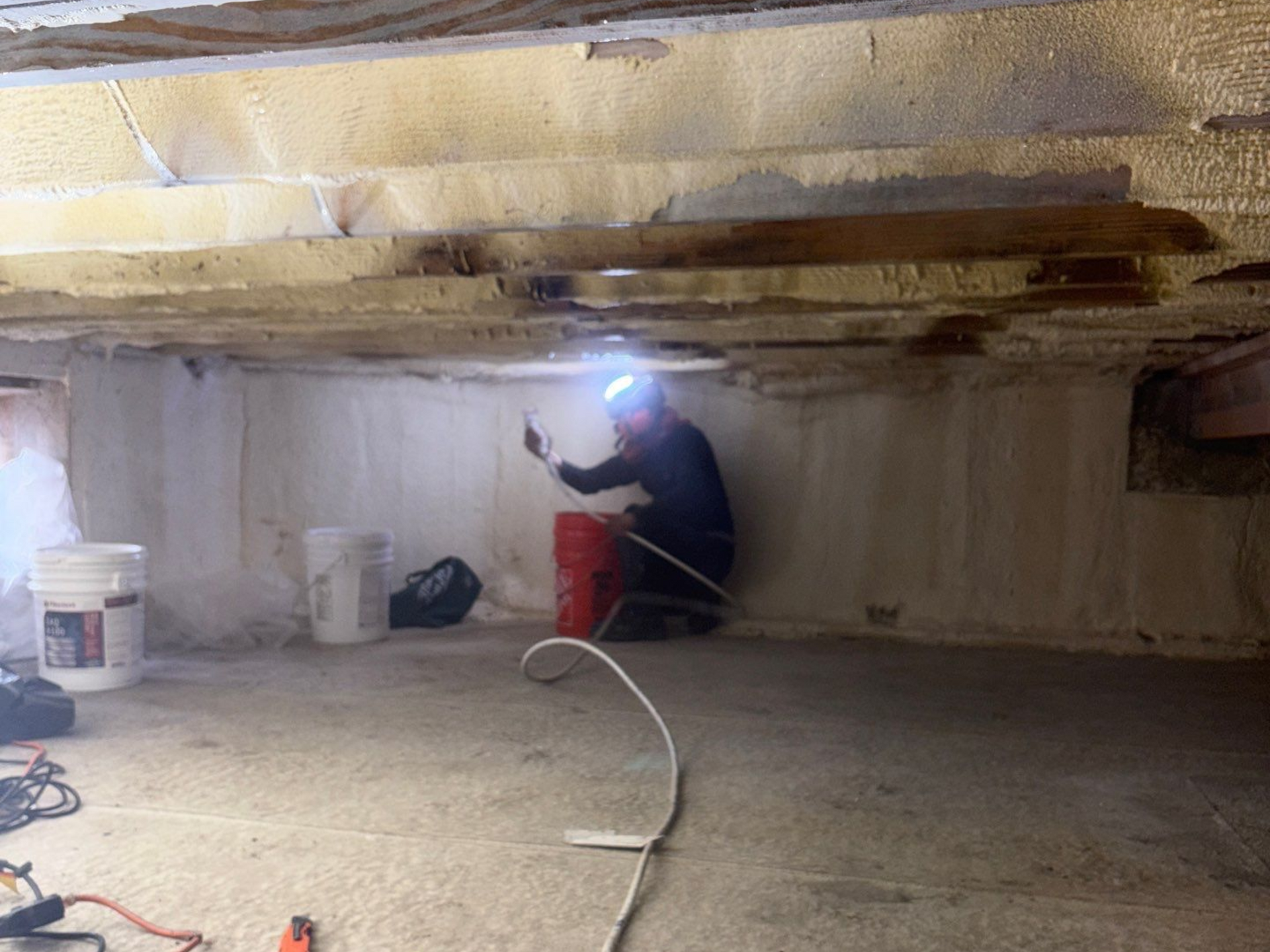
The Solution: A Full Crawlspace Encapsulation System
This is the part that gives homeowners peace of mind — and it's something we take a lot of care getting right.
Surface Preparation and Final Inspection
Before we begin any encapsulation work, our team does a thorough walkthrough of the entire crawlspace. Even after remediation, we verify that every surface is clean, dry, and ready to accept the encapsulation coating. No shortcuts here — proper prep is what makes the protection last.
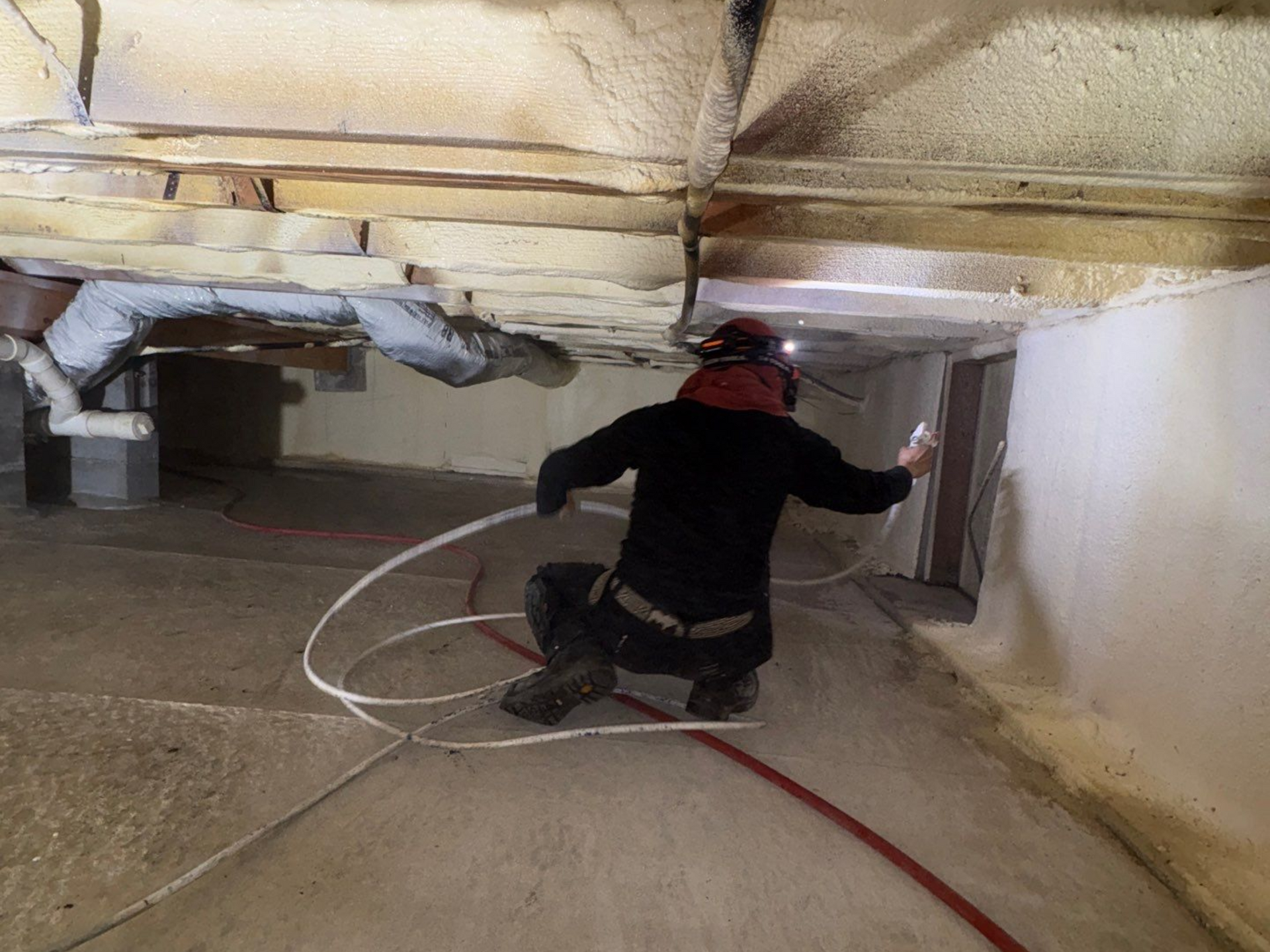
Identifying and Addressing Moisture Sources
We don't just coat the surfaces and call it done. We identify where moisture is entering and concentrate our treatment on the highest-risk areas first. In a waterfront property like this one, that means paying close attention to the perimeter walls, any gaps or vents, and the underside of the subfloor where condensation tends to accumulate.
Spray-Applied Encapsulation Coating
The core of this job was the application of a professional-grade, mold-resistant encapsulation coating — Fiberlock IAQ 6100, one of the most trusted products in the industry — applied across the floor joists, subfloor, and all structural framing throughout the crawlspace. This coating seals porous wood surfaces that would otherwise absorb moisture and harbor mold. It creates a controlled environment where moisture has nowhere to take hold. It's not a paint — it's a professional barrier system designed specifically for spaces like this one.
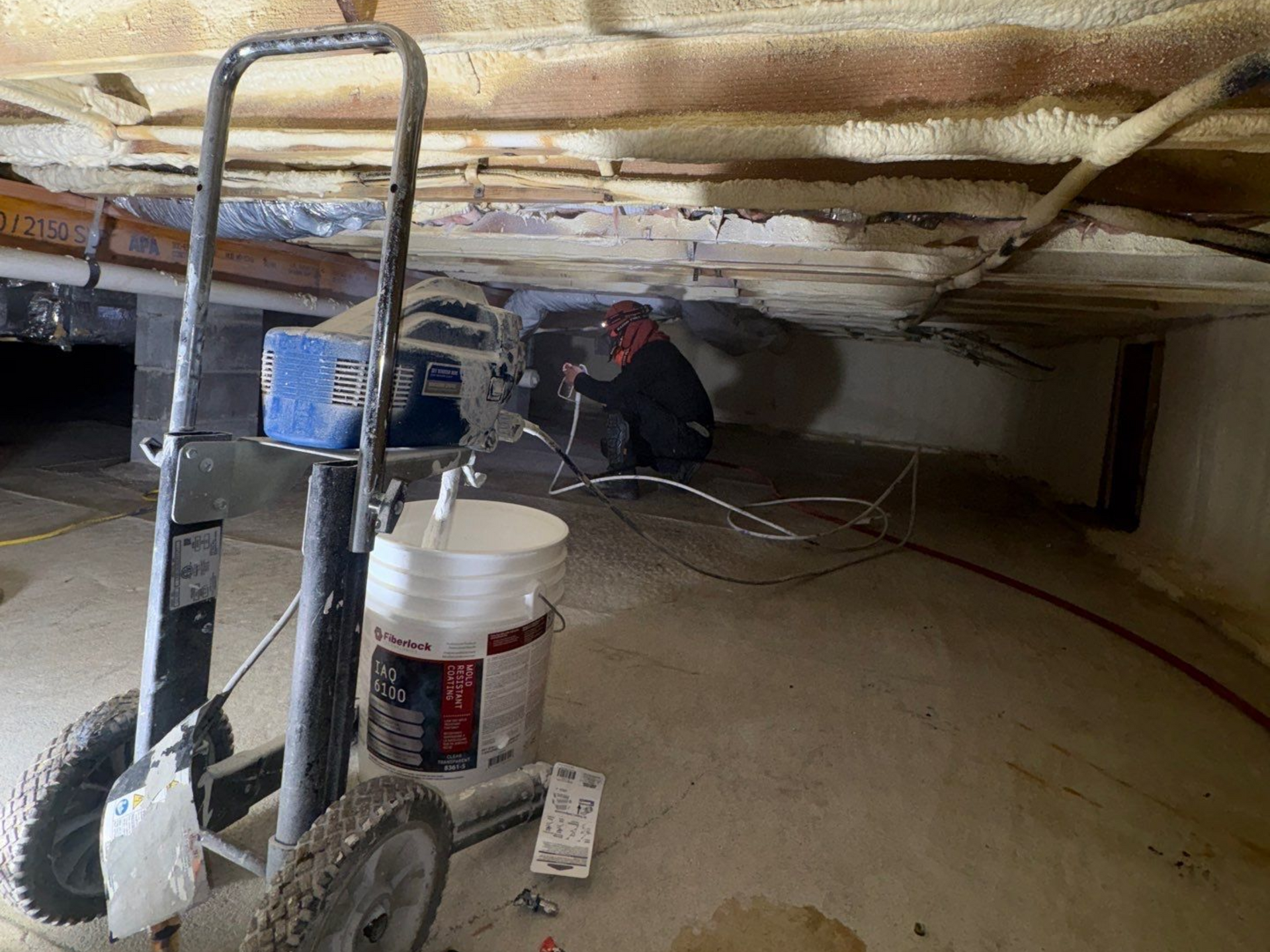
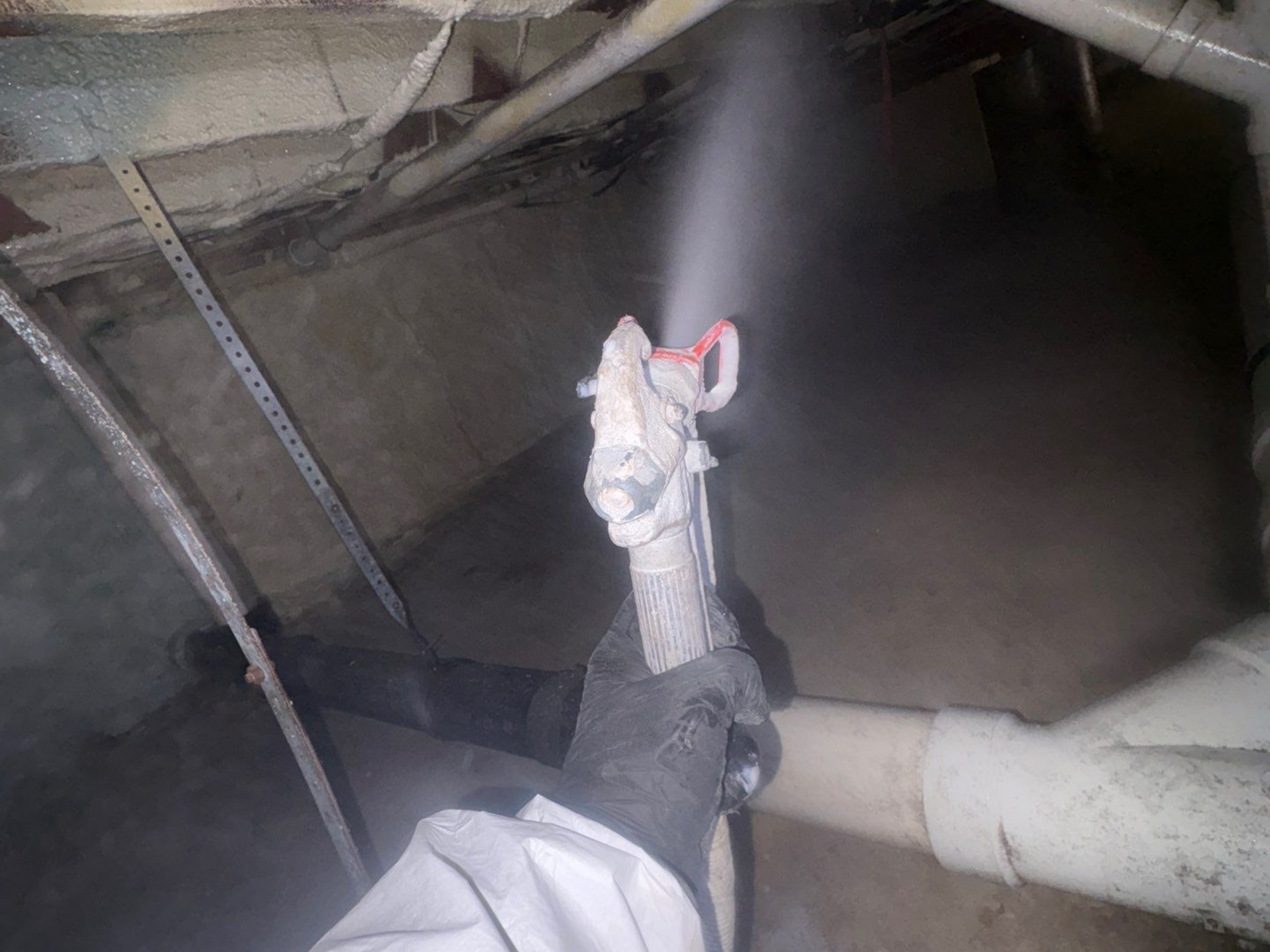
Full Coverage — Every Inch
No section of the crawlspace is skipped. Our technicians reach every corner, every low-clearance area, and every section of exposed framing to ensure complete, even coverage across the full 3,000 square feet. That thoroughness is what separates a properly protected crawlspace from one that will develop problems again in a year or two.
Air Quality Protection
One thing homeowners often don't realize is how directly a crawlspace affects the air quality throughout the entire home. Air moves up through the floors and into your living space. A contaminated crawlspace means contaminated air in your home. Encapsulation helps break that cycle — creating a cleaner, healthier environment from the ground up, literally.
What Encapsulation Gives You That Remediation Alone Can't
Mold remediation removes the mold that's there. It's necessary, it's important, and when it's done by a certified team, it works. But remediation alone doesn't change the environment that allowed mold to grow in the first place. In a waterfront home on Long Island, that environment — the humidity, the moisture, the lack of airflow — isn't going away on its own.
Encapsulation changes the environment. It seals the surfaces, controls the moisture, and protects the structural components of your home from the ongoing exposure that comes with living near the water. It's the step that takes you from "the mold is gone right now" to "I've done everything I can to make sure it doesn't come back."
If you've already been through remediation and you're still wondering whether the problem is truly behind you, we understand that worry. And we can help you do something about it.
Is Crawlspace Encapsulation Right for Your Home?
Encapsulation is something we strongly recommend for any Long Island homeowner whose home fits one or more of these situations: your property sits near the water — whether that's the Hamptons, the South Shore, the North Shore, or anywhere along the coast; you've had mold remediation performed previously; you've noticed a musty or earthy odor in your home without being able to identify the source; your home has higher-than-normal indoor humidity levels; or your crawlspace is unfinished and open to ambient air.
We see this across the full length of Long Island — from Queens and Nassau County to all of Suffolk County, including East Hampton, Southampton, Westhampton, Hampton Bays, Montauk, and the North Fork. Coastal exposure doesn't care how expensive your home is or how recently it was built. The moisture is there regardless.
If You're Dealing With This, You're Not Alone — We Can Help
We know this isn't a fun thing to think about. Nobody wants to discover mold under their home, and nobody wants to worry that the problem might be coming back after they've already spent money to fix it.
But here's what we want you to know: this is exactly what we do. We've been helping Long Island homeowners handle situations exactly like this since 2006. Our team is IICRC certified in both mold remediation and water damage restoration. We've earned over 250 five-star reviews from homeowners across Nassau County, Suffolk County, and Queens. And when you call us, you're not talking to a call center — you're talking to a locally owned team that genuinely cares about getting this right for you.
If your home sits near the water and you've already been through remediation — or if you're just starting to notice the signs — don't wait for the problem to get worse. Call us. We'll come out, assess the situation honestly, and help you protect what you've already invested in.
K.O.S. Restoration —
(631) 560-8999
24-Hour Emergency Response | Serving Long Island, the Hamptons, Nassau County, Suffolk County, and Queens
IICRC Certified | 250+ Five-Star Reviews | Locally Owned Since 2006 | 45-Minute Response to Suffolk County
Frequently Asked Questions
Does crawlspace encapsulation replace mold remediation?
No — and it's important to understand the difference. Mold remediation removes active mold growth. Encapsulation is performed after remediation is complete to seal surfaces and prevent mold from returning. One does not replace the other; they work together to give you the most complete protection.
How long does crawlspace encapsulation last?
When applied correctly by a certified team using professional-grade products, a crawlspace encapsulation system can protect your home for many years. Periodic inspections are recommended, especially for waterfront properties with ongoing moisture exposure.
Is encapsulation necessary for waterfront homes on Long Island?
In most cases, yes — especially if the home has a crawlspace. Waterfront environments create persistent, elevated moisture conditions that standard remediation alone doesn't address. Encapsulation is the best long-term protection available for these properties.
Will crawlspace encapsulation improve the air quality inside my home?
Yes. Crawlspaces are directly connected to the air circulation in your home. Sealing and protecting that space reduces airborne contaminants and helps create a healthier indoor environment throughout the entire house.
Do you serve areas outside of the Hamptons?
Absolutely. We serve homeowners across all of Long Island — including Nassau County, all of Suffolk County, and Queens. If you're dealing with crawlspace mold or moisture concerns anywhere in our service area, we'd love to help.
Share This Post