East Hampton Pool House Flood Leads to Extensive Water Damage and Mold Growth
A hidden irrigation leak put nearly 3 feet of water under an East Hampton pool house. See how K.O.S. Restoration handled extraction, drying & mold remediation.
Tom Cwalinsky··5 min read·East Hampton, NY
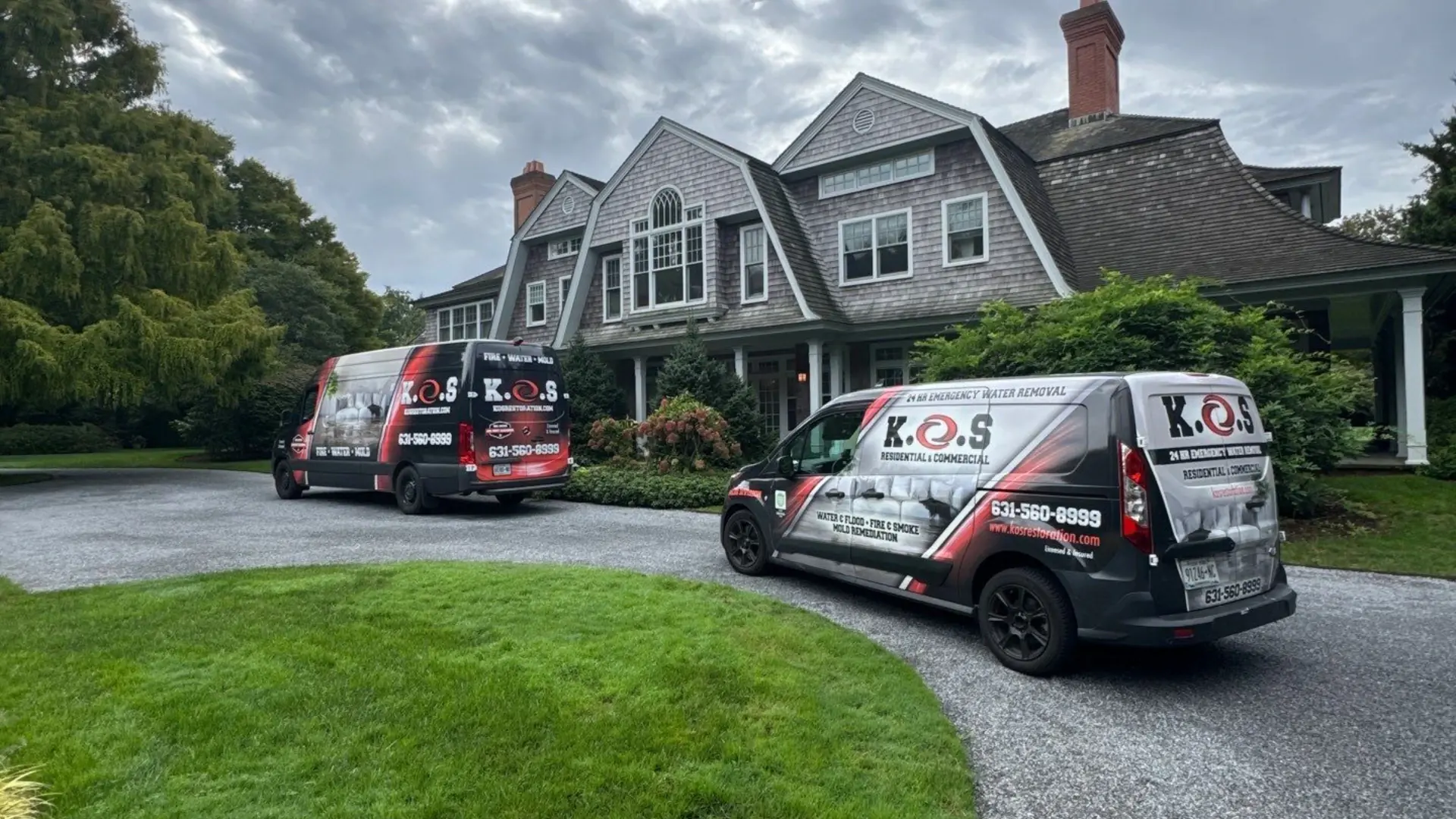
K.O.S. Restoration, an IICRC-certified water damage and mold remediation company that has served the Hamptons and all of Suffolk and Nassau County since 2006, responded to an East Hampton, NY pool house after a hidden irrigation line leak flooded the structure and left nearly three feet of standing water in the crawlspace. Our team located and stopped the leak, pumped out the crawlspace, protected the homeowner's contents, removed unsalvageable building materials, and installed commercial drying and dehumidification equipment throughout. Because active mold growth was discovered, the project also includes mold remediation with containment, HEPA vacuuming and antimicrobial treatment. K.O.S. Restoration offers 24/7 emergency response with a 45-minute response time in Suffolk County.
What started as a hidden irrigation line leak quickly turned into a major restoration project at an East Hampton home.
The homeowner contacted K.O.S. Restoration after discovering water throughout their pool house. By the time the leak was found, water had spread through finished areas of the structure, damaged building materials, and flooded the crawlspace with nearly three feet of standing water.
Unfortunately, situations like this are more common than many homeowners realize. A slow leak can go unnoticed for days or even weeks, allowing moisture to spread behind walls, beneath flooring, and into hidden spaces where mold can begin to grow.
Knowing how serious the situation had become, the homeowner called K.O.S. Restoration for immediate assistance.
Finding the Source and Assessing the Damage
Upon arrival, our team quickly traced the problem back to a failed irrigation water line.
Once the source was identified and addressed, technicians began taking moisture readings throughout the pool house to determine how far the water had traveled.
The moisture inspection revealed that the damage extended well beyond what was visible on the surface.
Water had affected:
Walls and wall cavities
Flooring and subflooring
Structural framing
The crawlspace beneath the building
Areas showing active mold growth
In several locations, moisture readings remained extremely elevated, confirming that immediate drying and restoration efforts were necessary.
Nearly Three Feet of Water in the Crawlspace
One of the biggest concerns was what was happening underneath the structure.
The crawlspace had taken on approximately three feet of standing water, creating the perfect environment for mold growth, structural deterioration, and additional damage if left untreated.
Our team immediately installed water extraction pumps to begin removing the flood water.
As the water level dropped, technicians were able to gain access to hidden areas and begin evaluating the full extent of the damage below the pool house.
For many homeowners, crawlspace water damage
often goes unnoticed until odors, mold, or structural concerns begin appearing inside the home.
Protecting the Property While Drying Gets Underway
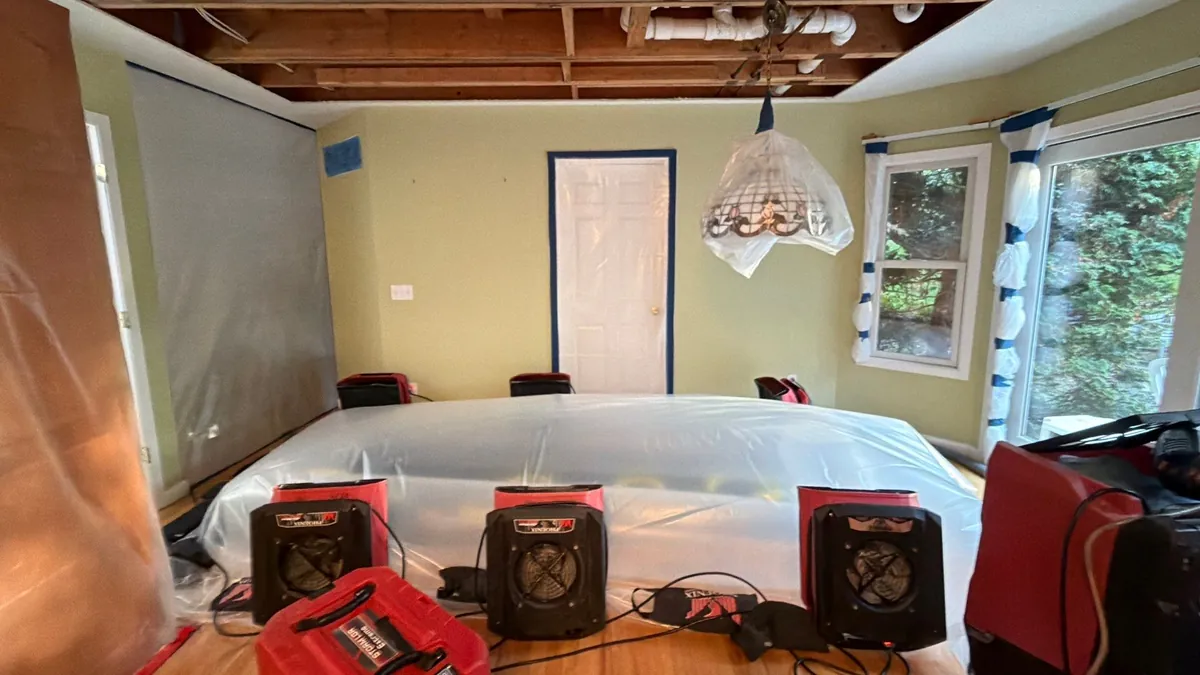
Before demolition and drying began, contents inside the affected areas were carefully protected and wrapped.
The goal is always to save as much as possible while creating access to wet materials that need to be dried or removed.
Once the affected areas were exposed, commercial drying equipment and dehumidifiers were strategically placed throughout the structure.
These systems work around the clock to remove moisture from:
Wood framing
Subfloors
Wall cavities
Structural materials
Hidden building assemblies
Our team will continue monitoring moisture levels throughout the drying process to ensure the structure reaches appropriate drying goals before reconstruction begins.
Removing Water-Damaged Materials
In some areas, the water damage was simply too extensive for materials to be saved.
Sections of water-damaged building materials were removed to expose trapped moisture and help accelerate the drying process.
While homeowners are often concerned when they see portions of walls or finishes being removed, this step is often necessary to prevent future issues and ensure moisture isn't trapped behind finished surfaces.
Removing unsalvageable materials now helps avoid bigger problems later.
Preparing for Mold Remediation
Because mold growth was already present, the next phase of the project will focus on professional mold remediation.
The team will establish containment areas to isolate affected spaces and prevent mold spores from spreading throughout the property.
The remediation plan includes:
HEPA vacuuming of affected surfaces
Enzyme and antimicrobial treatments
Detailed cleaning of structural materials
Ongoing moisture monitoring
Final verification that the area is dry and ready for reconstruction
Every step follows IICRC industry standards designed to address mold safely and thoroughly.
Why Fast Action Matters
One of the biggest takeaways from this project is how quickly water damage can escalate.
What may start as a hidden leak can eventually affect multiple areas of a property, especially when moisture finds its way into crawlspaces, wall cavities, and other concealed spaces.
The sooner the problem is identified, the greater the opportunity to reduce damage, save materials, and prevent mold growth.
That's why our team is available 24 hours a day to respond to water damage emergencies throughout Suffolk County, with an average response time of 45 minutes.
Project Update
This East Hampton water damage restoration project is currently in the drying and remediation phase.
Water extraction has been completed, damaged materials have been removed, drying equipment remains in place, and preparations are underway for mold remediation.
Our team will continue monitoring moisture levels and cleaning affected areas until the structure is dry, safe, and ready for the next stage of restoration.
If you've discovered flooding, water damage, mold growth, or moisture issues in your home, pool house, basement, or crawlspace, acting quickly can make all the difference.
Water Damage & Mold Services Throughout East Hampton and the Hamptons
K.O.S. Restoration works in every type of property across the East End, including:
Pool houses, guest houses, and detached structures
We respond 24/7 throughout East Hampton, Amagansett, Wainscott, Sag Harbor, Bridgehampton, Southampton, Montauk, Westhampton Beach, and all of Suffolk County, Nassau County, and Queens.
Get in Touch
If you suspect a hidden leak, find standing water, or smell something musty in your home or pool house, don't wait for the damage to spread. K.O.S. Restoration has been Long Island's trusted damage restoration team since 2006.
The things people ask when they're looking at the same problem.
How do I know if a hidden leak is causing water damage in my home?+
Common warning signs include unexplained increases in your water bill, musty odors, warped or cupping floors, soft spots in walls, peeling paint, and visible staining. In this East Hampton project, the irrigation line leak went unnoticed until water was already visible throughout the pool house. If you suspect a hidden leak, a professional moisture inspection with thermal imaging and moisture meters can confirm how far the water has traveled before the damage gets worse.
How long does it take to dry out a flooded crawlspace?+
Most crawlspace drying projects take three to seven days, depending on how much water was present, how long it sat, and what materials were affected. A crawlspace with several feet of standing water, like this East Hampton pool house, requires pump extraction first, followed by commercial dehumidification and daily moisture monitoring. K.O.S. Restoration documents moisture readings throughout the process to verify the structure has reached its drying goals before any rebuilding begins.
Does water damage always lead to mold?+
Not always, but mold can begin growing on wet building materials within 24 to 48 hours, which is why fast water removal and drying are so important. When water sits undetected for days or weeks — as often happens with hidden leaks — the likelihood of mold growth increases dramatically. In this project, active mold growth was already present by the time the leak was discovered, which is why professional mold remediation was added to the scope of work.
Why do walls and flooring need to be removed after water damage?+
Drywall, insulation, and some flooring materials trap moisture once they become saturated, and drying equipment alone can't always reach the water hidden behind finished surfaces. Removing unsalvageable materials exposes the wet structure underneath, accelerates drying, and prevents mold from growing in concealed cavities. Our technicians only remove what can't be saved — contents and salvageable materials are protected and preserved whenever possible.
Does homeowners insurance cover water damage from an irrigation line leak?+
Coverage depends on your policy and how the damage occurred, but sudden and accidental water damage is covered under many homeowners policies. K.O.S. Restoration documents the entire loss with photos, moisture readings, and detailed scope notes, and we work directly with insurance carriers and adjusters to support your claim. We recommend contacting your insurance provider as soon as the damage is discovered.
How quickly can K.O.S. Restoration respond to a water emergency in East Hampton?+
K.O.S. Restoration provides 24/7 emergency response throughout East Hampton, the Hamptons, and all of Suffolk County, with an average arrival time of 45 minutes. Fast response matters — the sooner extraction and drying begin, the more materials can be saved and the lower the risk of mold growth. Our team is based on Long Island and serves Suffolk County, Nassau County, and Queens.
Can the same company handle both water damage restoration and mold remediation?+
Yes — and it's often the better approach. K.O.S. Restoration is IICRC certified for both water damage restoration and mold remediation, which means one team manages extraction, drying, demolition, containment, and remediation from start to finish. That eliminates scheduling gaps between contractors, keeps the project moving, and ensures moisture and mold are addressed together rather than as separate problems.